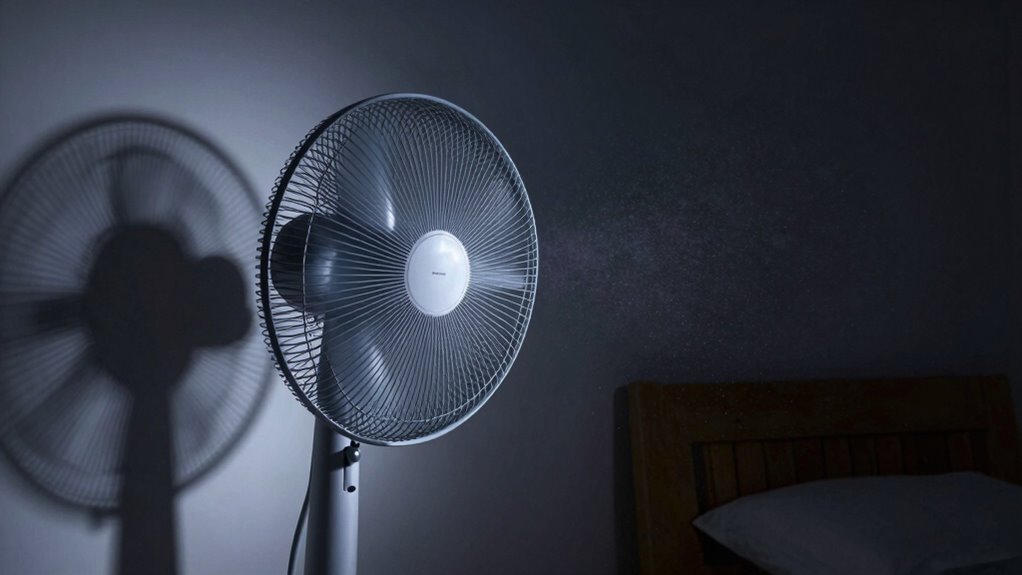

Decibel levels show how loud a fan is but don’t tell the full story about how it feels or impacts your sleep. Factors like fan design, pitch, frequency, and how long or patterned the noise is matter more than the dB rating. Your environment and personal sensitivities also influence perception. If you want to understand why some fans bother you more than others, keep exploring these key points.

Get home appliances delivered free with Prime
- Fast, free delivery on millions of items
- Prime Video, Amazon Music and more included
- Member-only deals all year
Key Takeaways
- Decibel levels don’t account for sound frequency, which affects perceived annoyance and sleep disturbance.
- Human sensitivity varies; two fans at identical dB can feel differently loud based on pitch and individual hearing.
- Room acoustics and fan placement significantly influence perceived noise, regardless of measured decibel levels.
- Pattern, duration, and variability of fan noise impact sleep quality more than raw decibel readings.
- Subjective factors like stress, light sleep, and personal sensitivity shape how loud a fan feels at night.
Products Worth Considering

Samsung 42-Inch Class OLED S90F 4K Smart TV (2025)

Sonos Era 100 Wireless Smart Speaker, Black

Levoit Core 600S-P Smart Air Purifier for Large Rooms
As an affiliate, we earn on qualifying purchases.
What Are Decibels and How Do They Measure Noise?
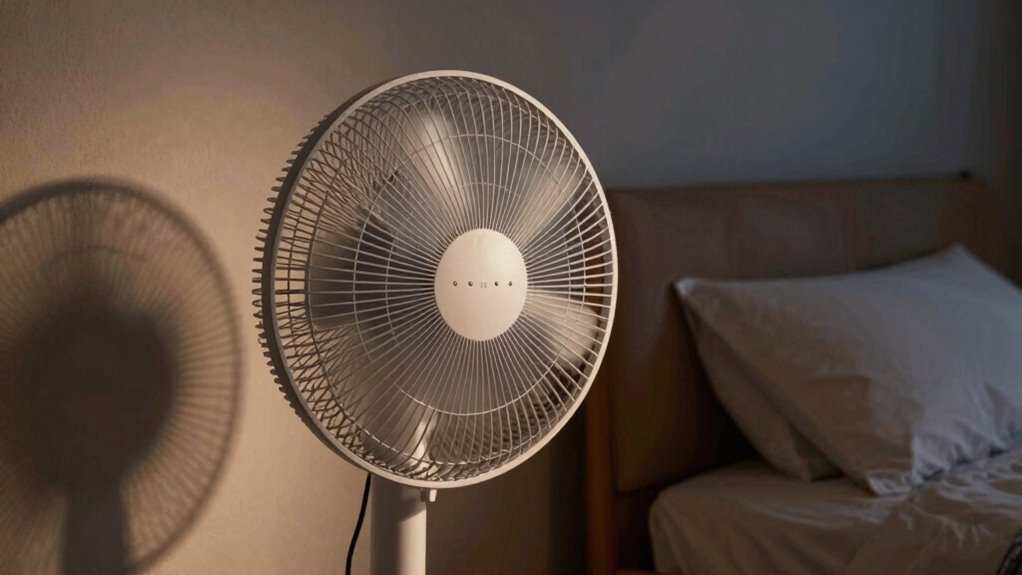
Have you ever wondered how we measure the loudness of sound? It’s done through decibel measurement, a scale that quantifies sound intensity. When it comes to fan noise, decibels (dB) help us understand how loud a fan actually is. The scale is logarithmic, meaning each increase of 10 dB roughly doubles the perceived loudness. For example, a quiet fan might produce around 40 dB, while a louder one reaches 60 dB. This measurement allows us to compare different noise levels objectively. However, decibel levels alone don’t tell the full story of how loud a fan feels to you. The perceived loudness can vary depending on factors like frequency and background noise. Additionally, the frequency spectrum of a fan’s noise influences how intrusive it sounds, even at the same decibel level. Understanding the decibel scale and how it relates to human hearing can improve your perception of noise impacts. The sound pressure level is also an important aspect that affects how we experience noise, especially during quiet nighttime hours. Moreover, auditory perception plays a role in how different individuals experience loudness, making subjective comfort levels vary. Still, understanding decibels provides a useful starting point to gauge how noisy your fan might be during the night.
Why dB Levels Don’t Always Show How Loud a Fan Feels
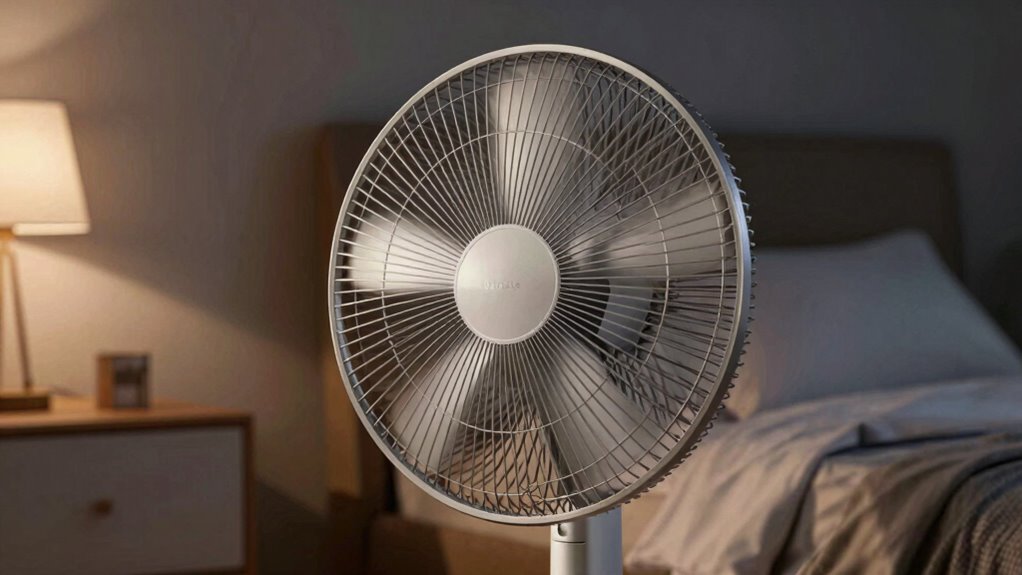
Although decibel levels provide a numerical measure of sound intensity, they don’t always reflect how loud a fan feels to you. Factors like fan blade design can influence perceived noise, as blades with uneven edges or larger surfaces generate more turbulence, making the fan seem louder even at lower dB levels. Additionally, fan positioning plays a pivotal role; a fan placed close to your bed or pointing directly at you amplifies the perceived loudness regardless of its actual decibel reading. The shape and size of the blades, along with how the fan is oriented, can make a significant difference in how loud it feels. Furthermore, sound perception is subjective and can be affected by individual sensitivity and room acoustics, meaning that even identical fans may seem differently loud to different people. Room acoustics, including the reflection of sound waves off walls and furniture, can also impact how sound waves are reflected and absorbed, altering your perception of loudness. Sometimes, noise frequency plays a role in how we experience sound, with certain pitches being more noticeable or irritating. Additionally, ventilation design can influence how sound travels through a space, affecting perceived loudness. So, even if a fan measures relatively quiet, it might still feel annoyingly loud depending on these design and placement factors.
How Do Frequency and Pitch Make Fan Noise More Annoying?
Frequency and pitch considerably influence how annoying fan noise feels, often more than loudness alone. Your perception of fan noise depends on its fan frequency and pitch perception, which can make certain sounds more intrusive. High-pitched sounds are often perceived as sharper and more grating, while lower pitches may seem dull but less irritating. When the pitch aligns with your ear’s sensitivity, it amplifies annoyance. A deeper understanding of sound perception principles can help in designing quieter fans that leverage sound perception principles. Consider these points: – High fan frequency can cause discomfort due to heightened pitch perception. – Low-frequency sounds may feel less intrusive but can resonate more deeply. – Pitch variations can trigger irritation even if the loudness remains constant. Additionally, individual differences in hearing sensitivity mean that some people may be more affected by certain frequencies, making personalized adjustments beneficial. Recognizing sound frequency ranges and their effects can assist in choosing or modifying fans to reduce annoyance. Understanding how fan frequency affects your perception helps you choose quieter fans or adjust existing ones for less annoyance, especially when accounting for individual hearing differences.
Why Noise Duration and Patterns Can Increase Your Sleep Disruption
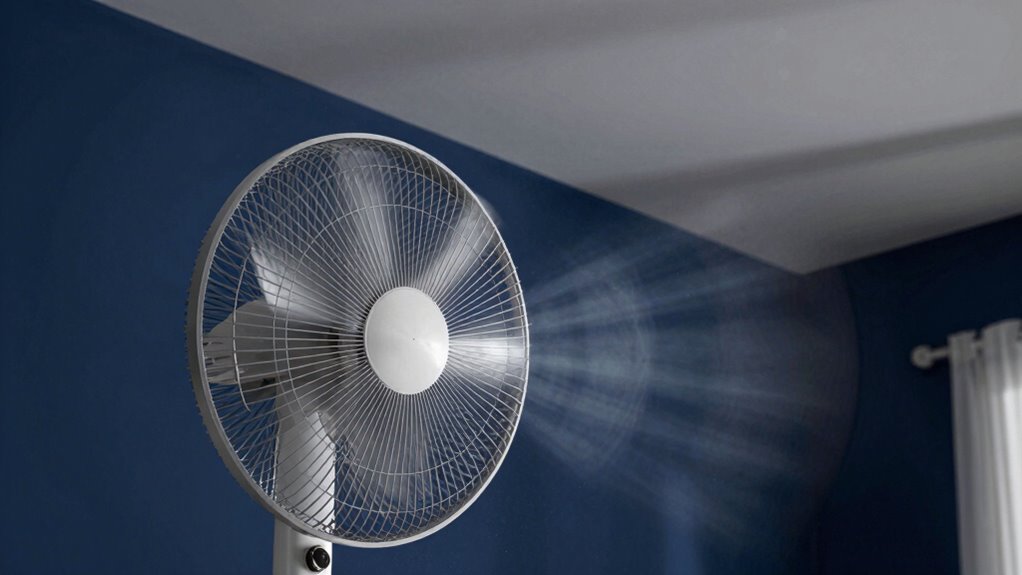
When noise repeats in predictable patterns, it can make it harder for you to stay asleep. Sudden or irregular sounds often jolt you awake, disrupting your rest even more. The longer noise lasts, the greater its impact on your sleep quality. Additionally, noise patterns that are consistent can cause your brain to anticipate and become more sensitive to disturbances, further impairing your sleep. Recognizing how sound patterns influence your sleep can help you develop better strategies for managing nocturnal noise. Understanding cybersecurity vulnerabilities in connected devices can also prevent unexpected disturbances that might disturb your sleep, especially as many smart devices can inadvertently contribute to noise disruptions if not properly secured. Being aware of device security can help reduce these unpredictable noises and improve your sleep environment.
Pattern Repetition Impacts Sleep
Repeated noise patterns, especially those with consistent timing or rhythm, can make it harder for your brain to adjust and fully relax. When your fan creates a predictable pattern, your brain starts to anticipate the noise, making it difficult to reach deep sleep. Noise consistency can lead to a cycle where your body remains alert, trying to prepare for the next sound. This pattern repetition can subtly disrupt your sleep, even if the noise level isn’t loud. To minimize this, consider ways to break up the pattern, such as introducing variability or using white noise. Being aware of how fan pattern and noise consistency influence your sleep helps you find better strategies for a quieter, more restful night. Incorporating sound masking devices or techniques can further help reduce the impact of repetitive noise cycles.
Sudden Noises Disrupt Rest
While predictable fan patterns can subtly interfere with your sleep, sudden noises often cause more immediate disruption. A sudden burst of noise, like a fan’s oscillation changing unexpectedly, can jolt you awake. These abrupt sounds, especially if they involve high noise frequency, prevent deep rest and fragment your sleep cycle. Recognizing how noise patterns matter is key to improving sleep quality. Additionally, understanding sound frequency and its impact on sleep can help you create a more restful environment. Variations in ambient noise levels can also influence your sleep continuity and overall restfulness. Being aware of sound masking techniques can further help reduce the impact of disruptive noises during sleep.
Duration Affects Sleep Quality
The length of time a fan makes noise considerably impacts your sleep quality, as prolonged disruptions are more likely to fragment your rest. Continuous fan noise can prevent your brain from reaching deep sleep stages, leading to lighter, less restorative sleep. Short, sporadic sounds might not disturb you much, but persistent noise can cause frequent awakenings. To minimize sleep disruption, consider these factors:
- *Persistent fan noise can cause your brain to stay alert longer.*
- *Long-lasting sounds increase the likelihood of awakening throughout the night.*
- *Patterned or irregular noise can make it harder to adapt and fall back asleep.*
Understanding how the duration of fan noise affects your sleep can help you create a more peaceful environment, ensuring your rest isn’t interrupted by prolonged noise exposure.
How Your Environment and Room Acoustics Change Fan Noise Perception
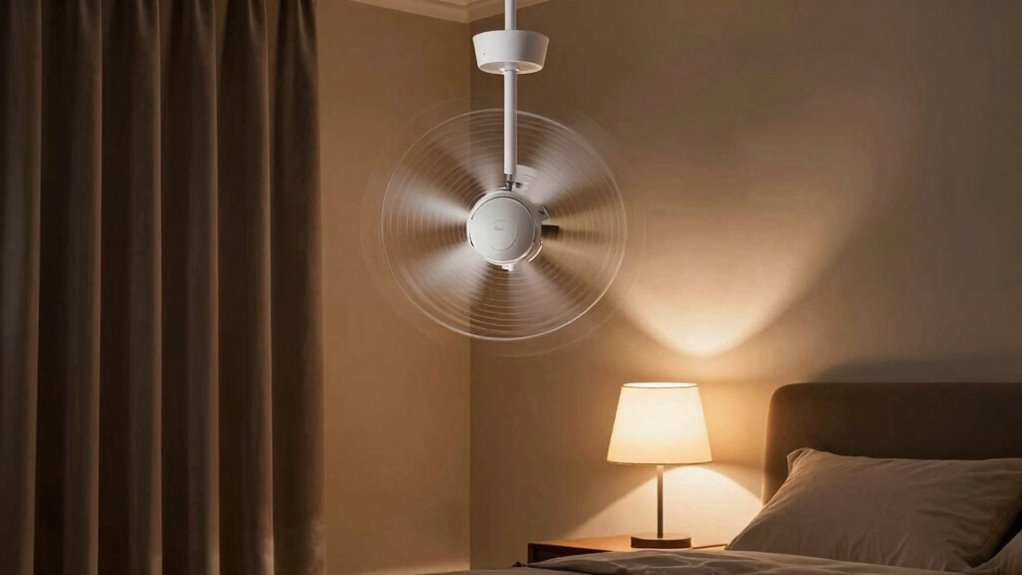
Your environment and room acoustics considerably influence how you perceive fan noise at night. Hard surfaces like walls and floors reflect sound, amplifying noise, while soft furnishings absorb it, making sounds quieter. Room temperature also plays a part; a warmer room can cause fans to run faster, increasing noise levels. Additionally, fan blade design affects sound quality—quiet fans often have blades engineered to reduce turbulence. To illustrate, consider this comparison:
| Environment Factor | Effect on Fan Noise Perception |
|---|---|
| Hard surfaces | Increases echo, amplifies fan noise |
| Soft furnishings | Absorbs sound, reduces perceived noise |
| Room temperature | Warmer temps may lead to faster fan operation |
| Fan blade design | Influences noise type and volume |
| Room size and shape | Larger or irregular rooms alter sound dynamics |
What Personal Factors Make You More Sensitive to Fan Noise at Night?
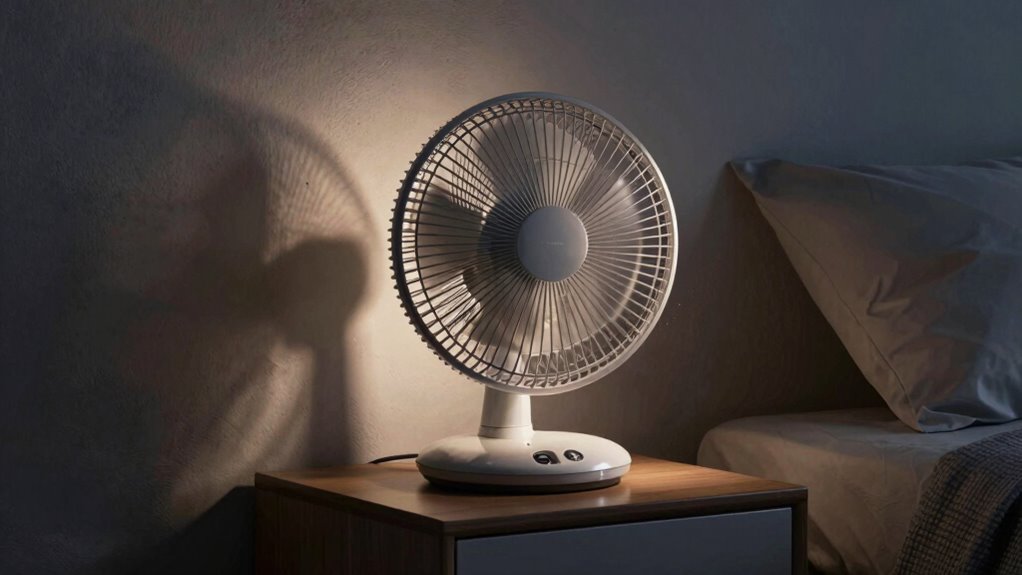
Your sensitivity to fan noise at night can vary based on your sleep habits and how easily you wake up. Hearing health issues or existing noise sensitivities might make the sound more disruptive for you. Additionally, stress and anxiety levels can heighten your awareness, making fan noise feel more intense and bothersome.
Sleep Sensitivity Levels
Certain personal factors can make you more sensitive to fan noise at night, affecting how easily you fall asleep or stay asleep. Your sleep sensitivity levels influence your noise perception and overall comfort. If you have heightened sensory awareness, even low-level fan sounds might disrupt your rest. Factors that contribute include:
- Increased stress or anxiety, amplifying noise sensitivity
- Having a lighter sleep cycle, making you more reactive to sounds
- Personal traits like hyperacusis, heightening noise perception
Understanding your sleep sensitivity can help you manage fan noise better. Recognizing that some individuals are naturally more sensitive allows you to tailor your environment, whether by reducing fan activity or exploring alternative sleep aids. Being aware of these personal factors helps you improve sleep quality despite noise challenges.
Hearing Health Factors
Hearing health factors play a significant role in how sensitive you are to fan noise at night. If your ear health is compromised or you lack proper hearing protection, even low-level sounds can feel overwhelming. Age, exposure to loud noises, and ear infections can heighten your sensitivity, making fan noise more disruptive. Maintaining good ear health through regular checkups and using hearing protection when exposed to loud environments can reduce your sensitivity. Here’s a quick overview:
| Factor | Effect | Advice |
|---|---|---|
| Ear health | Increased sensitivity | Regular checkups, avoid loud noises |
| Age | Greater auditory sensitivity | Use hearing protection, limit exposure |
| Hearing protection use | Reduced noise sensitivity | Wear earplugs or noise-canceling devices |
| Noise exposure history | Damage leading to hypersensitivity | Limit loud sounds, seek treatment |
| Ear infections | Heightened sound sensitivity | Seek prompt medical care |
Stress and Anxiety
When stress and anxiety levels are high, it becomes easier to notice and be bothered by fan noise at night. Your heightened emotional state makes you more sensitive to sounds that might otherwise go unnoticed. Poor air quality can also increase discomfort, amplifying your irritation. Additionally, if your fan isn’t well-maintained, irregular noises or rattles can trigger your anxiety further. To reduce sensitivity, consider improving air quality with proper ventilation, and make sure your fan is clean and functioning smoothly. Managing stress through relaxation techniques can lower your overall reactivity. Remember, a calm mind helps you tune out unnecessary noise.
- Practice deep breathing or meditation before bed
- Ensure your fan is regularly maintained
- Use air purifiers to improve air quality
Easy Tips to Manage Fan Noise and Sleep Better Tonight
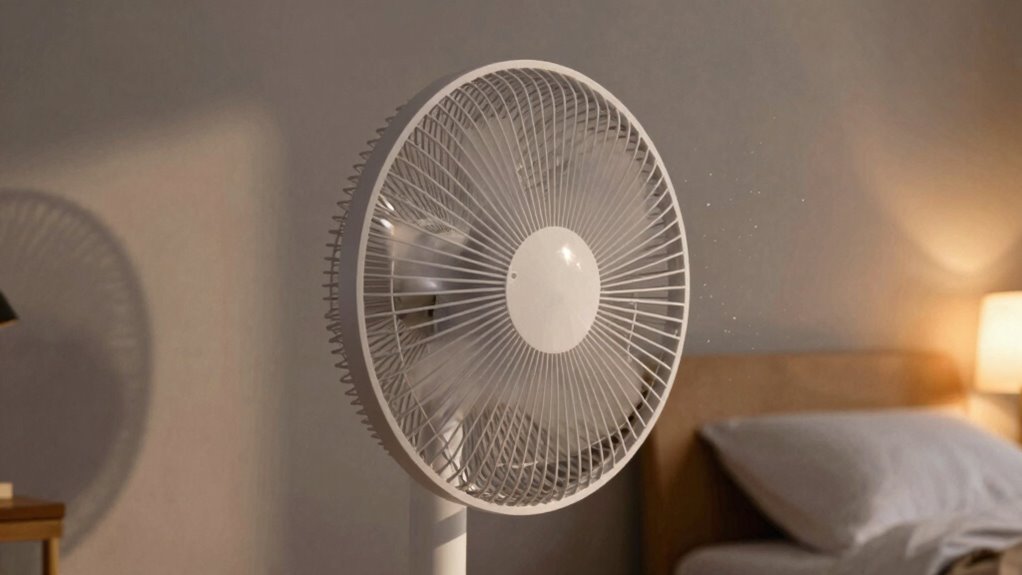
If fan noise keeps you awake, there are simple strategies you can try tonight to improve your sleep. First, consider the fan’s fan blade design; a fan with wider or more aerodynamic blades often produces less noise. If motor noise is an issue, place the fan farther from your bed or use a fan with a quieter motor. You can also add a soft cover or place a towel around the base to dampen vibrations. Using a white noise machine or calming background sounds can mask fan noise effectively. Additionally, guarantee your fan is well-maintained—clean blades and lubricated motors run quieter. Lastly, try orienting the fan in a direction that minimizes direct airflow or switching to a quieter fan model if needed.
Frequently Asked Questions
Can Fan Noise Cause Long-Term Hearing Damage?
Fan noise at night can cause long-term hearing damage if you’re exposed to high noise levels over time. Continuous noise exposure, especially above 85 dB, increases your risk of hearing loss. While many fans are quieter, loud or prolonged exposure could still harm your hearing. To protect yourself, keep noise levels moderate and limit exposure, especially if you notice any ringing or muffled sounds afterward.
How Does Fan Noise Impact Sleep Quality Over Time?
Fan noise can negatively impact your sleep quality over time by increasing noise sensitivity and causing sleep disruption. When you’re exposed to consistent or loud fan sounds, your brain stays more alert, making it harder to fall asleep or stay asleep. This ongoing disturbance can lead to poorer rest, affecting your mood, concentration, and overall health. To improve sleep, consider quieter fans or white noise machines that minimize disruption.
Are Some Fan Types Inherently Quieter Than Others?
Some fan types are inherently quieter than others due to their fan design and noise insulation. For example, tower fans and bladeless fans typically operate more quietly because of streamlined blades and better noise insulation materials. You’ll notice that fans with enclosed motors or advanced noise reduction features produce less noise. When choosing a fan, prioritize models with improved fan design and noise insulation to guarantee a quieter, more restful night.
What Role Does Humidity Affect Fan Noise Perception?
Humidity perception substantially influences how you perceive fan noise. When humidity levels are high, moisture influence makes the air feel warmer and more humid, which can amplify your awareness of sound. Conversely, lower humidity can make sounds seem less intrusive. As humidity affects your comfort and perception, you might find fan noise more noticeable in humid conditions, even if the actual noise level remains the same.
Can Wearing Earplugs Fully Block Fan Noise at Night?
Wearing earplugs can substantially improve noise blocking at night, but they won’t fully eliminate fan noise. Earplug effectiveness varies depending on fit and material, so some sound may still get through. For complete silence, consider high-quality earplugs designed for noise reduction, but remember, no earplug can guarantee total blockage. Combining earplugs with white noise machines or other sound masking methods can enhance your sleep environment further.
Conclusion
Remember, the decibel number only tells part of the story—it’s like judging a book by its cover. Your sleep quality depends on more than just dB levels; frequency, pattern, and your environment all play a role. So, next time your fan keeps you awake, consider these hidden factors. Don’t let the silent thief of sleep steal your night—take control and turn down the noise, one small change at a time.