
A lumpy bed happens because the internal layers of your mattress wear out or shift over time, affecting support and comfort. Different materials like foam, latex, or fibers can compress or break down unevenly, creating bumps and dips. Support systems such as coils or foam layers also weaken with use. Proper care and maintenance can slow this process, but persistent lumps often indicate layer damage. Keep exploring to uncover more about fixing and preventing these issues.

Get home appliances delivered free with Prime
- Fast, free delivery on millions of items
- Prime Video, Amazon Music and more included
- Member-only deals all year
What Are Mattress Layers and Why Do They Matter?
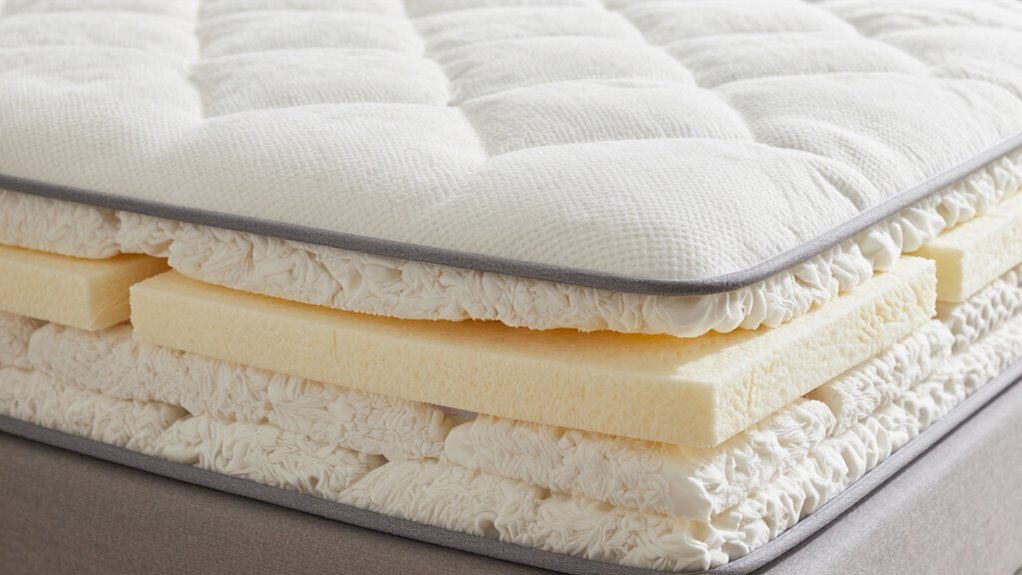
Mattress layers are the building blocks that determine how your bed feels and performs. The mattress layer composition includes different materials arranged in specific ways, impacting support and comfort. Each layer has a distinct role, from providing initial softness to offering long-term support. Layer durability is essential because it dictates how well the mattress maintains its structure over time. Higher-quality materials tend to be more durable, resisting sagging and indentations that cause lumps. Understanding these layers helps you recognize why your mattress feels uneven or uncomfortable. When layers break down or shift, it can lead to a lumpy surface and poor sleep quality. Choosing a mattress with durable layers ensures better comfort and longevity, keeping your bed feeling smooth and supportive longer.
What Is the Top Comfort Layer Made Of? Memory Foam, Latex, or Fibers

The top comfort layer can be made from memory foam, latex, or fibers, each offering different feel and support. You’ll notice how material composition influences the mattress’s softness, responsiveness, and durability. Understanding these differences helps you choose a layer that keeps your bed feeling comfortable and less lumpy. For example, color accuracy can vary between materials, affecting how true-to-life the mattress appears under different lighting conditions.
Material Composition Differences
Choosing the right top comfort layer is essential because it directly affects how your bed feels. Material differences in layer composition influence firmness, responsiveness, and durability. Memory foam molds to your body, providing contouring support, but can trap heat and feel too soft over time. Latex offers a bouncier, more resilient feel and maintains its shape longer, reducing lumpiness. Fibers like polyester or cotton add softness and breathability but can shift or clump with use. Understanding these material composition differences helps you select a layer that suits your comfort preferences and longevity needs. Each material’s unique properties impact how the layer responds to pressure and wear, which can lead to lumps or indentations if not properly chosen or maintained.
Comfort and Support Variations
Since the top comfort layer directly affects how your bed feels, understanding what it’s made of is essential. Whether it’s memory foam, latex, or fibers, each material offers unique comfort and support variations that influence your sleep quality. Your choice impacts how well the bed contours to your body, especially considering your bed frame and mattress size. Additionally, sustainable and energy-efficient materials are increasingly being used in mattress manufacturing to promote European cloud innovation and environmentally friendly solutions. Recognizing the material density helps determine the bed’s durability and likelihood of lump formation, guiding you toward a longer-lasting sleep surface. A layer composition that balances softness and support can further improve comfort and reduce lumps. Variations in material composition can also influence breathability and temperature regulation, further affecting comfort. Understanding foam density and its effect on firmness can help you select a top layer that aligns with your comfort preferences and mattress setup, reducing lumps and improving sleep.
How Does the Transition Layer Support Your Mattress Comfort?
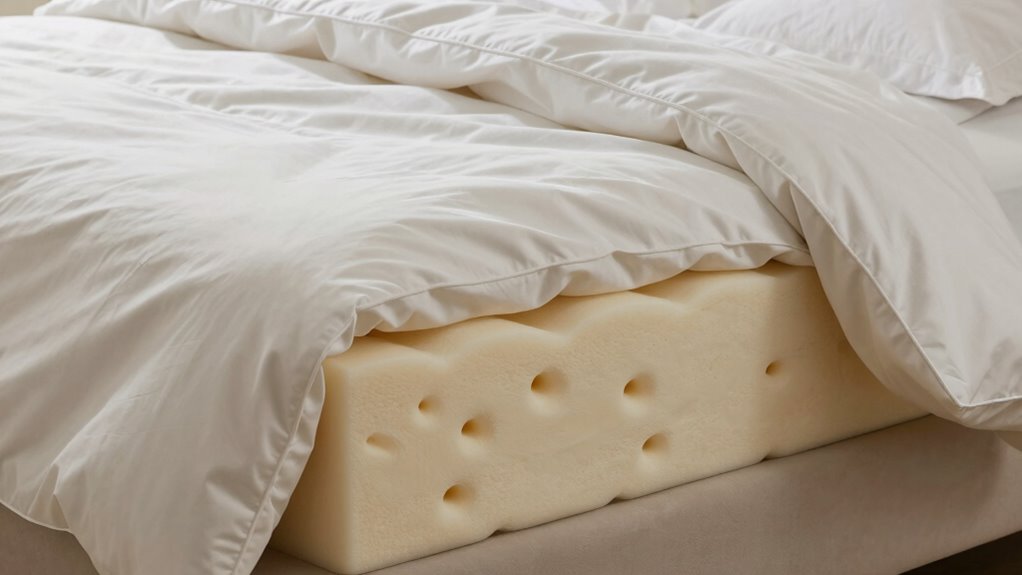
The shift layer plays a key role in making your mattress comfortable by evenly distributing your body weight. It also absorbs pressure points, preventing aches and soreness. Plus, it boosts the mattress’s stability, helping you stay balanced throughout the night. Additionally, a well-designed transition layer can improve overall sleep environment quality, contributing to more restful sleep. Incorporating auditory processing techniques into mattress design can enhance sensory adaptation and comfort further. A carefully engineered transition layer can also support UST projector setups by maintaining proper alignment and stability of the mattress surface, ensuring optimal comfort and functionality. Understanding layered mattress construction can help you choose the best setup for your sleep needs. Emphasizing Indigenous wellness essentials and natural remedies in bedding materials can further promote holistic sleep health.
Distributes Body Weight
A well-designed shift layer plays a crucial role in distributing your body weight evenly across the mattress. This layer helps prevent sagging and guarantees consistent support, which is key to maintaining proper sleep posture and bed firmness. When your body weight is spread out, you avoid creating pressure points that lead to discomfort or lumpy feelings.
Consider how the layer:
- Supports different body shapes and weights
- Maintains even firmness across the surface
- Enhances sleep posture alignment
- Reduces uneven indentation over time
Absorbs Pressure Points
Because pressure points can cause discomfort and contribute to lumpy beds, the shift layer actively works to absorb and cushion these areas. It provides targeted pressure relief by contouring to your body’s curves, reducing stress on sensitive spots like hips and shoulders. This layer’s ability to absorb pressure also helps prevent sagging and uneven wear, enhancing your mattress’s layer durability. When pressure is evenly distributed, your mattress maintains its shape longer, minimizing lumps over time. The shift layer acts as a buffer, softening the impact of your movements and helping you stay comfortable throughout the night. By effectively cushioning pressure points, this layer ensures a smoother sleeping surface, making your mattress feel more supportive and less prone to lumpy patches. Additionally, understanding the importance of proper pressure distribution can help you choose the right mattress components for lasting comfort.
Enhances Mattress Stability
When the shift layer actively stabilizes your mattress, it prevents unwanted shifting and sagging, ensuring consistent support throughout the night. This layer plays a vital role in enhancing mattress stability by working with your bed frame and maintaining proper mattress firmness. It helps distribute weight evenly, reducing pressure points and preventing lumps. You’ll notice a more solid feel, even if your mattress is on the softer side. To maximize stability, consider:
- Using a sturdy bed frame that complements the layer
- Choosing a mattress with appropriate firmness for your comfort
- Adding a non-slip pad between the mattress and frame
- Ensuring the transition layer is well-maintained and intact
- Selecting a mattress with high-quality materials for better durability and support. Properly maintaining your mattress and its components also contributes to long-term comfort and stability. Incorporating a well-designed layer structure can further enhance your mattress’s overall stability and longevity. This combination keeps your mattress steady, offering reliable support and a more comfortable night’s sleep.
What Supports the Mattress Core: Innerspring, Foam, or Hybrid?
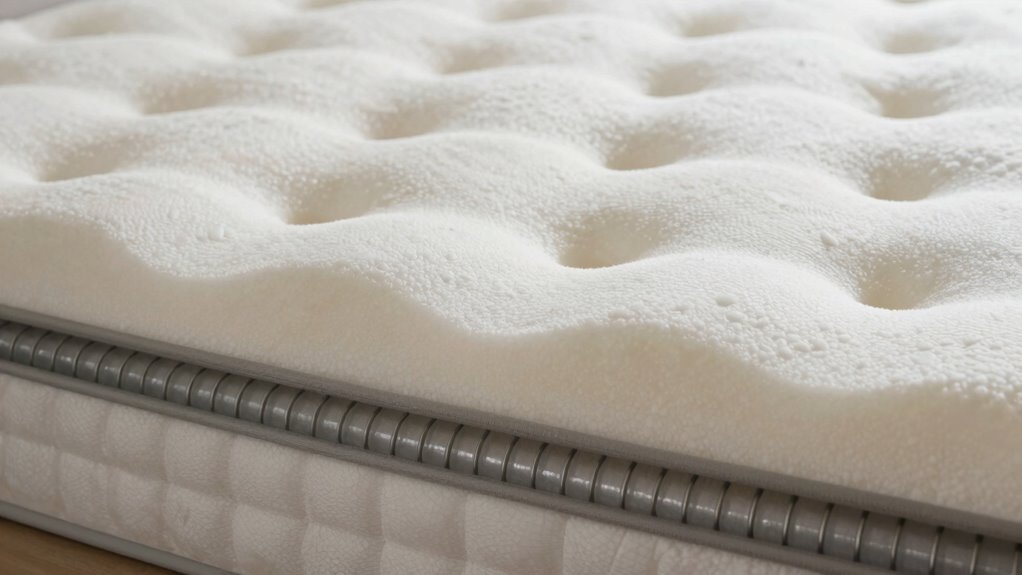
Choosing the right support for your mattress core is essential for comfort and durability. Your support system determines how well the layer structure holds up over time. Innerspring mattresses use coils that provide bounce and airflow, making them supportive yet breathable. Foam mattresses rely on dense layers that contour to your body, offering pressure relief. Hybrid mattresses combine innerspring coils with foam layers, delivering a balance of support and comfort. Each support type influences how your mattress maintains its shape and prevents sagging. When selecting a support system, consider your sleep preferences and how the layers interact to provide stability. Proper support guarantees your mattress feels even and prevents lumpiness caused by uneven wear. Additionally, understanding the layer structure of your mattress can help identify potential issues before they become noticeable. Recognizing the support system helps in diagnosing sagging and prolonging the lifespan of your mattress. To ensure long-term comfort, it’s also important to evaluate the quality and materials used in the support components, which directly impact durability.
How Do Wear and Tear Affect Mattress Layers Over Time?
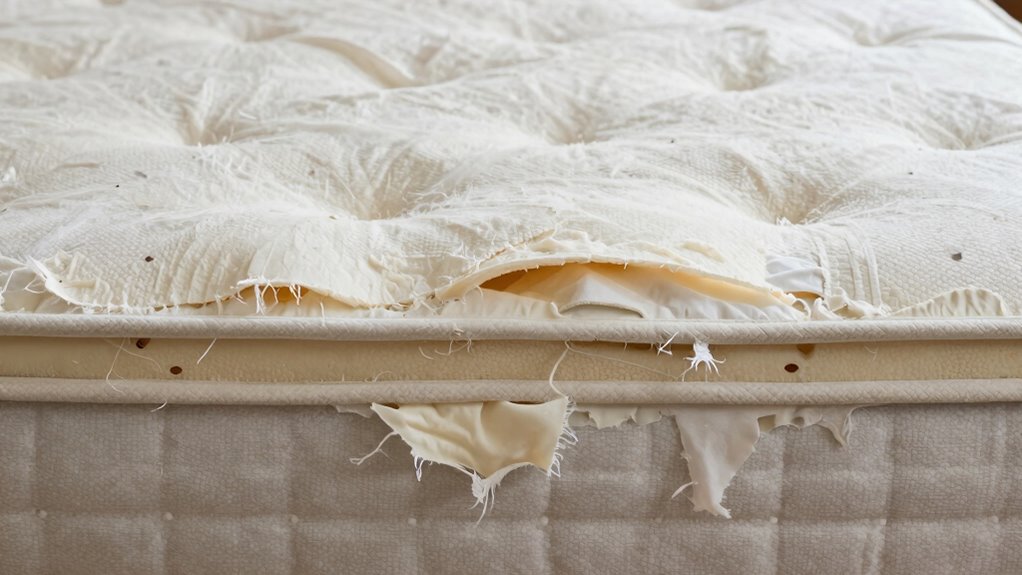
Over time, regular use causes mattress layers to degrade and lose their original support. This deterioration impacts bed quality and can negatively affect your sleep health. As you sleep, the materials in each layer compress, break down, or shift, leading to uneven surfaces that create lumps. You might notice:
- Sagging or dips developing in the mattress
- Reduced responsiveness and support
- Loss of contouring comfort
- Increased pressure points causing discomfort
Understanding mattress layer wear is crucial for effective herbal remedies, just as knowing how mattress layers wear helps maintain sleep quality. These changes compromise the mattress’s ability to provide consistent support, making your bed feel lumpier. Additionally, appliance maintenance plans can help prolong the lifespan of your mattress if they include regular inspections and care. Regularly assessing mattress condition can help identify early signs of deterioration before they become severe. Incorporating preventive measures such as rotating your mattress periodically can also slow down uneven wear. The longer wear persists, the more pronounced these issues become, diminishing sleep quality. Regularly evaluating your mattress’s condition helps ensure you maintain good sleep health and bed quality over time.
How Does Improper Care Damage Your Mattress?
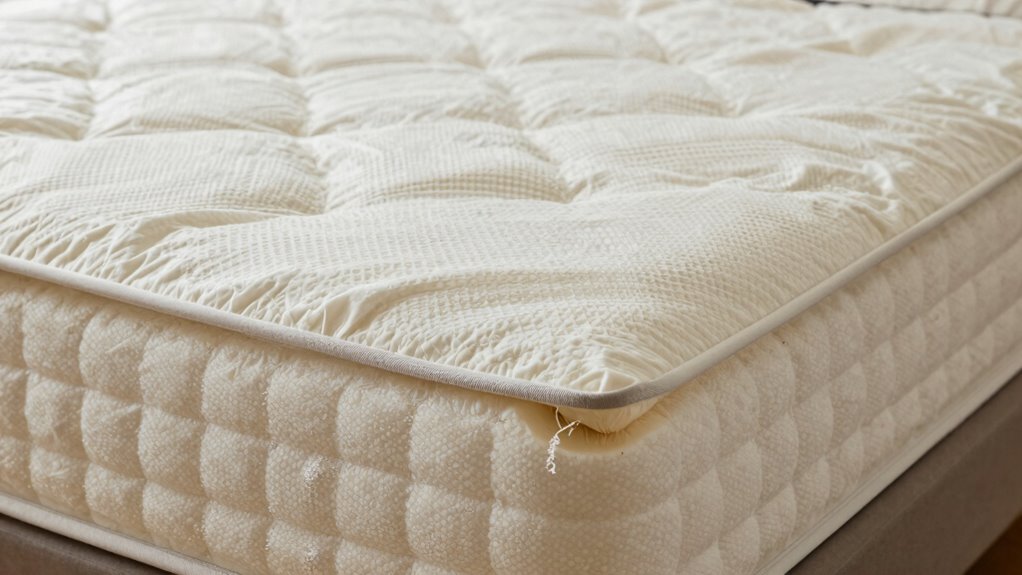
Improper care can substantially damage your mattress, causing it to wear out faster and develop lumps. Neglecting proper mattress hygiene allows dust, sweat, and allergens to accumulate, breaking down the materials inside. Failing to maintain bedding cleanliness can lead to the buildup of dirt and oils that deteriorate the layers over time. Poor bedding maintenance, like skipping mattress flips or using harsh cleaning products, can weaken the structure and cause uneven wear. Additionally, not using a mattress protector exposes it to spills and stains that can cause mold or fabric damage. Over time, these habits accelerate the breakdown of the comfort layers, making your mattress lumpy and uncomfortable. Proper mattress hygiene and consistent bedding maintenance are essential to prolong its lifespan and keep it feeling supportive. Regularly rotating or flipping your mattress helps distribute wear evenly, preventing lumps from forming prematurely.
How Can You Tell When Your Mattress Layers Are Breaking Down?
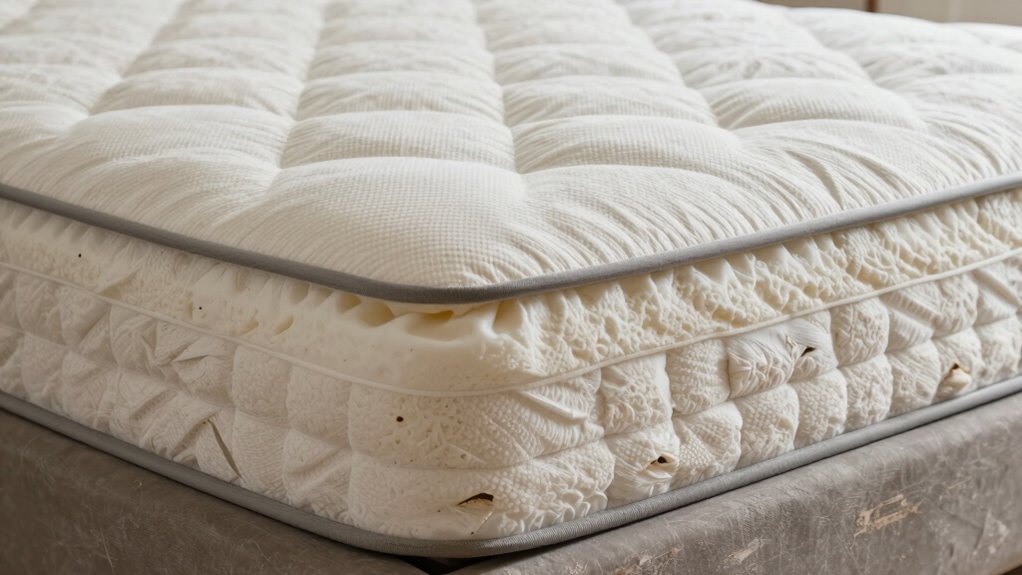
You can often tell your mattress layers are breaking down when you start to notice persistent sagging or indentations, even if you regularly flip or rotate it. This indicates layer separation or foam degradation, which compromises support. Look out for these signs:
- Uneven or deep indentations in the mattress surface
- Visible lumps or bulges where layers have shifted
- Increased motion transfer when your partner moves
- A noticeable decrease in overall firmness and support
These issues show the internal layers are deteriorating, leading to discomfort and reduced mattress lifespan. Foam degradation causes layers to lose their shape and resilience, while layer separation allows different components to shift apart. Addressing these signs early can help you decide whether it’s time for a replacement or professional repair.
What Causes Lumps to Form in Your Mattress? Common Problems Explained
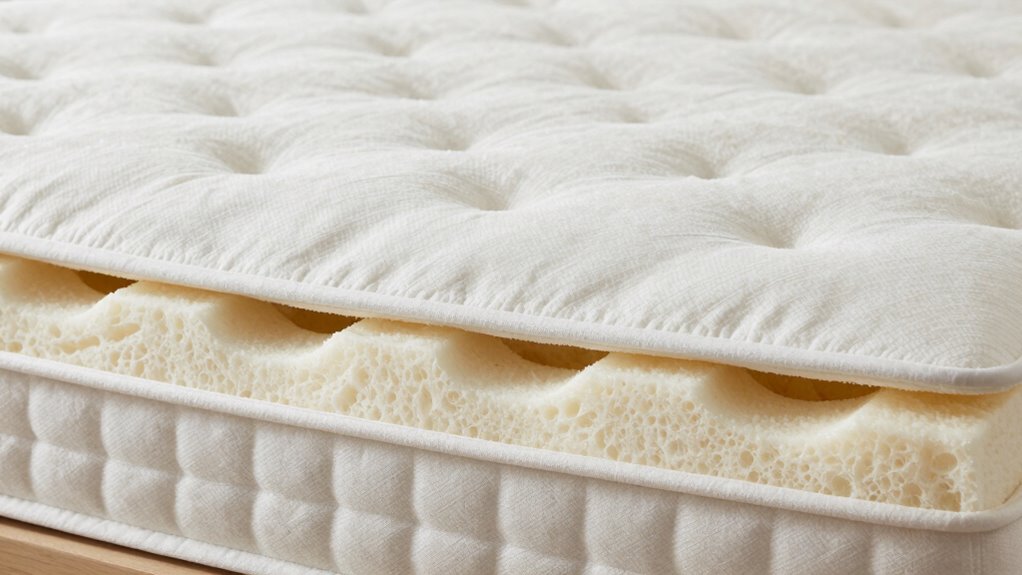
Lumps in your mattress often develop due to a combination of material breakdown and structural issues that occur over time. One common cause is layer compression, where support layers lose their resilience, creating uneven spots. Foam degradation also plays a significant role, as foam materials break down and develop permanent indentations. These issues cause the mattress surface to become lumpy and uncomfortable. Here’s a quick look at the main problems:
| Cause | Effect |
|---|---|
| Layer compression | Reduced support, uneven surface |
| Foam degradation | Permanent indentations, lumps |
| Poor manufacturing | Uneven layer placement |
| Excessive use | Accelerated material wear |
| Improper care | Faster breakdown of materials |
Understanding these causes helps you identify why your mattress feels lumpy.
How Can You Restore Comfort and Support to Your Mattress?
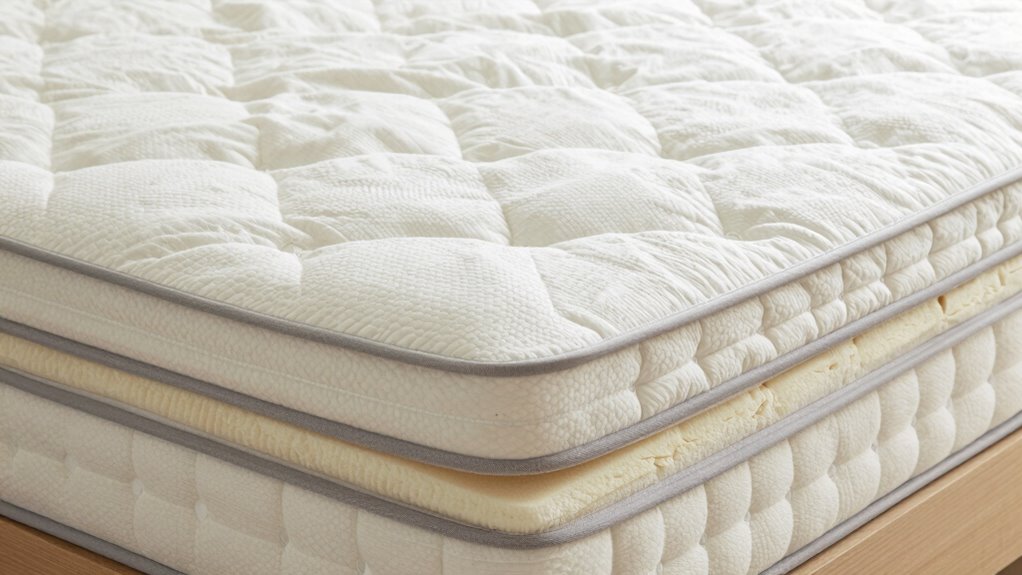
Restoring comfort and support to your mattress is possible with a few targeted steps. First, check for bed frame issues—ensure your frame is sturdy, level, and properly supporting your mattress. Adjust or replace it if needed. Next, assess your bedding arrangement: use a supportive mattress topper or flip your mattress if it’s double-sided. Rotate your mattress regularly to prevent uneven wear. Consider replacing worn-out pillows or sheets that might affect comfort. Additionally, inspect the mattress for sagging or lumps, and address these problems promptly. Proper bed frame support and a well-arranged bedding setup help distribute weight evenly, restoring the comfort and support you need for a good night’s sleep.
Frequently Asked Questions
Can Choosing the Wrong Mattress Layers Cause Lumps?
Yes, choosing the wrong mattress material can cause lumps over time. When layers degrade or aren’t suitable for your sleeping style, they can shift or break down unevenly, leading to lumps. Poor-quality or incompatible materials may not support your body properly, accelerating layer degradation. This results in uneven surfaces that feel lumpy, making it essential to select the right layers for durability and comfort.
How Often Should I Replace Individual Mattress Layers?
Did you know that mattress layers typically last between 3 to 5 years? You should replace individual mattress layers when you notice sagging, lumpiness, or loss of support, as these issues indicate reduced layer durability. Regularly check your mattress material, and if a layer feels uneven or too soft, it’s time to swap it out. Doing so maintains comfort and extends the overall lifespan of your bed.
Do Mattress Toppers Help Prevent Lumpy Beds?
Yes, mattress toppers can help prevent lumpy beds by providing an extra layer of memory foam or cushioning that maintains even support. They improve bed maintenance by protecting your mattress from wear and tear, reducing the chances of lumps forming over time. Plus, toppers can easily be replaced or adjusted, offering a simple way to keep your sleeping surface comfortable and smooth without needing to replace the entire mattress.
Are Lumpy Mattresses a Sign of Bed Pest Infestations?
Lumpy mattresses aren’t usually a sign of bed bug infestations, despite some bed bug myths suggesting otherwise. Bed bugs are tiny and hide in seams or crevices, not cause lumps or indentations in your mattress. To prevent pests, focus on pest prevention methods like regular cleaning and mattress encasements. If you suspect an infestation, inspect carefully and consult a pest control professional, but lumps typically indicate mattress wear, not pests.
How Does Temperature Affect Mattress Layer Breakdown?
Temperature effects your mattress layer deterioration by speeding up or slowing down material breakdown. When it’s hot, the heat causes the foam or fabric to soften, making layers wear out faster and potentially creating lumps. In cooler temperatures, materials stay firmer longer, delaying deterioration. You should keep your room at a consistent, moderate temperature to minimize layer breakdown, prolonging your mattress’s comfort and lifespan.
Conclusion
Just like a once-pristine garden can become overgrown and uneven, your mattress’s layers can break down over time, leading to lumps and discomfort. By understanding what causes these issues and caring for your mattress properly, you can maintain your sleep sanctuary inviting and supportive. Think of your mattress as a trusted ship’s hull—regular maintenance ensures it stays steady through life’s storms, so you wake refreshed and ready to navigate each new day.
Halloween Picks
halloween
As an affiliate, we earn on qualifying purchases.