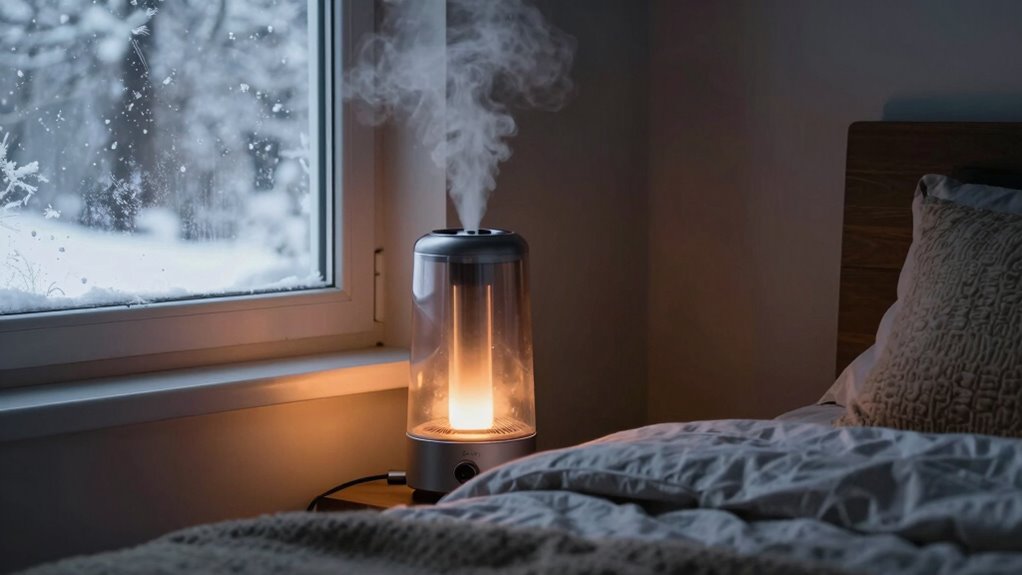

When heaters run in your bedroom, they dry out the air, which can cause dehydration and make you wake up feeling thirsty. The dry environment irritates your throat and nasal passages, disrupting your sleep. Plus, low humidity can lead to static electricity and skin discomfort. If you want to stay more comfortable and hydrated at night, understanding how to balance humidity levels can make a big difference—keep going to find out how.
Listen free for 30 days with Audible
Thousands of audiobooks and originals — cancel anytime.
As an affiliate, we earn on qualifying purchases.
Key Takeaways
- Heaters dry out bedroom air, reducing moisture and causing dehydration, which leads to increased thirst overnight.
- Dry air irritates throat and nasal passages, triggering a sensation of dryness and thirst when waking up.
- Low humidity levels from heaters can cause dehydration of mucous membranes, making you feel thirsty in the morning.
- Using heaters without humidifiers exacerbates dryness, intensifying your body’s need for water during sleep.
- Maintaining proper room humidity helps prevent dehydration and reduces waking up feeling excessively thirsty.

Levoit Top Fill Humidifiers for Bedroom, 2.5L Tank for Large Room, 28dB
- Long-lasting Humidification: Up to 25 hours on low setting
- Easy Top-Fill Design: Simple one-step water filling
- Hassle-Free Cleaning: Large opening for easy cleaning
As an affiliate, we earn on qualifying purchases.
As an affiliate, we earn on qualifying purchases.
How Do Heaters Make the Air in Your Bedroom Dry?
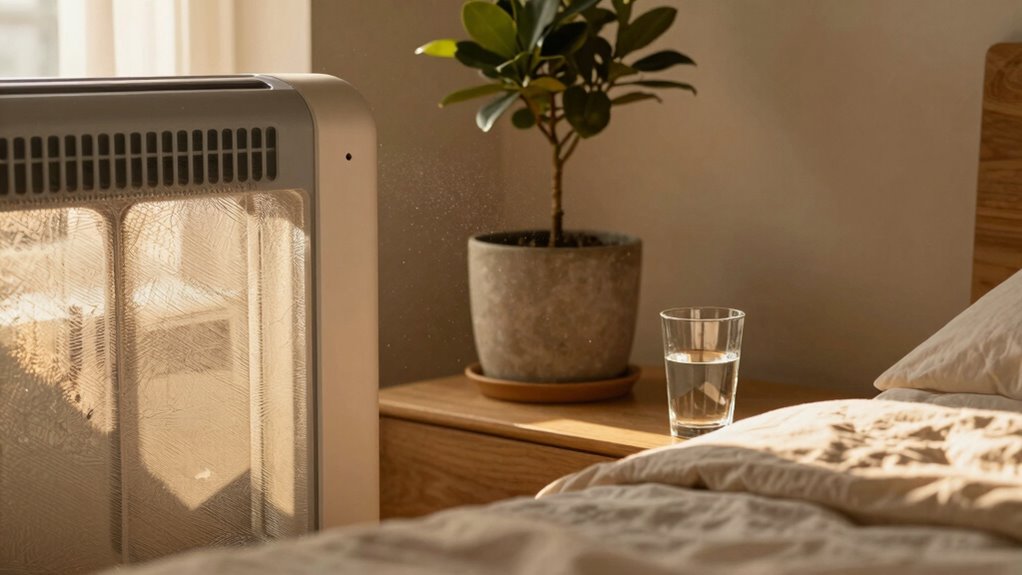
When you turn on a heater in your bedroom, it warms the air by generating heat through electrical or combustion processes. This process reduces the moisture in the air, making the room feel drier. Different heater types, like electric space heaters or oil-filled radiators, can vary in how much they dry out the air. Using humidifiers benefits your environment by adding moisture back in, counteracting the dryness caused by heaters. Without proper humidity, your skin, throat, and nasal passages can become irritated. The dry air also makes it harder to breathe comfortably and can lead to discomfort during sleep. Understanding how heaters dry out the air helps you take steps to maintain a healthier, more comfortable sleeping environment, especially by managing indoor humidity levels and considering humidification techniques. Being aware of the air quality in your bedroom can help prevent these issues and promote better sleep. Additionally, smart home devices can monitor and optimize humidity levels automatically to enhance comfort. Proper ventilation can also help regulate humidity and improve overall air quality in your space.

TempPro TP50 Digital Hygrometer Indoor Thermometer Room Thermometer
- Wellness Indicator: Displays air condition levels
- High Accuracy & Fast Updates: Measures with ±2-3%RH and ±1°F, updates every 10 seconds
- Record Tracking: Displays high and low temperature and humidity
As an affiliate, we earn on qualifying purchases.
As an affiliate, we earn on qualifying purchases.
How Does Dry Air Affect Your Sleep and Body?
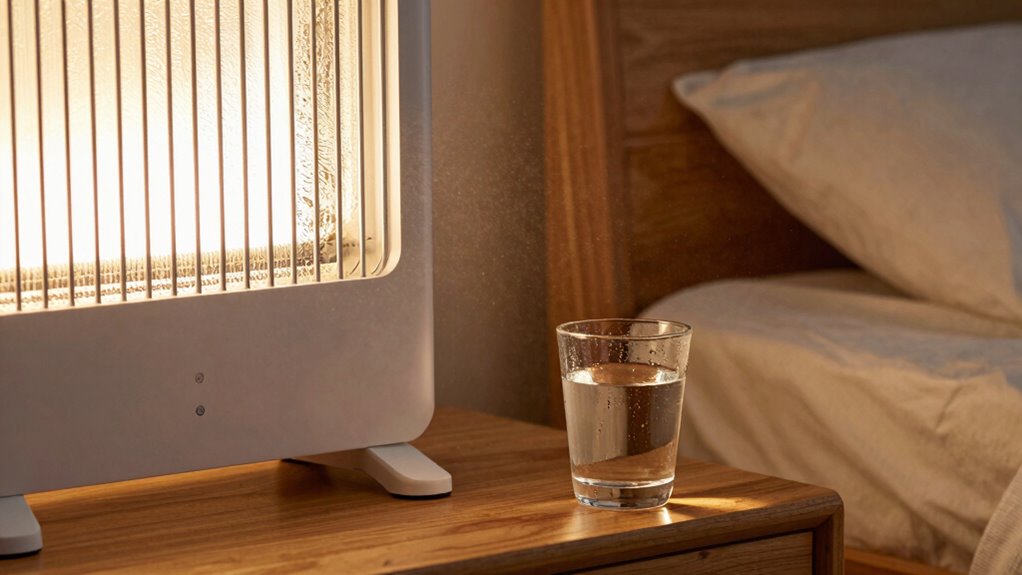
Dry air can remarkably disrupt your sleep and impact your overall well-being. When the air lacks humidity, your body struggles to stay hydrated, leading to dryness in your throat and nasal passages. This discomfort can cause you to wake up frequently or have trouble falling asleep, reducing your sleep quality. Humidification benefits become clear as adding moisture helps soothe irritated tissues, making breathing easier and promoting more restful sleep. Without proper humidity, your body also produces more stress hormones and experiences increased fatigue. Over time, dry air can weaken your immune system and leave you feeling drained. Maintaining proper humidity levels is essential for optimal health and comfort while sleeping, especially during dry seasons or in climate-controlled environments. Additionally, understanding the effects of dry air can help you take proactive steps to improve your sleep environment. Recognizing the importance of air moisture balance can further support your efforts to create a comfortable sleeping space.

Space Heaters for Indoor Use, Staholz Portable Space Heater with Humidifier/Ambient Light, Family-Safe Electric Heaters with Thermostat,12H Timer,70° Oscillation,Ultra-Quiet for Home Office(SL)
- Real-Time Temperature Display: LED digital display shows current temperature
- Smart Thermostat: Automatically adjusts to maintain comfort
- 1500W PTC Heating: Provides fast, even warmth
As an affiliate, we earn on qualifying purchases.
As an affiliate, we earn on qualifying purchases.
What Are the Signs Your Bedroom Is Too Dry?
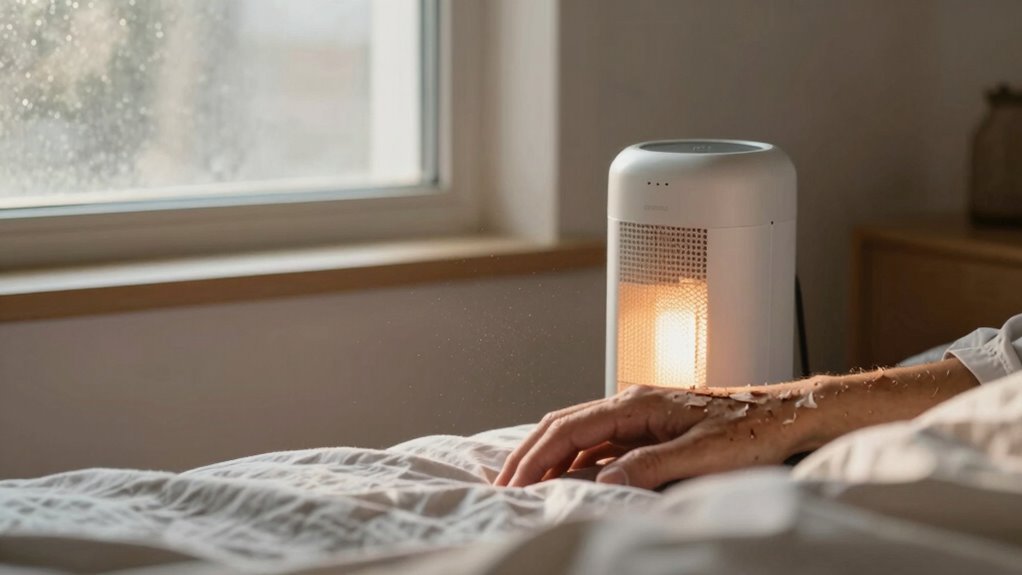
If your bedroom isn’t properly humidified, you might notice telltale signs that the air is too dry. One warning sign is bedroom mold, which can develop in areas with lingering moisture problems caused by dry air fluctuations. You may also see paint peeling or cracking on walls and ceilings, indicating that the environment is too dry and causing materials to contract. Additionally, you might experience frequent waking, dry skin, or persistent static electricity. These signs point to insufficient humidity levels, which can harm your comfort and home’s integrity. Proper humidity levels help maintain your home’s structural health and your personal comfort. To support a balanced environment, incorporating natural humidity sources like indoor plants can also be beneficial. Maintaining appropriate humidity can also prevent respiratory issues, ensuring a healthier sleep environment. Recognizing these signs early can help you take steps to adjust your humidification practices, creating a more comfortable and healthier bedroom environment. If you observe mold growth or peeling paint, it’s a clear signal that you need to increase humidity to create a healthier, more balanced sleeping environment. Being aware of indoor air quality can further help optimize your sleep space and overall health.

Afloia 1000ml/h Mist Free Humidifier and Air Purifier in One for Bedroom
- Mist-Free Comfort: No white dust or damp floors
- 4-Way Airflow: Ensures even humidity distribution
- All-in-One Air Care: Humidifies and purifies air
As an affiliate, we earn on qualifying purchases.
As an affiliate, we earn on qualifying purchases.
What Are Easy Ways to Add Humidity and Keep Hydrated?
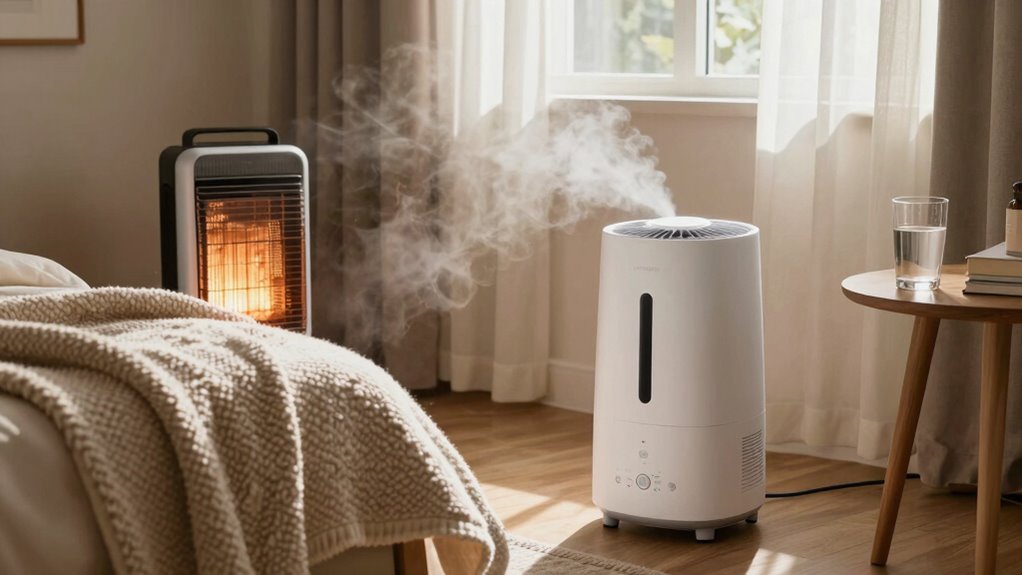
Looking for simple ways to boost humidity and stay hydrated? Using a humidifier is one of the easiest and most effective methods. It adds moisture to the air, making your environment more comfortable and reducing dryness that causes waking up thirsty. To stay well-hydrated, follow hydration tips like drinking water throughout the day, especially before bed. Keep a glass of water nearby to remind yourself to sip regularly. Incorporate moisture-rich foods into your diet, such as fruits and vegetables, to support hydration from the inside out. Wearing breathable clothing and adjusting your room temperature can also help maintain ideal humidity levels. Additionally, understanding the importance of a high-quality projector with good color accuracy can enhance your home viewing experience during cozy nights. These small changes make a big difference in preventing dehydration and improving your overall comfort during dry seasons. Proper air filtration can also ensure the humidity levels stay balanced and free from dust and allergens. Maintaining good air quality is essential for a healthier sleep environment and overall well-being. Regularly checking and adjusting your humidifier settings will help keep humidity levels optimal and prevent excess moisture that could lead to mold growth.
Why Maintaining Proper Humidity Benefits Your Health and Comfort Long-Term
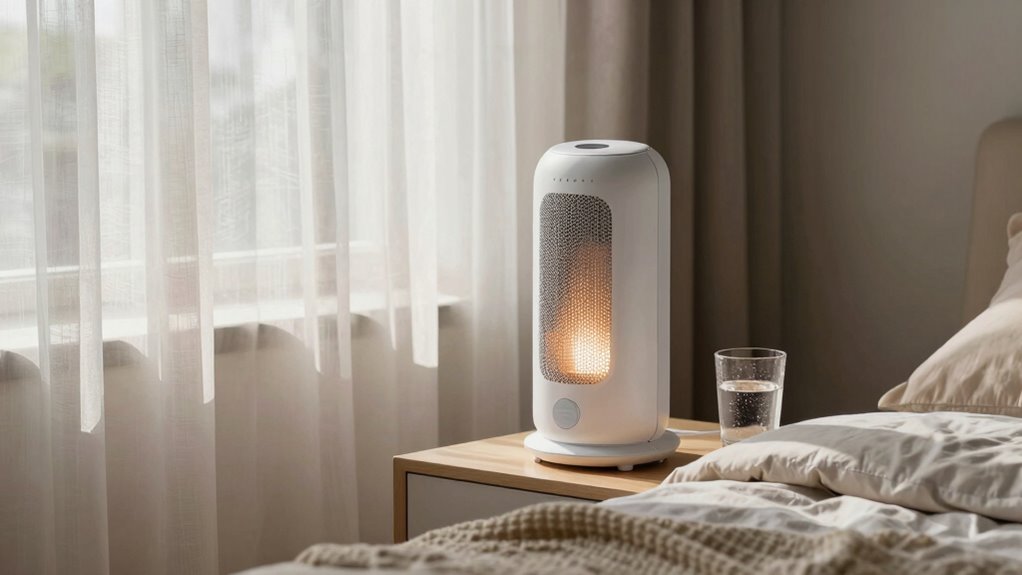
Maintaining proper humidity levels consistently benefits your health and comfort over the long term by supporting your respiratory system and preventing dryness-related issues. When humidity is balanced, your air quality improves, reducing irritants and airborne pathogens that can compromise your respiratory health. Proper humidity helps keep your nasal passages and throat moist, decreasing the risk of infections and irritation. It also minimizes static electricity and prevents dry, cracked skin. Over time, consistent humidity levels promote better sleep, boost your immune response, and reduce allergy symptoms. Additionally, using reliable humidity control tools can help optimize your indoor environment for long-term health benefits. Paying attention to indoor air quality ensures a healthier environment that enhances overall comfort. Maintaining optimal indoor humidity levels can also prevent mold growth and structural damage caused by excess moisture. Proper humidity levels are essential for preventing the growth of mold and bacteria, which can affect health and home integrity. By paying attention to your indoor air quality, you create a healthier environment that enhances overall comfort. Long-term, maintaining ideal humidity helps you breathe easier, stay healthier, and enjoy a more comfortable living space.
Frequently Asked Questions
Can Using Humidifiers Completely Prevent Waking up Thirsty?
Using a humidifier can considerably reduce your chances of waking up thirsty, but it won’t completely prevent it. Humidifier limitations, like uneven distribution or maintenance issues, mean it might not fully restore natural humidity levels in your room. While adding moisture helps, maintaining overall proper humidity and ensuring your environment mimics natural conditions are essential. So, a humidifier helps but isn’t a guaranteed solution on its own.
What Are the Best Types of Heaters to Maintain Optimal Humidity?
Choose oil-filled radiators or ceramic heaters, as they gently warm the air without drying it out. To maintain ideal humidity, ensure proper humidifier maintenance and place heaters away from vents and windows, allowing even heat distribution. This setup helps keep your room comfortable, reduces dryness, and minimizes waking up thirsty. You’ll enjoy a cozy, well-balanced environment that supports your sleep and overall well-being.
How Does Dry Air Impact Respiratory Health During Winter?
Dry air can seriously impact your respiratory health during winter by causing airway irritation, making it harder to breathe comfortably. It also increases your risk of respiratory infections since your mucous membranes dry out and lose their ability to trap germs effectively. You might notice a sore throat or cough more often. To protect yourself, keep humidity levels balanced and stay hydrated, reducing these risks and supporting your respiratory system.
Are There Specific Room Sizes That Require Different Humidity Levels?
Yes, room size affects the ideal humidity levels you should maintain. Larger rooms may need higher humidity to prevent dry air, while smaller spaces require less to avoid excessive moisture. You should aim for 30-50% humidity, adjusting based on your room’s size. Use a hygrometer to monitor levels and a humidifier or dehumidifier accordingly, ensuring your space stays comfortable and healthy without overdoing it.
What Are the Long-Term Effects of Consistently Dry Indoor Air?
Like a silent thief, consistently dry indoor air can steal your health over time. You might develop respiratory issues, such as sore throats or asthma flare-ups, and your skin may become dry and irritated. Low indoor humidity weakens your immune system and irritates mucous membranes, making you more vulnerable to infections. Long-term exposure can lead to chronic respiratory problems and discomfort, so maintaining balanced indoor humidity is vital for your well-being.
Conclusion
So, next time you wake up parched after a night with the heater cranking, remember: dry air isn’t just sneaky—it’s plotting against your comfort. Maybe it’s time to embrace a humidifier or just leave a bowl of water by the radiator. Because nothing screams “luxury sleep” like waking up refreshed, not dehydrated, and realizing your heater isn’t secretly a villain in your bedroom saga. Stay hydrated, sleep better, and keep that dry air at bay!
Flea & tick season Picks
flea and tick prevention
As an affiliate, we earn on qualifying purchases.