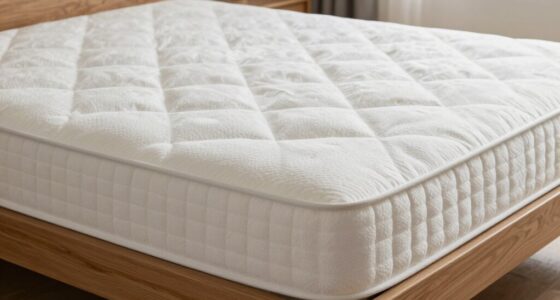
Mattress names like “Cloud Comfort” or “Night Serenity” are mainly designed to catch your eye and make products memorable, but they don’t reveal key details about firmness, support, or construction. These names are branding tools, not technical descriptions, so they can be misleading. What really matters are the materials and specs that determine how a mattress feels and supports your body. If you keep exploring, you’ll discover what truly helps you find the right mattress for your sleep needs.

Get home appliances delivered free with Prime
- Fast, free delivery on millions of items
- Prime Video, Amazon Music and more included
- Member-only deals all year
Key Takeaways
- Mattress names are primarily branding tools that aim to attract attention rather than provide detailed support or comfort information.
- Names like “Plush” or “Firm” are subjective and vary across brands, offering little consistency in support levels.
- Construction, materials, and firmness ratings are more reliable indicators of a mattress’s actual feel and support.
- Sleep position and bed frame compatibility influence comfort more than the product name.
- Making an informed choice requires reviewing technical specifications, not just relying on catchy names.
Have you ever wondered what those mattress names really mean? It’s tempting to think they reveal everything about the mattress’s comfort, firmness, or quality, but the truth is, most names are more about marketing than specifics. Manufacturers often assign catchy, memorable names to their products to help them stand out on the shelves, rather than to convey detailed information. This means that a “Cloud Comfort” or “Night Serenity” might sound appealing, but it doesn’t tell you whether the mattress suits your sleep needs or fits your bedroom style.
Mattress names are mainly marketing tools, not detailed descriptions of comfort or support.
When it comes to understanding what a mattress name really signifies, it’s essential to consider how those labels relate to your bed frame styles and sleep position preferences. For example, some brands use names that suggest softness or firmness, but these are often relative and not standardized across brands. A “Plush” mattress in one company might feel quite firm compared to a “Plush” from another. Similarly, a “Firm” label doesn’t necessarily mean you’ll get the same level of support if the construction or materials differ. So, don’t rely solely on the name—look at the specifications, materials, and firmness ratings to get a clearer picture.
Your sleep position preferences are also crucial here. If you’re a side sleeper, you might prefer a mattress with more cushioning to alleviate pressure points, even if it’s called something like “Luxury Soft.” Conversely, if you sleep on your back or stomach, you might need a firmer mattress—regardless of its name. The construction and materials used in mattresses can significantly influence comfort and support, making it important to review these details rather than just the labels. The name alone won’t tell you whether a mattress supports your preferred sleep position or aligns with your bed frame style, whether that’s a platform bed, adjustable frame, or traditional box spring.
In the end, mattress names are more about branding than detailed descriptions. To find the right fit, don’t get swayed by a catchy name alone. Instead, focus on the mattress’s construction, firmness level, and how well it matches your sleep position and bed frame style. Reading reviews, trying out mattresses in stores, and understanding the materials used will give you a much clearer idea of what you’re actually buying—beyond just the name. Remember, a name is just a name; what matters most is how the mattress supports your sleep. Additionally, understanding mattress construction and materials can help you make a more informed decision.
As an affiliate, we earn on qualifying purchases.
Frequently Asked Questions
Do Mattress Names Reflect Actual Comfort Levels or Just Marketing?
Mattress names often lean more on marketing than actual comfort levels. You might assume a name promises a certain feel, but brand reputation and consumer perceptions show that comfort varies widely. Don’t rely solely on the name; instead, read reviews and test the mattress yourself. Names can be catchy, but real comfort depends on your personal preferences and the mattress’s construction. Trust your experience over marketing hype.
Are Higher-Priced Mattresses Always Better Regardless of Their Names?
Higher-priced mattresses aren’t always better, even with advanced sleep technology. They often rely on branding strategies to justify the cost, but comfort varies by individual. You should focus on mattress features, like support and materials, rather than just price or name. Research different options, test them if possible, and consider your sleep needs. A more affordable mattress with good sleep technology might serve you better than a pricier, well-branded one.
How Do Mattress Brands Choose Their Naming Conventions?
Mattress brands choose their naming conventions based on brand reputation and aiming for naming consistency. They want recognizable, memorable names that reflect quality and differentiate their products. Often, they use a pattern or theme to create a cohesive lineup. You’ll notice that consistent naming helps build trust and makes it easier for you to compare different models, but it doesn’t always reveal the actual features or comfort level of each mattress.
Can a Mattress’s Name Influence My Purchasing Decision Unfairly?
A mattress’s name can be like a siren song, tempting you to buy based on perception rather than facts. It can unfairly influence your decision, especially if the brand’s reputation and customer reviews are strong, but the mattress itself doesn’t meet your needs. Always look beyond the name, reading reviews and researching specifications, so you make an informed choice rather than falling for a catchy label.
Do Mattress Names Change Over Time to Hide Product Updates?
Yes, mattress names can change over time to hide product updates, often driven by brand reputation and marketing strategies. Manufacturers might rebrand or rename mattresses to make outdated models appear new or improved, avoiding direct comparisons. This tactic helps preserve sales and maintains a fresh image, but it can be confusing for you. Always check the mattress’s specifications and reviews instead of relying solely on the name to understand what you’re buying.
best support mattresses for side sleepers
As an affiliate, we earn on qualifying purchases.
As an affiliate, we earn on qualifying purchases.
Conclusion
So next time you see a fancy mattress name, ask yourself—does the label really tell the whole story? Don’t be fooled by clever branding or catchy titles; what matters most is how the mattress feels and fits your needs. After all, isn’t it worth digging a little deeper to find true comfort rather than relying on a name that might just be a marketing ploy? Your perfect sleep shouldn’t be a mystery—seek out what truly works for you.
As an affiliate, we earn on qualifying purchases.
As an affiliate, we earn on qualifying purchases.
Halloween Picks
halloween
As an affiliate, we earn on qualifying purchases.