TL;DR

Get home appliances delivered free with Prime
- Fast, free delivery on millions of items
- Prime Video, Amazon Music and more included
- Member-only deals all year
Apple and Amazon have introduced smart displays that a hands-on report says could work as shared household screens for calendars, smart-home controls and other family information. The $299 HomeView and $499.99 Echo Show 16 bring stronger hardware and different approaches to shared use, but their everyday performance has not yet been fully tested.
Apple’s $299 HomeView and Amazon’s $499.99 Echo Show 16 have launched with upgraded hardware and software aimed at making smart displays useful as shared household screens. In a brief hands-on report, The Verge’s reviewer said the devices could serve as a kind of family computer for calendars, smart-home controls and everyday coordination, though their performance still needs fuller testing.
The new devices address a longstanding weakness in smart displays: many earlier models paired a touchscreen with a speaker but had limited hardware and software. The Verge report says Apple’s HomeView uses an A18 chip, also used in the MacBook Neo, and a Liquid Retina display. Amazon’s Echo Show 16 has a MediaTek processor and the Nanomatte display used in its new Alexa Tablet.
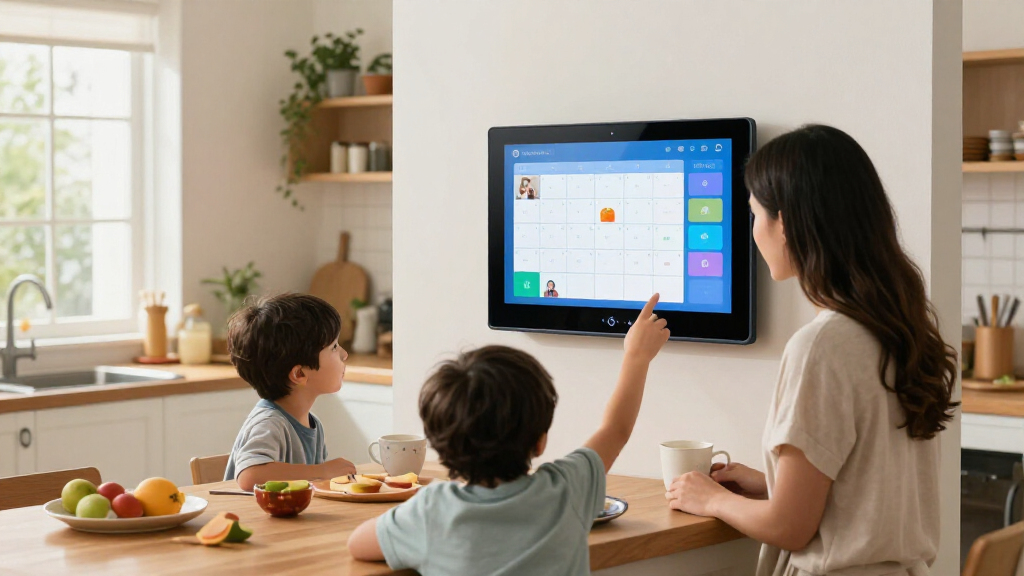
The proposed role is not to replace a laptop for homework or bill payments. Instead, the screens are intended to give a household a shared place to check a calendar, meal plans and household information, as well as manage connected devices. The report describes the Echo Show 16 as offering a more tablet-like interface, including calendar and smart-home dashboard options, and a meal-planning feature on its Family Management homescreen.
The products take different approaches to household use. Amazon’s screen is designed to function as a standalone household device and can be set up without a phone, although a phone may help. HomeView is more closely tied to the iPhone: some apps rely on a connected phone, and the report says certain features appear to depend on facial recognition and the phone being nearby. Those distinctions may shape who can use each screen and what information it can show.
A shared display could help move routine household information out of one person’s phone and make it available to everyone at home. The report describes families juggling calendars, grocery lists, meal plans and chores across personal devices, while connected-home tasks such as checking a door camera or adjusting a thermostat add another layer.
The value will depend on whether these screens are easy for multiple people to use and remain in a common space. The reviewer highlights an always-on display that can respond to a tap or voice command without requiring a PIN or dismissing a screensaver. That design could make a wall-mounted or centrally placed screen more convenient than a tablet that is carried away or left without charge. Still, the report is an early assessment, not evidence that either product has solved these problems for households generally.
Price is a significant trade-off. The HomeView costs $299, while the Echo Show 16 costs $499.99. The report contrasts those prices with the $85 Echo Show 5 and $99 Nest Hub in 2023. The newer models offer a different set of capabilities, but buyers will need to decide whether those additions justify paying substantially more for a household screen.
Products Worth Considering

Samsung 85-Inch QN70H Neo QLED 4K Smart TV (2026)

TCL QM64L 85-Inch QD-Mini LED 4K Smart Fire TV

Sony BRAVIA 5 85-Inch Mini LED 4K HDR Smart TV (K-85XR50)
As an affiliate, we earn on qualifying purchases.
From Smart Displays to Home Hubs
The Verge reviewer says they wrote an obituary for the smart-display category three years ago, describing devices that tried to do too much while performing too little well. That earlier assessment also set out improvements the category needed: stronger hardware, shared-use features and an always-available screen. The reviewer says the HomeView and Echo Show 16 appear to address those points, based on brief hands-on time.
The push for a central household screen is not new. The report points to the popularity of products such as the Skylight Calendar as evidence of interest in a communal display. It also recounts the reviewer’s experience with Google’s Pixel Tablet, which combined a tablet and smart display but had detachable-screen and smart-home limitations in their household. Google reportedly canceled a successor about 18 months later; that history is relevant to the category’s challenges, but does not establish how the new Apple and Amazon devices will perform.
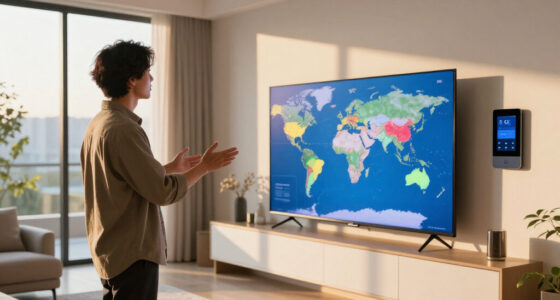
The companies’ product strategies reflect their broader ecosystems. Apple’s HomeView emphasizes personal information tied to the iPhone, while Amazon’s Echo Show 16 is presented as a device centered on the home and its connected products. The report says Amazon’s Omnisense technology can sense presence, temperature and room acoustics. A demonstration showed a person approaching a driveway represented on a home map, with a tap opening a live view through a Ring camera.
“These could finally turn the smart display into what it should have been all along: the family computer.”
— The Verge reviewer
Everyday Performance Still Untested
The central uncertainty is whether the devices will work as reliably and simply in daily household use as they appeared in brief demonstrations. The reviewer says proper testing is still needed; the report does not provide long-term results for multiuser access, responsiveness, software reliability or how often families would use the screens.
It is also not yet clear how much HomeView can do when an iPhone is absent, or how its features behave for household members who are not recognized by the device. On Amazon’s side, the report describes demonstrations of Omnisense and Ring integration, but does not establish how those functions perform across different homes or what setup and privacy controls are available. The source material does not provide details on broader availability, sales or customer response.
Full Reviews Will Test the Promise
The next useful test is extended use in real households. Reviews can establish whether the always-on interfaces remain easy to use, whether multiple people can access relevant information, and whether the smart-home features work consistently beyond demonstrations. They can also clarify how much each device depends on a phone, account or compatible connected-home equipment.
Until those tests are available, the confirmed development is that Apple and Amazon have launched higher-priced smart displays with hardware and features aimed at shared household use. Whether either becomes a dependable family hub worth its price remains an open question.
Key Questions
What is the HomeView?
HomeView is Apple’s $299 smart display. The Verge report says it has an A18 chip and Liquid Retina display, and that it is designed to work closely with an iPhone.
What is different about the Echo Show 16?
Amazon’s $499.99 Echo Show 16 is described as a rebuilt smart display with a MediaTek processor, a Nanomatte display, calendar and smart-home dashboard options, and a meal-planning feature. It can be set up without a phone, according to the report.
Are these devices replacements for a family laptop?
No. The report uses “family computer” to mean a shared household screen for routine information and smart-home controls, not a device for homework or paying bills.
Have the devices been fully tested?
No. The report is based on brief hands-on time and says the reviewer still needs to test the products properly. Their performance in everyday household use remains uncertain.
Source: theverge.com