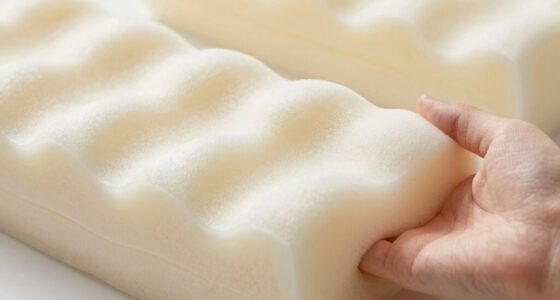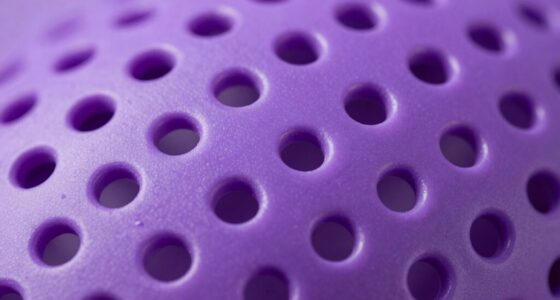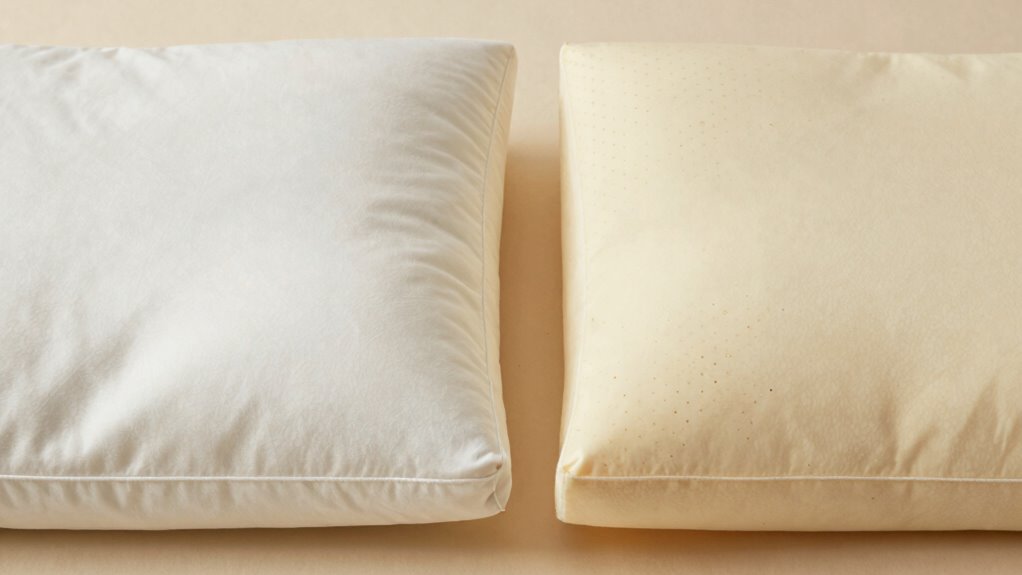
When choosing between memory foam and latex pillows, consider how they feel, support, and heat regulation. Memory foam contours to your head and neck, offering plush, personalized support but tends to trap heat. Latex provides a resilient, bouncy feel and stays cooler naturally. If you want to learn which pillow suits your sleep style and preferences better, exploring these differences can help you make an informed decision.
Key Takeaways
- Memory foam molds to the head and neck, offering a plush, contouring feel, while latex provides quick, resilient support with a springy sensation.
- Memory foam tends to retain heat, whereas latex pillows naturally promote better airflow and cooling due to their ventilated structure.
- Memory foam offers customizable firmness levels and pressure relief, with a support lifespan of around 3-4 years; latex is more durable, lasting 6-8 years.
- Latex pillows are naturally hypoallergenic and antimicrobial, making them suitable for allergy sufferers, while memory foam resists dust mites and mold.
- Proper maintenance, including airing and using protective covers, extends the lifespan and maintains the comfort and support of both pillow types.
What Are Memory Foam and Latex Pillows?
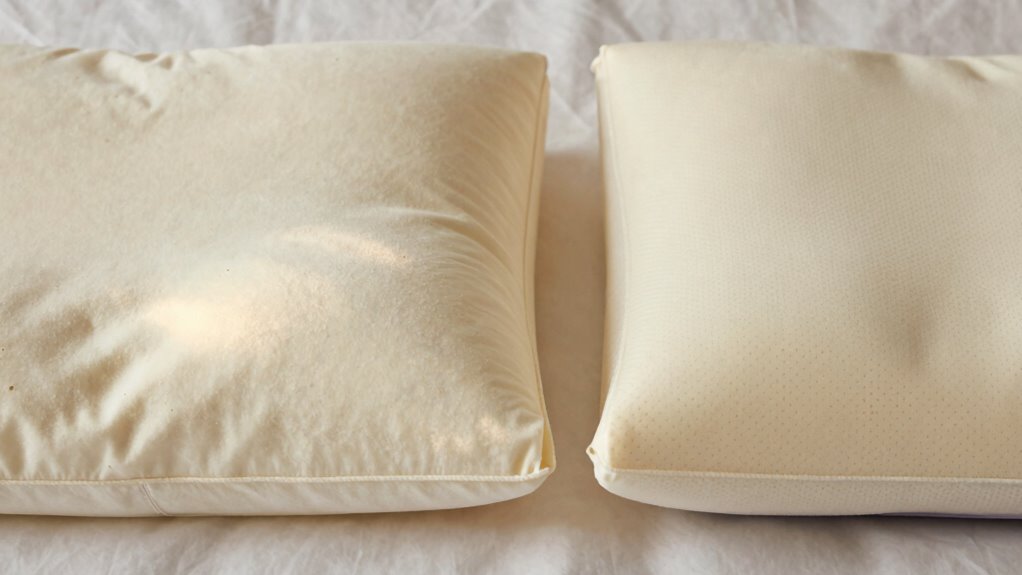
Memory foam pillows are made from a dense, viscoelastic material that molds to the shape of your head and neck, providing personalized support. The pillow material responds to heat and pressure, allowing it to contour closely to your sleep posture. This helps align your spine and reduces pressure points, making it ideal for those who prefer a supportive, cradle-like feel. Memory foam’s unique properties enable it to absorb movement, so it remains stable even if you shift during the night. Latex pillows, on the other hand, are crafted from natural or synthetic latex, offering a resilient and bouncy feel. They also conform to your sleep posture but tend to be more responsive and springy than memory foam. Understanding these pillow materials helps you choose the best support for your sleep needs.
How Do Memory Foam and Latex Pillows Feel and Comfort You?
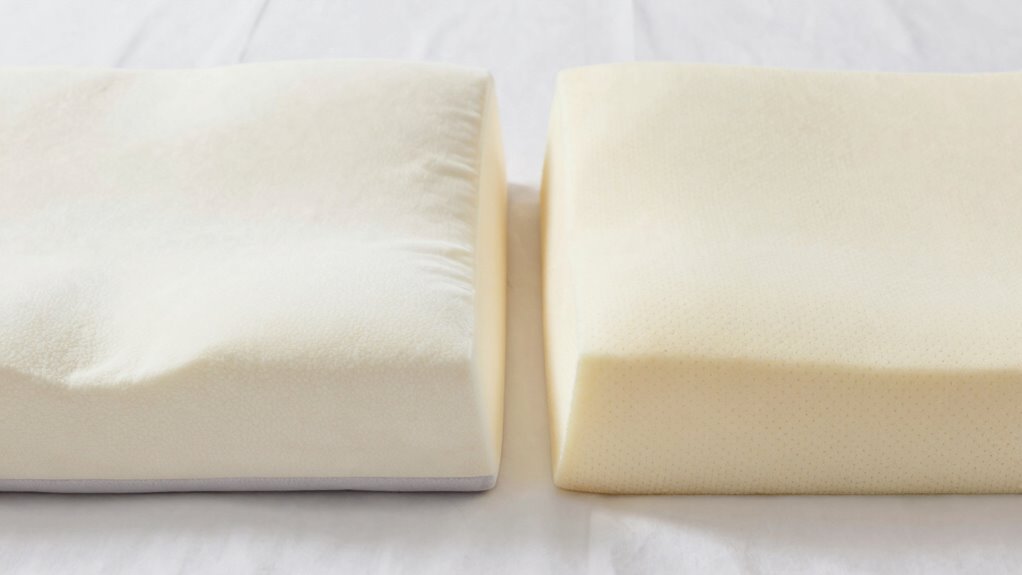
When you lie on these pillows, you’ll notice how they contour to your head and neck, offering pressure relief and personalized support. Their responsiveness varies, so you can find a pillow that adjusts to your movements or stays firm for consistent comfort. Plus, you can choose from different softness and firmness levels to match your sleeping preference. Additionally, the Free Floating property of certain materials allows the pillows to adapt more naturally to your shape, enhancing comfort throughout the night. Understanding the material properties helps in selecting the right pillow for optimal support and comfort. Moreover, European cloud innovation contributes to the development of advanced materials that improve pillow performance and sustainability.
Pressure Relief and Contouring
Both memory foam and latex pillows are designed to provide targeted pressure relief and support, but they do so in different ways. Your firmness preferences and pillow shape play a key role in how well each pillow contours to your head and neck. Memory foam molds closely to your curves, offering excellent pressure relief by evenly distributing weight. It responds gradually, creating a cradling sensation that supports your natural contours. Latex pillows, on the other hand, tend to be more resilient and maintain their shape better over time. They offer a supportive feel without sinking too deeply, making them suitable for those who prefer a firmer pillow with consistent contouring. Your choice depends on whether you desire immediate, deep contouring or a more resilient, supportive feel that maintains its shape. pressure relief is a key benefit of both types, but the way each pillow achieves it differs, impacting overall comfort. Additionally, pillow responsiveness influences how quickly each material adapts to your movements and pressure changes throughout the night.
Responsiveness and Adjustability
While memory foam molds slowly to your shape, latex pillows respond quickly, offering a different feel. This difference impacts responsiveness and how easily you can customize firmness. With memory foam, you get a slow response, which can feel more supportive but less adjustable on the fly. Latex, on the other hand, offers high responsiveness, bouncing back immediately, making it easier to adjust your position. Here’s what to contemplate:
- Firmness customization: Latex allows quick adjustments, while memory foam provides a more stable, molded feel.
- Responsiveness comparison: Latex responds swiftly to movement, whereas memory foam reacts more gradually.
- Suitability: Choose latex if you want rapid responsiveness; opt for memory foam if you prefer a slow, contouring response.
- Both materials offer different levels of adjustability to suit your sleeping preferences, with latex generally providing greater responsiveness due to its quick rebound. Additionally, material properties play a significant role in how each pillow performs over time and under varying conditions, affecting their long-term durability.
Softness and Firmness Levels
Memory foam pillows tend to feel plush and contour closely to your head and neck, providing a soft, enveloping sensation. They typically offer a range of firmness options, from soft to firm, allowing you to choose based on your preferred softness spectrum. Softer memory foam pillows give a gentle, cradling feel, ideal for those who prefer a plush touch, while firmer options provide more support and stability for side or back sleepers. The density of memory foam also affects how supportive and resilient the pillow feels, with higher-density foams offering more durability. Additionally, the pressure relief properties of memory foam help distribute weight evenly, reducing pressure points during sleep. Memory foam’s ability to conform precisely to your body is enhanced by its viscoelastic nature, which responds slowly to pressure and heat. Latex pillows, on the other hand, generally feel more resilient and springy, with a natural firmness that resists sinking too much. They often come in medium to firm levels, appealing to sleepers seeking a balance between softness and support. Understanding these firmness options helps you select a pillow that feels comfortable and suits your sleep style. Additionally, the high smoke point of latex makes it suitable for various home uses beyond pillows, such as baking or frying, and this resilience is partly due to its natural elasticity, which contributes to its supportive qualities.
Which Material Provides Better Support and Pressure Relief?
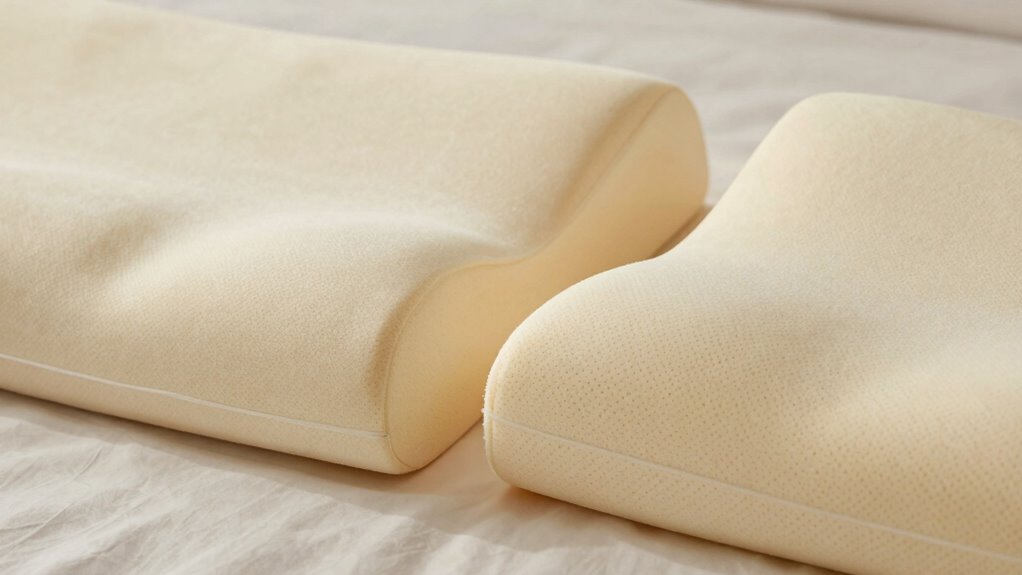
When it comes to support and pressure relief, latex pillows generally offer a more resilient and responsive feel, conforming closely to your head and neck without sacrificing stability. In a support comparison, latex provides better support by quickly reacting to your movements. For pressure distribution, latex evenly spreads pressure across your pillow surface, reducing stress points. Consider these benefits:
- Support consistency: Latex maintains its shape, offering stable support throughout the night.
- Responsive feel: It reacts instantly to your movements, keeping your head aligned.
- Pressure relief: Latex cushions pressure points, helping prevent discomfort and aches. Its natural elasticity enhances pressure distribution, making it a popular choice for those seeking ergonomic sleep support. Additionally, latex’s natural resilience helps it recover shape quickly after compression, ensuring long-term comfort.
- To further enhance comfort, latex pillows often feature ventilation features that promote airflow, helping to keep you cool during sleep. Latex pillows are also praised for their durability and long-lasting performance, making them a worthwhile investment for better sleep quality.
How Do Memory Foam and Latex Pillows Handle Heat and Stay Cool?
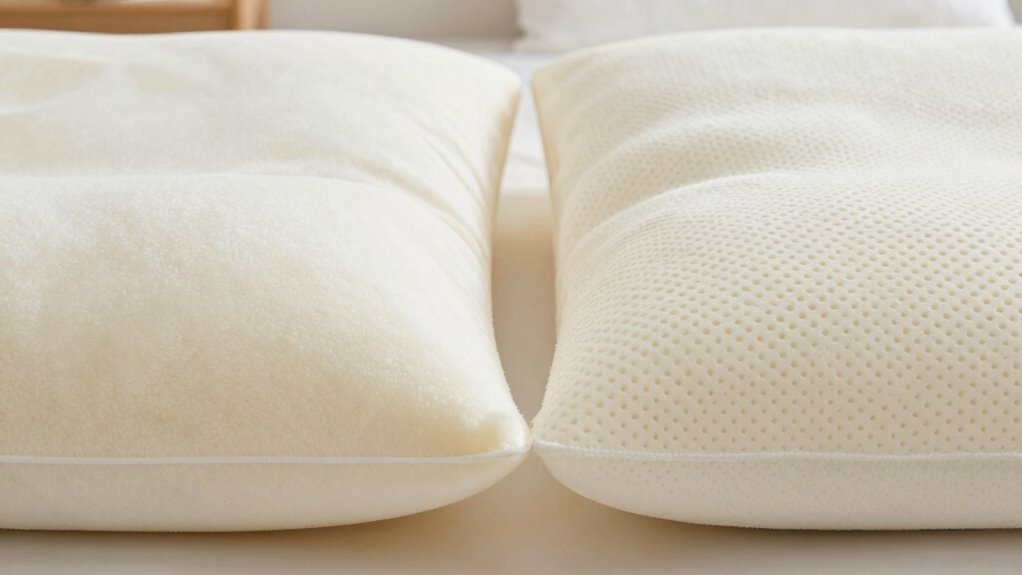
Heat management is a key factor to contemplate when choosing a pillow, as it directly affects your comfort throughout the night. Memory foam tends to trap heat due to limited breathability, which can cause discomfort. Some memory foam pillows incorporate cooling technology like gel infusions or open-cell structures to improve airflow. Additionally, consistent feedback from users indicates that selecting a pillow with enhanced cooling features can significantly improve sleep quality. Incorporating advanced cooling methods into pillow design can further optimize heat regulation. Latex pillows naturally offer better breathability because of their porous structure, helping you stay cool. Here’s a comparison:
| Feature | Memory Foam | Latex |
|---|---|---|
| Breathability | Often limited, improved with cooling tech | Excellent, porous and ventilated |
| Cooling Technology | Gel infusions, open-cell design | Naturally cooling, breathable |
| Heat Retention | High without enhancements | Low, stays cooler naturally |
| Overall Comfort | Can vary based on cooling features | Consistently cooler, breathable |
Understanding heat retention in different materials can help you select a pillow that keeps you comfortable all night. Additionally, considering ventilation methods in pillow design can further enhance airflow and cooling. Incorporating moisture-wicking fabrics and ensuring proper pillow maintenance can also contribute to better heat dissipation.
How Long Do Memory Foam and Latex Pillows Last?
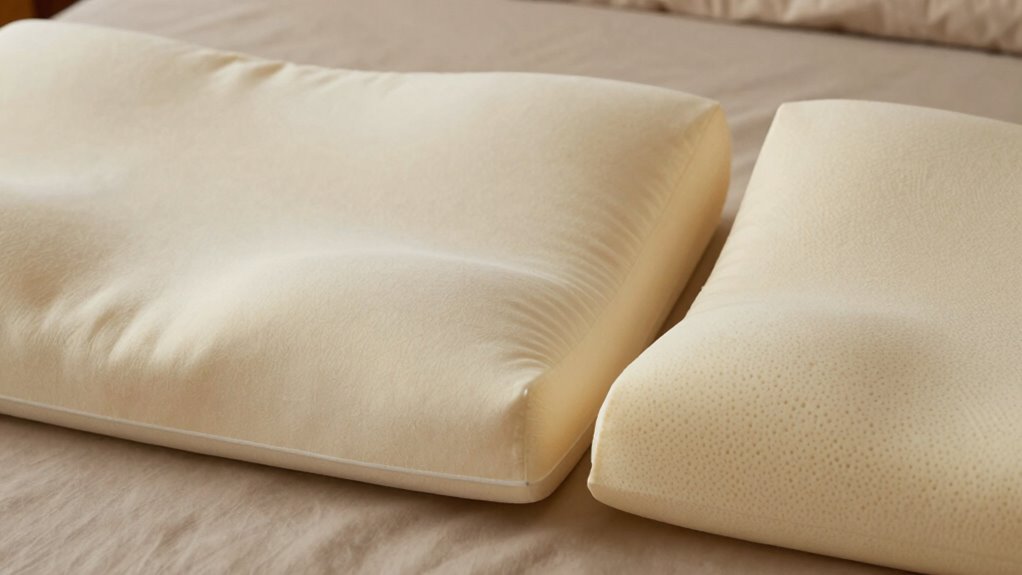
Memory foam and latex pillows have different lifespans based on their materials and how they’re cared for. Durability factors like material quality, usage, and maintenance influence how long they last. Generally, memory foam pillows last around 3 to 4 years, while latex pillows tend to endure 6 to 8 years. To maximize their lifespan estimates, you should:
- Use a pillow protector to prevent stains and dust buildup.
- Rotate and fluff the pillow regularly to maintain shape and support.
- Follow manufacturer cleaning instructions to avoid damage.
While memory foam pillows may soften or develop indentations sooner, latex pillows retain their resilience longer. Proper care can extend their usability, ensuring you get the most out of your investment.
Are Memory Foam and Latex Pillows Hypoallergenic?
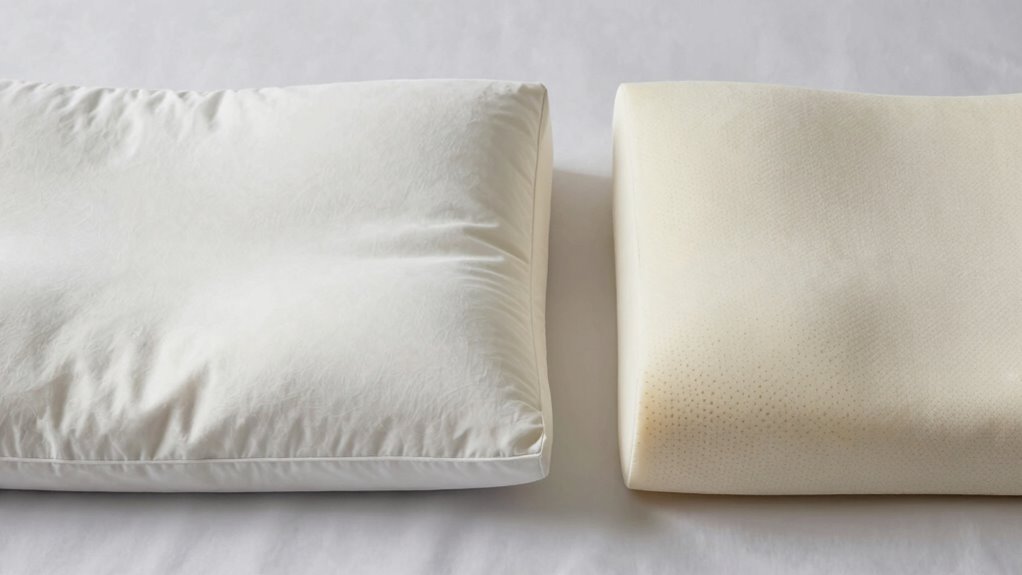
Both memory foam and latex pillows are often marketed as hypoallergenic options, but their suitability depends on your sensitivities. Memory foam generally offers hypoallergenic benefits because its dense structure resists dust mites and mold growth, providing allergen resistance. Latex pillows naturally contain antimicrobial properties, which help reduce allergens and prevent bacterial buildup. However, some people may be allergic to latex proteins themselves, so it is crucial to check specific product labels if you have latex sensitivities. Overall, both pillow types can support allergen resistance and contribute to a cleaner sleeping environment. If you suffer from allergies or asthma, choosing hypoallergenic pillows like these may help minimize triggers and improve sleep quality. Always consider your individual sensitivities before making a decision.
How Do You Keep Memory Foam and Latex Pillows Clean and Well-Maintained?
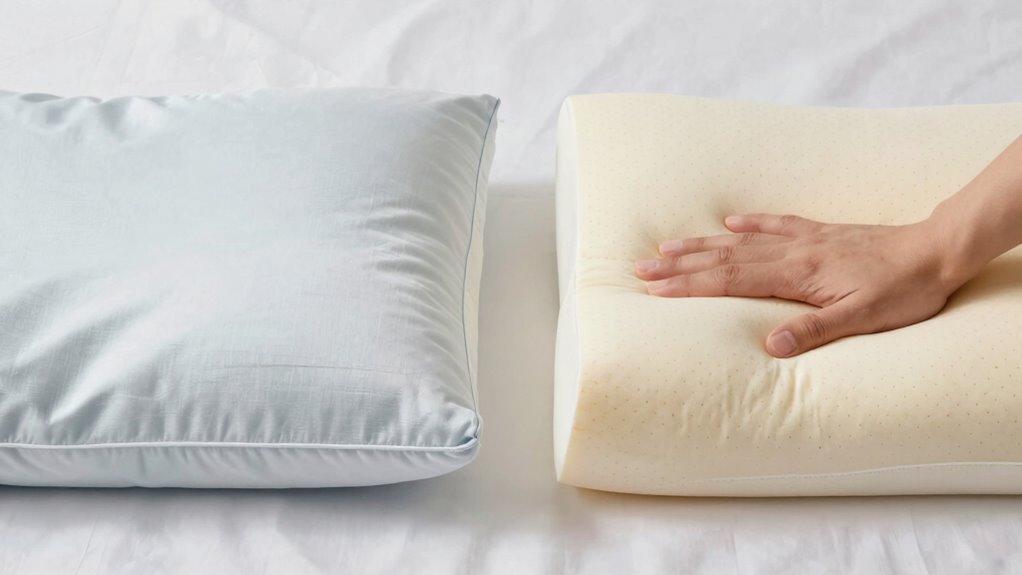
To keep your memory foam and latex pillows in good shape, you should regularly air them out to reduce moisture and odors. Using protective covers helps prevent stains and extends their lifespan, while spot cleaning and deep cleaning keep them fresh and hygienic. Following these simple steps guarantees your pillows stay comfortable and well-maintained over time.
Regularly Air Out Pillows
Regularly airing out your pillows is an effective way to keep them fresh and extend their lifespan. It helps address breathability issues and improves pillow maintenance. To do this effectively:
- Remove your pillow from the case and place it in a well-ventilated area.
- Let it sit uncovered for several hours, ideally in sunlight, which also helps eliminate odors.
- Flip and rotate the pillow to ensure even airing on all sides.
This routine reduces moisture buildup and prevents mold or bacteria growth, vital for maintaining hygiene and comfort. Memory foam and latex pillows benefit from this simple maintenance, as it keeps them dry and reduces heat retention. Regular airing out is a quick, natural way to keep your pillows fresh and supportive.
Use Protective Covers Frequently
Using protective covers is one of the most effective ways to keep your memory foam and latex pillows clean and well-maintained. Protective covers act as a barrier against sweat, oils, dust mites, and allergens, helping preserve pillow hygiene. They also prevent stains and reduce wear, extending your pillow’s lifespan. Choose breathable, washable covers that fit snugly to avoid shifting during sleep. Regularly washing and replacing these covers guarantees ongoing cleanliness and reduces the buildup of dirt. Keep in mind, protective covers should be used in addition to regular pillow maintenance routines. By consistently using protective covers, you make it easier to maintain a hygienic sleeping environment and keep your pillows fresh and supportive for years to come.
Spot Clean and Deep Clean
Protective covers help maintain your pillows’ cleanliness day to day, but occasional spot cleaning and deep cleaning are necessary to remove dirt, stains, and allergens. To keep your memory foam or latex pillow in top shape and preserve pillow firmness, follow these steps:
- Spot Clean: Use a mild detergent and a damp cloth to gently clean stains or spots. Avoid soaking the pillow to prevent damage.
- Deep Clean Memory Foam: Lightly sprinkle baking soda over the surface, let it sit for hours, then vacuum it off. For latex, spot clean with a damp cloth and mild soap.
- Air Out: Regularly air your pillows in a well-ventilated space, especially if you sleep in different positions, to reduce odors and maintain support.
Which Pillow Is Right for You: Memory Foam or Latex?
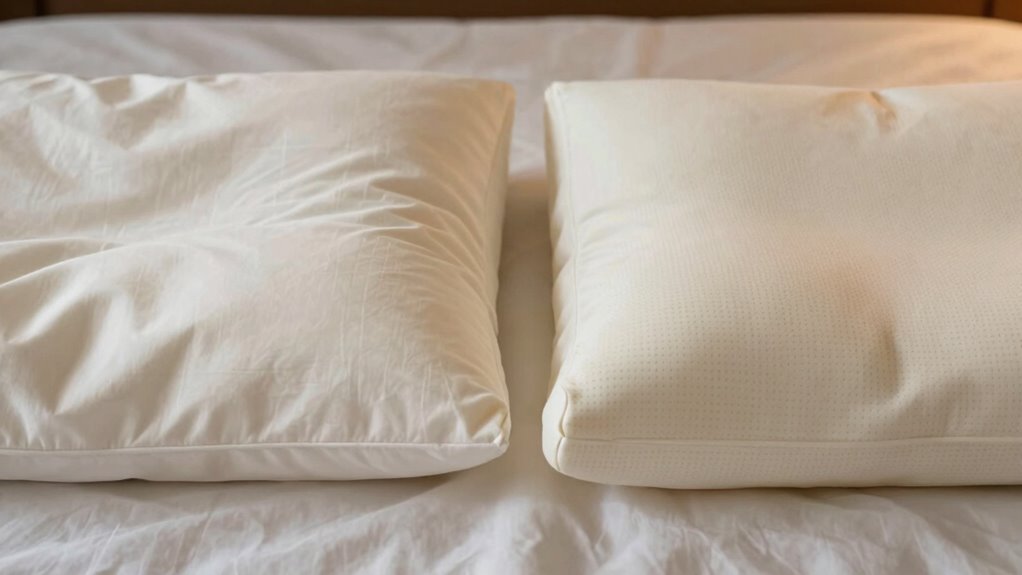
Choosing between a memory foam and a latex pillow depends on your personal preferences and sleep needs. Consider pillow firmness: memory foam tends to be softer and contours closely to your head and neck, providing excellent support for side and back sleepers. Latex pillows usually offer a firmer, more resilient feel, making them ideal if you prefer more support or tend to sleep on your stomach. If you switch positions frequently, latex’s responsiveness can help keep your alignment consistent. Memory foam’s slow response might feel too soft for stomach sleepers, while latex’s bounce can prevent you from sinking too deep. Ultimately, your choice hinges on your preferred firmness level and sleeping position, ensuring you get the support and comfort necessary for restful sleep.
Frequently Asked Questions
Are Memory Foam and Latex Pillows Suitable for Side Sleepers?
Yes, memory foam and latex pillows are suitable for side sleepers. They offer excellent side sleeper comfort by contouring to your head and neck, providing proper support and alignment. Memory foam molds to your shape, reducing pressure points, while latex offers a resilient, supportive feel. Both help maintain pillow contouring throughout the night, ensuring you stay comfortable and well-supported in your side sleeping position.
How Do Price Differences Impact Pillow Durability?
Higher-priced pillows often offer better durability because their material costs and quality standards promote longer longevity. When you invest more, you’re typically getting superior materials that resist sagging and wear over time. Cheaper options may save you money initially but tend to degrade faster, requiring replacement sooner. So, consider the balance between price and durability to guarantee your pillow maintains support and comfort for years to come.
Can Latex Pillows Cause Allergic Reactions in Some Users?
While latex pillows offer great support, they can cause allergic reactions in some users with latex allergies. If you have a latex allergy, you might experience symptoms like itching, swelling, or breathing issues. It is crucial to check labels for hypoallergenic or natural latex options, and consider alternatives like memory foam if you’re prone to allergic reactions. Being aware helps you choose a pillow that keeps you comfortable without risking allergic responses.
Do Memory Foam Pillows Emit Chemical Odors?
Yes, memory foam pillows can emit chemical odors due to off-gassing from the manufacturing process. You might notice a strong smell initially, but it typically diminishes over time. To speed up odor elimination, guarantee good ventilation in your bedroom and let the pillow air out before use. Using a pillow protector can also help reduce exposure to any lingering chemical off-gassing.
Are There Eco-Friendly Options for Both Pillow Types?
You can choose eco-friendly options for both pillow types. Look for pillows made from sustainable materials like organic latex or recycled memory foam. Brands committed to eco-conscious manufacturing prioritize reducing chemical use and minimizing environmental impact. These environmentally responsible choices offer sustainable support and promote healthier sleep, helping you sleep soundly while caring for the planet. Always check labels for certifications like GOLS or OEKO-TEX to guarantee eco-credentials.
Conclusion
Choosing between memory foam and latex pillows comes down to your comfort preferences and needs. If you want a pillow that offers a cloud-like feel and excellent support, memory foam might be your pick. For a cooler, more natural feel, latex could be better. Remember, even in this modern age, the right pillow can turn your sleep from a mere snooze to a true good night’s rest—no need to revisit the days of sleeping on hay!