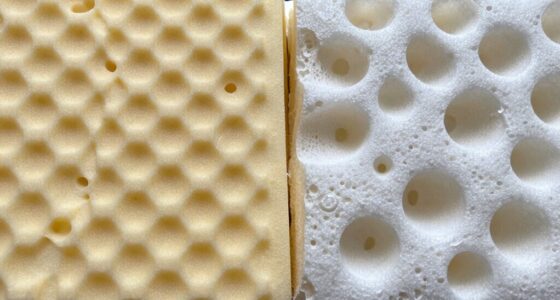
Perforated latex feels softer and more flexible because the holes reduce material density, making it easier to bend and stretch. These holes also improve airflow by creating channels that allow heat and moisture to escape, helping keep you cool and dry. Additionally, perforations evenly disperse pressure, enhancing support and comfort. If you’re curious about how design choices affect performance, there’s more to discover about perforation patterns and benefits.

Get home appliances delivered free with Prime
- Fast, free delivery on millions of items
- Prime Video, Amazon Music and more included
- Member-only deals all year
Key Takeaways
- Holes in perforated latex increase flexibility and softness, making the material more adaptable and comfortable.
- Perforations distribute pressure evenly, reducing localized stress and enhancing overall support.
- The holes create pathways for improved airflow, promoting breathability and temperature regulation.
- Perforated latex facilitates moisture evaporation, helping to keep surfaces dry and comfortable.
- The pattern and size of holes influence both the feel and ventilation, balancing durability with enhanced airflow.
As an affiliate, we earn on qualifying purchases.
What Is Perforated Latex and How Is It Made?

Perforated latex is a type of latex material that features small, evenly spaced holes throughout its surface. Its latex composition consists of natural or synthetic latex blended with other materials to achieve desired properties. The manufacturing process begins with creating a latex mixture, which is then poured into molds or spread onto surfaces. To produce perforations, manufacturers typically use precise cutting or molding techniques, ensuring the holes are evenly spaced and uniform. These perforations are embedded during the curing process, so they become an integral part of the latex sheet. This process allows for consistent quality and durability. The result is a specialized latex product designed for enhanced airflow and specific tactile qualities, setting perforated latex apart from solid sheets. Perforation techniques are crucial for maintaining the structural integrity and functional benefits of perforated latex. Additionally, material selection influences the flexibility and longevity of the final product, while Manufacturing precision ensures the perforations are consistent and reliable, which is essential for product performance. A key factor in achieving optimal performance is controlling the perforation size and pattern, which directly impacts airflow and feel.
As an affiliate, we earn on qualifying purchases.
How Do Perforations Change the Feel of Latex?

Perforations make latex softer and more flexible, so it feels less stiff and more responsive to your movements. They also change how pressure is distributed across the surface, offering a different sensation during use. These adjustments can make the latex feel more comfortable and tailored to your preferences. Additionally, perforations can improve airflow, helping to keep the material cooler during use. The increased ventilation provided by perforations can also reduce sweating and enhance overall comfort during prolonged wear. Moreover, understanding how material properties are affected by perforations can assist in choosing the right latex for your specific needs. Integrating innovative materials into perforated latex can further optimize its performance and comfort, especially when combined with smart design principles.
Softness and Flexibility
When latex is perforated, it often feels softer and more flexible than its solid counterpart. The holes reduce the material’s density, making it easier to bend and manipulate. This increased flexibility enhances comfort without compromising latex durability, as the material retains its strength despite the perforations. The perforations also improve material elasticity, allowing the latex to stretch more easily and return to shape quickly. As a result, you’ll notice a lighter, more responsive feel, which can improve your overall experience. The design of the perforations helps maintain the integrity of the latex while giving it a more supple, adaptable quality. Additionally, perforated latex can improve airflow, contributing to better temperature regulation and breathability. This design also helps distribute stress more evenly across the material, increasing its durability over time. Overall, perforated latex offers a combination of durability, elasticity, and softness that enhances comfort and flexibility.
Pressure Distribution Changes
The holes in perforated latex alter how pressure is distributed across its surface. This affects pressure dynamics, making the material respond differently under weight. With perforations, pressure is dispersed more evenly, reducing pressure points that cause discomfort. This redistribution enhances airflow optimization, helping you stay cooler and more comfortable. The following table illustrates how perforations influence pressure:
| Effect | Description | Benefit |
|---|---|---|
| Pressure relief | Holes decrease localized pressure | Reduced pressure points |
| Airflow boost | Increased airflow through holes | Cooler, more breathable |
| Flex response | Altered pressure distribution | Softer, more adaptable |
| Support feel | Less pressure buildup in key areas | Improved comfort |
| Durability impact | Changes in material stress points | Longer-lasting feel |
Perforations optimize airflow and pressure, transforming latex feel. This design feature can significantly improve user comfort by balancing support and softness.
As an affiliate, we earn on qualifying purchases.
Why Do Perforations Make Latex More Flexible and Supportive?

Because perforations create small openings in latex, they allow the material to stretch and compress more easily. This enhances its elasticity benefits, making the latex more adaptable to your body’s movements. The holes enable the material to bend without losing shape, providing greater flexibility where you need it most. Additionally, perforations support enhancement by helping distribute pressure evenly across the surface, preventing overstretching in certain areas. This balance between flexibility and support means you’ll experience a more comfortable, responsive feel. The perforated structure acts like tiny hinges, giving latex the ability to move fluidly while maintaining its integrity. Incorporating proper care techniques can help maintain the longevity and performance of perforated latex over time. Proper ventilation is also crucial to prevent moisture buildup and keep the material in optimal condition. Effective ventilation strategies can significantly extend the lifespan of perforated latex by reducing the risk of mold and deterioration. Regular cleaning and maintenance ensure that the perforations remain clear and functional, preserving the material’s benefits. Overall, perforations improve latex’s ability to support your body’s contours, making it feel both more flexible and supportive.
As an affiliate, we earn on qualifying purchases.
How Do Perforations Improve Airflow in Latex Products?

Perforations in latex not only enhance its flexibility and support but also markedly improve airflow, making the material more breathable. These holes create pathways that facilitate better air circulation, which is essential for breathability enhancement. By allowing air to pass through more freely, perforated latex prevents heat and moisture buildup, keeping you cooler and more comfortable. This airflow optimization helps reduce sweating and enhances overall comfort during use. The perforations act like tiny vents, promoting continuous air exchange within the material. As a result, latex products with perforations are better at maintaining a fresh, dry environment. When considering material properties, perforated latex offers a superior solution that combines comfort with durability. Additionally, understanding field recording techniques can help you care for and maintain your latex products more effectively. Proper product maintenance techniques ensure the perforations remain effective and extend the lifespan of your latex items.
How Does Perforated Latex Help Dissipate Heat and Regulate Temperature?

Perforated latex improves heat dissipation by allowing better air flow through the material, keeping you cooler. The increased circulation helps carry away excess heat, preventing overheating. As a result, your body temperature stays more regulated throughout the night. Incorporating clearer thinking into your bedding choices can further enhance comfort and reduce discomfort caused by heat buildup.
Enhanced Air Circulation
The presence of holes in perforated latex allows air to flow freely through the material, considerably boosting ventilation. This enhanced air circulation improves breathability benefits, making your sleep environment cooler and more comfortable. The perforations act as airflow mechanisms, encouraging fresh air to replace warm, stale air quickly. Here’s a simple visual:
| Perforated Latex Benefits | How It Works |
|---|---|
| Increased airflow | Holes create channels |
| Better temperature control | Air moves freely |
| Improved comfort | Reduces buildup of heat |
These features help regulate temperature naturally, reducing heat retention and promoting a healthier sleep climate. By optimizing airflow, perforated latex ensures you stay cool and comfortable all night long.
Increased Heat Dissipation
By allowing air to move freely through its surface, perforated latex actively helps dissipate heat that builds up during sleep. The holes create pathways for heat to escape, preventing it from trapping and causing discomfort. This enhances breathable comfort, so you stay cooler throughout the night. The increased airflow promotes efficient thermal regulation, ensuring your body doesn’t overheat. Unlike solid latex, perforated variants allow heat to disperse quickly, reducing hot spots and maintaining a consistent temperature. This airflow also helps moisture evaporate faster, contributing to a dry, comfortable sleep environment. Overall, perforated latex’s design works to keep you cool and comfortable, supporting better rest by effectively managing heat buildup.
Regulated Body Temperature
Because heat can quickly accumulate during sleep, perforated latex actively helps regulate your body temperature by allowing air to flow freely through its surface. This enhances breathability benefits, preventing overheating and promoting a cooler, more comfortable sleep. The holes facilitate airflow, which dissipates heat more effectively and maintains an ideal temperature. To illustrate, consider the table below:
| Feature | Benefit | Result |
|---|---|---|
| Perforations | Increased airflow | Cooler sleep environment |
| Breathability | Moisture dissipation | Reduced sweating |
| Material density | Temperature regulation | Enhanced comfort |
| Surface design | Heat escape channels | Better temperature control |
| Overall effect | Comfort enhancement | Restful sleep |
This combination ensures your body stays cool, supporting restorative sleep and maximum comfort.
Where Do You Find Perforated Latex in Everyday Items?

Have you ever noticed perforated latex in everyday items? You’ll find it in products like mattress toppers, pillow inserts, and ergonomic cushioning. Manufacturers use perforated latex because it enhances airflow, helping regulate temperature and improve comfort. The manufacturing processes involve adding tiny holes during production, which maintains latex durability while increasing breathability. These small perforations don’t compromise the material’s strength; instead, they optimize airflow and flexibility. You might also see perforated latex in medical supports or sports gear, where breathability is essential. Its versatility makes it popular in various applications, especially where comfort and airflow matter most. So, next time you encounter a perforated latex product, you’ll know it’s designed to provide better ventilation without sacrificing durability.
What Are the Advantages of Perforated Latex Compared to Solid Latex?

Perforated latex offers several advantages over solid latex, especially when it comes to comfort and functionality. One key benefit is breathability, which helps regulate temperature and reduces heat buildup, making your sleep or rest more comfortable. The holes allow air to flow freely, enhancing ventilation and decreasing moisture retention. Additionally, perforated latex tends to feel softer and more responsive, providing better pressure relief. While durability considerations are important, properly designed perforations don’t compromise the material’s strength if they’re well-made. Instead, they help prevent sagging over time by promoting even wear. Overall, perforated latex combines improved airflow with maintained support, making it a smart choice for those seeking enhanced comfort without sacrificing longevity.
How Do You Design Perforations: Size, Shape, and Pattern?

Designing perforations involves carefully selecting their size, shape, and pattern to optimize airflow, support, and durability. Your primary design considerations include balancing hole dimensions to maximize airflow enhancement without compromising structural integrity. Larger holes improve ventilation but may weaken the latex, so finding the right size is key. Shape choices, such as circular or elongated holes, influence both feel and airflow dynamics, allowing you to tailor the sensation and breathability. Pattern arrangement, whether uniform or strategic, impacts overall support and ventilation efficiency. By thoughtfully adjusting these parameters, you create perforations that enhance comfort while maintaining durability. Ultimately, your goal is to develop a perforation design that delivers effective airflow enhancement while preserving the latex’s essential properties.
What’s Next for Perforated Latex Technology?

Advancements in perforated latex technology are paving the way for smarter, more customizable solutions that cater to diverse needs. Future innovations will likely focus on expanding applications beyond traditional uses, such as ergonomic mattresses and cushions, into areas like wearable tech and adaptive seating. These developments open doors for innovative applications that enhance comfort, airflow, and durability. However, manufacturing challenges remain, including ensuring precise perforation patterns at scale and maintaining latex’s structural integrity. Overcoming these hurdles requires improved manufacturing techniques and materials. As technology evolves, expect perforated latex to become more versatile, integrating smart features like moisture-wicking or temperature regulation. You’ll see increased customization options, making perforated latex a more adaptive, high-performance material for a variety of industries.
Frequently Asked Questions
How Durable Are Perforated Latex Products Over Time?
Perforated latex products can be quite durable if crafted with proper latex elasticity and ideal perforation density. Over time, the holes may expand or weaken, especially if you use them frequently or expose them to harsh conditions. To maximize longevity, choose products with balanced perforation density that maintain elasticity. Proper care and gentle handling help preserve their durability, ensuring they stay comfortable and functional over the years.
Can Perforations Affect Latex’s Resistance to Moisture?
Think of perforations as tiny gateways that can invite moisture in. Yes, they can slightly reduce latex’s resistance to moisture, making it more prone to absorption. This increased exposure can also lower mold resistance, especially in humid environments. To protect your perforated latex, make sure it stays dry and well-ventilated. Proper care helps maintain its durability and prevents moisture-related issues, keeping your product in great shape longer.
Are There Health Concerns With Perforated Latex Materials?
You should be aware that perforated latex materials can pose health concerns if you have a latex allergy, potentially triggering reactions. While perforations improve airflow, they may also impact chemical safety if the manufacturing process introduces contaminants. Always check labels for latex allergy warnings and guarantee the product meets safety standards. If you’re sensitive, consider alternatives like hypoallergenic or synthetic materials to reduce health risks.
How Do Perforation Patterns Influence Latex’s Noise Levels?
Imagine your latex as a concert hall, where perforation patterns are the design of the soundproofing. You’ll find that specific patterns enhance sound absorption and improve acoustic performance, reducing noise levels considerably. The more strategic the perforations, the better your latex manages noise, creating a calmer environment. By choosing the right pattern, you control sound reflection and absorption, making your space quieter and more peaceful.
Is Perforated Latex Suitable for Outdoor Use?
Perforated latex isn’t ideal for outdoor use because it often lacks UV resistance, making it prone to deterioration when exposed to sunlight. If you want durability outside, look for perforated latex that offers UV protection. It also offers aesthetic options, allowing you to choose patterns that blend with outdoor decor. However, verify the specific product is designed for outdoor conditions to enjoy its benefits without quick wear.
Conclusion
Perforated latex transforms your comfort by enhancing airflow and flexibility. Did you know that perforated latex mattresses can increase breathability by up to 50%? This means cooler nights and better support for your body. As technology advances, expect even smarter designs that optimize comfort and heat regulation. Embrace perforated latex for a more comfortable, breathable sleep experience—you’ll feel the difference every night.
Cold & flu season Picks
humidifiers
As an affiliate, we earn on qualifying purchases.