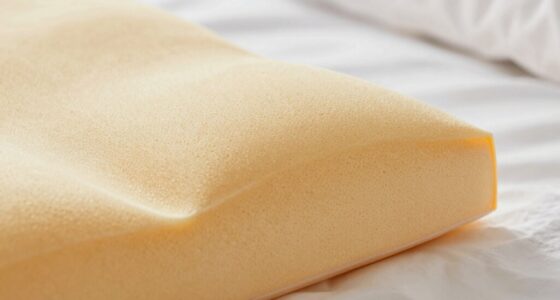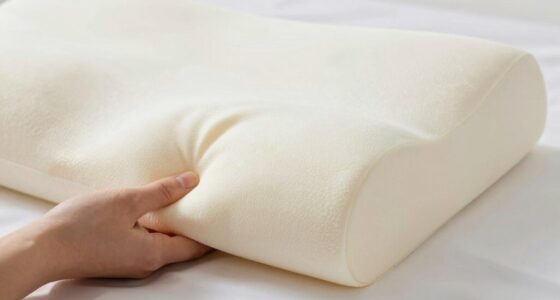

Dunlop and Talalay latex feel different mainly because their manufacturing processes create distinct textures and densities. Dunlop is poured into molds, resulting in a denser, firmer, and more resilient feel that offers strong support. Talalay undergoes vacuum-sealing and freezing, making it lighter, softer, and more uniform in texture. These differences influence how each latex responds and supports your body. To understand how these factors shape your comfort, keep exploring what makes each type unique.

Get home appliances delivered free with Prime
- Fast, free delivery on millions of items
- Prime Video, Amazon Music and more included
- Member-only deals all year
Key Takeaways
- Dunlop latex is denser and firmer due to its pouring and vulcanization process, resulting in a more supportive, resilient feel.
- Talalay latex undergoes vacuum-sealing and freezing, creating a lighter, more uniform, and plush texture.
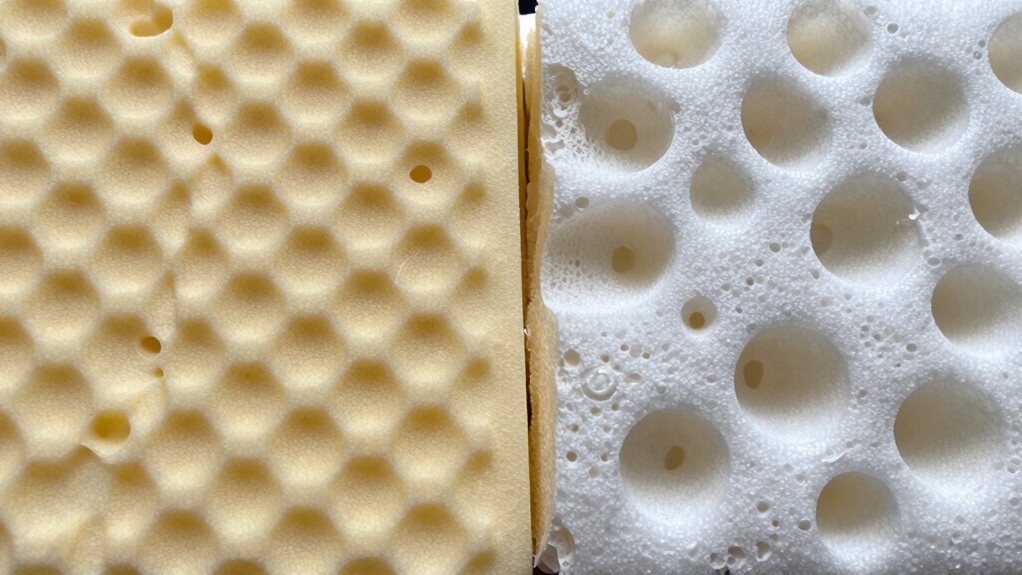
- Manufacturing methods influence air cell structure and bubble size, affecting responsiveness, bounce, and softness.
- Dunlop’s denser air cells provide durability and resistance to sagging, while Talalay’s larger bubbles offer a softer, more buoyant feel.
- Differences in production environment and density lead to distinct scent, temperature regulation, and long-term comfort characteristics.
As an affiliate, we earn on qualifying purchases.
How Dunlop and Talalay Latex Are Made

Dunlop and Talalay latex are made through distinct manufacturing processes that influence their texture and quality. Dunlop latex is poured into a mold, then vulcanized, resulting in a denser, firmer product with a more consistent latex density. This process often produces a slight latex scent that lingers, especially in new mattresses. In contrast, Talalay latex undergoes a vacuum-sealing process, which freezes the latex before vulcanization. This results in a lighter, more uniform texture and a softer feel. The process also tends to reduce the latex scent, making it smell fresher and less chemical-like. Both methods impact the overall quality, with Dunlop offering a denser feel and potentially more pronounced scent, while Talalay provides a lighter, more breathable experience.
As an affiliate, we earn on qualifying purchases.
What Do Dunlop and Talalay Latex Feel Like When You Press Them?

When you press on Dunlop latex, you’ll notice it’s quite firm and dense, offering substantial support. Its latex density makes it feel heavier and more solid compared to other types. The latex firmness is higher, giving it a resilient, springy feel that quickly returns to shape after pressure. You’ll sense a consistent, uniform resistance across the surface, making it ideal for those who prefer a supportive, less plush feel. Dunlop’s density and firmness contribute to its durability, maintaining shape over time. When pressed, it doesn’t sink in much, providing a stable base. This firmness makes it less conforming but more supportive, especially for back sleepers or those who need firm comfort. Additionally, its manufacturing process results in a denser structure that enhances its long-term resilience. Moreover, the density and manufacturing method of Dunlop latex give it a naturally more resistant quality compared to other types. A rigid structure contributes to its ability to withstand prolonged use without significant sagging. Overall, Dunlop latex delivers a firm, dense sensation that feels solid and supportive under your hand. The manufacturing process also influences its natural resistance and durability, making it a popular choice for those seeking long-lasting support.
As an affiliate, we earn on qualifying purchases.
How Do Density and Firmness Affect Latex Comfort?

Your comfort depends on how dense and firm your latex feels. Higher density provides better support and pressure relief, while lower density offers a softer feel. Understanding these factors helps you choose the right balance for your sleep preferences. Additionally, personal preferences and body weight can influence how latex feels, making it important to consider latex characteristics when selecting a mattress. The manufacturing process can also impact the final feel of latex, further affecting its comfort level. Being aware of latex density variations can help you make more informed decisions to enhance your sleep experience. Moreover, the type of latex used, such as Dunlop or Talalay, can further modify the firmness and overall sensation, with each type offering distinct comfort profiles based on their unique production methods.
Density’s Impact on Support
Density plays a crucial role in determining how supportive and comfortable latex mattresses feel. Higher latex density generally means a greater support level because the material is more compact and resilient. When you choose latex with a higher density, you’ll notice it provides firmer support, helping to maintain proper spinal alignment. Conversely, lower-density latex tends to feel softer and less supportive, which can be better for pressure relief but may not offer enough support for some sleepers. The density affects how the latex responds to your weight and movements, influencing overall support. Understanding the relationship between latex density and support level helps you select a mattress that aligns with your comfort needs, whether you prefer a firmer or softer sleeping surface. Additionally, material resilience impacts how well the latex can maintain its shape over time, ensuring long-term support and durability. This resilience also contributes to the longevity of the mattress, making it a key factor in your overall satisfaction with the sleep surface. A higher density can also enhance support consistency, providing reliable comfort night after night. Moreover, the way density influences pressure distribution can significantly affect your sleep quality by reducing discomfort during the night. To further understand your choice, consider how support and comfort balance is achieved through appropriate density levels, ensuring both support and pressure relief are optimized.
Firmness and Pressure Relief
Higher density latex tends to feel firmer, providing more support, while lower density feels softer and more plush. This difference directly impacts how well your mattress relieves pressure. Firmer latex offers targeted support, preventing sinking and keeping your spine aligned, making it ideal for back sleepers or those who prefer a more supportive feel. Softer latex, with its increased latex softness, contours closely to your body, easing pressure points and reducing discomfort. Your choice of latex density influences how pressure is distributed across your body, affecting overall comfort. If you need a balance of support and softness, consider medium-density options. Understanding how latex density impacts firmness can help you select a mattress that offers ideal pressure relief tailored to your sleeping preferences. Material properties also play a role in how latex responds under pressure, influencing its durability and long-term comfort. Additionally, latex composition can affect how the material performs over time and responds to varying body weights and sleeping positions. Recognizing the relationship between latex density and firmness can guide you toward the most suitable latex for your needs. Density and firmness are key factors in customizing your sleep experience, highlighting the importance of understanding material characteristics. Moreover, the process of manufacturing can influence the overall consistency and performance of latex products, ensuring you get the desired firmness and pressure relief.
As an affiliate, we earn on qualifying purchases.
How Air Cells and Bubbles Make Latex Feel Different

Air cells and bubbles are key factors that influence how latex feels under your touch. The porosity of latex determines how much air flows through, affecting softness and breathability. Bubble size plays a big role in the sensation: larger bubbles create a bouncier, more responsive feel, while smaller bubbles result in a denser, more uniform surface. Imagine these visuals:
Large bubbles add bounce; tiny bubbles create smooth, consistent comfort.
- Large, airy bubbles like marshmallows, offering a springy bounce.
- Tiny, tightly packed bubbles creating a smooth, consistent surface.
- Varying pore sizes giving a unique sensation of softness combined with support. Porosity is a crucial factor that impacts both comfort and durability in latex products. Additionally, the air flow within the latex influences how quickly heat and moisture are dissipated, contributing to overall comfort during use. The structure of air cells also affects how long the latex maintains its shape and support over time. Changes in the air cell structure can lead to different levels of resilience and longevity in latex mattresses. These features shape your experience, making latex feel different depending on how the air cells and bubbles are structured within the material. Your comfort hinges on these microscopic yet impactful differences.
How Do Dunlop and Talalay Latex Hold Up Over Time?

You want your mattress to stay comfortable for years, so understanding how Dunlop and Talalay latex perform over time is key. Their durability varies based on construction and materials, affecting long-term support. Let’s explore what factors influence their lasting performance and how they compare.
Durability Differences Unveiled
When it comes to durability, Dunlop and Talalay latex each have distinct strengths that can influence their longevity over time. Your choice depends on how these latex properties respond to durability factors like compression, elasticity, and resistance to wear. Dunlop latex typically boasts a denser structure, making it more resistant to sagging and indentation. In contrast, Talalay latex offers a softer feel but may show signs of compression sooner. Imagine:
- A mattress that retains its shape after years of use, like a firm, supportive fortress.
- Latex that slowly compresses, creating softer spots over time.
- Surface resilience that keeps the latex feeling fresh and springy longer.
Understanding these durability differences helps you pick the latex type that will maintain its performance and comfort for years to come.
Long-Term Performance Factors
Over time, the long-term performance of Dunlop and Talalay latex depends largely on their inherent structural differences and how they respond to ongoing use. Higher latex density generally means better resilience and durability, helping the material maintain its shape longer. Dunlop latex tends to have a denser, firmer composition, which can resist deformation over years of use. Talalay latex, with its lighter, more airy structure, may soften slightly with age but still offers good longevity if properly maintained. Your choice in latex firmness impacts how well it holds up—firmer options often preserve their form better, while softer varieties may soften further. Overall, both types can endure years of use, but their long-term performance hinges on latex density and initial firmness.
Are Dunlop or Talalay Latex More Responsive and Bouncy?

Are Dunlop and Talalay latex considerably different in responsiveness and bounce? Yes, their latex elasticity impacts how each feels under you. Dunlop latex typically offers a firmer, more supportive bounce, making it feel lively and responsive. Talalay, on the other hand, tends to be softer and more plush, providing a gentle, more forgiving response.
To visualize this:
- Imagine pressing into Dunlop latex—your hand quickly rebounds, like bouncing off a trampoline.
- Envision sinking slightly into Talalay latex—your hand slowly returns, offering a more cushioned sensation.
- Picture the responsiveness comparison—Dunlop feels firmer and more energetic, while Talalay provides a lighter, more buoyant feel.
How Do Manufacturing and Environmental Factors Change Latex Feel?

Manufacturing processes and environmental conditions play a significant role in shaping the feel of latex mattresses. Variations in latex manufacturing methods, such as Dunlop or Talalay, affect texture, density, and responsiveness. The environmental influence, including temperature and humidity during production, impacts the latex’s structure and durability. For example, Dunlop latex is denser and firmer due to its manufacturing process, while Talalay offers a softer, more buoyant feel. These factors also affect how the latex responds over time. The table below illustrates how different manufacturing and environmental factors influence latex feel:
| Factor | Effect on Feel | Resulting Experience |
|---|---|---|
| Manufacturing Method | Density & texture | Firmer or softer feel |
| Temperature Control | Cell structure integrity | Consistent comfort |
| Humidity Levels | Latex elasticity | Bounce and responsiveness |
How Do Cost and Market Availability Influence Your Choice?

Cost and market availability are key factors that can substantially influence your mattress choice. Pricing trends fluctuate based on material costs and demand, which can make certain latex types more expensive over time. Availability challenges also affect your options; popular latex products may be sold out or hard to find. Picture these scenarios:
- You see a plush Talalay mattress priced higher due to limited supply and high demand.
- Dunlop latex becomes scarce, pushing prices up, making it less accessible.
- A local store has a limited selection, forcing you to choose based on what’s available rather than preference.
These factors can steer you toward a specific latex type or brand, often dictated by what’s currently accessible and affordable in your market.
Which Latex Type Is Best for Your Sleep Style?

Choosing the right latex mattress depends heavily on your sleep style, as different types offer distinct feel and support qualities. If you sleep hot or need extra bounce, Talalay latex may suit you better due to its lighter, more responsive feel. For those who prefer firmer support or a denser feel, Dunlop latex often provides more durability and compression resistance. If you have latex allergies, consider hypoallergenic options, as some latex types contain fewer allergens. Eco-friendly options are also available, especially with natural Dunlop latex or sustainably produced Talalay. Your choice should align with your sleep position and comfort preferences, ensuring proper spinal support and pressure relief. Ultimately, understanding these differences helps you select a latex type that enhances your sleep quality and meets your health and environmental priorities.
Frequently Asked Questions
Can Latex Types Be Combined for Personalized Comfort?
Yes, you can combine different latex types for personalized comfort. Using a latex blend, like a mix of Dunlop and Talalay, allows you to customize the firmness and feel of your mattress. This approach helps you achieve the perfect balance of support and softness, tailored specifically to your preferences. Mixing latex types offers a versatile way to create a mattress that provides the custom comfort you need for restful sleep.
How Does Latex Affect Allergy or Asthma Symptoms?
If you have a latex allergy or asthma symptoms, latex can trigger reactions, so you should avoid it. Latex allergy causes symptoms like skin irritation, sneezing, or difficulty breathing. For asthma, latex exposure might worsen your symptoms, especially if you’re sensitive. Consider hypoallergenic alternatives like memory foam or synthetic mattresses. Always check product labels for latex content, and consult your doctor if you’re unsure about how latex might affect your allergies or asthma.
Are There Eco-Friendly Options Within Dunlop or Talalay Latex?
You can find eco-friendly options in both Dunlop and Talalay latex by looking for products with eco certifications like GOLS or OEKO-TEX. These certifications indicate the latex is produced through sustainable farming practices and meets strict environmental standards. Choosing these options supports environmentally conscious manufacturing and reduces your ecological footprint, making your sleep more sustainable without sacrificing comfort or quality.
How Do Temperature Regulation Features Differ Between Latex Types?
You’ll notice that Talalay latex offers better temperature regulation because its manufacturing process creates a more open-cell structure, promoting airflow. In contrast, Dunlop latex has a denser composition, which can trap heat. The latex density in Talalay is generally lower, enhancing breathability, while Dunlop’s higher density can retain more heat. So, if cooling is your priority, choose Talalay for a more comfortable sleep experience.
Is Latex Suitable for Side Sleepers or Specific Sleeping Positions?
Latex is great for side sleepers because it offers excellent support and pressure relief for your shoulders and hips. Its responsive nature helps keep your spine aligned, making it comfortable in various sleeping positions. Latex’s durability guarantees consistent support over time, and its contouring qualities adapt to your body’s shape. If you prefer a supportive, pressure-relieving mattress, latex is an ideal choice for side sleepers and other positions.
Conclusion
Ultimately, choosing between Dunlop and Talalay latex comes down to understanding your comfort, your support, and your preferences. Whether you prioritize firmness or softness, resilience or breathability, durability or eco-friendliness, your decision should reflect what feels right for you. Know the differences, weigh the benefits, and trust your instincts. Because the best latex for you isn’t just about features—it’s about finding the perfect fit for your sleep style, your needs, and your comfort.
NFL season / tailgating Picks
team gear
As an affiliate, we earn on qualifying purchases.