

To reduce the countdown feeling of alarm clock anxiety, create a calming sleep environment with soft lighting, calming scents, and clutter-free space. Establish a gentle morning routine with slow stretches, mindful breathing, and positive affirmations to start your day peacefully. Using technology like smart alarms and sleep tracking can help you wake during light sleep. Focusing on relaxation tactics before bed and shifting your mindset can make mornings feel less stressful; explore these strategies further to find what works best for you.
Key Takeaways
- Establish a calming bedtime routine with relaxation techniques like deep breathing or meditation to ease anxiety before sleep.
- Use gentle alarm options such as sunrise alarms or vibrations to wake gradually and reduce startling sensations.
- Create a soothing sleep environment with dim lighting, calming scents, and clutter-free space to promote restful sleep.
- Practice positive affirmations and visualization to set a confident, stress-free mindset for waking up.
- Maintain consistent sleep schedules and limit screen time before bed to improve sleep quality and reduce morning stress.
As an affiliate, we earn on qualifying purchases.
What Is Alarm Clock Anxiety—and Why Do We Feel It?

Have you ever woken up feeling tense or dread just because your alarm is about to go off? That’s alarm clock anxiety, a common experience linked to poor sleep hygiene. When your sleep habits are inconsistent or disrupted, your body’s stress response becomes heightened, making mornings stressful. This heightened stress response can include increased cortisol levels, which is responsible for alertness and stress. Elevated cortisol levels can make waking up feel overwhelming, fueling feelings of anxiety. Over time, this creates a cycle where poor sleep worsens your stress response, and anxiety interferes with restful sleep. Recognizing sleep hygiene as a crucial factor helps you see how managing your sleep environment and routines can significantly reduce morning stress. Improving your sleep environment and establishing consistent routines can help regulate your body’s stress hormones and break the cycle of anxiety. Additionally, being aware of your budget for sleep-related needs, like blackout curtains or a comfortable mattress, can support better sleep quality. Understanding this connection and bedroom setup can help you see how lifestyle adjustments impact sleep health, ultimately reducing morning stress and alarm clock anxiety. It’s not just about waking up; it’s about waking up feeling ready.
calming sleep environment products
As an affiliate, we earn on qualifying purchases.
As an affiliate, we earn on qualifying purchases.
How Can You Recognize the Signs of Morning Stress?

Recognizing morning stress starts with paying attention to how you feel when you wake up. If you notice persistent feelings of dread or exhaustion, it could be a sign of underlying stress. Keep a dream journal to track any unsettling dreams or recurring themes that may contribute to your morning anxiety. Poor sleep hygiene, like irregular sleep schedules or excessive screen time before bed, can also heighten morning stress. Notice if you wake up feeling tense, overwhelmed, or with a racing mind—these are key indicators. Being aware of these signs helps you identify patterns and triggers, so you can address them proactively. Additionally, understanding how sleep quality impacts your morning mood can guide you toward healthier routines for a calmer, more restful start to your day. Incorporating calming bedtime habits, such as establishing a consistent sleep schedule or limiting screen exposure, can significantly improve your sleep hygiene and reduce morning stress. Recognizing the importance of cybersecurity measures can also help protect your personal information and reduce additional stressors related to digital security. Furthermore, understanding how cultural symbols for strength relate to resilience can inspire mental resilience and coping strategies to combat morning anxiety. Fostering a sense of mental wellness through relaxation techniques may further ease morning anxiety and promote a more peaceful awakening.
As an affiliate, we earn on qualifying purchases.
Create a Sleep Environment That Promotes Calm Wake-Ups

Creating a sleep environment that promotes calm wake-ups involves making intentional adjustments to your bedroom setup. First, consider your bedroom lighting; opt for soft, dim lights or use blackout curtains to create a restful atmosphere that naturally prepares you for sleep. When morning arrives, gentle lighting or a sunrise alarm can ease you into wakefulness without startling you. Additionally, incorporate sleep-promoting scents like lavender or chamomile in your bedroom. These calming aromas can help reduce stress and promote a peaceful mindset upon waking. Keep your space clutter-free and comfortable, ensuring your bed and surroundings invite relaxation. Also, energy-efficient lighting can enhance your sleep environment by providing adjustable illumination that supports your circadian rhythm. By controlling your bedroom lighting and adding soothing scents, you set the stage for gentle, anxiety-free wake-ups that start your day on a calm note. Creating a relaxing environment can further enhance your sleep quality and reduce morning stress, especially when paired with a comfortable and cozy support breakfast to start your day right.
As an affiliate, we earn on qualifying purchases.
Build a Gentle Morning Routine to Start Your Day Peacefully
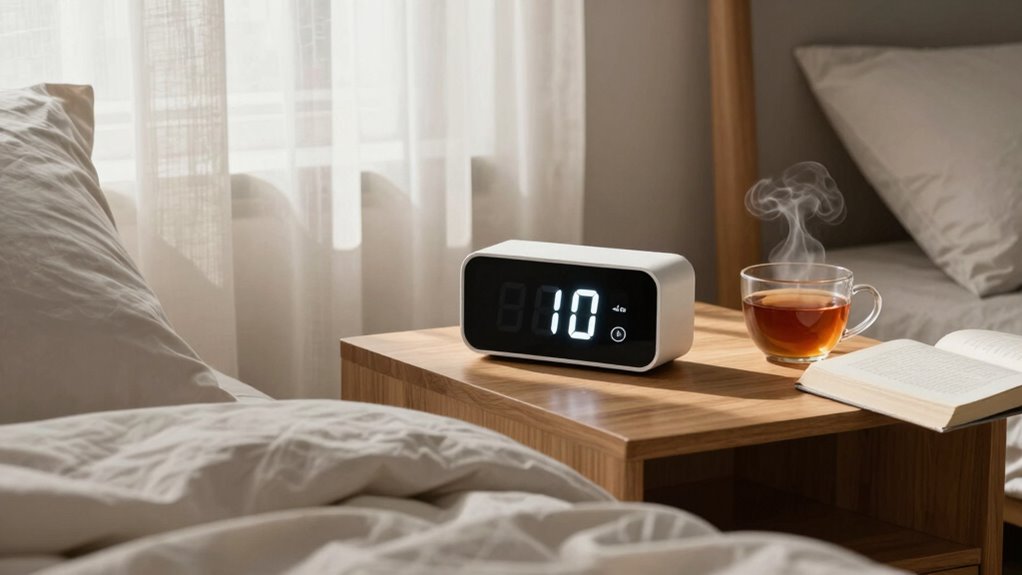
Starting your day with a gentle routine can help maintain the calmness you’ve cultivated during sleep. A peaceful morning sets a positive tone, easing you into the day. To create this, focus on simple, mindful habits that promote a gentle wake up. Imagine waking up to soft sunlight filtering through curtains, a calming aroma of tea or coffee, and a few quiet moments of deep breathing. You might include:
- Stretching slowly in bed
- Drinking a glass of warm water
- Listening to soothing music or nature sounds
- Practicing a brief mindfulness or meditation session
- Setting positive intentions for the day
- Incorporating home décor elements like soft lighting or calming colors to enhance your environment
These small acts foster peaceful mornings, reduce anxiety, and help you start your day gently, avoiding the rush and stress that often accompany sudden alarms. Additionally, creating a calm environment through thoughtful design can support your efforts to establish a tranquil morning routine. Incorporating relaxing rituals into your morning can further enhance your sense of peace and readiness for the day ahead. Incorporating local cultural elements such as traditional décor or regional art can also promote a sense of serenity rooted in familiar comfort.
Use Tech and Apps to Wake Up Less Stressfully

Using technology and apps can make waking up less stressful by gradually easing you into the day. A smart alarm detects your sleep cycles and wakes you during light sleep, reducing grogginess and morning anxiety. Sleep tracking features help you understand your sleep patterns, allowing you to set realistic wake times and improve overall rest. These tools remove the jarring, abrupt sound of traditional alarms, replacing them with gentle sounds or vibrations that wake you more naturally. By analyzing your sleep quality, you can identify habits that disrupt restful nights and adjust accordingly. Incorporating a smart alarm with sleep tracking creates a smoother, more mindful waking experience, helping you start your day calmer and more prepared. Understanding sleep cycle awareness can further optimize how you wake up and feel throughout the day. Additionally, integrating home automation features can help create a more relaxing environment that promotes better sleep and easier mornings. Employing personalized sleep insights can further tailor your wake-up routine to enhance your overall well-being. Leveraging connected sleep devices can provide real-time data to refine your morning routine even more effectively.
Practice Relaxation and Mindfulness Before Bed
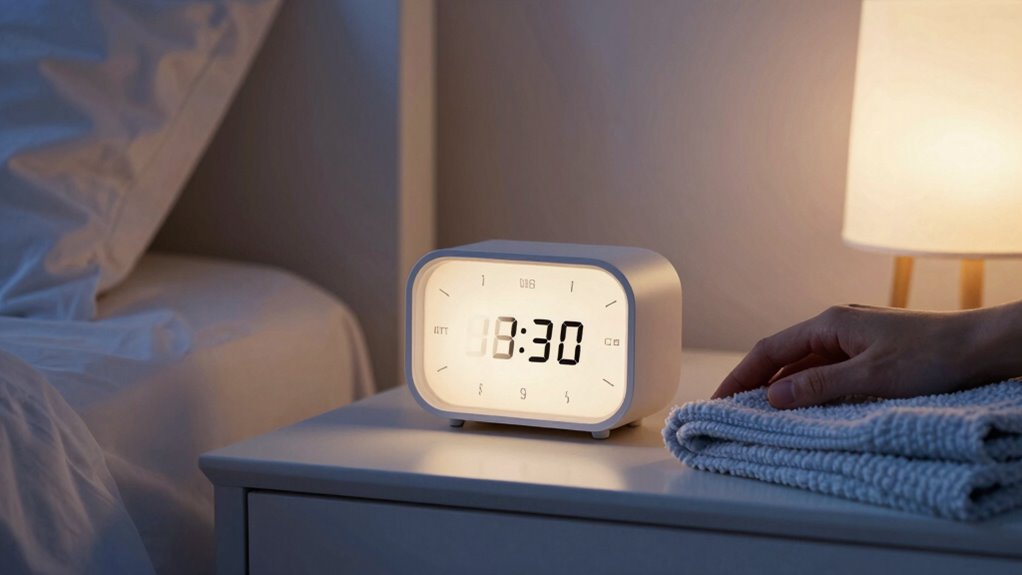
Practicing relaxation and mindfulness before bed can substantially reduce nighttime anxiety and improve your sleep quality. Engaging in breathing exercises helps slow your heart rate and calm your mind. Guided meditation guides you through a peaceful mental journey, easing racing thoughts. To create a calming environment, imagine:
- Sitting comfortably on a soft cushion, eyes closed
- Taking slow, deep breaths that fill your lungs completely
- Visualizing a tranquil beach or forest during meditation
- Feeling the tension melt away from your muscles
- Focusing on each breath, letting worries drift away
These practices help shift your focus from the countdown to a state of calmness, making it easier to fall asleep peacefully and wake up refreshed. Incorporating evidence-based insights like picture, sound, placement, and comfort into your nightly routine can enhance relaxation and set the stage for better sleep. Paying attention to sleep hygiene and creating a consistent routine can further boost relaxation efforts. Incorporate them nightly for best results.
Shift Your Mindset to Wake Up Positively

Start your day with positive affirmations to set a confident tone. Visualize a successful, happy day each morning to boost your mindset. Before bed, set clear intentions to help you wake up feeling motivated and calm.
Practice Morning Affirmations
Morning affirmations can powerfully set a positive tone for the day by shifting your mindset right from the moment you wake up. By repeating positive affirmations or morning mantras, you reinforce confidence and calmness. Imagine waking up to words like “I am ready,” “Today is filled with opportunity,” or “I am in control.” Picture yourself:
- Taking a deep breath before speaking the words aloud
- Smiling as you repeat your affirmations in front of the mirror
- Feeling a surge of energy as your mind absorbs positive thoughts
- Connecting with your intentions for the day
- Starting with gratitude, embracing a fresh perspective
These small acts help reframe your outlook, reduce anxiety, and create a foundation for a peaceful morning. Consistent practice makes positive affirmations a natural part of your routine.
Visualize a Positive Day
To set a positive tone for the day, visualize yourself waking up with a clear and optimistic mindset. Start your morning visualization by imagining a smooth, revitalizing wake-up, feeling grateful and energized. Incorporate dream journaling into your routine to help process your subconscious and foster positive thoughts. Reflect on pleasant dreams, which can boost your mood and set a hopeful tone. Picture yourself moving through your morning calmly, accomplishing tasks with confidence. This mental rehearsal shifts your focus away from anxiety and builds anticipation for a good day. Consistently practicing morning visualization and engaging with your dreams can help you wake up feeling more prepared and less overwhelmed by the clock. It’s a simple, effective way to start each day positively.
Set Intentions Before Sleep
As you finish your evening routine, take a moment to set clear intentions for the night ahead. This simple act shifts your mindset from worry to calmness, making sleep preparation more effective. Visualize a peaceful, restful night where you wake up refreshed. To help, consider these actions:
- Imagine yourself waking up energized and ready to face the day
- Focus on releasing any lingering stress or tension
- Visualize your ideal morning, feeling positive and motivated
- Affirm your ability to rest deeply and wake renewed
- Picture yourself sleeping soundly through the night without disturbance
Setting intentions before sleep helps reduce anxiety and creates a mental space for restful sleep. By intentionally guiding your thoughts, you’re more likely to wake up feeling positive and prepared for a new day.
Frequently Asked Questions
Can Alarm Clock Anxiety Affect My Overall Mental Health?
Alarm clock anxiety can impact your overall mental health by disrupting sleep hygiene and creating stress around mornings. When you constantly worry about waking up on time, it may lead to poor sleep quality and increased anxiety. To improve this, establish calming morning routines and maintain consistent sleep habits. This helps reduce the countdown feeling and promotes better mental well-being, making mornings less stressful and supporting your overall mental health.
Are There Specific Sleep Disorders Linked to Alarm Clock Anxiety?
Yes, certain sleep disorders like insomnia and circadian rhythm disorders are linked to alarm clock anxiety. Sleep disruption from these conditions makes waking up stressful, heightening your fear of oversleeping. When your internal clock is misaligned, it worsens morning anxiety, creating a cycle of stress and poor sleep. Addressing these underlying issues through proper sleep hygiene or medical advice can help reduce alarm clock anxiety and improve your overall sleep quality.
How Long Does It Typically Take to Overcome Alarm Clock Anxiety?
It usually takes a few weeks to overcome alarm clock anxiety if you establish a consistent sleep routine and focus on morning preparedness. You might worry it’ll never improve, but with steady effort, you’ll start waking up more relaxed and confident. Visualize peaceful mornings, where the countdown no longer dominates your thoughts. Keep practicing these habits daily, and soon, you’ll find your anxiety markedly lessens, making mornings calmer and more manageable.
Is Alarm Clock Anxiety More Common in Certain Age Groups?
You might notice alarm clock anxiety is more common among teens and the elderly. Teens often struggle with sleep due to school pressures, making mornings stressful. Elderly individuals may experience heightened anxiety about waking up on time or health concerns, impacting their mornings. If you fall into either group, establishing a consistent sleep schedule and relaxing bedtime routines can help ease this anxiety and make mornings less stressful.
Can Dietary Habits Influence Morning Stress Levels?
Your dietary habits can definitely influence morning stress levels. Eating healthy snacks before bed can stabilize your blood sugar, preventing energy dips that add to stress. Stay hydrated by drinking water throughout the day and especially before sleep, as dehydration can worsen anxiety. Avoid caffeine and sugar in the evening, and opt for calming foods like nuts or bananas. These habits help you wake up feeling more relaxed and ready to start your day.
Conclusion
By taking small steps to ease your mornings, you can turn that dreaded countdown into a gentle sunrise. Remember, your alarm clock is not the villain—it’s how you approach its chime that makes all the difference. Embrace calming routines, create a cozy sleep space, and shift your mindset. Like a sunrise breaking through clouds, a peaceful wake-up can illuminate your whole day, transforming anxiety into serenity with each new dawn.