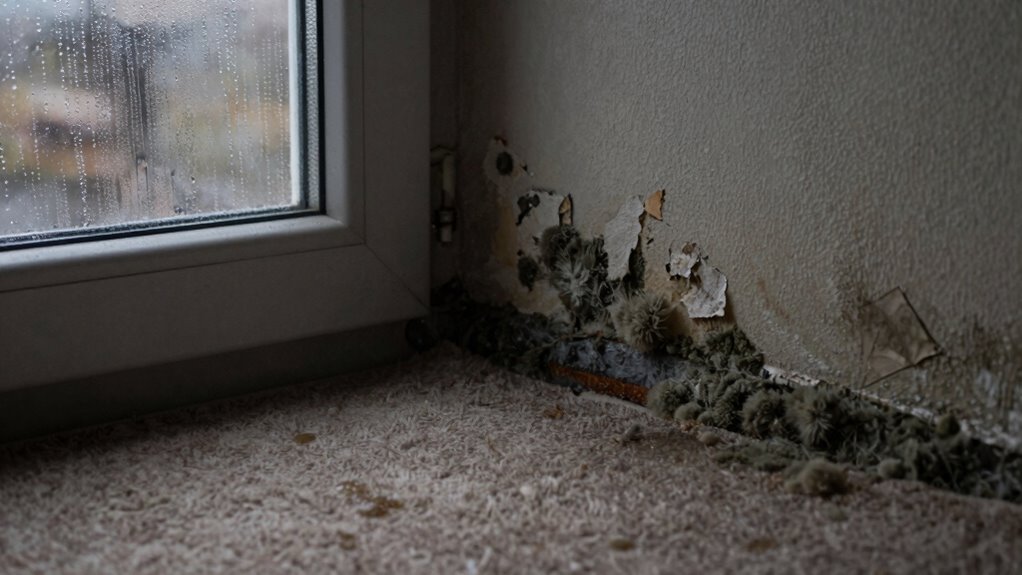

Damp bedrooms create the perfect environment for mold to thrive because excess moisture and poor ventilation raise humidity levels. When windows stay shut or surfaces stay wet, mold spores settle and grow, causing a musty smell and potential health issues. Common sources include condensation, leaks, or daily activities like showering or cooking. Keeping your room dry and well-ventilated helps prevent this. Stay tuned to learn how to spot and stop mold before it becomes a problem.

Get home appliances delivered free with Prime
- Fast, free delivery on millions of items
- Prime Video, Amazon Music and more included
- Member-only deals all year
Key Takeaways
- Excess moisture and poor ventilation increase humidity, creating ideal conditions for mold growth.
- Limited air circulation traps moisture, allowing mold spores to settle and proliferate on surfaces.
- Visible signs like water stains, fuzzy patches, and musty odors indicate underlying dampness and mold presence.
- Activities generating water vapor, such as showering or laundry, raise indoor humidity and promote mold development.
- Continuous dampness and high humidity levels sustain mold spores, leading to a persistent musty smell in bedrooms.
As an affiliate, we earn on qualifying purchases.
What Causes Mold to Grow in Your Bedroom?
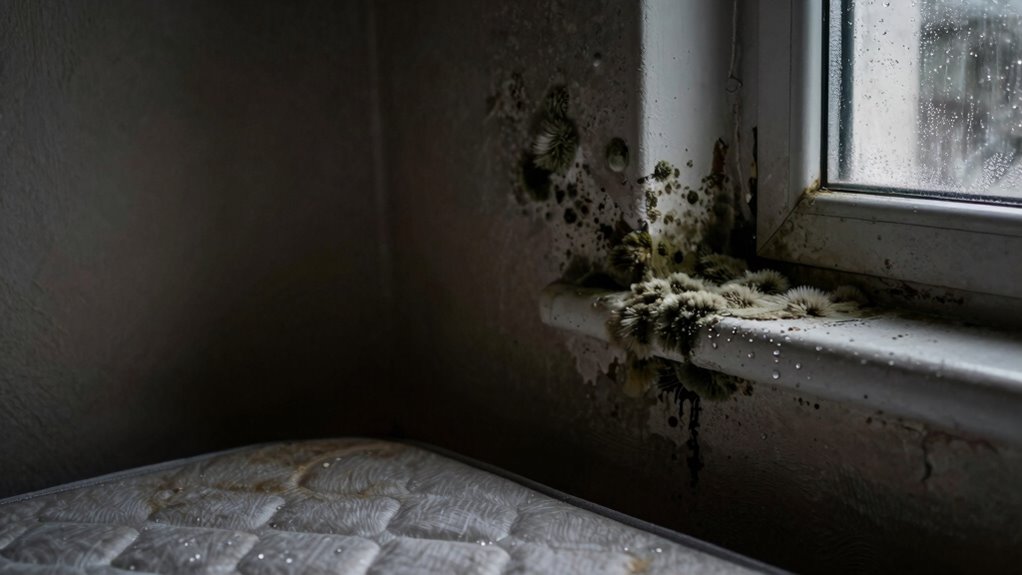
Mold tends to grow in bedrooms when there’s excess moisture and poor ventilation. When air circulation is limited, humidity levels stay high, creating the perfect environment for mold spores to settle and multiply. To reduce this risk, improve airflow by opening windows regularly or using fans. You can also invest in mold-resistant paints, which contain antimicrobial properties that help prevent mold growth on walls. These paints act as a barrier, making it harder for mold to take hold even if moisture levels rise temporarily. Keep an eye on damp areas like near windows and walls, and address leaks promptly. Additionally, understanding the importance of air circulation in your environment can help you identify issues with lighting and humidity that may contribute to mold growth. Proper ventilation techniques are essential in maintaining a dry and healthy bedroom environment. Promoting airflow can significantly reduce humidity levels and inhibit mold development. Improving indoor humidity control through dehumidifiers or moisture absorbers can further help create an environment less inviting for mold to thrive. By enhancing air circulation and choosing mold-resistant paints, you create an environment less inviting for mold to thrive.
As an affiliate, we earn on qualifying purchases.
How Does Dampness Help Mold Thrive?
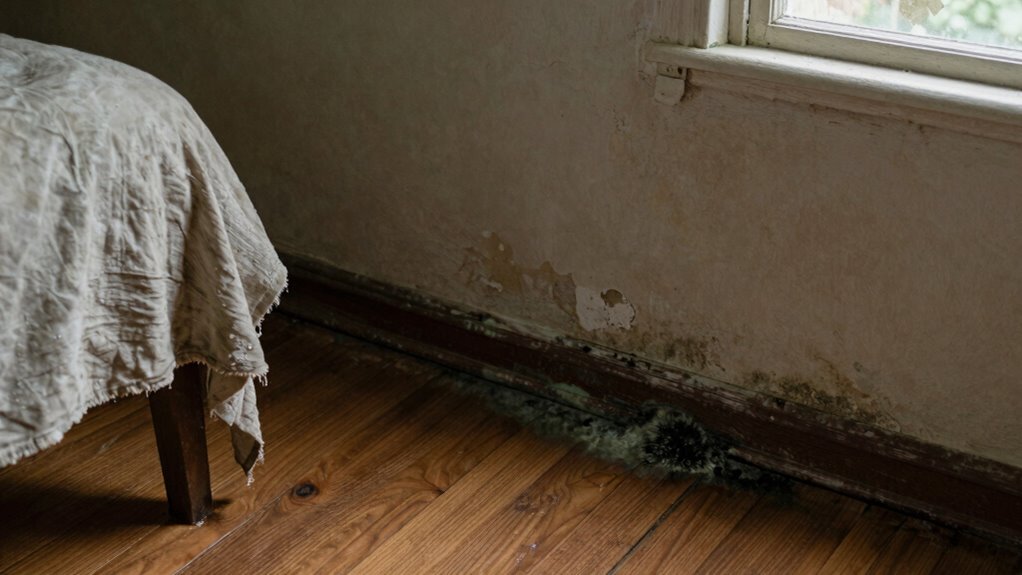
Dampness provides the ideal environment for mold to thrive because it supplies the moisture mold spores need to grow and spread. When humidity levels are high, mold spores settle onto surfaces and find enough moisture to activate. Without adequate airflow or drying, this moisture persists, creating a perfect breeding ground. Mold spores are everywhere, but they only become problematic when humidity levels rise, and damp surfaces stay moist. Elevated humidity keeps the environment consistently damp, allowing mold to reproduce rapidly. You might notice musty odors or visible mold growth in these conditions. Keeping humidity levels in check and reducing dampness prevents mold spores from gaining a foothold, protecting your bedroom from a growing mold problem. Additionally, free floating spores can easily disperse through the air, increasing the likelihood of widespread contamination if conditions remain damp. Understanding environmental conditions helps in managing moisture effectively and preventing mold proliferation. Proper ventilation is also essential to reduce indoor moisture levels and minimize mold risks, ensuring a healthier living space. Recognizing and controlling indoor humidity is crucial for long-term mold prevention.
moisture absorber for damp rooms
As an affiliate, we earn on qualifying purchases.
As an affiliate, we earn on qualifying purchases.
Where Does Excess Moisture Come From in Bedrooms?
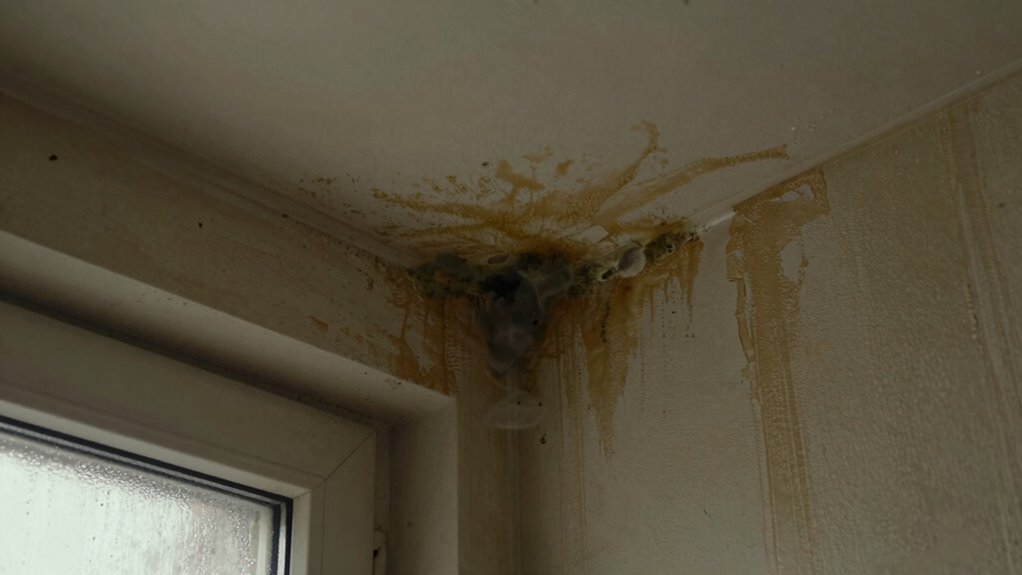
Excess moisture in bedrooms often comes from everyday activities that introduce water into the air, such as showering, cooking, or even breathing. Poor air circulation prevents this moisture from escaping, causing humidity levels to rise. When the air isn’t moving well, moisture settles on surfaces and increases the risk of mold growth. Additionally, temperature regulation plays a role—warm air holds more moisture, so if your room stays warm without proper ventilation, humidity can spike. This creates a damp environment ideal for mold to thrive. To keep moisture in check, improve air circulation with fans or vents and maintain consistent, moderate temperatures. Proper ventilation is essential in managing humidity levels and preventing mold development. Regularly monitoring indoor humidity with a hygrometer can help catch rising moisture levels early. Being aware of indoor air quality can also guide you in maintaining a healthier, mold-free bedroom environment. Ensuring adequate ventilation options are in place can significantly reduce excess moisture buildup, making your space more comfortable and safe. These steps help prevent excess moisture buildup, reducing the chance of mold and musty odors in your bedroom.
air circulator fan for ventilation
As an affiliate, we earn on qualifying purchases.
As an affiliate, we earn on qualifying purchases.
How Can You Spot Mold and Dampness in Your Room?
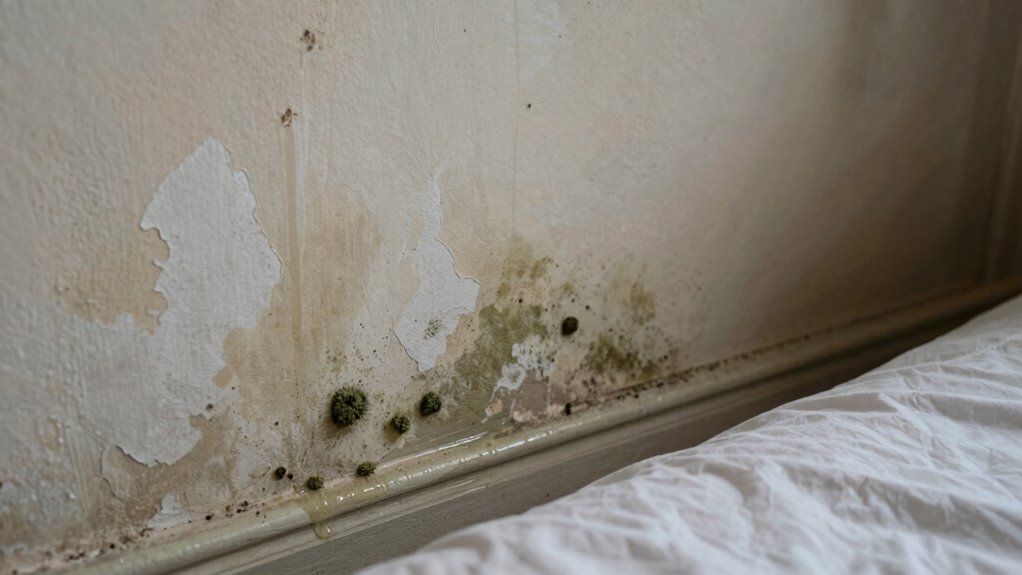
You can spot mold and dampness by keeping an eye out for visible signs like black or green patches, fuzzy spots, or water stains on walls and ceilings. Feel for dampness or musty odors that indicate hidden moisture behind surfaces. Regularly check for condensation or peeling paint, which can also signal moisture issues. Additionally, recognizing the visual and auditory elements in your environment can help identify early signs of mold growth. Being aware of dampness detection techniques can enhance your ability to catch issues before they worsen. For example, noticing increased airborne spores or a persistent musty smell can be crucial indicators of hidden mold presence. Using a moisture meter can provide accurate moisture readings to better assess concealed dampness. Furthermore, understanding mold risk factors can help you take preventative measures to protect your space.
Visual Mold Indicators
How can you tell if your room has mold or dampness just by looking? Start by checking for visible spots or stains on walls, ceilings, or floors—they often appear as fuzzy, discolored patches, usually green, black, or brown. Peeling or bubbling paint and wallpaper can also signal underlying moisture issues. Look for a musty odor, which is a common indicator of mold presence. To prevent mold growth, consider using mold resistant paints in vulnerable areas. Also, examine your room for signs of persistent moisture, and explore dehumidifier options to keep humidity levels low. Regular visual inspections help catch problems early, making it easier to address dampness before mold becomes a health risk. Incorporating simple, effective methods like monitoring humidity and improving ventilation can further reduce mold risk and create a healthier space. Additionally, understanding the visual mold indicators can help you identify issues before they worsen.
Detecting Moisture Signs
Since moisture often hides behind surfaces, spotting signs of dampness requires a careful eye. Check your room’s humidity levels regularly; high humidity promotes mold growth and dampness. Use a hygrometer to monitor these levels—ideally, they should stay below 60%. Look for condensation patterns on windows, walls, or ceilings, especially in cooler areas. Persistent moisture or water droplets forming on surfaces indicate excess humidity and potential hidden dampness. Feel walls and surfaces for dampness or a musty smell, which often signals unseen mold growth. Pay attention to any peeling paint or wallpaper, as these can also hint at underlying moisture issues. Maintaining proper ventilation helps reduce excess moisture and prevent mold development. Regularly inspecting these signs helps you catch problems early before mold becomes a bigger health risk. Additionally, using air purifiers with appropriate filters can help reduce airborne mold spores and improve indoor air quality.
Easy Ways to Prevent Dampness and Mold Growth
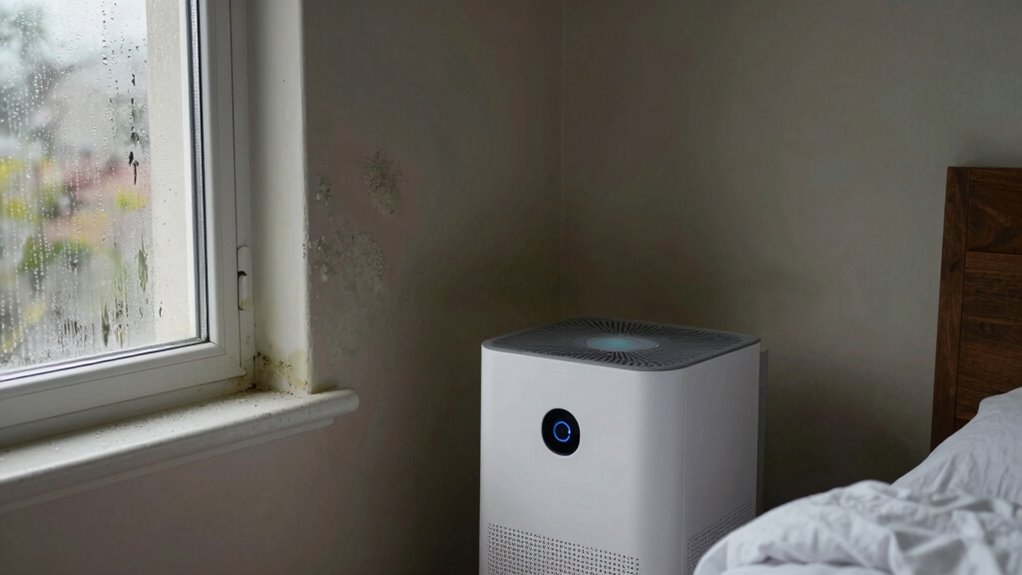
Wondering how to keep dampness and mold at bay? Start by choosing the right bedroom decor that promotes airflow, like light-colored or breathable fabrics. Use mold resistant paint on your walls to create a barrier against moisture. Keep windows open whenever possible to improve ventilation, and consider installing exhaust fans in high-moisture areas. Regularly check for leaks or condensation, and fix issues promptly. Keep humidity levels below 60% with a dehumidifier, especially in damp seasons. Avoid clutter that traps moisture, and ensure your bedding and curtains dry quickly. These simple steps can considerably reduce dampness and prevent mold growth, making your bedroom healthier and more comfortable.
Long-Term Tips for Keeping Your Bedroom Mold-Free
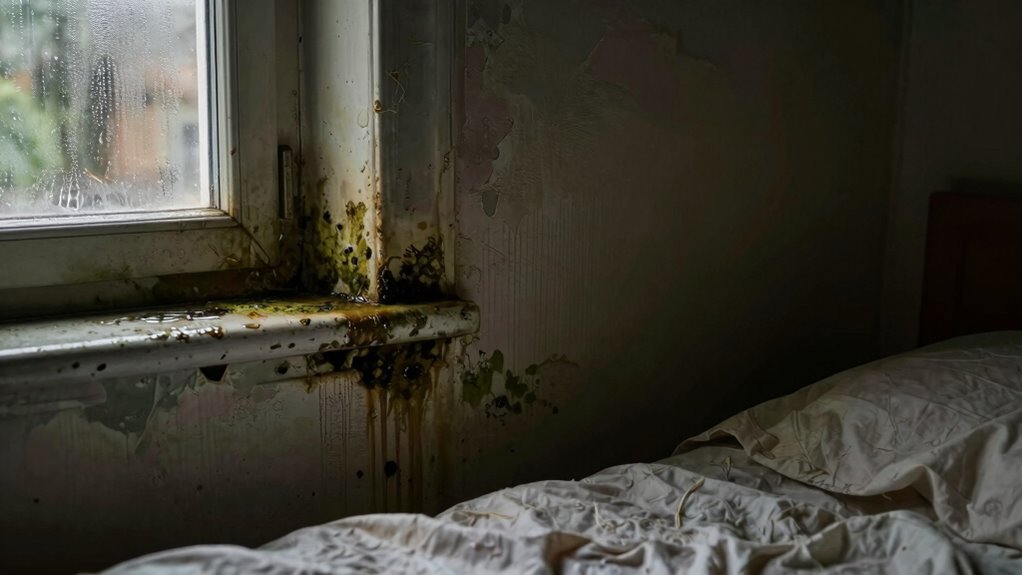
Good ventilation helps keep moisture levels in check, preventing mold growth over time. Make a habit of opening windows or using exhaust fans regularly. Also, check your bedroom for signs of excess moisture to catch problems early before they become mold issues.
Ventilation Techniques That Help
Proper ventilation is essential for preventing mold growth in your bedroom. Good air flow helps reduce humidity, which is vital since moisture encourages mold. One simple technique is regularly opening your windows to let fresh air in and stale air out. Even during colder months, briefly opening windows each day can make a big difference. Use cross-ventilation by opening windows on opposite sides of the room if possible. Additionally, consider using exhaust fans or air purifiers with HEPA filters to improve air quality and circulation. Ensuring consistent air flow prevents dampness from settling and keeps humidity levels in check. By making ventilation a habit, you’ll considerably lower the risk of mold developing in your bedroom.
Regular Moisture Checks
Regularly checking your bedroom for signs of moisture is a crucial step in preventing mold growth over time. Consistently monitoring humidity levels helps you catch early signs of excess moisture, reducing the risk of condensation buildup that fosters mold. By staying vigilant, you can identify subtle changes before they become problematic. Consider the following practices to maintain a dry, mold-free environment:
- Use a hygrometer to track humidity levels regularly.
- Inspect walls and windows for condensation buildup.
- Look for any damp spots or water stains on surfaces.
- Ensure proper ventilation after activities that generate moisture, like showering or laundry.
These proactive checks empower you to address issues promptly, maintaining ideal conditions that discourage mold growth and protect your health.
Frequently Asked Questions
Can Mold Affect My Health Even if I Don’t See It?
Yes, mold can affect your health even if you don’t see it. Mold releases spores and mycotoxins into the air, which can reduce your air quality and trigger allergy symptoms like sneezing, coughing, and nasal congestion. You might not realize it’s there, but poor air quality caused by hidden mold can still cause respiratory issues and worsen allergies. It’s important to address dampness to protect your health.
Are Certain Materials in the Bedroom More Prone to Mold Growth?
Certain materials in your bedroom are more prone to mold growth because they retain moisture and are porous. Items like drywall, carpet, curtains, and bedding absorb moisture easily, creating ideal conditions for mold. To prevent this, keep humidity levels low, ensure proper ventilation, and regularly clean or replace porous materials. By managing moisture retention, you decrease mold risk and keep your bedroom healthier and fresher.
How Quickly Can Mold Develop After Moisture Exposure?
Mold growth can start within 24 to 48 hours after moisture exposure, especially in damp bedrooms. If you leave things wet or humid without proper ventilation, mold can quickly develop on surfaces like walls, bedding, or furniture. To prevent this, you should dry out any moisture promptly, improve airflow, and keep humidity levels low. Acting quickly is key to stopping mold growth before it becomes a bigger problem.
Do Indoor Plants Contribute to Mold Problems?
Indoor plants can contribute to mold growth if you don’t practice humidity control and proper plant maintenance. Excess moisture from overwatering or high humidity creates a damp environment, promoting mold. To prevent this, make sure your indoor plant’s soil dries out between waterings, improve ventilation, and use mold-resistant potting soil. Regularly cleaning your plants and monitoring humidity levels helps keep mold at bay and maintains a healthy indoor environment.
What Are the Safest Methods to Remove Existing Mold?
To remove existing mold safely, start with mold removal by wearing gloves, goggles, and a mask. Use safe cleaning solutions like a mixture of water and detergent or commercial mold removers. Scrub affected areas thoroughly and dry them completely. Ventilate the room well during and after cleaning. If mold persists or covers a large area, consider hiring professionals for thorough, safe cleaning to prevent health risks.
Conclusion
If you ignore the signs of dampness, mold could silently take hold, turning your peaceful sanctuary into a hidden hazard. Imagine walking into your bedroom and feeling the damp air cling to your skin, while unseen mold spores spread silently behind the walls. But don’t worry—by staying vigilant and taking proactive steps, you can keep your space safe. The key to a healthy, mold-free bedroom is within your reach—are you ready to reclaim it?
Fall yard work Picks
leaf blowers
As an affiliate, we earn on qualifying purchases.