Improving your bedroom’s air quality can help you sleep better by reducing allergens, odors, and pollutants that disrupt rest. You can do this by ensuring proper airflow, keeping clutter minimal, and using air purifiers or plants to filter toxins. Managing humidity levels and avoiding smoking or harsh chemicals also make a difference. Small changes like these promote cleaner air and greater comfort, so keep exploring ways to create a healthier sleep environment.

Get home appliances delivered free with Prime
- Fast, free delivery on millions of items
- Prime Video, Amazon Music and more included
- Member-only deals all year
Why Air Quality Matters for Better Sleep
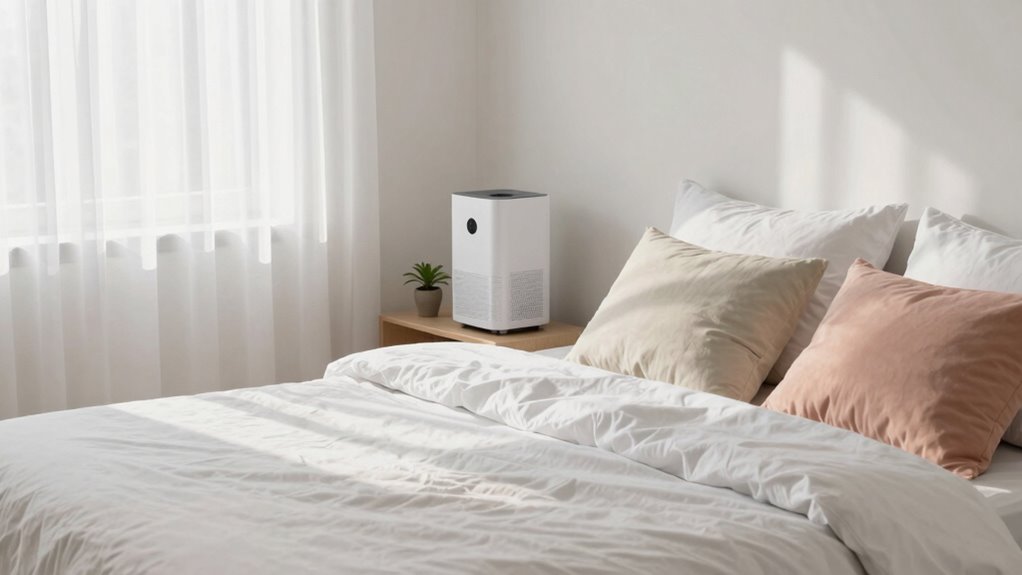
Good air quality in your bedroom is essential for getting restful sleep. When you focus on air quality testing, you can identify pollutant sources that may be affecting your environment. Common pollutants include dust mites, pet dander, mold spores, volatile organic compounds (VOCs), and cigarette smoke. These pollutants can trigger allergies, asthma, or respiratory issues, disrupting your sleep cycle. Poor air quality also leads to stuffiness and decreased oxygen levels, making it harder to breathe comfortably throughout the night. By understanding and addressing pollutant sources, you create a healthier sleep environment. Regular ventilation helps remove indoor pollutants and improves air circulation, further enhancing sleep quality. Clean air helps your body relax, reduces nighttime awakenings, and promotes deeper, more restorative sleep. Ensuring ideal air quality is a crucial step toward better sleep hygiene and overall well-being. Additionally, using air purifiers with HEPA filters can significantly reduce airborne allergens and improve sleep comfort. Incorporating smart ventilation systems can further optimize airflow based on real-time air quality data, enhancing your bedroom environment. Regular maintenance of your air purifier, such as filter cleaning and replacement, is essential to maintain optimal performance and ensure the air you breathe remains clean.
As an affiliate, we earn on qualifying purchases.
How to Improve Air Circulation in Your Bedroom
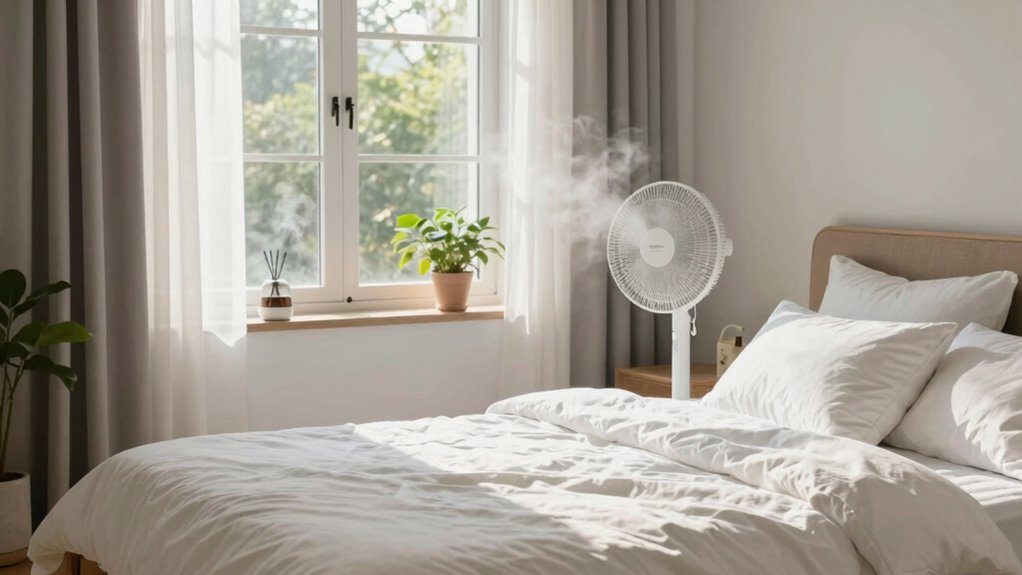
Improving air circulation in your bedroom is essential for maintaining fresh, healthy air and reducing pollutant buildup. Start by evaluating your air vent placement to ensure vents are positioned to promote even airflow throughout the room. Avoid blocking vents with furniture or curtains, which can hinder circulation. Using a fan is an effective way to enhance airflow; place it strategically near windows or doorways to create a breeze that moves stale air out and fresh air in. Consider oscillating fans for broader coverage and adjust their direction to target different parts of the room. Good ventilation prevents stuffiness and helps disperse indoor pollutants, leading to better sleep quality. Incorporating proper ventilation techniques can further optimize airflow and indoor air quality. Ensuring adequate airflow is maintained throughout the night helps prevent the buildup of indoor pollutants and improves overall sleep comfort. Consistently improving air circulation keeps your bedroom environment healthier and more comfortable overnight, especially when combined with energy-efficient ventilation systems. Properly managing airflow patterns can also reduce humidity levels and inhibit mold growth, contributing to a healthier sleeping environment. Additionally, air purification devices can help remove lingering airborne contaminants, further enhancing sleep quality.
As an affiliate, we earn on qualifying purchases.
Tips to Reduce Dust and Allergens for Better Sleep
Keeping your bedding clean by washing it regularly helps remove dust and allergens that can disrupt your sleep. Reducing clutter in your bedroom minimizes places where dust can collect and circulate. By taking these simple steps, you create a healthier environment that promotes better rest. Additionally, choosing safer riding habits for your daily routines can help prevent accidents and injuries, ensuring a more restful sleep at night. Implementing air quality improvements such as proper ventilation can further reduce indoor pollutants and support overall sleep quality. Incorporating air filtration devices can also help capture airborne particles, enhancing sleep comfort.
Regular Bedding Washing
Regularly washing your bedding is one of the most effective ways to reduce dust, allergens, and bacteria that can disrupt your sleep. Start with mattress maintenance by washing your sheets, pillowcases, and blankets weekly to keep allergens at bay. Fresh bedding prevents dust mites and mold buildup, which can trigger allergies or congestion. Pay special attention to pillow hygiene—replace pillows every 1-2 years and wash pillowcases frequently to eliminate allergens and bacteria. Use hot water whenever possible, as it kills dust mites and germs more effectively. Always follow manufacturer instructions for your bedding, and consider using allergen-proof covers for added protection. Incorporating ventilation techniques in your bedding setup can help improve airflow and reduce moisture buildup, further enhancing air quality. Additionally, air quality management plays a crucial role in maintaining a healthy sleep environment. Regular bedding washing not only improves air quality but also promotes a cleaner, healthier sleep environment. Maintaining proper hygiene practices can significantly reduce the presence of airborne irritants and allergens in your bedroom, especially when combined with air filtration devices or air purifiers.
Minimize Clutter and Dust
Reducing clutter around your bedroom not only creates a more organized space but also considerably cuts down on dust accumulation. When you keep surfaces clear and store items properly, dust and allergens have fewer places to settle. Focus on clutter organization by regularly sorting items and minimizing unnecessary belongings. This organized approach supports your inner wisdom by fostering a calmer environment conducive to restful sleep. To help you visualize, here’s a quick guide:
| Clutter Type | Dust Prevention Tip | Recommended Action |
|---|---|---|
| Clothes | Store in drawers or hampers | Keep laundry off the floor |
| Books & Papers | Use closed storage | Limit surface stacking |
| Decorations | Dust regularly | Reduce unnecessary items |
| Electronics | Clean screens often | Minimize dust-catching surfaces |
Keeping clutter under control promotes cleaner air and better sleep. Additionally, maintaining good ventilation in your bedroom helps reduce airborne dust and allergens, further improving sleep quality. Proper airflow can reduce airborne particles and create a healthier sleeping environment.
As an affiliate, we earn on qualifying purchases.
Using Air Purifiers and Plants to Clean Your Bedroom Air
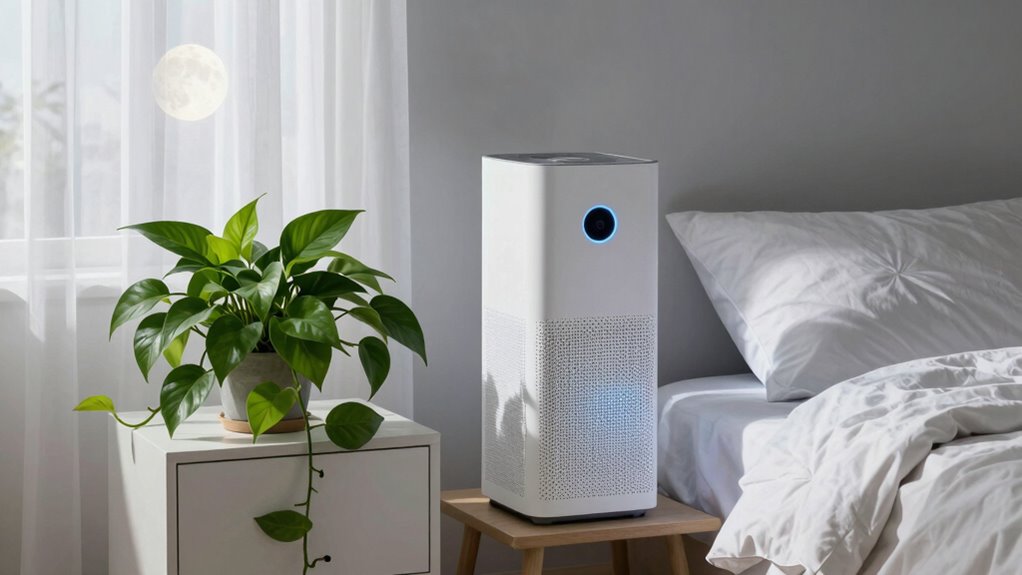
Using air purifiers and indoor plants is an effective way to improve your bedroom air quality. Air purifiers can quickly remove dust, allergens, and pollutants, making the air safer to breathe. Meanwhile, certain plants not only filter toxins but also add a natural touch to your space; some of the best options include snake plants and pothos. Incorporating vintage-inspired air quality solutions can also enhance your home’s aesthetic while maintaining a healthy environment. Additionally, choosing stylish air quality devices that blend with your decor can make maintaining fresh air more effortless and visually appealing. Selecting air filtration methods that suit your room size and needs ensures optimal performance and cleaner air.
Benefits of Air Purifiers
Air purifiers are an effective way to improve your bedroom’s air quality by removing pollutants and allergens that can cause health issues. They help reduce dust, pet dander, and airborne irritants, leading to easier breathing and better sleep. Different air purifier types, such as HEPA, activated carbon, and ionic models, cater to specific needs. Regular air purifier maintenance guarantees ideal performance and longevity. Here’s a quick comparison:
| Air Purifier Type | Best For | Maintenance Tips |
|---|---|---|
| HEPA | Allergies | Change filters regularly |
| Activated Carbon | Odors | Clean exterior monthly |
| Ionic | Airborne particles | Monitor for dust buildup |
Best Indoor Plants
In addition to air purifiers, incorporating certain indoor plants can substantially enhance your bedroom’s air quality. Plants like snake plants, pothos, and peace lilies are known for their ability to filter toxins and improve air freshness. Proper indoor plant care is essential; verify they receive adequate light and avoid overwatering. When it comes to plant placement, position them where they won’t be disturbed and where they can access indirect sunlight. Keep them out of drafts and away from heating vents to prevent stress. Regularly dust the leaves to maximize their air-purifying benefits. By choosing the right plants and caring for them properly, you’ll create a healthier sleeping environment that promotes better air quality and restful sleep.
bedroom air purifier replacement filters
As an affiliate, we earn on qualifying purchases.
As an affiliate, we earn on qualifying purchases.
Managing Humidity Levels for Comfortable Sleep
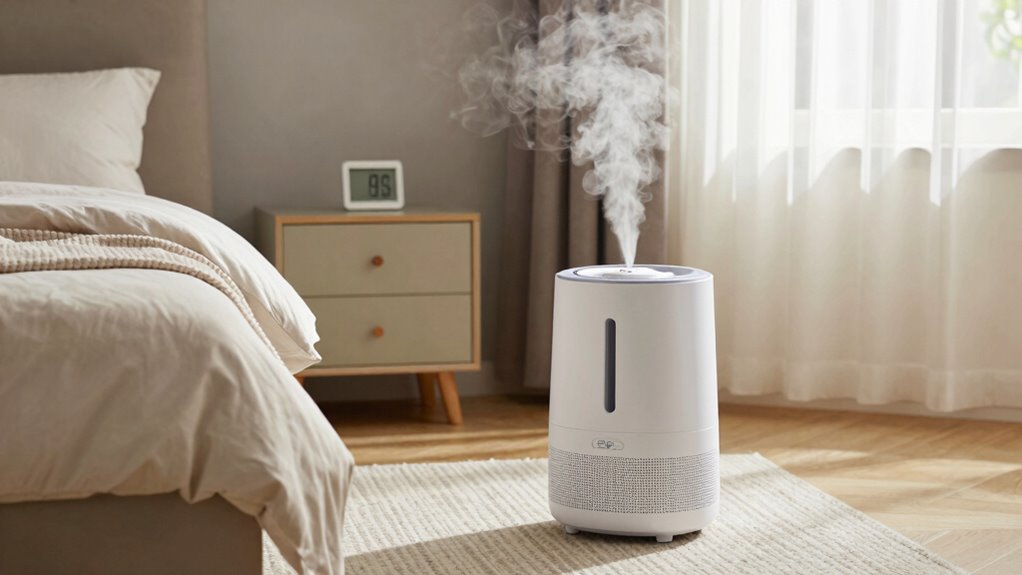
Maintaining the right humidity levels in your bedroom is essential for a comfortable and restful sleep. When humidity is too high or low, it can cause discomfort, congestion, or dry skin. To manage this, use effective moisture control techniques like using a humidifier properly. Regular humidifier maintenance ensures it functions efficiently and prevents mold or bacteria buildup. Aim for a humidity level between 40-60%. Here are key tips:
- Keep humidity within the recommended range using a hygrometer.
- Use a humidifier or dehumidifier as needed to adjust moisture levels.
- Maintain your humidifier by cleaning it regularly to prevent mold and bacteria.
These small steps help create an ideal sleeping environment and improve overall air quality in your bedroom.
Lifestyle Habits to Boost Your Bedroom’s Air Quality

Adopting healthy lifestyle habits can notably improve your bedroom’s air quality. Start by scheduling regular air quality testing to identify potential pollutants and allergens. Proper bedroom ventilation is essential; open windows daily to allow fresh air in and stale air out. Consider using exhaust fans or air purifiers to reduce dust, pet dander, and indoor chemicals. Keep your bedroom clutter-free to prevent dust buildup and avoid smoking indoors, which can greatly degrade air quality. Maintain clean bedding and vacuum frequently to minimize allergens. Additionally, avoid using harsh chemical cleaners in the bedroom. Simple habits like these ensure you’re consistently improving air circulation and reducing airborne pollutants, creating a healthier environment that promotes better sleep and overall well-being.
Frequently Asked Questions
How Often Should I Replace or Clean My Air Purifier Filters?
You should replace your air purifier filters every 3 to 6 months, depending on usage and air quality. Regular filter replacement is key to effective purifier maintenance, ensuring it works efficiently and improves your sleep environment. Check the manufacturer’s recommendations, and if you notice reduced airflow or odors, it’s time to clean or replace the filters sooner. Proper purifier maintenance keeps your bedroom air clean and helps you sleep better.
Can Certain Mattress Types Affect Indoor Air Quality?
Certain mattress types can impact your indoor air quality. For example, foam mattresses made from synthetic materials may release volatile organic compounds (VOCs), affecting air quality. Additionally, mattresses with poor breathability can lead to allergen buildup, like dust mites and mold, which can worsen indoor air. To improve your sleep environment, choose natural or hypoallergenic materials, and regularly clean and air out your mattress to reduce allergen buildup.
What Are Natural Ways to Eliminate Odors in the Bedroom?
To naturally eliminate odors in your bedroom, try air freshening techniques like opening windows for fresh air or using essential oil diffusers. You can also incorporate odor absorption methods such as placing bowls of baking soda or activated charcoal around the room to trap smells. Regularly washing bedding and vacuuming carpets helps keep your space fresh. These simple steps improve air quality and create a more inviting sleep environment.
Do Air Quality Levels Vary by Bedroom Size or Layout?
Yes, air quality levels do vary by bedroom size and layout. Larger rooms with more volume may have better air circulation naturally, but they can also trap more pollutants if ventilation isn’t sufficient. Smaller spaces might need more active air circulation methods, like fans or air purifiers, to maintain good air quality. Understanding your room’s volume and layout helps you choose the right ventilation to keep your air fresh and conducive to sleep.
Are There Specific Houseplants That Are Safe for Bedrooms?
Did you know that over 20% of households use houseplants to improve indoor air? For safe bedroom greenery, opt for air purifying plants like snake plants, pothos, or peace lilies. They remove toxins and boost oxygen levels without risking your health. These plants are easy to care for and perfect for creating a calming, healthier sleeping environment. Incorporate them into your bedroom for better sleep and cleaner air.
Conclusion
Improving your bedroom air quality can genuinely enhance your sleep. While some believe air purifiers alone are enough, integrating multiple strategies creates a healthier environment. Research suggests that good air quality not only helps you fall asleep faster but also deepens sleep cycles, boosting overall rest. By managing humidity, reducing allergens, and ensuring proper circulation, you set the stage for better sleep—and science shows these small changes can make a significant difference in your nightly rest.
Cold & flu season Picks
humidifiers
As an affiliate, we earn on qualifying purchases.