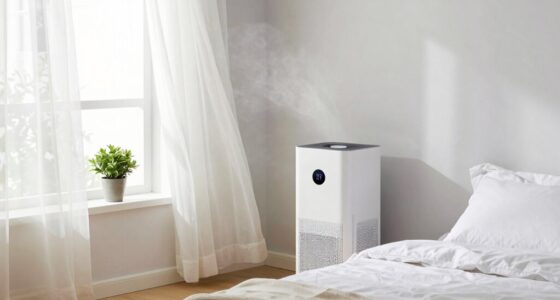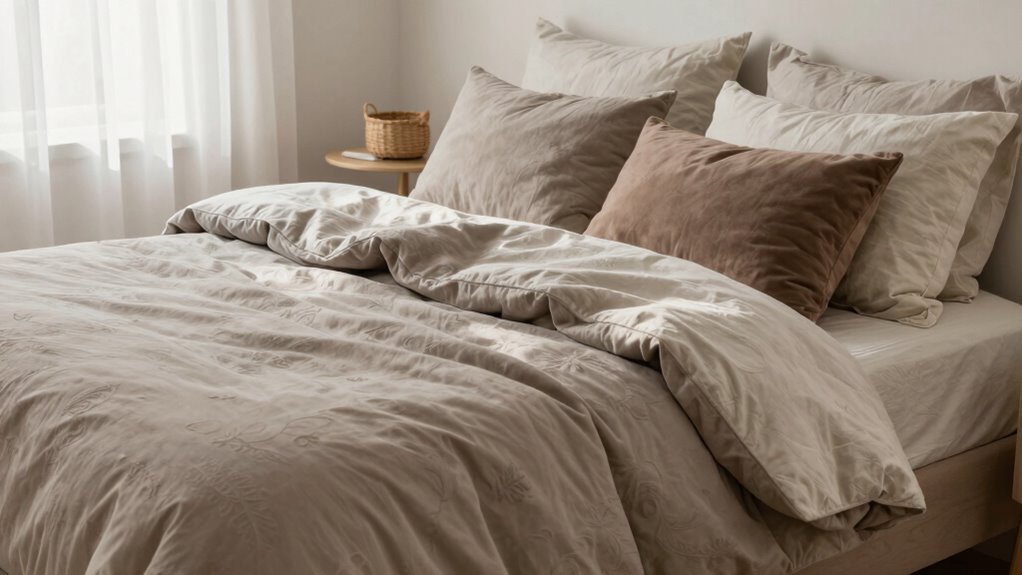

Your bedroom textiles, like sheets, pillowcases, and blankets, have a hidden impact on your sleep quality. Soft, breathable fabrics help regulate temperature and reduce discomfort, making it easier to fall and stay asleep. Meanwhile, rough or irritating materials can disrupt your rest and cause allergies or skin irritation. Choosing hypoallergenic, natural fibers improves comfort and health. If you want to discover how to optimize your sleep environment, you’ll find helpful insights ahead.

Get home appliances delivered free with Prime
- Fast, free delivery on millions of items
- Prime Video, Amazon Music and more included
- Member-only deals all year
Key Takeaways
- Fabrics’ softness and texture directly influence relaxation and ease of falling asleep.
- Breathable textiles help maintain optimal body temperature, preventing overheating or chills.
- Allergic reactions caused by certain dyes or chemicals in textiles can disrupt sleep quality.
- Smooth, hypoallergenic fabrics promote comfort and reduce skin irritation during rest.
- Textile choices impact sleep depth and continuity by either supporting or hindering relaxation.
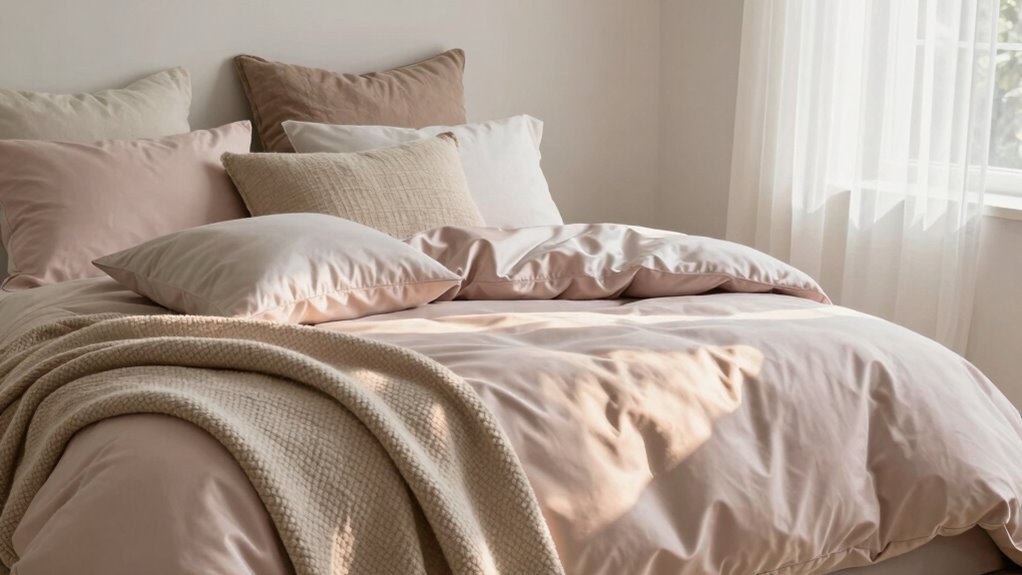
Have you ever wondered how your bedroom textiles impact your sleep? The truth is, the fabrics you choose for your sheets, pillowcases, and blankets can considerably influence the quality of your rest. It’s not just about aesthetics or warmth; it’s about how the textiles feel against your skin and how they affect your body’s comfort throughout the night. When you select fabrics that are too rough or irritating, you might unknowingly be disrupting your sleep cycle. Conversely, soft, breathable textiles can promote relaxation and help you fall asleep faster.
One key factor to reflect on is fabric allergies. Some textiles contain dyes, chemicals, or fibers that can trigger allergic reactions or skin sensitivities. If you notice redness, itching, or discomfort after sleeping, your bedding might be the culprit. Allergic reactions can cause restless nights, frequent waking, or even difficulty falling asleep altogether. Choosing hypoallergenic fabrics, like organic cotton or silk, can reduce these risks, ensuring your sleep environment is safe and soothing. Being mindful of fabric allergies means you can avoid the discomfort that interrupts your rest and create a healthier sleeping space.
Texture comfort plays an equally important role in how well you sleep. The feel of your bedding against your skin can either enhance relaxation or cause irritation. If your sheets are coarse or rough, they might create friction that prevents you from settling in comfortably. On the other hand, fabrics with a smooth, gentle texture—such as sateen or bamboo—can help you feel more at ease. The right texture encourages your body to relax, reducing tension and making it easier to drift into a restful sleep. Additionally, breathable textiles help regulate your body temperature, preventing overheating or chills that wake you up in the middle of the night. Understanding the impact of fabric fibers can guide you toward healthier sleep choices.
Choosing the right bedroom textiles involves more than just picking a color or pattern; it’s about prioritizing your comfort and health. Look for natural fibers that are soft, breathable, and free from harsh chemicals. Pay attention to how the fabrics feel against your skin and how well they support a comfortable sleep environment. Remember, the textiles you sleep on influence not only how quickly you fall asleep but also the depth and quality of your rest. By making mindful choices about fabric allergies and texture comfort, you set yourself up for more restful, uninterrupted nights—because good sleep starts with the right textiles.
As an affiliate, we earn on qualifying purchases.
Frequently Asked Questions
Can Certain Textile Colors Affect Sleep Quality?
Yes, certain textile colors can affect your sleep quality by influencing your sleep environment through color psychology. Soft, calming hues like blue and green promote relaxation and help you unwind, making it easier to fall asleep. Bright or stimulating colors like red or yellow may increase alertness, disrupting your sleep. By choosing textiles in soothing shades, you create a more peaceful sleep environment, enhancing overall restfulness and well-being.
Do Natural Fibers Improve Sleep More Than Synthetic Ones?
Natural fibers generally improve sleep more than synthetic ones because of their superior fiber breathability, which helps regulate your body temperature and keeps you comfortable all night. They also tend to be softer and less irritating on your skin. While synthetic fabrics offer durability, they often lack breathability, potentially trapping heat and moisture. Choosing natural fibers like cotton or linen can create a cooler, more restful sleep environment.
How Often Should Bedroom Textiles Be Washed for Optimal Sleep?
You should wash your bedroom textiles weekly to maintain a ideal sleep environment. Regular cleaning removes dust, allergens, and sweat that can disrupt sleep quality. Pay attention to bedroom lighting, as dim, soft lighting helps create a calming atmosphere. Keeping textiles fresh and clean enhances comfort, supporting better sleep. Consistent washing and a cozy sleep environment contribute greatly to restful nights, so make it a weekly routine.
Are There Specific Textures That Promote Better Relaxation?
You should choose textures that promote relaxation, like smooth, soft fabrics such as cotton or linen, which feel gentle against your skin. Avoid rough or highly textured patterns that can cause discomfort. Focus on fabric durability to guarantee your textiles stay cozy over time. Opting for calming textures and simple patterns can help you unwind more easily, creating a peaceful environment that encourages restful sleep and reduces stress.
Do Hypoallergenic Textiles Reduce Sleep Disturbances?
Imagine your sleep as a delicate dance, and hypoallergenic textiles are the gentle partners that prevent allergy flare-ups. Yes, they do reduce sleep disturbances by minimizing allergens, which often trigger sneezing or congestion. Their fabric breathability keeps air flowing, preventing heat buildup. This creates a clean, comfortable environment, allowing you to breathe easier and enjoy uninterrupted rest. Hypoallergenic textiles truly make your bedroom a sanctuary for restful sleep.
breathable organic cotton sheets
As an affiliate, we earn on qualifying purchases.
As an affiliate, we earn on qualifying purchases.
Conclusion
By choosing the right bedroom textiles, you can genuinely improve your sleep quality. Think beyond just comfort—consider how fabrics influence temperature, moisture, and even allergens. It’s easy to overlook these details, but small changes can make a big difference in how rested you feel. Don’t underestimate the power of your bedding choices; they’re a simple step toward more restful nights and energized mornings. Your best sleep might be just a fabric choice away.
As an affiliate, we earn on qualifying purchases.
chemical-free natural fiber bedding
As an affiliate, we earn on qualifying purchases.
As an affiliate, we earn on qualifying purchases.
Halloween Picks
halloween
As an affiliate, we earn on qualifying purchases.