
Your sleep position and nasal airflow play a big role in snoring. When you sleep on your back, gravity pulls tissues downward, which can block your airway and cause vibrations. Nasal congestion makes it harder to breathe through your nose, forcing you to breathe through your mouth and increasing vibrations. By adjusting your position and clearing your nasal passages, you can reduce snoring and enjoy more restful sleep. Keep going to discover how these factors really influence snoring.

Get home appliances delivered free with Prime
- Fast, free delivery on millions of items
- Prime Video, Amazon Music and more included
- Member-only deals all year
Key Takeaways
- Sleeping position affects gravity’s pull on throat tissues, influencing airway narrowing and snoring severity.
- Side sleeping and head elevation help keep the airway open, reducing vibrations and snoring noise.
- Nasal congestion increases airway resistance, causing mouth breathing and amplified tissue vibrations.
- Clear nasal passages improve airflow, decreasing tissue vibrations and promoting quieter sleep.
- Proper sleep posture and nasal airflow management are simple strategies to reduce snoring effectively.
As an affiliate, we earn on qualifying purchases.
What Causes Snoring? The Basics Explained
Have you ever wondered what causes snoring? It all starts with the way air flows through your mouth and nose during sleep. A loud night often signals that your airway is partially blocked, creating vibrations in the tissues at the back of your throat. These vibrations produce the familiar snoring sound. Sometimes, breathing pauses occur when the airway becomes completely obstructed, causing you to stop breathing momentarily. This interruption forces your body to wake briefly, disrupting your sleep cycle. Factors like relaxed throat muscles, excess tissue, or nasal congestion contribute to these obstructions. Recognizing that loud night noises and breathing pauses are signs of airway resistance helps you identify when snoring might be more than just a nuisance. Understanding airway resistance is key to addressing sleep disturbances effectively.
As an affiliate, we earn on qualifying purchases.
How Your Sleeping Position Affects Snoring
Your sleeping position plays a considerable role in whether you snore or not. Your sleep posture directly influences your breathing mechanics, affecting how open or restricted your airway becomes during sleep. Sleeping on your back can cause your tongue and soft palate to collapse to the back of your throat, narrowing the airway and increasing snoring chances. In contrast, sleeping on your side helps keep your airway open by preventing tissue collapse, promoting smoother airflow. Proper sleep posture supports better breathing mechanics, reducing vibrations in your throat that produce snoring sounds. Exploring sleep position adjustments can be a simple yet effective step toward quieter nights. By paying attention to how you sleep, you can considerably impact your snoring and overall sleep quality.
bedside adjustable head elevation pillow
As an affiliate, we earn on qualifying purchases.
As an affiliate, we earn on qualifying purchases.
How Gravity Can Block Your Airway During Sleep
Gravity plays a significant role in how your airway behaves during sleep. Its effects can cause tissues in your throat to relax and shift downward, narrowing the airway. This airway obstruction occurs more easily when you’re lying on your back, as gravity pulls the tongue and soft palate toward the back of your throat. This added pressure can block airflow, leading to snoring or even pauses in breathing. Understanding how gravity influences airway obstruction helps explain why certain positions worsen snoring. When you sleep without proper support or in a position that encourages tissue collapse, gravity effects intensify, increasing the likelihood of airway blockage. Recognizing this connection allows you to make adjustments that minimize gravity’s impact and promote better airflow during sleep. Proper positioning during sleep can help counteract gravity’s effects and reduce snoring.
As an affiliate, we earn on qualifying purchases.
Sleeping on Your Back vs. Side: Which Is Better for Snoring?

Sleeping on your back often worsens snoring because gravity causes your tongue and soft tissues to fall back into the airway, blocking airflow. Switching to your side can reduce snoring by preventing this collapse and keeping your airways open. Your sleep posture matters—side sleeping generally promotes easier breathing than back sleeping. The firmness of your mattress also impacts your sleep position; a firm mattress supports better alignment, while a too-soft one may cause you to sink and worsen snoring. Consider this comparison:
| Sleep Position | Effect on Snoring | Mattress Firmness |
|---|---|---|
| Back | Worsens snoring | Often too soft or uneven |
| Side | Reduces snoring | Supports proper alignment |
Proper airway management during sleep plays a crucial role in minimizing snoring and improving sleep quality.
How Nasal Congestion Leads to Snoring
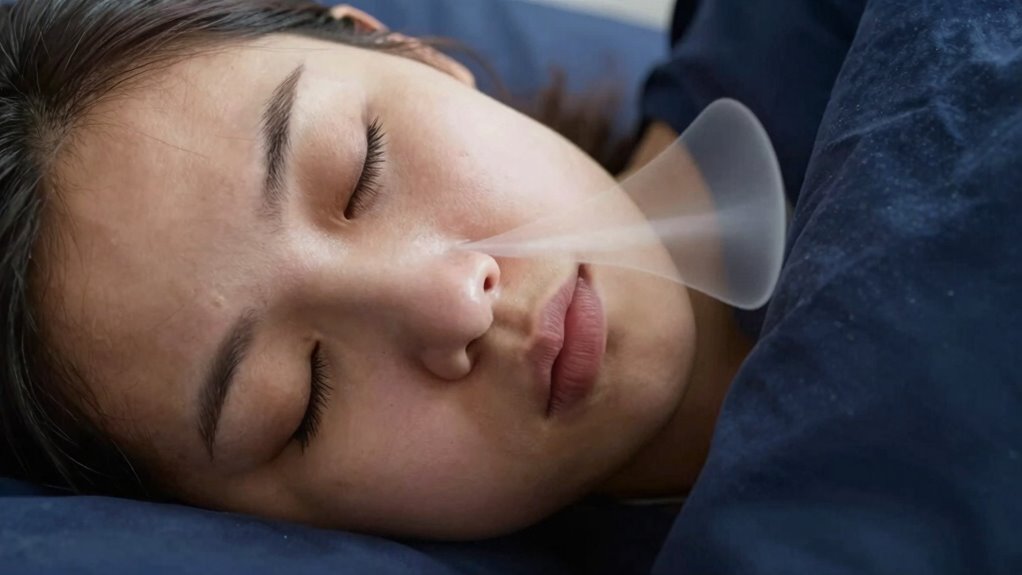
Have you ever noticed that nasal congestion makes snoring worse? Your nasal anatomy plays a key role here. When your nasal passages are blocked due to sinus inflammation, airflow becomes restricted. This forces you to breathe through your mouth, which increases the likelihood of snoring. Sinus inflammation causes swelling of the mucous membranes, narrowing the nasal passages further. As airflow struggles to pass through congested areas, tissues in your throat vibrate more, generating the snoring sound. Even minor congestion can markedly impact your breathing during sleep. When your nasal passages are obstructed, your body compensates by trying to breathe harder, which amplifies vibrations in your airway. Clearing congestion helps improve airflow and reduces the chances of snoring caused by nasal blockage. Proper airflow is essential for minimizing airway vibrations and promoting restful sleep.
Why Clear Nasal Passages Make a Difference in Breathing
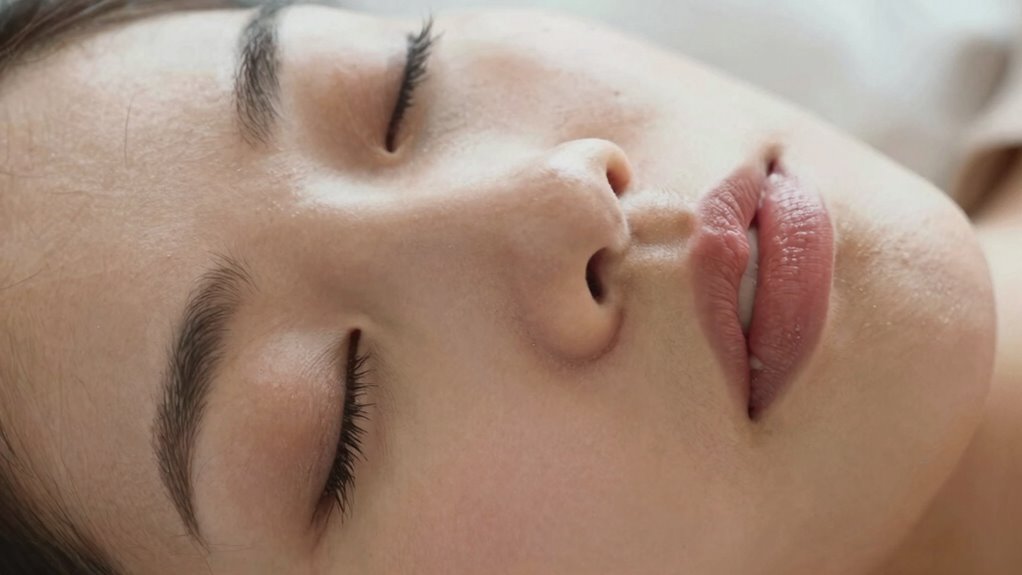
When your nasal passages are clear, breathing becomes much easier and more efficient. Proper nasal hygiene helps prevent congestion that can disrupt airflow during sleep. Keeping your passages open makes a noticeable difference in reducing snoring and improving overall breathing. Additionally, maintaining quality and client satisfaction in your approach can lead to better health outcomes.
Nasal Congestion Causes Disrupted Breathing
Nasal congestion can considerably disrupt your breathing during sleep, making it harder to get a restful night. When your nasal passages are blocked, airflow becomes restricted, forcing you to breathe through your mouth, which can worsen snoring. Your sleep environment and lifestyle factors play a role in congestion; allergens in your room or exposure to irritants can worsen nasal blockages. Additionally, habits like smoking or consuming alcohol close to bedtime can inflame nasal tissues, increasing congestion. When your nasal passages aren’t clear, your body struggles to get enough oxygen, leading to disrupted sleep and potentially more snoring. Maintaining a healthy sleep environment and making lifestyle adjustments can help keep your nasal passages open, ensuring smoother airflow and more restful sleep. Understanding the impact of nasal airflow is essential for addressing snoring effectively.
Proper Nasal Hygiene Enhances Airflow
Maintaining proper nasal hygiene is essential for ensuring clear airways and better breathing during sleep. Using nasal sprays can help keep your passages moist and reduce inflammation, making it easier to breathe freely. Regularly clearing your nasal passages prevents buildup of mucus and allergens that can block airflow. Additionally, the benefits of a humidifier go beyond just adding moisture; it helps keep nasal tissues hydrated, reducing congestion and dryness that often worsen snoring. When your nasal passages are clear, you breathe more easily and quietly, decreasing the chances of snoring disruptions. Incorporating these simple habits into your nightly routine can improve airflow and contribute to more restful sleep. Ensuring proper air purifier maintenance also supports a cleaner environment, helping to reduce airborne irritants that can contribute to congestion. Clear nasal passages are key to smoother, more comfortable breathing all night long.
Simple Techniques to Improve Your Nasal Airflow

Improving your nasal airflow can make a significant difference in reducing snoring, and fortunately, there are simple techniques you can try. Using nasal sprays can help clear nasal passages and reduce congestion, making breathing easier. Additionally, practicing breathing exercises can strengthen your nasal muscles and promote better airflow. Selecting the right type of home theater projector based on your space and needs can further enhance your overall comfort and sleep quality. Humidifiers can also keep nasal passages moist, providing relief from dryness that may contribute to snoring.
How Breathing Patterns Impact Snoring

Your breathing patterns during sleep directly influence the likelihood and severity of snoring. A disrupted breathing rhythm, such as irregular pauses or rapid breaths, can cause the airway to narrow or vibrate, producing snoring sounds. Airflow dynamics play an essential role; shallow or uneven airflow increases turbulence, making snoring worse. When your breathing becomes irregular, muscles in your throat may relax unevenly, contributing to airway obstruction. Conversely, steady, deep breaths promote smoother airflow, reducing vibrations. Recognizing Youngster Choice as a factor in personal habits can help you understand how different patterns impact snoring. Improving your breathing patterns—like inhaling fully and maintaining consistent airflow—can markedly decrease snoring episodes. Focusing on airflow dynamics ensures that your airway remains open and less prone to vibrations during sleep.
Easy Tips to Adjust Your Sleep Position for Less Snoring

To reduce snoring, try sleeping on your side instead of your back, which keeps your airways open. Elevating your head slightly can also help prevent airway blockage and improve airflow. Avoid sleeping on your back altogether, as this position often worsens snoring by causing your tongue and soft tissues to collapse backward.
Sleep on Your Side
Sleeping on your side can substantially reduce snoring by helping your airway stay open and preventing the throat muscles from collapsing. This improved sleeping posture promotes better airway clearance, making breathing easier and quieter throughout the night. To make this change easier, try using a body pillow or placing a pillow behind your back to avoid rolling onto your stomach. Remember, consistent side sleeping can lead to more restful nights and less daytime fatigue.
| Feeling Rested | Less Snoring | More Energy |
|---|---|---|
| Sleep peacefully | Breathe freely | Wake refreshed |
| Wake up energized | No more interruptions | Enjoy deep rest |
Elevate Your Head Slightly
Raising your head slightly can make a noticeable difference in reducing snoring. Proper pillow elevation helps keep airways open, easing airflow and decreasing vibration. Adjusting head positioning prevents the throat from collapsing and minimizes snoring sounds. To achieve this, consider these tips:
- Use extra pillows or a wedge pillow for ideal pillow elevation
- Choose a firm pillow that supports proper head positioning
- Avoid stacking multiple pillows that cause your head to tilt awkwardly
- Maintain a neutral head position, not too elevated or flat
- Ensure your pillow keeps your head aligned with your spine
Small adjustments in pillow elevation can greatly improve airflow, making your sleep quieter and more restful. Focus on finding the right head positioning to reduce snoring effectively.
Avoid Sleeping on Back
Lying on your back often worsens snoring because the tongue and soft tissues can fall into the airway, blocking airflow. To improve your sleeping posture, try sleeping on your side instead. Using the right pillow support can make this easier—choose a pillow that keeps your head and neck aligned without forcing your sleeping posture into an uncomfortable position. You might also consider placing a pillow behind your back to prevent rolling onto your back during sleep. Elevating your head slightly with a supportive pillow can help maintain a side position and keep your airways open. Avoid pillows that cause your head to bend forward or downward, as this can worsen snoring. Adjusting your sleep position with proper pillow support is a simple yet effective way to reduce snoring caused by poor sleeping posture.
When Should You See a Doctor About Snoring?
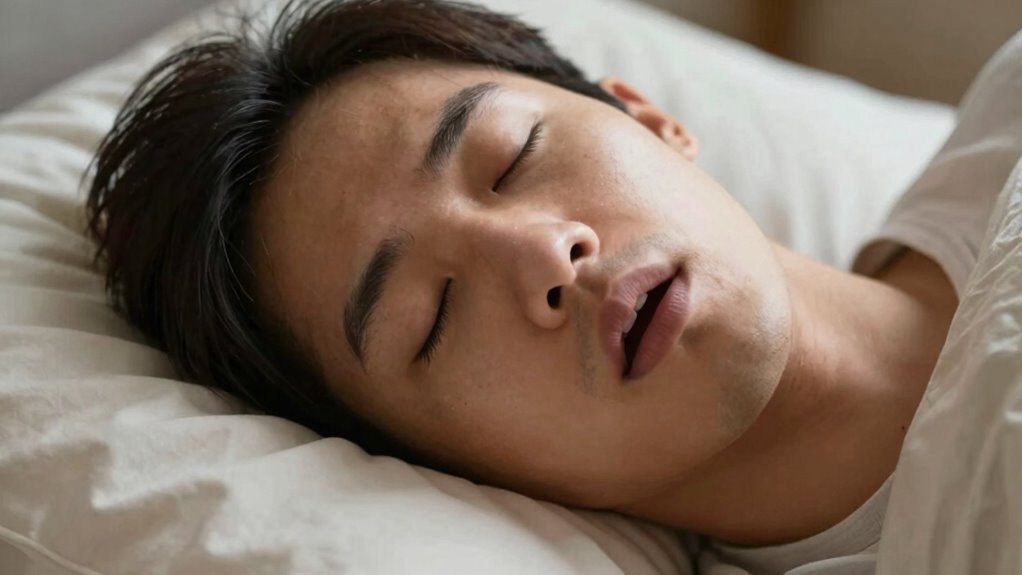
You should see a doctor about your snoring if it happens frequently or is loud enough to disturb your sleep or your partner’s. Persistent snoring can signal underlying health issues like sleep apnea. Consider consulting a healthcare professional if you notice:
See a doctor if your snoring is frequent or disruptive to your sleep or your partner’s health.
- Gasping or choking during sleep
- Excessive daytime fatigue
- High blood pressure or obesity
- Restless sleep or frequent awakenings
- Worsening snoring despite improving sleep hygiene or making lifestyle changes
Addressing snoring often involves improving sleep hygiene and adopting lifestyle changes, but persistent issues may need medical evaluation. Ignoring symptoms can lead to serious health risks. Seeing a doctor ensures proper diagnosis and treatment, helping you sleep better and protect your overall health.
Frequently Asked Questions
Can Lifestyle Changes Reduce Snoring Naturally?
Yes, lifestyle modifications can help reduce snoring naturally. You should consider losing excess weight, which can lessen pressure on your airways. Incorporate breathing exercises into your routine to strengthen your respiratory muscles and improve airflow. Avoid alcohol and sedatives before bed, as they relax throat muscles. Changing your sleep position, like sleeping on your side, can also make a significant difference. These steps can lead to quieter, more restful nights.
Are There Specific Sleeping Positions Recommended for Heavy Snorers?
Think of your sleeping posture as your personal symphony—certain positions can quiet the noise. For heavy snorers, sleeping on your side with your head elevated encourages better breathing techniques and reduces airway obstruction. Avoid sleeping on your back, which can worsen snoring. Use pillows or specialized cushions to support this position. By adjusting your sleeping posture, you can markedly diminish snoring and enjoy more restful nights.
How Does Alcohol Consumption Influence Nasal Airflow During Sleep?
Alcohol effects your nasal airflow during sleep by causing nasal congestion and relaxing your throat muscles. This relaxation can block your airways, making it harder to breathe through your nose. As a result, you might breathe more through your mouth, increasing snoring. If you want to reduce snoring and improve airflow, it’s best to limit alcohol intake before bed, especially if you notice increased congestion or breathing difficulty after drinking.
Do Sleep Apnea Devices Help With Positional Snoring?
Yes, sleep apnea devices can help with positional snoring. They often work by encouraging better sleep posture, preventing you from sleeping on your back, which worsens snoring. Using nasal strips can also improve airflow through your nasal passages, reducing snoring caused by nasal congestion. Combining devices that promote proper sleep posture with nasal strips can markedly decrease your snoring and improve your sleep quality.
What Role Does Hydration Play in Reducing Nasal Congestion?
Hydration impacts your nasal congestion by keeping nasal tissues moist and reducing inflammation. When you’re well-hydrated, your nasal passages stay moist, improving airflow and decreasing blockages. Adequate hydration boosts nasal moisture, helping prevent dryness that can worsen congestion. Drinking plenty of fluids throughout the day supports better nasal health, making it easier to breathe freely at night and potentially reducing snoring caused by nasal blockage.
Conclusion
Now that you know how your sleep position and nasal airflow influence snoring, it’s time to take action. Small adjustments can make a big difference, so don’t let snoring become a thorn in your side. Remember, sometimes you need to change the tune to find harmony, and if issues persist, seeing a doctor might be your best bet. Sweet dreams are just a position or breath away—don’t let snoring keep you from them.
Fall Picks
fall essentials
As an affiliate, we earn on qualifying purchases.