
To determine if your squeaky bed is caused by the mattress or the frame, start by testing different areas—sit or bounce gently on each part to identify where the noise originates. Check for loose joints, screws, and broken parts in the frame, and inspect the mattress for sagging, tears, or worn springs. Often, squeaks from movement point to the frame, while persistent creaks when shifting suggest a mattress issue. The tips ahead will help you pinpoint the culprit more precisely.
Key Takeaways
- Apply gentle pressure or bounce on different bed areas to determine if noise originates from the mattress or frame.
- Inspect joints, bolts, and moving parts of the frame for looseness, damage, or misalignment causing squeaks.
- Listen for creaks during movement; squeaks from the mattress often occur when shifting positions or during weight shifts.
- Visually check the mattress for sagging, tears, or internal damage like broken springs, indicating mattress issues.
- Test contact points between the frame, mattress, and floor; friction here often causes noise and can be mitigated with lubrication or padding.
What Causes Your Bed to Squeak or Creak?

Ever wonder why your bed squeaks or creaks whenever you move? It often comes down to the bed material and frame design. Certain bed materials, like wood, tend to expand and contract with temperature changes, causing creaking sounds. Metal frames can also produce noise if they’re poorly assembled or lack proper lubrication. The frame design plays a significant role too; simple, loose joints or squeaky connectors create friction every time you shift, leading to noise. If your frame has uneven supports or is not securely fitted, you’ll notice more squeaks and creaks. Regularly tightening bolts and choosing sturdy materials can reduce these sounds. Additionally, using lubricants or padding on contact points can help dampen noise and improve comfort. Proper frame construction and maintenance are essential for minimizing disturbances and enhancing your sleep quality. Being aware of bed material properties can help you select the best options for quieter, more restful nights. Recognizing these factors can also prevent unnecessary bed replacement costs and extend the lifespan of your furniture. Incorporating soundproofing techniques can further help reduce noise transmission through the frame.
How Can You Tell if Your Mattress Is Causing Noise?
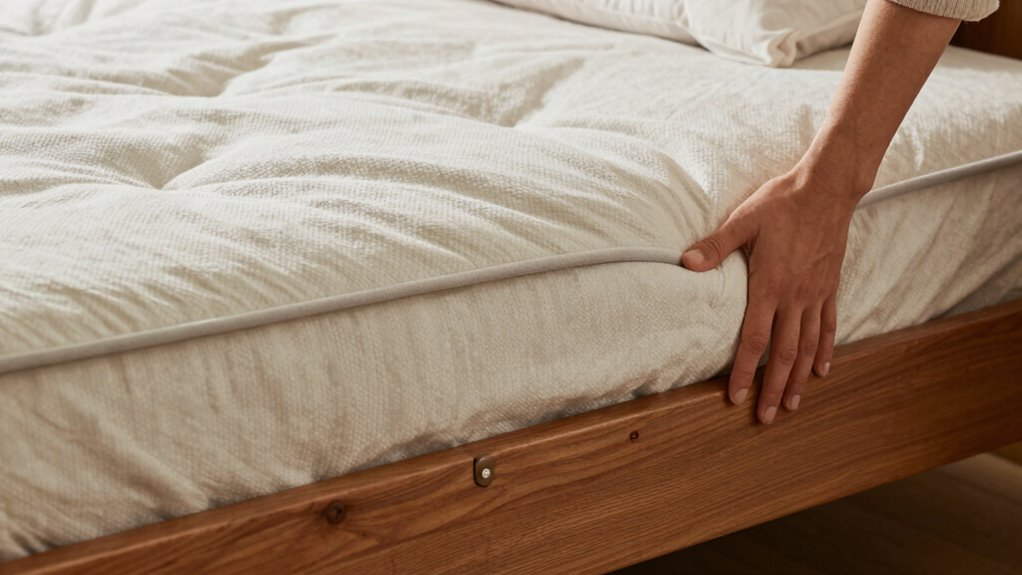
To determine if your mattress is causing noise, start by listening for squeaking sounds when you move. Check for sagging areas that might indicate worn springs or foam. Additionally, observe if your mattress shifts or moves more than usual during use. Incorporating a supportive foundation can also impact noise levels and overall stability. Regularly inspecting the spring system can help identify issues before they worsen. Ensuring proper ventilation around your sleeping area can also reduce moisture buildup that may contribute to noise and deterioration. Proper bed frame construction and material quality play crucial roles in minimizing noise and enhancing durability. Being aware of noise sources related to bedding components can further help you diagnose and resolve the problem effectively.
Listen for Squeaking Sounds
Squeaking sounds are a common sign that your mattress may be causing noise issues. When you hear squeaks during movement, listen closely to determine where they originate. If the noise seems to come from the bed frame, it might be loose or worn out. However, if the squeaking persists even when you’re not moving the frame, your mattress materials could be the culprit. Some mattresses, especially those with metal coils or springs, tend to produce squeaks over time. Foam or latex mattresses generally don’t squeak unless they’re compressed against a noisy frame. To pinpoint the source, try gently shifting your position and listening carefully. Identifying whether the noise comes from the bed frame or the mattress can help you decide whether to tighten, replace, or adjust your sleeping setup. Additionally, understanding ergonomics can help optimize your overall sleep environment to minimize noise and improve comfort. Recognizing the signs of wear and tear in your mattress can also prevent further noise issues and prolong its lifespan. Conducting a regular inspection of bed components can help catch potential problems early before they lead to persistent noise. Moreover, ensuring that all components are properly assembled and secured can further reduce squeaking and extend your mattress’s usability.
Check for Sagging Areas
How can you tell if your mattress is causing noise? One sign is sagging areas that affect spring tension. When you lie down, look for dips or indentations, especially around the middle or edges. These sagging spots often result from worn-out springs or mattress material breakdown, leading to increased noise during movement. To visualize your mattress’s condition, consider this:
| Sagging Signs | Possible Cause |
|---|---|
| Uneven surface | Mattress sagging from prolonged use |
| Soft spots | Spring tension loss |
| Noise during movement | Mattress or spring deterioration |
If you notice these signs, your mattress may be the source of noisy disturbances, caused by sagging and reduced spring tension. Addressing it early prevents further discomfort and noise issues.
Identify Mattress Movement
Ever notice a creaking or groaning sound when you shift positions on your mattress? That’s often a sign that mattress shifting or bed movement is causing the noise. To confirm, try these steps:
- Observe if the noise occurs only when you change positions or also during the night.
- Gently push or lift different areas of the mattress to see if it moves or creaks excessively.
- Check if the mattress feels loose or unstable on the bed frame.
- Listen closely during movement—does the sound come from the mattress itself or the frame?
- Inspect the bed frame’s support structure to ensure it’s sturdy and properly assembled.
- Consider mattress stability factors that could contribute to shifting or noise, such as uneven surfaces or worn components.
If bed movement is causing noise, it’s likely your mattress shifting or not sitting securely. Identifying this helps determine if the issue is the mattress or the frame, guiding your next steps.
How Do You Know if Your Bed Frame Is Making Noise?
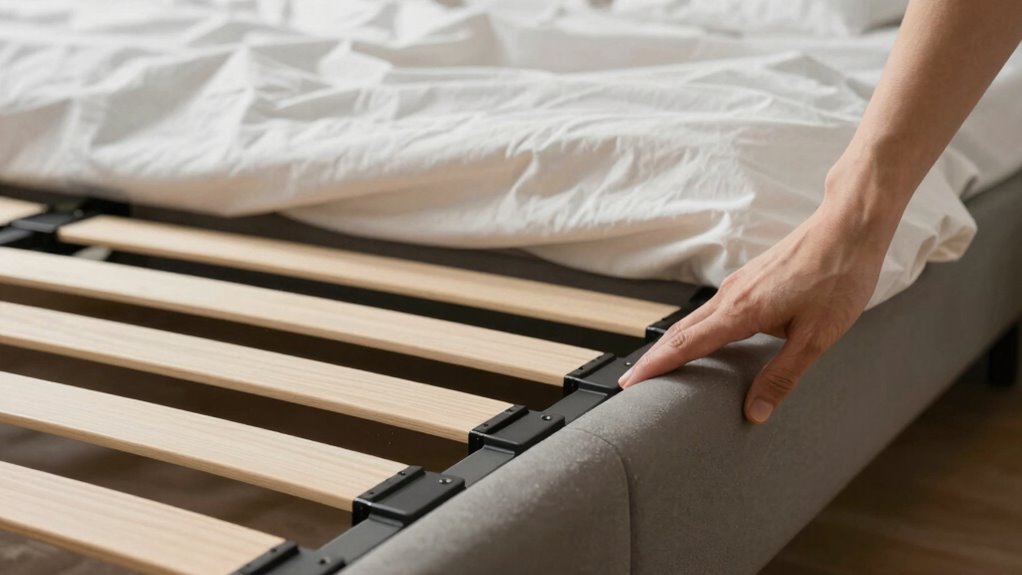
Noticing unusual noises from your bed frame can be a sign it’s causing trouble. To determine if your frame is the culprit, start with a thorough bed frame inspection. Look for loose bolts, screws, or joints that might be rubbing or shifting. Listen carefully when you move or sit on the bed—if the squeaks or creaks happen then, the noise sources are likely within the frame. Check for uneven or wobbly parts that could be rubbing against each other. Sometimes, the noise comes from where the frame contacts the floor or mattress. Identifying these noise sources through inspection is key to knowing whether your bed frame is the root of the problem, or if the issue lies elsewhere. Proper maintenance can often prevent or fix these issues before they become persistent. Additionally, modern bed frames with integrated noise-reduction features can offer a quieter sleeping experience. Regularly tightening frame components and ensuring they are properly aligned can also help minimize noise. An understanding of home environment factors, such as vibrations or external sources, can further help identify the cause of the noise.
How Can You Test and Find Out Where the Noise Is Coming From?

To pinpoint the exact source of the noise, you need to systematically test different parts of your bed. Start by applying gentle pressure or bouncing near the head, center, and foot of the bed to observe where the squeaks or creaks occur. To test bed noise effectively, follow these steps:
Identify squeaks by pressing, bouncing, and inspecting different areas of your bed systematically.
- Sit or lie on different areas and listen closely for squeaks.
- Use your hand to gently shake the frame and slats to identify squeaks from joints.
- Remove bedding to check for noises from the mattress or frame connections.
- Apply a bit of lubricant or tighten loose screws if you hear squeaks at specific spots.
This process helps you identify squeaks accurately and understand whether the noise originates from the mattress or the frame.
How to Check Your Mattress for Noises and Damage
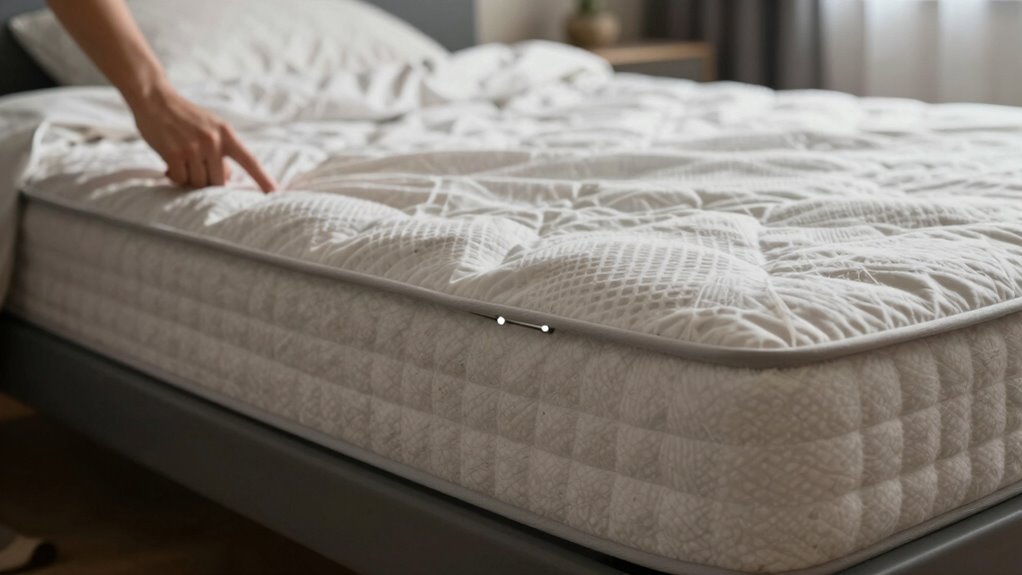
Start by inspecting your mattress surface for tears, sagging, or uneven areas. Pay attention to any unusual sounds when you press or move on it. Also, look closely for visible damage that could be causing noise or discomfort. Being aware of external factors, like the frame’s stability, can also help identify the source of noise. Additionally, understanding feature Buddies can provide insights into common issues with bed components.
Inspect Mattress Surface Regularly
Regularly inspecting your mattress surface helps you catch early signs of noise or damage before they worsen. During your mattress inspection, focus on the bed surface for visible issues. Here are key steps:
- Check for tears, rips, or sagging in the fabric.
- Feel for uneven spots or lumps that indicate internal damage.
- Look for loose or broken springs if you can see inside.
- Examine seams and edges for fraying or separation.
- Remember to avoid using harsh chemicals that may damage the mattress surface or void warranties air purifier maintenance.
Performing consistent mattress inspection keeps you aware of potential problems. Addressing minor issues early can prevent more significant noise and damage later. Remember, a well-maintained bed surface ensures a quieter, more comfortable sleep. By making this a routine, you’ll extend your mattress’s lifespan and avoid surprises that disrupt your rest.
Listen for Unusual Sounds
Have you ever noticed strange creaking or squeaking noises when you move on your bed? These sounds often reveal issues with your mattress or frame, influenced by your bedroom acoustics. To identify the source, listen carefully at different times and positions. Focus on whether the noise comes from the head, foot, or sides of the bed. Noises that occur only during movement may point to loose joints or worn components. To improve noise mitigation, check for squeaks when applying gentle pressure or shifting weight. Avoid shouting or creating loud sounds, as they can mask subtle issues. By paying attention to these sounds, you can better determine if your bed needs repair or replacement, ensuring a quieter, more restful sleep environment.
Check for Visible Damage
To effectively check your mattress for noises and damage, carefully inspect its surface and edges for visible signs of wear or harm. Look closely for tears, sagging, or uneven areas that indicate bed damage. Examine the seams for fraying or loose stitching. Check for any indentations or indentations that might suggest internal damage. Also, assess the frame supporting your mattress for cracks or broken components. Here are key points to focus on:
- Look for tears or frayed fabric on the mattress surface
- Inspect edges and corners for sagging or visible wear
- Check the seams for loose stitches or damage
- Examine the bed frame for cracks or broken parts
Addressing visible wear early can help prevent noise issues and prolong your mattress’s life.
How to Inspect Your Bed Frame for Loose or Broken Parts
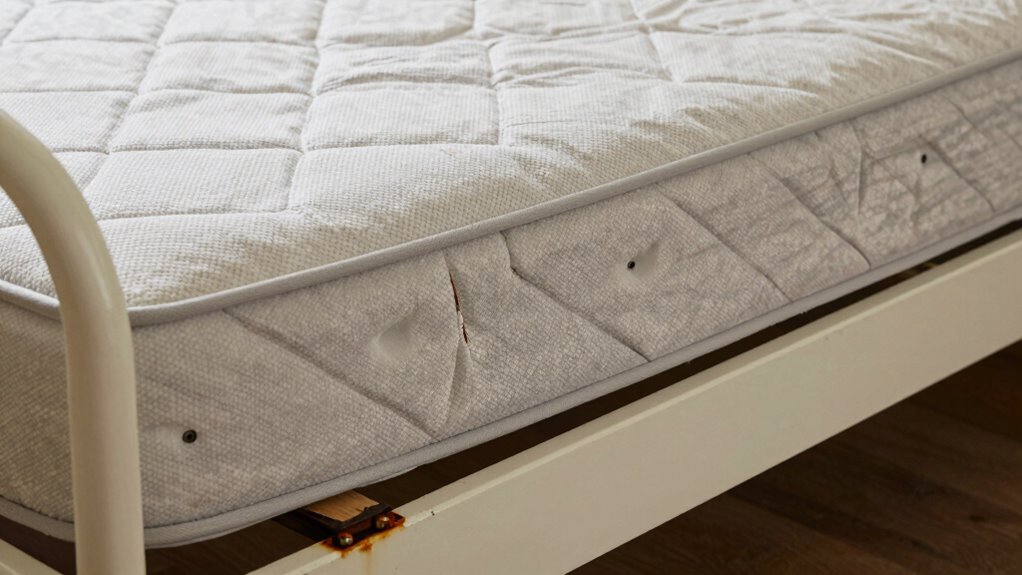
Inspecting your bed frame for loose or broken parts is an essential step in diagnosing noise issues. Start with a thorough bed frame inspection, checking every joint, screw, and bolt. Tighten any loose fasteners you find, as loose connections often cause squeaks. Look for signs of damage such as cracks, splinters, or bent components that could compromise stability. Pay close attention to the connections between the headboard, footboard, and side rails. If you notice any loose parts, tighten or replace them promptly. Also, listen carefully while moving the frame—this can help identify hidden loose components. Effective loose part detection helps prevent future issues and ensures your bed remains quiet and stable. Regular inspections can save you from more significant repairs down the line.
Simple Fixes to Stop Your Bed From Squeaking
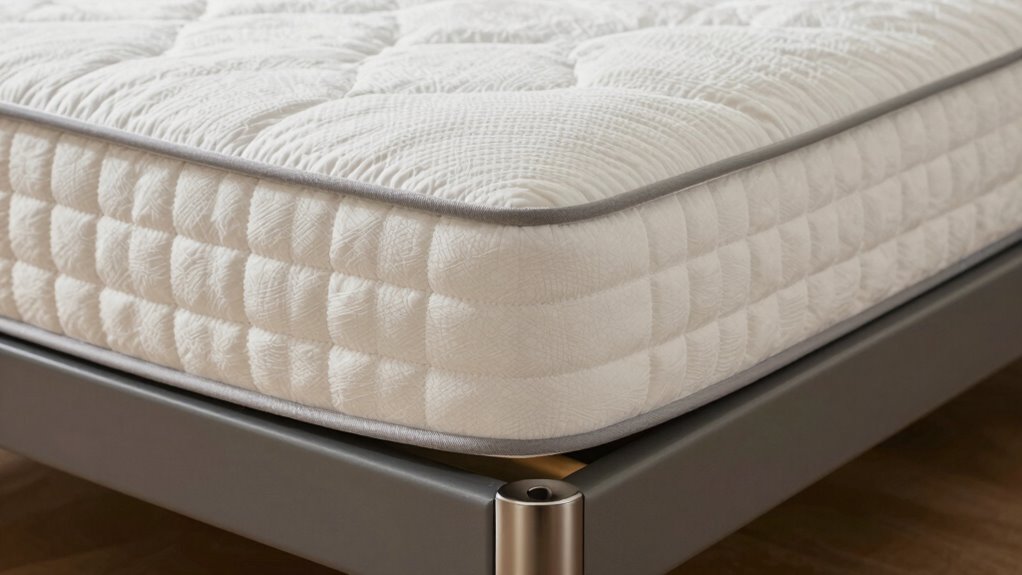
Squeaking beds can often be fixed with simple steps before considering costly repairs. First, check for loose bolts or screws and tighten them, as this can eliminate many squeaks without affecting bed comfort or mattress durability. Second, apply a thin layer of lubricant, like WD-40, to squeaky joints or metal-on-metal contact points. Third, place a piece of felt or cloth between wooden components to reduce friction and noise. Fourth, inspect the mattress and box spring for shifting or uneven placement, which can cause squeaks. These fixes not only quiet your bed but also improve overall comfort. You’ll enjoy restful sleep without the distraction of noise, and your mattress will stay in better shape longer. Simple solutions, quick results.
Is It Time to Replace Your Mattress or Frame?

Sometimes, despite tightening bolts and applying lubricant, squeaks keep coming back. If your mattress or frame shows signs of wear, it might be time to replace them. A mattress’s lifespan typically ranges from 7 to 10 years; beyond that, comfort and support decline, causing noise and discomfort. Frame durability varies, but excessive creaking indicates weakened joints or warped material.
| Signs to Think About | What to Do |
|---|---|
| Mattress sagging | Replace if over 10 years old |
| Persistent squeaks | Check frame before replacing |
| Loose joints | Tighten or replace frame |
| Visible damage | Replace mattress/frame |
| Reduced support | Consider new mattress |
Knowing when to replace helps restore quiet and sleep quality.
Frequently Asked Questions
Can a Squeaky Bed Indicate Underlying Structural Issues?
A squeaky bed can indicate underlying structural issues, especially if you notice creaking when moving or adjusting it. Check the frame stability first, as loose joints or worn-out parts often cause noise. Also, consider your mattress material—some materials like foam or box springs are more prone to squeaking over time. Addressing these issues promptly can prevent further damage and improve your sleep quality.
How Often Should I Inspect My Bed Frame for Problems?
You should inspect your bed frame at least once every three to six months as part of regular bed frame maintenance. During your inspection schedule, look for loose bolts, cracks, or worn-out joints that could cause noise or compromise stability. Regular checks help catch issues early, ensuring your bed remains safe and quiet. If you notice any problems, tighten or replace parts promptly to maintain a secure, noise-free sleep environment.
Are Certain Mattress Types More Prone to Making Noise?
Certain mattress materials tend to be more prone to making noise. In particular, innerspring mattresses often produce more noise due to metal coils moving and rubbing against each other, leading to frequent creaks. Memory foam and latex mattresses are generally quieter because they lack metal components. If you want a quieter sleep, opt for foam or latex, as they typically have lower noise frequency, so you won’t be disturbed by squeaks or pops.
Does Humidity Affect Bed Squeaking or Creaking Sounds?
Humidity effects can definitely cause your bed to squeak or creak more. When the air is humid, moisture can seep into your mattress and frame, loosening joints and materials, which worsens squeak issues. To mitigate these sounds, you should keep your bedroom well-ventilated and use dehumidifiers if needed. Regularly tightening bolts and applying lubricant to squeaky joints also helps with squeak mitigation, making your bed quieter and more comfortable.
When Is It Better to Replace the Entire Bed Instead of Repairing?
You should consider a bed replacement when repairs no longer resolve squeaking or creaking, and the frame shows signs of significant wear or damage. Conduct a structural assessment to determine if the frame is compromised or if the mattress is the main issue. If the frame is unstable, cracked, or warped, replacing the entire bed is smarter and safer than ongoing repairs. This guarantees durability and better sleep quality.
Conclusion
To keep your nights peaceful, pinpoint whether your squeaks come from the mattress or frame. Regular inspections can prevent small issues from turning into costly repairs—did you know that 60% of bed noise problems are caused by loose frame parts? Addressing these early saves you money and hassle. So, take a few minutes to check and fix what’s causing the noise, ensuring restful, quiet sleep every night.