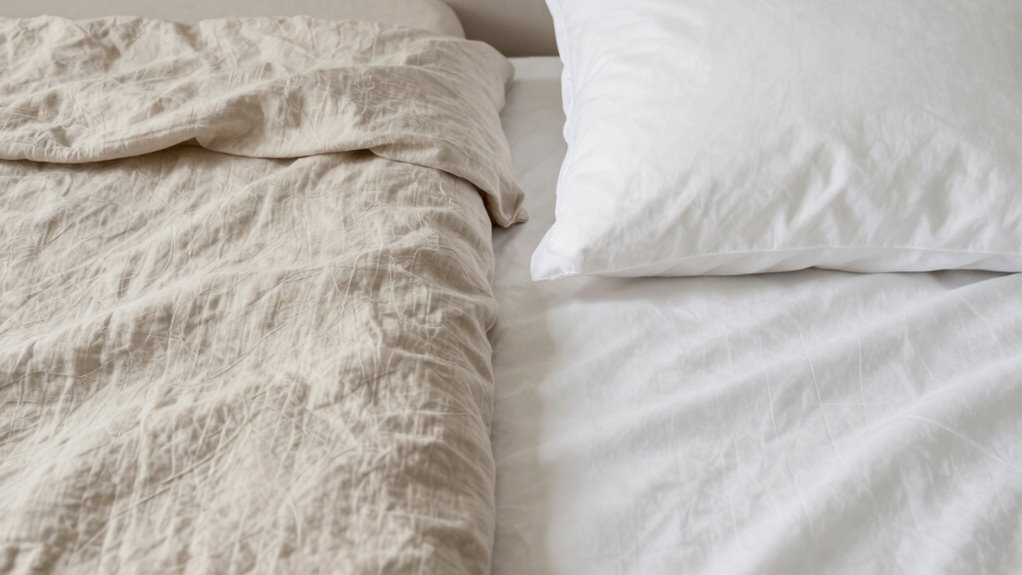

Linen sheets breathe better than cotton because their coarse fibers create larger gaps that promote airflow and moisture evaporation. Linen’s open weave also helps keep you cooler by wicking away sweat and releasing heat quickly. Cotton can be breathable depending on the weave and thread count, but linen’s natural structure offers superior breathability and moisture management. Want to discover how to choose the right sheets for your sleep comfort? Keep exploring for more insights.

Get home appliances delivered free with Prime
- Fast, free delivery on millions of items
- Prime Video, Amazon Music and more included
- Member-only deals all year
Key Takeaways
- Linen’s open weave and natural fibers create larger gaps that promote superior airflow compared to cotton.
- Linen’s coarse, porous fibers facilitate better moisture-wicking and quick evaporation, enhancing breathability.
- Cotton’s breathability depends on weave type and thread count; lower counts generally improve airflow but may reduce durability.
- Linen’s lightweight, airy fibers naturally regulate temperature, keeping sleepers cooler in warm climates.
- Both fabrics are breathable, but linen’s fiber structure offers inherently better airflow and moisture management.
What Are Linen and Cotton Sheets Made Of?

Linen and cotton sheets are made from natural fibers, but they come from different plants. Linen comes from the flax plant, while cotton is derived from the cotton plant’s seed fibers. Their fiber composition differs: linen fibers are long and strong, giving the fabric durability, whereas cotton fibers are shorter and softer. During manufacturing processes, linen fibers are extracted through retting and then spun into yarn, which is woven into fabric. Cotton fibers go through ginning, cleaning, and spinning before weaving. These processes influence the texture and strength of each fabric. Linen’s manufacturing emphasizes preserving fiber length and strength, resulting in a crisp, durable fabric. Cotton’s process focuses on softness and ease of production, creating a smooth, breathable sheet material. Additionally, linen’s fiber structure naturally lends itself to better breathability and moisture-wicking properties compared to cotton.
How Do Linen and Cotton Sheets Allow Air to Flow?
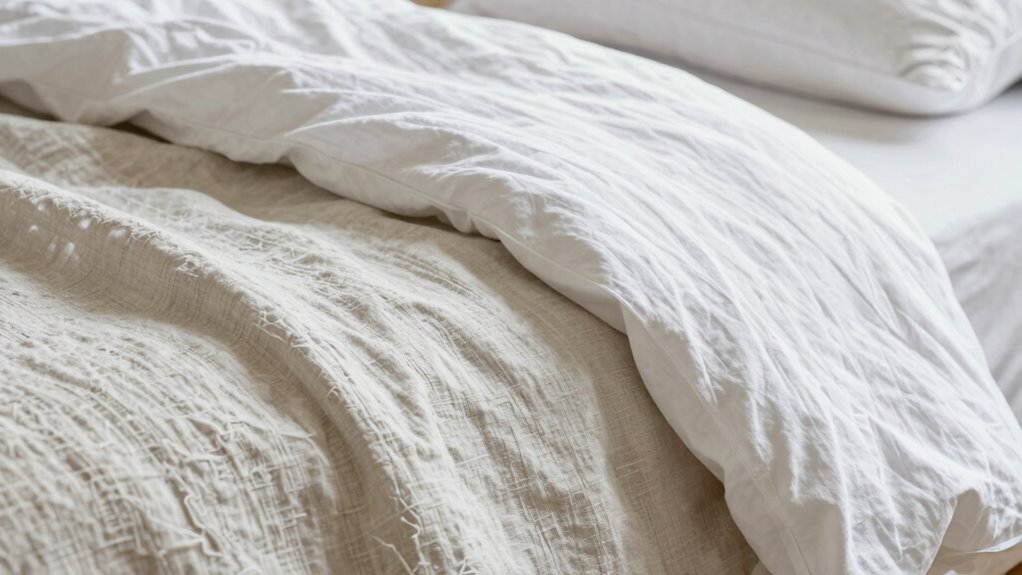
The way linen and cotton sheets allow air to flow is largely influenced by their fiber structure and fabric weave. Linen fibers are coarse and naturally porous, creating gaps that promote airflow. Cotton fibers are smoother but can be woven tightly or loosely; a lower thread count typically results in better breathability because the fabric texture remains more open. Higher thread counts tend to make sheets denser, reducing airflow, but if woven with a looser pattern, they still breathe well. The fabric texture plays a vital role: linen’s naturally rough surface allows air to pass easily, while cotton’s smoothness can be adjusted for breathability depending on weave type. Additionally, fabric porosity significantly impacts how well air circulates through your sheets, with more porous fabrics allowing better airflow. Overall, both fibers’ structure and weave determine how well air circulates through your sheets.
Do Linen and Cotton Wicks Moisture Away?
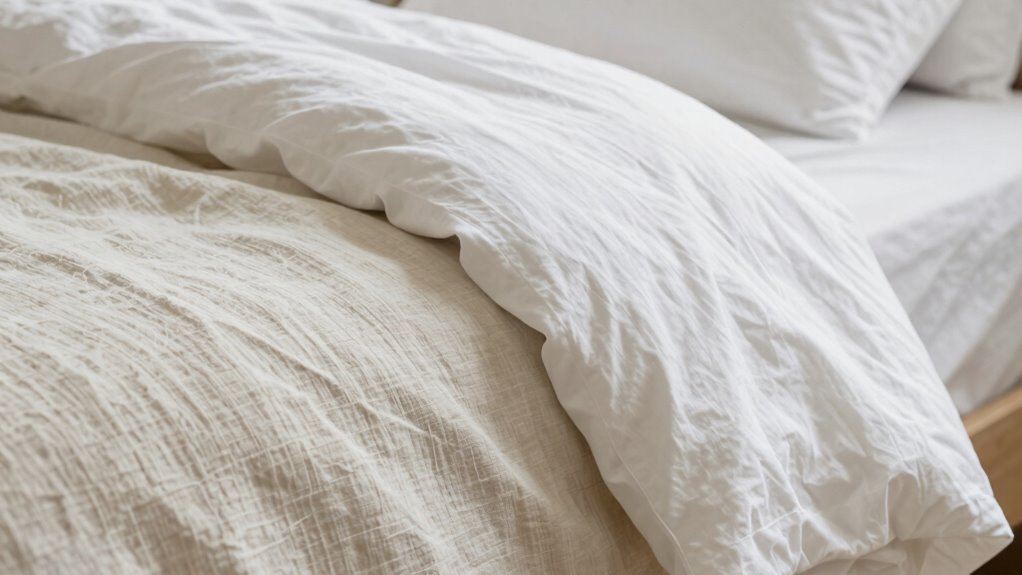
Have you ever wondered which fabric keeps you drier through the night? Both linen and cotton excel at moisture absorption, but they differ in sweat management. Linen quickly wicks moisture away from your skin, helping you stay dry. Cotton absorbs sweat more slowly, which can lead to a damp feeling. To illustrate, here’s a quick comparison:
| Feature | Linen | Cotton |
|---|---|---|
| Moisture absorption | Fast, dries quickly | Slower, retains moisture |
| Sweat management | Excellent for wicking away moisture | Less effective for quick wicking |
| Breathability | High | Moderate |
| Feel on skin | Cool and dry | Soft but may feel damp |
If you want sheets that keep you feeling fresh and dry, linen’s moisture-wicking properties outperform cotton’s.
Additionally, linen’s natural fibers promote sustainable practices in bedding, making it an eco-friendly choice for environmentally conscious consumers.
Why Does Linen Breath Better Than Cotton?
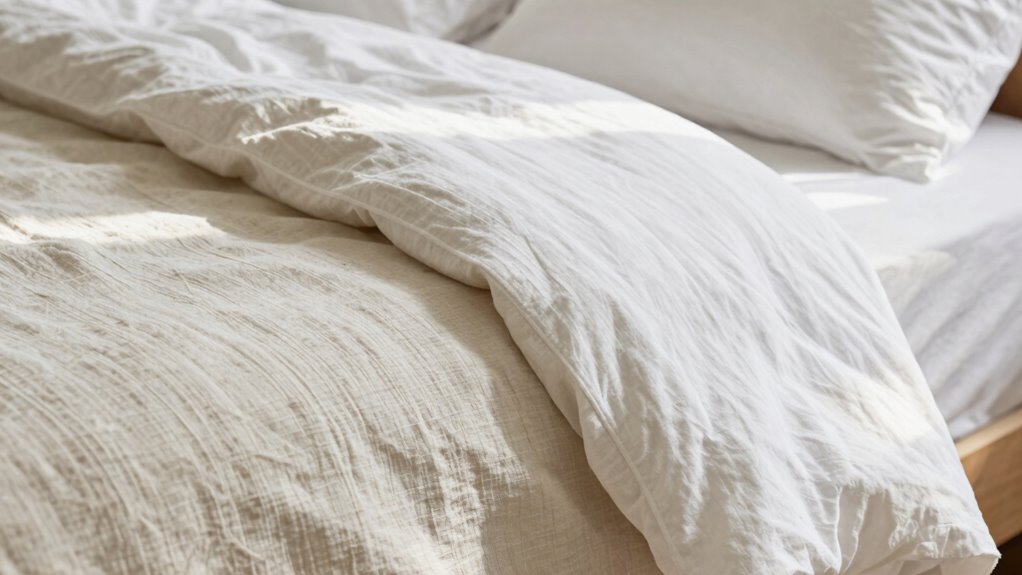
Because linen fibers are naturally more breathable than cotton, they allow air to circulate more freely around your body. This enhanced fabric porosity means linen can release heat and moisture more effectively, keeping you cooler at night. Linen’s open weave structure creates tiny gaps that promote better airflow, aiding moisture management and preventing sweat from building up. Unlike cotton, which has a tighter weave, linen’s fibers are less dense, allowing for superior breathability. This helps regulate your body temperature, especially in warm weather. As a result, linen sheets keep you feeling fresh and dry longer, making them a better choice if breathability and moisture control are priorities for your sleep comfort. Additionally, the natural properties of linen contribute to long-lasting durability, ensuring your sheets stay breathable and comfortable over time.
How Do Cotton Weaves and Weights Affect Breathability?

The way cotton is woven and its fabric weight directly influence how well it breathes. Lightweight weaves tend to allow more air flow, keeping you cooler, while denser weaves can trap heat. Understanding these factors helps you choose sheets that match your comfort needs. Additionally, considering the artistic expression involved in fabric design can enhance your appreciation of the material’s qualities.
Cotton Weave Types
Cotton weave types and weights directly influence how breathable your sheets will be. The fiber texture determines how much air can pass through, affecting comfort and temperature regulation. For example, a percale weave features a tight, durable pattern with a smooth finish, offering good breathability and crispness. Conversely, sateen weave has a softer, silkier feel with a more relaxed weave pattern, which may trap heat more easily. The choice of weave impacts airflow and moisture-wicking capabilities, so understanding these differences helps you select sheets suited to your sleep preferences. Thinner, loosely woven cotton fabrics generally breathe better, keeping you cooler throughout the night. Additionally, fabric construction plays a crucial role in managing heat and moisture, further enhancing breathability and overall comfort. By considering fiber texture and weave patterns, you can find the perfect balance between comfort and breathability.
Fabric Weight Impact
Fabric weight plays a crucial role in how breathable your sheets will be, as lighter fabrics allow more air to circulate and help dissipate heat. When considering cotton weaves and sheet density, lighter weights typically mean better breathability, especially in warmer climates. Heavier fabrics, with higher sheet density, tend to trap more heat and moisture, reducing airflow. The fabric weight influences not just comfort but also durability, with lighter sheets feeling softer and more breathable over time. To optimize breathability, choose sheets with lower fabric weight and a looser weave, which promote airflow. Additionally, selecting lightweight fabrics made from natural fibers can further enhance ventilation and cooling. Remember, the balance between sheet density and fabric weight determines how well your sheets can wick away heat and moisture, ensuring a cooler, more comfortable night’s sleep.
Breathability Differences
Ever wondered why some sheets feel cooler and more breathable than others? The answer lies in how cotton weaves and weights influence breathability. Lighter cotton fabrics with a tight yet open weave promote airflow enhancement, allowing air to circulate freely and helping moisture regulation during sleep. Thinner or looser weaves increase ventilation, making sheets feel cooler and more comfortable on hot nights. Conversely, heavier or tightly woven cotton can trap heat and moisture, reducing breathability. The key is selecting fabrics designed for optimal airflow, which helps wick away sweat and keeps you dry. Additionally, understanding the cotton weave types can help you choose sheets that maximize breathability. Understanding how different cotton weaves and weights affect moisture regulation and airflow enhancement can help you choose sheets that stay fresh and breathable throughout the night.
Does Durability Change How Comfortable Your Sheets Are?
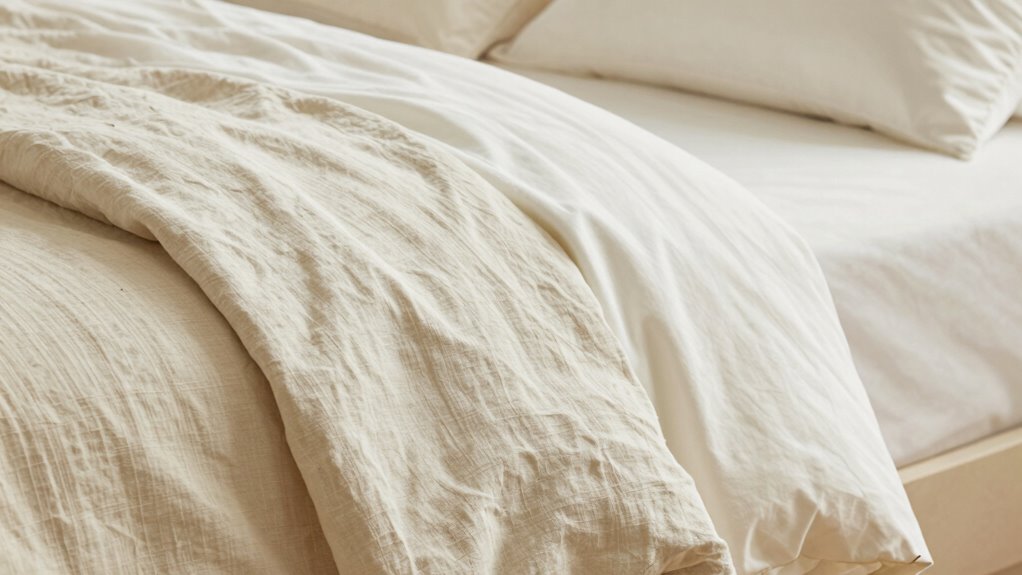
The strength and feel of your sheets play a big role in your comfort, especially as they resist wear and tear over time. Durable fabrics tend to hold up better, maintaining their smoothness and softness longer. When sheets last, they continue to provide a comfortable sleep experience day after day. High-quality materials such as those used in premium Gold IRAs demonstrate how durability and quality investment options can ensure long-term satisfaction and reliability.
Fabric Strength and Feel
While durability might seem like a purely practical concern, it actually influences how comfortable your sheets feel over time. Strong fabric enhances sheet softness by preventing pilling and fraying, maintaining a smooth surface against your skin. Linen tends to be more durable and stiff initially, becoming softer with each wash, whereas cotton varies based on quality and weave. The feel of your sheets depends on both fabric strength and construction. Consider these factors:
- Higher fabric durability ensures long-lasting softness
- Softer sheets feel more luxurious against your skin
- Linen’s initial stiffness softens over time, improving comfort
- Cotton’s sheet softness depends on fiber quality and weave
- Stronger fabrics resist wear, preserving a smooth feel longer
- Incorporating visual and auditory cues can help in understanding fabric properties and care instructions.
Ultimately, fabric strength supports consistent comfort, making your sheets feel better over time.
Wear and Tear Resistance
Durability isn’t just about how long your sheets last; it also affects how comfortable they stay over time. When considering wear and tear resistance, fiber elasticity plays a key role. Cotton sheets typically have good fiber elasticity, allowing them to bounce back after washing and daily use, which helps prevent pilling and fraying. Linen, while strong, may feel rougher sooner if not properly maintained. Sheet maintenance, like gentle washing and avoiding harsh detergents, preserves their elasticity and structural integrity. Well-maintained sheets resist tearing and thinning, maintaining a smooth surface that feels comfortable against your skin. Ultimately, choosing sheets with higher wear and tear resistance means they’ll not only last longer but also stay comfortable and inviting, even after repeated use.
Longevity and Comfort
Although durable sheets often maintain their structural integrity over time, their ability to keep you comfortable can still change as they age. Linen durability means your sheets resist wear and tear, but with repeated washes, they may soften further, enhancing comfort. Cotton softness, on the other hand, can diminish if the fibers break down or become rougher. To optimize comfort:
- Proper washing techniques extend linen resilience and softness
- Over-drying can weaken cotton fibers over time
- Linen’s natural fibers develop a softer feel with each wash
- Cotton sheets may become less plush if not cared for properly
- Both materials benefit from gentle laundering to preserve comfort and longevity
Ultimately, durability influences comfort, but regular maintenance plays a vital role in keeping your sheets cozy and long-lasting.
Which Material Keeps You Cooler at Night?
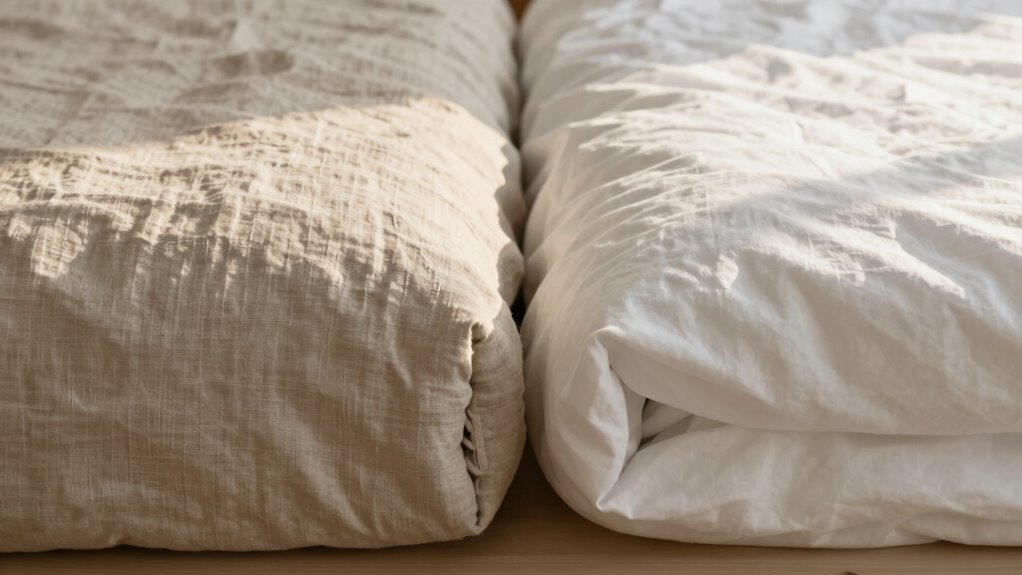
When it comes to staying cool at night, the choice of material can make a significant difference. Linen sheets excel in moisture management, quickly wicking away sweat to keep you dry and comfortable. Their natural breathability allows air to flow freely, enhancing temperature regulation and preventing heat buildup. Cotton sheets also breathe well but tend to trap more heat than linen, especially if they’re made from thicker or less breathable weave types. If staying cool is your priority, linen’s lightweight and airy fibers give it a clear advantage. Its ability to wick moisture and regulate temperature helps you stay cool throughout the night, making linen the better option for hot sleepers. Cotton can work, but linen keeps you cooler, especially in warmer climates or during summer.
Are Linen and Cotton Sheets Eco-Friendly and Sustainable?
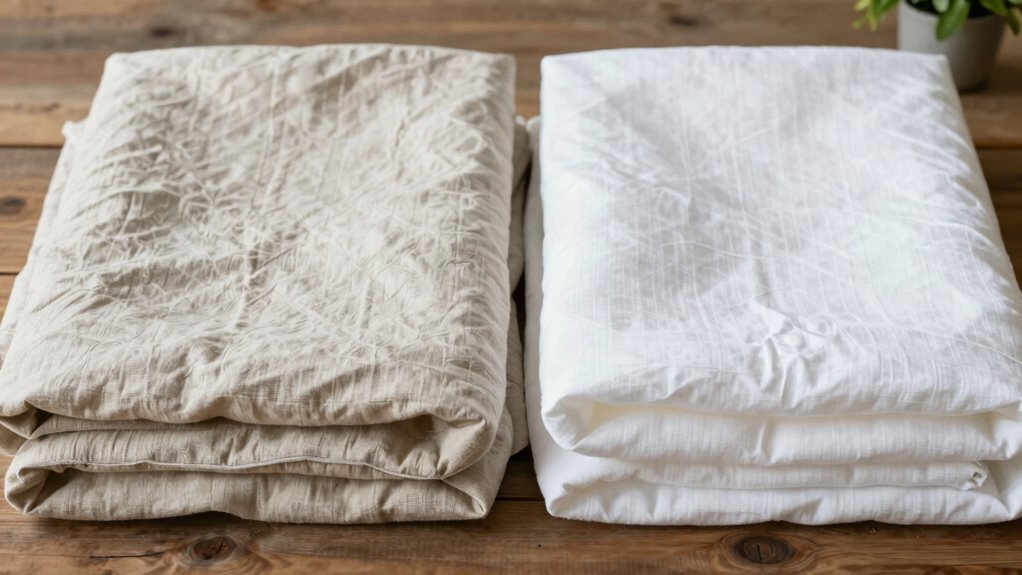
Both linen and cotton sheets offer more than just comfort; their environmental impact also influences your choice. Linen, derived from flax, is highly eco conscious textiles due to its minimal water needs and natural durability. Cotton, especially organic varieties, can be eco-friendly when produced through sustainable manufacturing practices. Consider these factors:
- Linen’s biodegradable fibers reduce waste and pollution
- Organic cotton minimizes chemical use in cultivation
- Both materials often use environmentally responsible dyes
- Linen’s long lifespan decreases replacement frequency
- Sustainable manufacturing reduces energy consumption and water use
Choosing either material supports eco-conscious efforts, but always check for certifications like GOTS or OEKO-TEX to guarantee sustainable practices. Your selection can positively impact the environment while providing quality bedding.
Is the Breathability of Sheets Worth the Price?
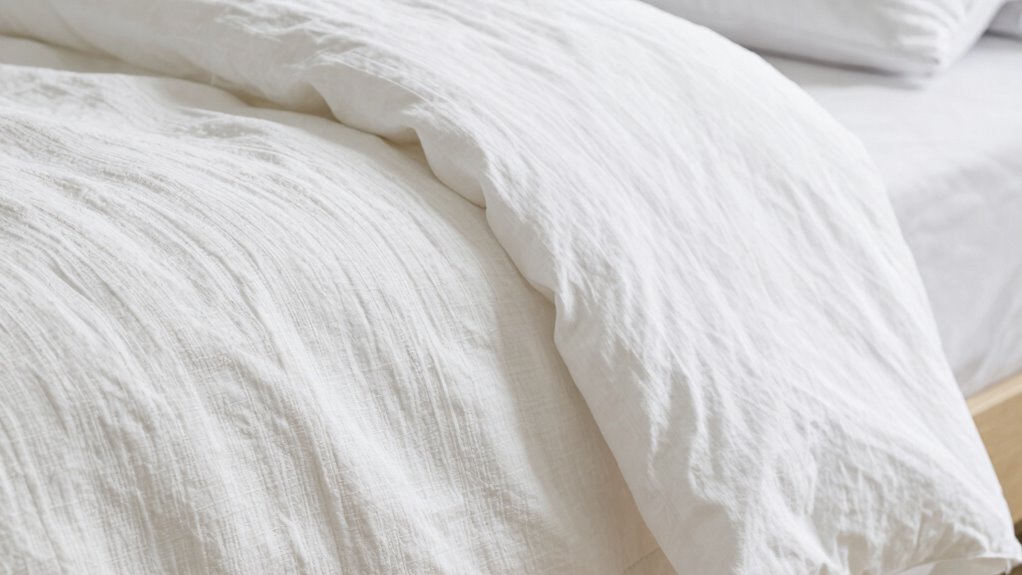
You might wonder if spending more on breathable sheets is really worth it. While they can improve sleep quality and comfort, they often come with a higher price tag. Considering long-term durability and overall benefits can help you decide if the investment pays off.
Comfort Versus Cost
While breathable sheets like linen often come with a higher price tag, many find that the comfort they provide is worth the extra cost. When considering the price comparison, you should weigh the immediate expense against long-term comfort and quality. Linen tends to soften with each wash, offering an increasingly comfortable feel, but it requires specific maintenance tips to preserve its quality. Cotton sheets generally cost less upfront and are easier to care for, but may not breathe as well.
- Invest in quality materials for better comfort
- Factor in long-term savings from durability
- Balance initial costs with ongoing maintenance
- Consider the benefits of breathability for overall sleep quality
- Recognize that comfort often justifies a higher investment in premium sheets
Long-Term Durability Benefits
Investing in breathable sheets like linen can pay off in the long run through their durability and ability to maintain comfort over time. Linen’s natural fibers are strong and tend to get softer with each wash, making fabric care easier without sacrificing quality. While linen typically has a lower thread count than cotton, its fibers are thicker and more resilient, contributing to its longevity. Cotton sheets with a high thread count may feel plush initially but can wear down faster, especially if not properly cared for. Over time, linen’s durability ensures fewer replacements, saving you money. The combination of robust fibers and easy fabric care makes linen a smart choice for long-term use, proving that quality and durability often outweigh initial costs.
Breathability and Sleep Quality
Breathability is a key factor that directly impacts sleep quality, especially if you tend to overheat or sweat during the night. Sheets with good breathability improve moisture management and temperature regulation, helping you stay comfortable. Linen, with its natural fibers, excels at allowing air to circulate and wick away moisture, reducing night sweats. Cotton, while also breathable, varies based on weave and quality. Consider these points:
- Enhances airflow for cooler sleep
- Keeps moisture away from your skin
- Reduces overheating risks
- Promotes restful, uninterrupted sleep
- Justifies higher costs with better comfort
Investing in breathable sheets can improve sleep quality considerably, making the extra expense worthwhile if comfort is a priority. Proper moisture management and temperature regulation lead to deeper, more restorative sleep every night.
How to Choose the Best Sheets for Your Sleep Needs
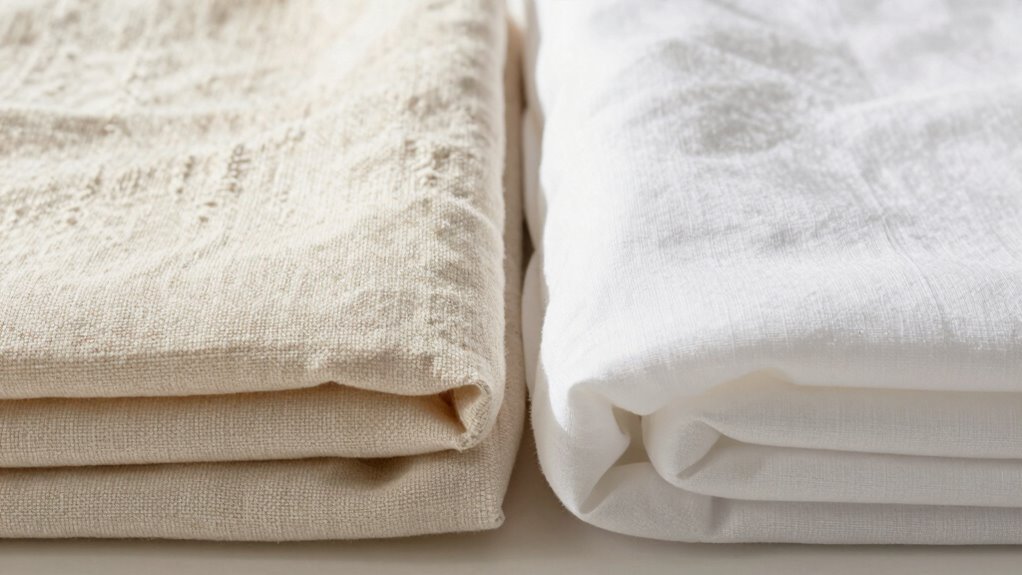
Choosing the right sheets depends on understanding your specific sleep needs. If you tend to sleep hot, opt for breathable fabrics like linen or cotton with a lower thread count, which promote airflow. For softer, more luxurious feel, higher thread count sheets made from tightly woven cotton or fabric dyeing techniques can provide durability and vibrant colors. Consider how the sheets are manufactured—fabric dyeing affects color longevity, while a higher thread count often indicates a finer, smoother texture. If you have sensitive skin, look for natural fibers and minimal chemical treatments. Ultimately, balancing breathability, softness, and durability helps you select sheets that enhance your sleep quality and comfort. Carefully review product details to ensure they meet your preferences and sleep environment.
Frequently Asked Questions
How Do Linen and Cotton Sheets Compare in Temperature Regulation?
You’ll find linen sheets excel in temperature regulation because their fabric density is lower, making them more breathable. Linen’s natural moisture-wicking properties help keep you dry and cool, especially on hot nights. Cotton sheets, with a denser fabric, trap more heat and moisture, which can make you feel warmer. So, if you want better temperature control and moisture management, linen is your best choice for a cooler, more comfortable sleep.
Which Type of Sheet Is More Hypoallergenic?
Like a gentle shield, linen sheets are more hypoallergenic, making them ideal for allergy prevention. Their natural fibers resist dust mites and mold, reducing allergy triggers. Cotton sheets can also be hypoallergenic, but linen’s breathability and antimicrobial properties give it an edge in keeping allergens at bay. If you’re sensitive, choosing linen helps create a healthier sleeping environment, lowering allergy risks and ensuring a more comfortable, irritation-free night.
Do Linen or Cotton Sheets Require Special Care?
Linen sheets require gentle care, so you should follow specific care instructions like washing in cool water and avoiding bleach. Cotton sheets are more forgiving, but to keep them soft, use gentle detergents and tumble dry on low. Maintenance tips include avoiding high heat and ironing only if needed. Both types last longer with proper care, ensuring your sheets stay fresh and comfortable for years.
How Does Thread Count Affect Breathability?
Think of thread count as the heartbeat of your sheets—higher isn’t always better. A higher thread count means a denser fabric, which can trap heat and reduce breathability. Lower thread counts allow air to flow freely like a gentle breeze, keeping you cooler. So, when choosing sheets, consider a balanced thread count that prioritizes fabric density without sacrificing breathability, ensuring your sleep stays fresh and comfortable.
Are There Any Health Benefits Associated With Linen or Cotton Sheets?
You’ll find that linen and cotton sheets offer health benefits like promoting natural sleep and allergy relief. Linen’s breathability helps regulate your body temperature, reducing night sweats and discomfort, while both fabrics are hypoallergenic and resistant to dust mites. Choosing natural fibers can also minimize exposure to synthetic chemicals, helping you breathe easier and sleep more soundly, especially if you have allergies or sensitive skin.
Conclusion
Choosing between linen and cotton sheets comes down to your breathability needs, your comfort preferences, and your eco-conscious choices. Whether you prioritize linen’s superior airflow, cotton’s versatility, or sustainability, understanding their differences helps you make the best decision. Ultimately, it’s about finding sheets that keep you cool, wick moisture, and feel just right. So, weigh your options wisely, consider your sleep habits, and enjoy a cooler, more comfortable night’s sleep every time.
Halloween Picks
halloween
As an affiliate, we earn on qualifying purchases.