
Over time, your mattress feels smaller because it gradually loses firmness and support as it ages. The foam develops indentations, and sagging causes uneven surfaces, making it seem like it shrinks even though its size stays the same. Bedding choices, support, and proper maintenance can help preserve your mattress’s comfort and spaciousness. If you’re curious about how to keep your mattress feeling its best longer, there’s more to discover below.
Key Takeaways
- Mattress materials like foam and coils lose resilience and support, causing sagging and a feeling of reduced size.
- Body impressions and uneven dips develop over time, making the mattress feel shorter or narrower.
- Bedding choices, such as bulky pillows or heavy covers, can create a cramped perception of space.
- Sagging and wear lead to decreased support, making the mattress feel smaller even if its physical size stays the same.
- Proper maintenance and support can preserve the mattress’s perceived size, but significant aging often requires replacement.
What Changes as Your Mattress Ages?
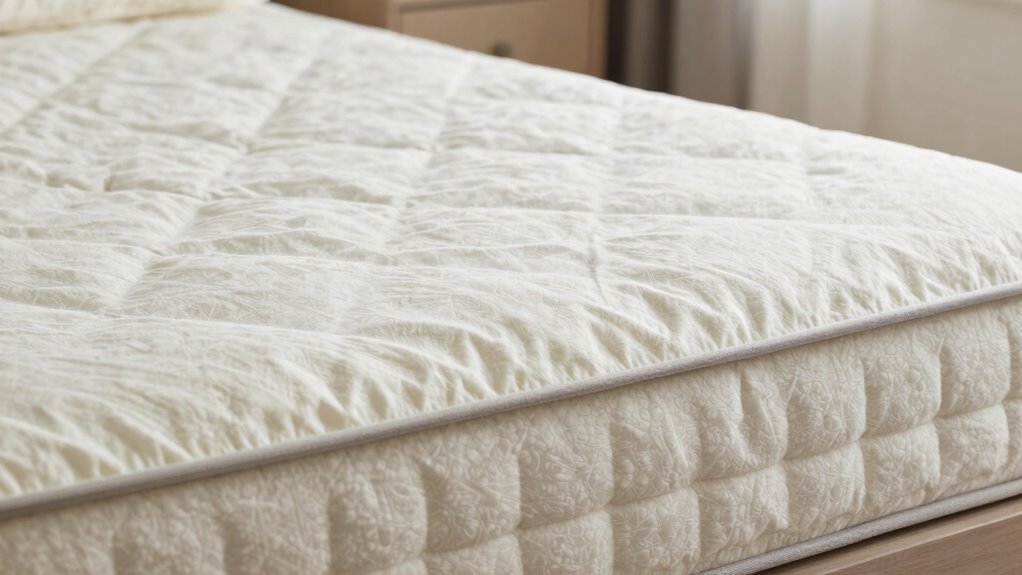
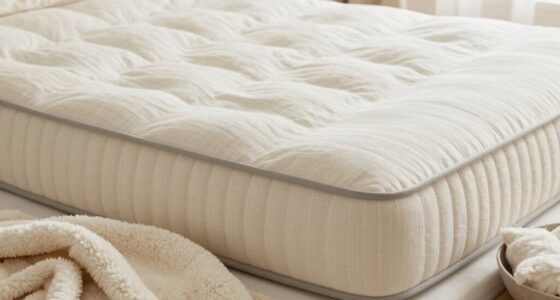
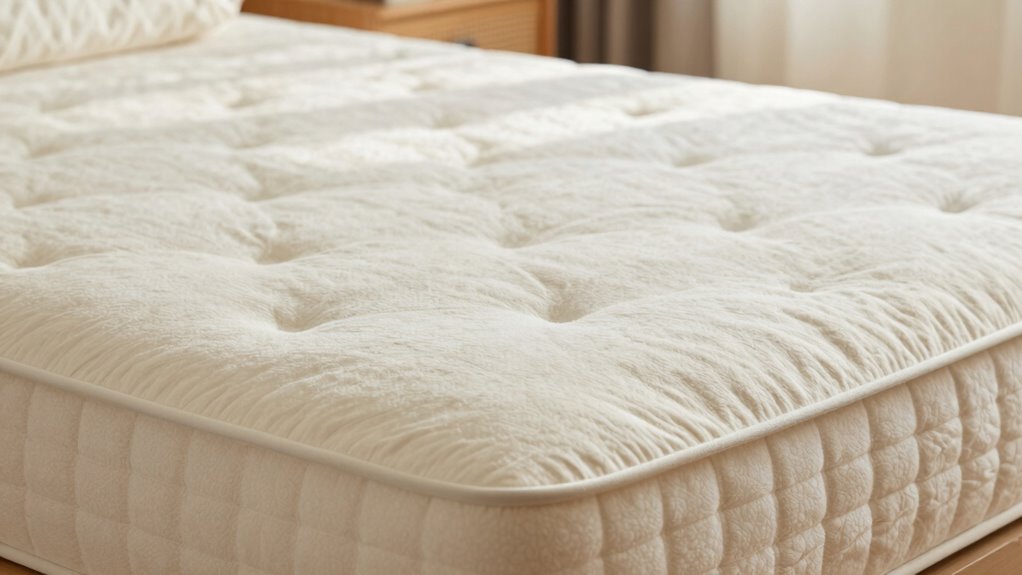
As your mattress ages, it gradually loses its firmness and support. This is especially true for mattresses made with memory foam and other mattress materials that break down over time. Memory foam, known for molding to your body, tends to soften and develop indentations as its structure deteriorates. Other mattress materials, like latex or innerspring coils, also experience wear, leading to sagging or uneven surfaces. These changes cause the mattress to feel less supportive and more compressed, which can make it seem smaller or less comfortable. Over time, the materials lose their original resilience, reducing the overall thickness and firmness. Additionally, the breakdown of internal materials can contribute to a reduction in overall size, making it appear as though the mattress is shrinking. Understanding how these materials age helps explain why your once plush mattress no longer feels the same, signaling it may be time for a replacement.
How Do Sagging and Body Impressions Make Your Mattress Feel Smaller?
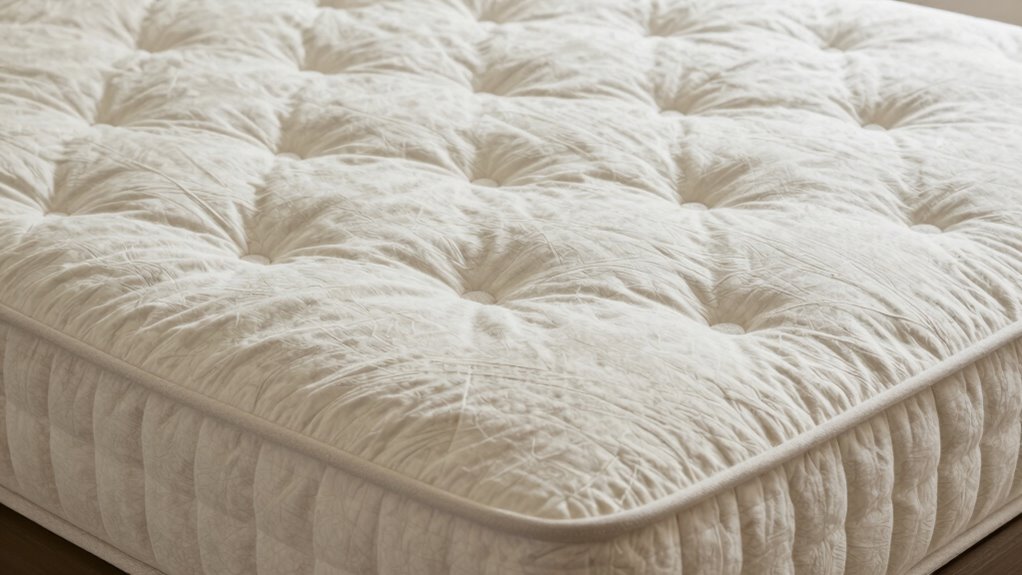
Sagging and body impressions develop when the materials in your mattress wear down unevenly, causing certain areas to dip or indent. If you have a memory foam mattress, these impressions can become more noticeable as the foam molds to your body over time. This uneven surface reduces the overall support and can make your mattress feel smaller because it no longer provides a smooth, consistent sleeping surface. Using mattress toppers can temporarily fill in these dips and improve comfort, but they don’t fix the underlying issue. Over time, sagging and impressions diminish the perceived size of your mattress, making it seem shorter or narrower. Addressing these issues usually involves replacing or flipping your mattress to restore evenness and support. Additionally, understanding mattress materials can help you choose options that resist sagging longer.
Can Bedding and Accessories Make Your Mattress Feel Less Spacious?

Sometimes, your bedding and accessories can make your mattress feel smaller or more cramped than it actually is. Pillow preferences play a big role; bulky or overly plush pillows can restrict your movement and create a sense of tightness. Additionally, mattress covers or heavy bedding can add layers that make your sleeping surface seem less open. If your mattress cover is thick or fitted tightly, it can create a feeling of confinement, especially if you’re used to lighter bedding. Choosing the right pillows and lightweight, breathable covers can help maintain a sense of spaciousness. Keep in mind that the way you layer your bedding influences how roomy your mattress feels, so selecting appropriate accessories can make a noticeable difference in your comfort. Proper layering techniques can also impact how spacious your bed feels, helping you create a more open and comfortable sleep environment.
Does Maintaining Your Mattress and Using Proper Support Help Keep It Feeling Bigger?
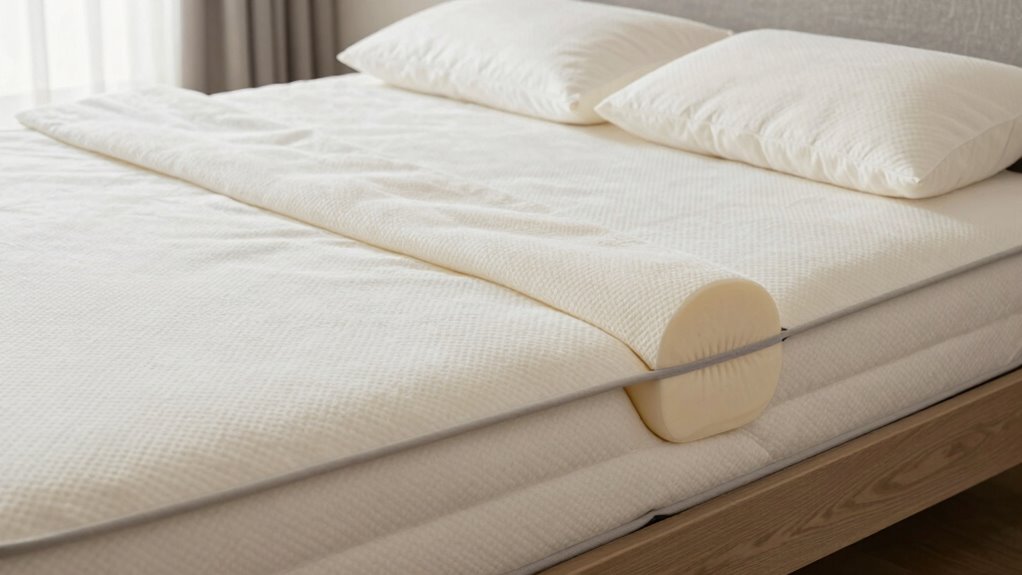
Regularly maintaining your mattress and ensuring proper support can considerably help it feel larger and more comfortable over time. Choosing the right bed frame is essential—it should provide sturdy, even support to prevent sagging that can make your mattress feel smaller or less plush. Additionally, mattress rotation is a simple yet effective technique to promote even wear, maintaining its firmness and shape. Rotating your mattress every three to six months prevents uneven compression, helping it retain its original feel. Proper support and consistent maintenance keep your mattress in ideal condition, making it feel more spacious and comfortable for longer. Incorporating water-based therapies like hydrotherapy can also aid in relaxing your muscles and improving overall comfort, which complements proper mattress care. By paying attention to bed frame selection and implementing regular mattress rotation, you help preserve your mattress’s size and supportive qualities.
Is It Time to Replace Your Mattress for Better Comfort?

Even with proper support and routine maintenance, your mattress can lose its ability to provide comfortable sleep over time. When you notice persistent aches, uneven surfaces, or a significant decline in sleep quality, it’s a sign that it’s time to contemplate replacing your mattress. Good sleep hygiene depends on a supportive, comfortable surface, which deteriorates as the mattress ages. Regular mattress maintenance can prolong its lifespan, but it won’t prevent wear entirely. If your mattress no longer offers adequate support or causes discomfort despite these efforts, investing in a new one can dramatically improve your sleep quality. Prioritizing your sleep health ensures you wake up refreshed and ready for the day. Understanding signs of wear and aging can help you make timely decisions about replacement. Don’t wait until discomfort becomes chronic—know when it’s time for a replacement.
Frequently Asked Questions
Can Mattress Size Vary Due to Manufacturing Differences?
Yes, mattress size can vary due to manufacturing inconsistencies and production variability. You might notice slight differences in dimensions between brands or even batches of the same model. These discrepancies happen because manufacturing processes aren’t perfectly uniform, leading to minor size differences. When shopping or comparing mattresses, keep in mind that small variations are normal and don’t necessarily mean the mattress is defective or shrinking.
How Does Humidity Affect Mattress Firmness Over Time?
Humidity impacts your mattress firmness through moisture absorption and material expansion. When humidity rises, your mattress absorbs moisture, causing the materials to expand and soften, making it feel less firm. Conversely, low humidity leads to moisture loss, causing the materials to contract and stiffen. This constant cycle of expansion and contraction can alter your mattress’s feel over time, making it seem less supportive even though it’s not physically shrinking.
Do Certain Sleep Positions Impact Perceived Mattress Size?
Yes, your sleep posture can influence how you perceive your mattress size. If you tend to curl up or stretch out, it affects mattress alignment and makes the surface feel different. Proper sleep posture guarantees even distribution of your weight, maintaining comfort and support. When your mattress aligns well with your sleep position, it feels more spacious, reducing the sense of it being smaller over time.
Can Cleaning Products Alter Mattress Dimensions?
Cleaning products can alter mattress dimensions if they contain harsh chemicals that cause fabric shrinkage. When you use strong cleaning chemicals, especially on fabric or foam layers, the material might tighten or warp slightly, making your mattress feel smaller. Always check labels and opt for gentle, mattress-safe cleaning solutions. Avoid excessive moisture, as water combined with certain chemicals can also lead to fabric shrinkage and unintended size changes.
Are There Specific Mattress Types More Prone to Feeling Smaller?
Think of a memory foam mattress like a sponge slowly losing its shape. You’ll find that foam, latex, or hybrid mattresses often feel smaller over their lifespan because their materials naturally compress and wear out. These types tend to be more prone to feeling smaller, especially if they’re older or haven’t been rotated regularly. Choosing a high-quality mattress with durable materials can extend its lifespan and maintain its original size longer.
Conclusion
As your mattress ages, it’s like a once spacious dance floor slowly losing its room for movement. Sagging and impressions settle in, shrinking your comfort zone. But with proper support and care, you can keep that space feeling open and inviting—like a fresh canvas awaiting new memories. When it’s time to replace it, think of upgrading as opening a window to a brighter, more expansive world of restful nights. Your perfect sleep sanctuary awaits.