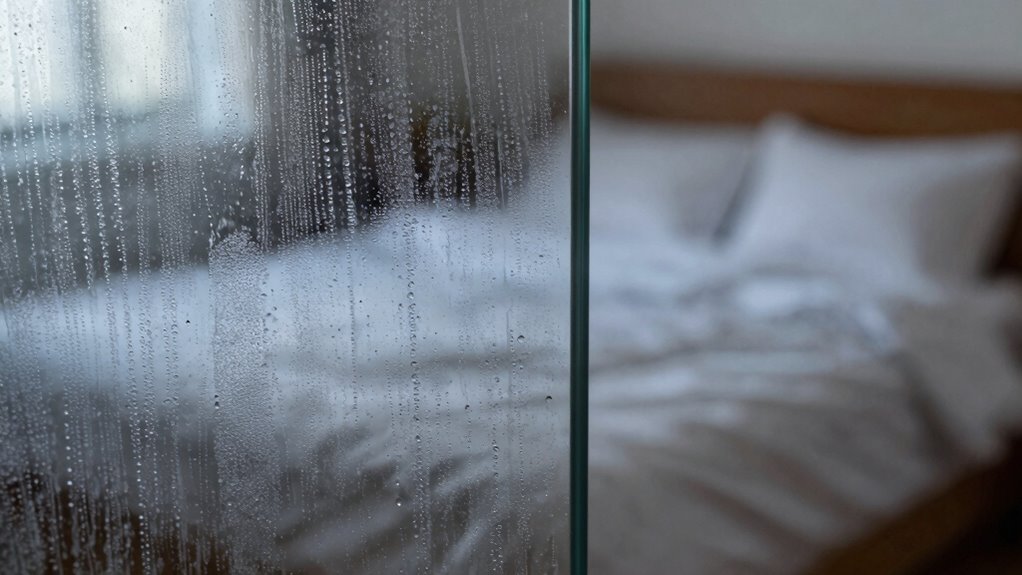

Bedroom condensation isn’t just a minor annoyance; it’s a big clue about your sleep environment. When you notice moisture buildup, it signals high indoor humidity that can lead to mold, dust mites, and respiratory issues, all of which disturb your sleep. Persistent condensation can also damage walls and furniture over time. By understanding these signs, you’ll see how moisture affects your health and rest—and there’s more to uncover that can help improve your sleep quality.

Get home appliances delivered free with Prime
- Fast, free delivery on millions of items
- Prime Video, Amazon Music and more included
- Member-only deals all year
Key Takeaways
- Condensation indicates excess indoor humidity, which can disrupt sleep quality and cause respiratory issues.
- Persistent moisture buildup can lead to mold growth, worsening allergies and asthma symptoms at night.
- High humidity levels impair the body’s ability to regulate temperature, causing discomfort and frequent awakenings.
- Visible condensation signals underlying ventilation or moisture control problems affecting overall sleep environment.
- Addressing condensation helps prevent structural damage and creates a healthier, more restful sleeping environment.
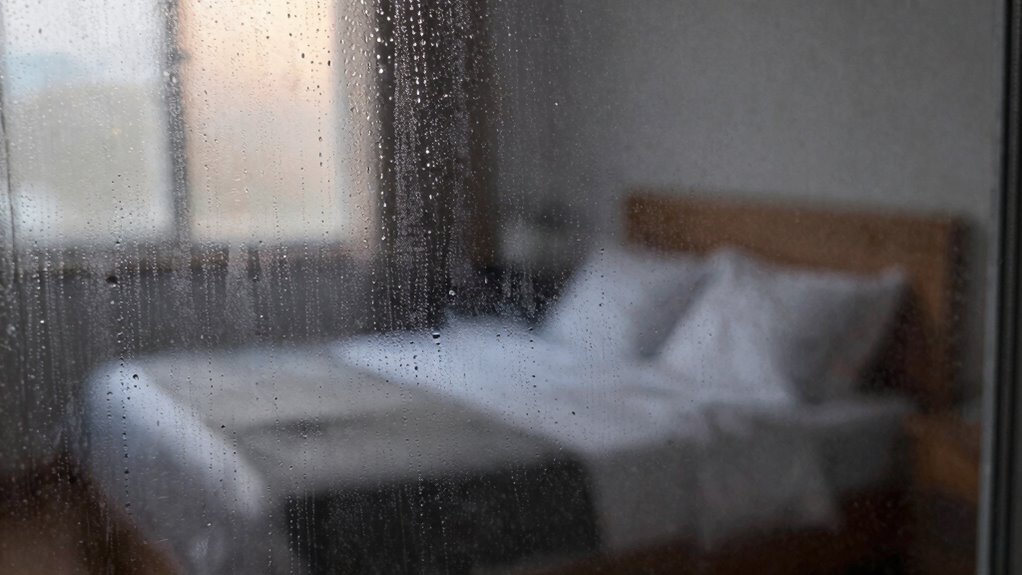
If you notice condensation forming on your bedroom windows or walls, it can disrupt your sleep and signal underlying issues with moisture control. This moisture buildup isn’t just a minor inconvenience; it’s often a sign that your room’s humidity levels are off balance. When humidity control isn’t properly managed, excess moisture can accumulate, leading to damp surfaces and a persistently humid environment. This not only affects comfort but can also have lasting effects on your health and sleep quality.
High humidity creates a perfect environment for mold, dust mites, and other allergens to thrive. These irritants can cause respiratory issues, allergies, and even worsen asthma symptoms, making restful sleep harder to achieve. When your room’s moisture levels are unchecked, your body struggles to regulate its own temperature and moisture, leading to more wakefulness during the night. Condensation on windows and walls becomes a visible reminder that your indoor environment isn’t ideal, but it also points to deeper issues with moisture buildup that need addressing. Proper humidity control strategies can significantly reduce these risks and improve sleep quality.
High indoor humidity fosters mold and allergens, impairing sleep and overall health.
Controlling humidity is crucial, especially in bedrooms, because it directly influences sleep quality. If you’re experiencing frequent condensation, it’s likely because your room’s humidity level is too high—generally above 60%. To improve this, you need to implement effective humidity control strategies. Using dehumidifiers can help extract excess moisture from the air, creating a more balanced environment. Ventilation also plays a vital role; opening windows or installing exhaust fans can help exchange humid indoor air with drier outdoor air, reducing the risk of condensation forming. Ensuring proper Ventilation can also prevent the buildup of indoor pollutants, further supporting healthier sleep. Adequate ventilation is essential for maintaining a safe and comfortable sleeping environment.
Ignoring persistent condensation can lead to long-term damage to your walls, furniture, and even your health. Over time, moisture may seep into walls, causing paint to peel or wood to warp, which further destabilizes your room’s environment. More importantly, the ongoing presence of dampness can perpetuate poor sleep quality, as your body remains in a state of constant alertness due to discomfort and potential allergens. Recognizing that condensation is a bigger sleep clue than it looks, you understand that addressing moisture buildup and improving humidity control isn’t just about comfort—it’s about safeguarding your health and ensuring you get restorative sleep night after night. Proper humidity management is essential for maintaining a healthy indoor environment and supporting better sleep.
As an affiliate, we earn on qualifying purchases.
Frequently Asked Questions
Can Condensation Damage My Mattress or Bedding?
Yes, condensation can damage your mattress and bedding. Excess moisture creates a perfect environment for mold growth, which can lead to health issues and unpleasant odors. Over time, persistent condensation causes mattress deterioration, compromising its support and comfort. To protect your bedding and sleep quality, make certain of proper ventilation, use dehumidifiers, and address condensation issues promptly. Regularly inspecting your mattress can help catch early signs of mold and damage.
How Quickly Does Condensation Form in a Bedroom?
Condensation can form in your bedroom within a few hours, especially if humidity levels are high and airflow circulation is poor. When warm, moist air contacts cooler surfaces like windows or walls, moisture quickly condenses. To reduce this, you should improve airflow by opening windows or using a fan, and control humidity with a dehumidifier. Keeping your room well-ventilated minimizes condensation buildup and helps you sleep more comfortably.
Is Condensation More Common in Certain Seasons?
Yes, condensation is more common during certain seasons, especially winter. Seasonal humidity levels drop outside, but winter moisture inside your home increases due to heating, making condensation more likely. When warm, moist air hits cooler surfaces like windows or walls, it causes water droplets. You’ll notice more condensation in colder months because of this interplay between winter moisture and lower outdoor temperatures, which makes managing indoor humidity essential for better sleep.
Can Using a Heater Reduce Bedroom Condensation?
Yes, using a heater can reduce bedroom condensation by improving heater effectiveness and promoting better moisture control. When you heat the room, the air warms up, which helps it hold more moisture and prevents it from condensing on surfaces. However, make certain you balance heating with proper ventilation, as excessive dryness can cause other issues. A combination of steady heating and good airflow is your best approach to manage condensation effectively.
Does Condensation Affect Sleep Quality Directly?
Yes, condensation can directly affect your sleep quality. High humidity levels from excess condensation create a damp environment, which can cause discomfort and disrupt your rest. Poor air circulation traps moisture, worsening condensation and making it harder to breathe comfortably. To improve sleep, guarantee good air circulation and maintain ideal humidity levels, reducing condensation and creating a healthier, more comfortable sleeping environment.
As an affiliate, we earn on qualifying purchases.
Conclusion
Think of your bedroom like a mirror—condensation reveals hidden truths about your sleep. When droplets gather, they whisper secrets about your environment, stirring awareness beneath the surface. Ignoring this sign is like closing your eyes to a silent alarm, risking restless nights. Addressing condensation clears the fog, restoring harmony and balance. So, let these droplets be your guide, a gentle rhythm urging you to nurture your space, ensuring every night brings clarity and restful dreams.
mold and dust mite remover spray
As an affiliate, we earn on qualifying purchases.
As an affiliate, we earn on qualifying purchases.
As an affiliate, we earn on qualifying purchases.
Fall Picks
fall essentials
As an affiliate, we earn on qualifying purchases.