Your bed warms up slowly because the bedding materials have low thermal conductivity, which delays heat transfer from your body. Once warmed, materials like memory foam or thick blankets trap and retain heat effectively, keeping the surface warm longer. This combination creates a delay before you feel the warmth, but then it stays for an extended period. If you want to understand more about this heat behavior, there’s plenty to explore.

Get home appliances delivered free with Prime
- Fast, free delivery on millions of items
- Prime Video, Amazon Music and more included
- Member-only deals all year
Key Takeaways
- Low thermal conductivity materials resist initial heat transfer, causing a slow warm-up of the bed surface.
- Insulating bedding traps heat, maintaining warmth once the surface has warmed up.
- Surface materials with high heat retention delay the initial warming phase but keep warmth longer.
- Heat gradually penetrates from the body through insulating layers, resulting in delayed surface warmth.
- The interaction of thermal properties influences the time it takes for a bed to warm and stay warm.

Thermal conductivity is the property that determines how quickly heat flows through a material. Materials with high thermal conductivity, like metals, transfer heat rapidly, meaning they warm up and cool down quickly. Conversely, materials with low thermal conductivity, such as certain fabrics and mattresses, resist the flow of heat, causing a slower rise in temperature. Your mattress, often made of foam or other insulating materials, has low thermal conductivity, which explains why it takes time to reach a comfortable warmth. The heat from your body gradually penetrates these materials, instead of instantly transferring, resulting in that initial cold feeling. Additionally, the material composition of your bedding influences how effectively it retains heat and contributes to the surface heat delay. Understanding how thermal properties impact heat transfer can help you choose bedding that better suits your comfort needs. Heat retention plays a vital role in how long your bed stays warm once it’s heated up. Materials with good heat retention, like memory foam or thick blankets, trap heat effectively. Once the heat has penetrated the surface, these materials hold onto it, preventing rapid cooling. This means that even if your body stops actively generating heat, the mattress and bedding continue to radiate stored warmth, providing a cozy, long-lasting comfort. The combination of low thermal conductivity and high heat retention makes your bed a perfect insulator, delaying the initial warm-up but maintaining that warmth efficiently. Recognizing the thermal conductivity of bedding materials can help improve your overall sleep environment. Effective heat transfer depends on the interaction between these thermal properties, impacting overall sleep comfort. Knowing the thermal behavior of materials can guide you in selecting bedding that optimizes your sleep experience.
As an affiliate, we earn on qualifying purchases.
Frequently Asked Questions
Does Mattress Material Affect the Surface Heat Delay?
Yes, mattress material affects the surface heat delay. Materials with high conductivity, like memory foam, transfer heat quickly, reducing delay. In contrast, materials with good insulation properties, such as latex or thicker foam layers, slow heat transfer, causing a longer warm-up period. Your choice of mattress material influences how fast your bed warms up and stays warm, so consider those properties when selecting your ideal sleep surface.
How Does Room Temperature Influence Warm-Up Time?
Room temperature influences warm-up time because higher temperatures improve thermal conductivity, allowing heat to transfer faster to your mattress. Conversely, lower room temperatures reduce insulation properties, slowing down the warm-up process. When your room is warm, your bed reaches a comfortable temperature quicker, while cooler environments delay this process. Understanding how thermal conductivity and insulation properties interact helps explain why some rooms heat your bed faster than others.
Can Bed Heating Systems Bypass the Heat Delay?
Your bed heating system can’t completely bypass the heat delay, but smart thermostats help speed up the process. They learn your habits and optimize heating schedules, making your bed warmer faster while conserving energy. This boosts energy efficiency and reduces waiting time, so you don’t have to endure the icy cold for long. While no system can eliminate the delay entirely, smart tech minimizes it, giving you cozy warmth quicker and smarter.
Is There a Way to Speed up Bed Warming?
Yes, you can speed up bed warming by using a mattress with good insulation properties and a heating system that responds quickly. Pre-warming your bed for about 15-20 minutes before sleep enhances sleep comfort, preventing the delay. Additionally, choosing a high-quality heated mattress pad or electric blanket that heats uniformly can markedly reduce the heat-up time, ensuring your bed is cozy and warm when you’re ready to sleep.
Does Bedding Type Impact Surface Heat Retention?
Yes, bedding type impacts surface heat retention. Thicker, insulating bedding like flannel or fleece traps heat better, reducing heat transfer away from your body and helping your bed stay warm longer. Conversely, lighter fabrics like cotton or silk allow more heat transfer, causing quicker cooling. Choosing bedding with good insulation can improve warmth retention, making your bed feel cozy faster and maintaining that warmth for a longer period.
As an affiliate, we earn on qualifying purchases.
Conclusion
You might expect your bed to warm quickly, yet it lingers in coldness before slowly embracing heat. This surface heat delay reminds you that comfort isn’t instant; it’s a patient process, much like warmth and cold coexisting. While you crave immediate coziness, nature teaches patience. In this quiet pause, you realize that true comfort isn’t just rapid warmth, but the slow, steady embrace that stays, long after the initial heat arrives.
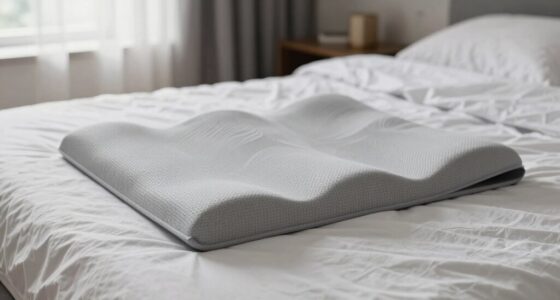
thermal insulating mattress topper
As an affiliate, we earn on qualifying purchases.
As an affiliate, we earn on qualifying purchases.
As an affiliate, we earn on qualifying purchases.
Cold & flu season Picks
humidifiers
As an affiliate, we earn on qualifying purchases.