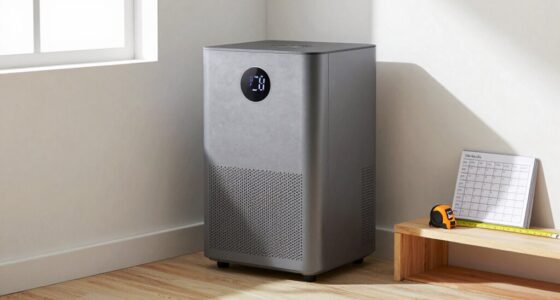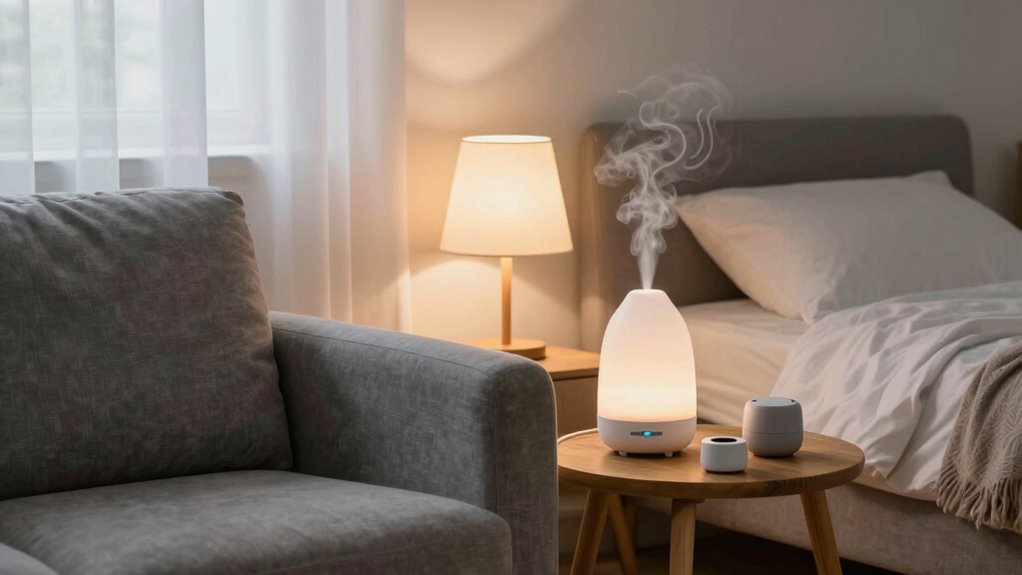

To soothe tinnitus at night, gentle sounds like rain, ocean waves, or white noise often help mask the ringing and promote relaxation. But loud, harsh, or unpredictable noises can worsen symptoms and disturb sleep. Consistency and proper volume are key—sudden changes or loud settings may trigger discomfort. Understanding which sounds calm your ears and creating a calming environment can make a big difference, so explore these tips to improve your sleep experience.

Get home appliances delivered free with Prime
- Fast, free delivery on millions of items
- Prime Video, Amazon Music and more included
- Member-only deals all year
Key Takeaways
- Gentle, steady nature sounds like rain or white noise typically help mask tinnitus and promote relaxation during sleep.
- Sudden, loud, or unpredictable noises can worsen tinnitus symptoms and disrupt sleep quality.
- Excessively loud or harsh sounds may trigger tinnitus or increase discomfort, hindering restful sleep.
- Inconsistent or sporadic sound levels can startle the listener and interfere with sleep continuity.
- Overuse of sound therapy without proper sleep hygiene may diminish its effectiveness or cause dependency.
white noise machine for tinnitus
As an affiliate, we earn on qualifying purchases.
As an affiliate, we earn on qualifying purchases.
What Is Tinnitus and How Does It Affect Sleep?
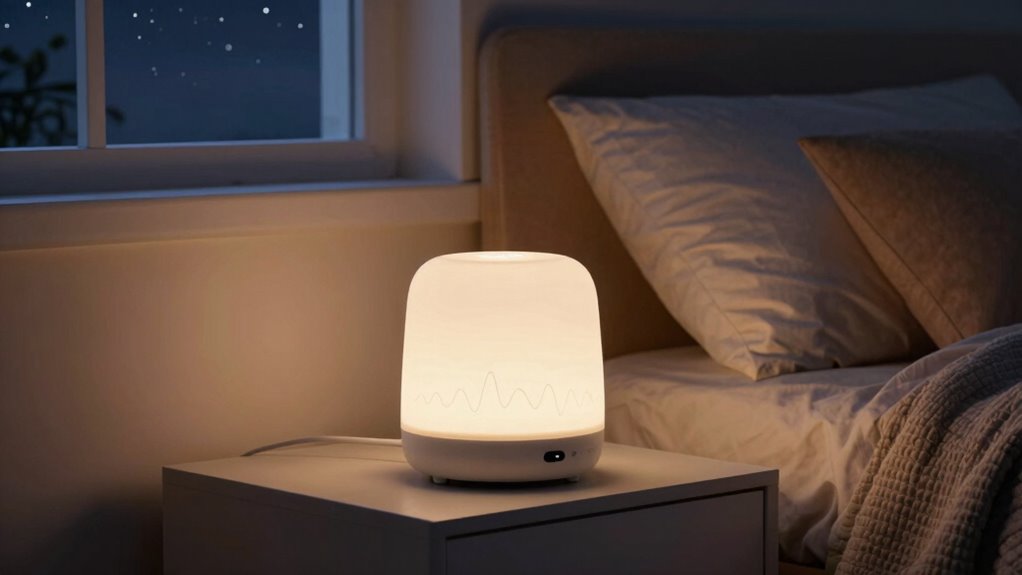
Have you ever experienced a persistent ringing, buzzing, or hissing in your ears that won’t go away? That’s tinnitus, a condition affecting your auditory perception. Tinnitus awareness helps you understand that it’s not a disease but a symptom of underlying issues like hearing loss or ear injury. It can profoundly impact your sleep, making it hard to fall asleep or stay asleep. You might notice that the constant noise worsens when it’s quiet, heightening your frustration. Fortunately, sound therapy options exist to help mask or reduce the perceived sounds, providing relief and promoting better sleep. Recognizing what tinnitus is and how it affects your sleep is the first step toward managing its impact effectively, so you can find ways to rest more peacefully. Incorporating auditory processing techniques can also enhance your ability to adapt to tinnitus sounds and improve overall sleep quality. Understanding sound therapy options can empower you to choose the most effective strategies for your needs. Additionally, exploring noise-masking devices can provide immediate relief by generating soothing sounds that distract from the tinnitus. Moreover, some individuals find that relaxation techniques help ease the stress and anxiety that often accompany tinnitus, which can further support restful sleep.
As an affiliate, we earn on qualifying purchases.
How Can Sleep Sounds Help Manage Tinnitus?
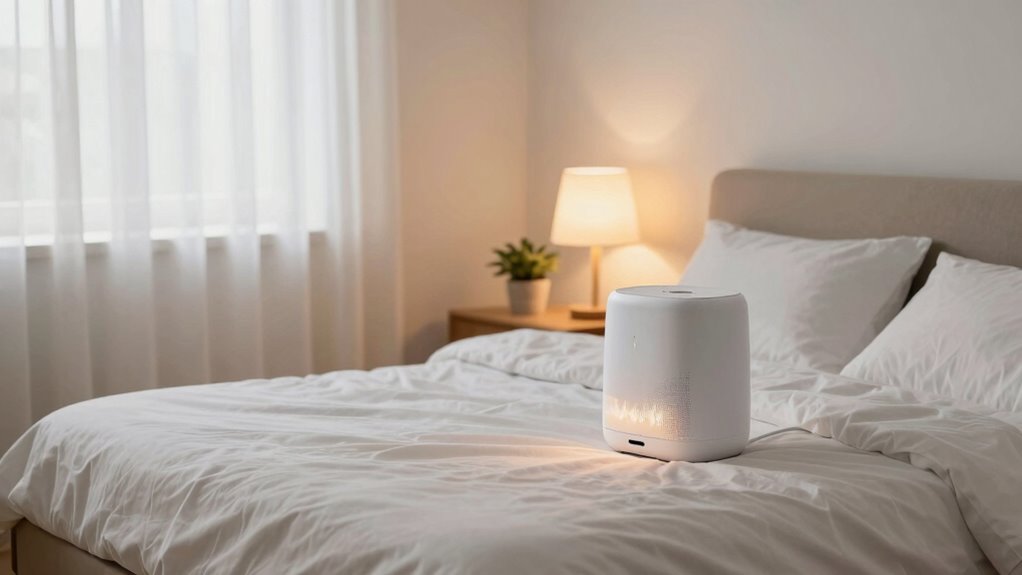
Sleep sounds can help mask the ringing of tinnitus, making it less noticeable and easing your mind. They also promote relaxation, helping you fall asleep more easily. Choosing the right type of sound is key to effectively managing your symptoms and improving your sleep quality. Additionally, evidence-backed guidance can assist in identifying the most effective sounds for your individual needs. Incorporating thoughtfully curated sounds into your nightly routine can enhance their calming effects and support sleep hygiene. Understanding sound therapy principles can further optimize your approach and outcomes. Ensuring proper air purifier maintenance can also contribute to a healthier sleep environment, reducing irritants that may worsen tinnitus.
Masking Tinnitus With Sounds
Many people find that introducing soothing sounds can effectively mask their tinnitus, making the ringing or buzzing less noticeable. Sound masking uses ambient noise to cover up the internal sounds, helping you focus less on the tinnitus. Sleep sounds like gentle rain, white noise, or nature sounds create a consistent background that blends with your tinnitus, reducing its prominence. This technique doesn’t eliminate tinnitus but makes it easier to ignore, especially at night. The key is choosing ambient noise that’s calming and non-intrusive. By using sound masking effectively, you can create a more comfortable environment that minimizes the perception of tinnitus, helping you relax and fall asleep more easily. Additionally, understanding the concept of Free Floating tinnitus can help you develop strategies to manage it more effectively. Incorporating sound therapy into your routine can also promote better adaptation and relief over time.
Promoting Relaxation and Sleep
Since stress and anxiety can worsen tinnitus symptoms, promoting relaxation is essential for managing the condition. You can incorporate relaxation techniques such as deep breathing, meditation, or progressive muscle relaxation to calm your mind and body before bed. Establishing good sleep hygiene—like maintaining a consistent sleep schedule, creating a comfortable sleep environment, and avoiding screens before bedtime—also supports better rest. Sleep sounds can serve as a soothing background, helping you relax and shift into sleep more easily. Additionally, sound therapy offers targeted relief by masking tinnitus noises, further easing the transition to sleep. By combining relaxation techniques with proper sleep hygiene, you reduce stress levels and create a calming atmosphere that minimizes tinnitus awareness, making it easier to fall asleep and enjoy restful nights.
Selecting Suitable Sound Types
Choosing the right type of sound can considerably enhance your ability to mask tinnitus and promote relaxation. When selecting sounds for therapy, focus on those that minimize tinnitus triggers and create a calming environment. Sound therapy offers various options, but not all sounds work equally well for everyone. You should experiment with different types to see which ones help reduce the perception of tinnitus. Some sounds can be soothing and mask tinnitus effectively, while others may aggravate symptoms. Consistency is key—using the same sound regularly can strengthen its calming effects. Remember to avoid sounds that are too loud or jarring, as they can trigger tinnitus or interfere with sleep. Incorporating appropriate sound levels is essential to avoid overstimulation or discomfort. Additionally, paying attention to sound environment factors can help optimize the therapy’s effectiveness and ensure a comfortable experience. Exploring sound quality can also make a significant difference in how well the sounds mask tinnitus and promote restful sleep.
As an affiliate, we earn on qualifying purchases.
Which Sounds Actually Calm Tinnitus at Night?
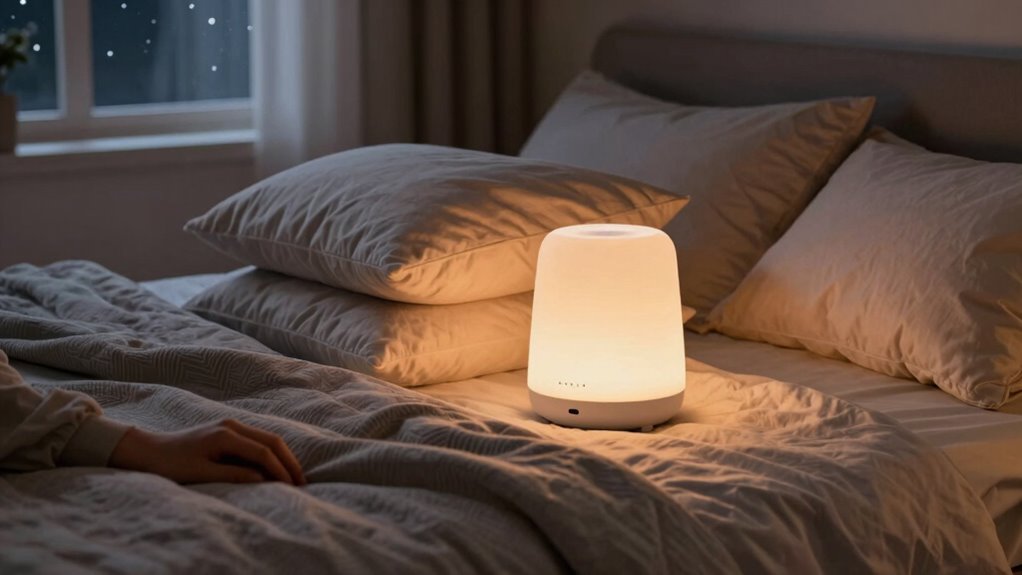
Not all sounds help soothe tinnitus at night; some can even make the ringing worse. Many people find that nature sounds, like gentle rain, ocean waves, or rustling leaves, create a calming environment that masks tinnitus without being intrusive. These sounds mimic natural environments and can promote relaxation, making it easier to fall asleep. White noise, a consistent, neutral sound, is also popular because it covers up the tinnitus with a steady background hum. Unlike sudden or harsh noises, white noise stays constant, preventing your brain from focusing on the ringing. Both nature sounds and white noise can help distract your mind from tinnitus, creating a peaceful atmosphere conducive to restful sleep. Choosing effective sounds can significantly improve your sleep quality and reduce tinnitus awareness at night. Additionally, understanding sound masking techniques can help you select the most beneficial audio environment for your needs. Experiment to see which sound works best for you. Incorporating sound therapy into your nightly routine may further enhance your comfort and sleep quality by providing tailored masking options.
sound masking device for tinnitus
As an affiliate, we earn on qualifying purchases.
As an affiliate, we earn on qualifying purchases.
What Sounds Might Worsen Tinnitus or Disrupt Sleep?
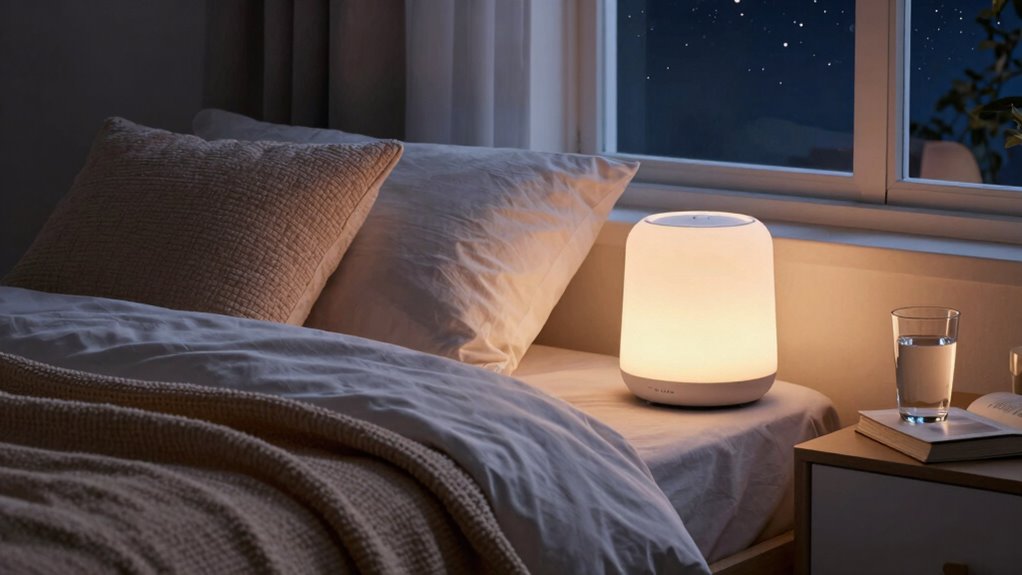
While certain sounds can soothe tinnitus at night, others may actually worsen the ringing or disrupt your sleep. If you’re sensitive to background noise or have sound sensitivity issues, some sounds can be more harmful than helpful. Loud or unpredictable noises can heighten tinnitus symptoms and make it hard to fall asleep. Additionally, inconsistent or abrupt sounds may trigger your sound sensitivity, causing discomfort or awakening. Sound sensitivity can vary greatly from person to person, so understanding your own reactions is important. Be cautious with: – Sudden loud noises – High-pitched sounds – Background noise that’s too loud – Inconsistent or sporadic sounds – Noises that change unpredictably. Using adaptive sound environments that maintain steady, gentle sounds can help mitigate these effects. These types of sounds can intensify tinnitus or disturb your sleep cycle, so it’s best to avoid them and choose soothing, steady sounds instead. Proper sound management is essential for maintaining a comfortable sleep environment and minimizing tinnitus discomfort. Incorporating sound therapy with gentle, consistent noises like white noise or nature sounds can help create a more stable auditory environment conducive to restful sleep.
Why Do Volume and Consistency Matter for Sleep Sounds?
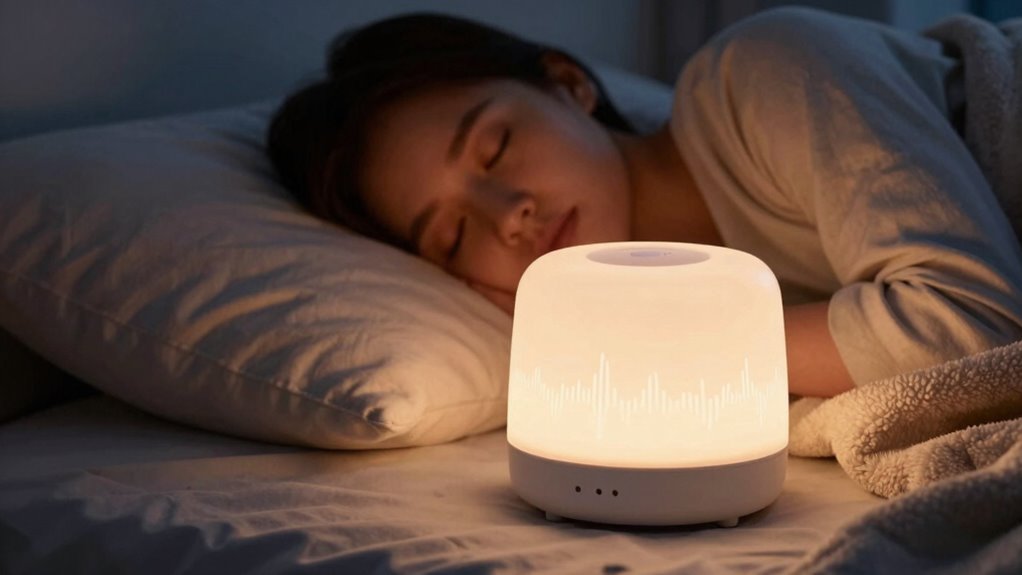
Maintaining a consistent volume helps your brain relax and reduces sudden awakenings. You should also prefer gradual sound adjustments rather than abrupt changes, which can be jarring. Avoid sudden noise shifts to keep your sleep environment steady and calming.
Consistent Volume Levels
Having a consistent volume level for your sleep sounds is essential because sudden changes can disrupt your ability to fall asleep or stay asleep. Proper volume control guarantees the sound remains soothing rather than startling. Maintaining sound balance prevents abrupt shifts that could wake you up or heighten tinnitus. When your sleep sounds stay steady, your brain can relax, making it easier to drift into sleep.
Consider these tips:
- Use devices with reliable volume control
- Avoid sounds that fluctuate in loudness
- Set a fixed volume before sleeping
- Choose sounds with a natural, even tone
- Keep the volume low enough to be soothing, not overpowering
Gradual Sound Adjustments
Gradual sound adjustments are important because sudden changes can wake you up or disrupt your sleep cycle. When using ambient noise or sound therapy, a steady volume helps your brain stay relaxed and prevents startling interruptions. Rapid increases or decreases in volume can heighten your awareness of the sound, making it harder to fall asleep or causing wakefulness during the night. By adjusting the volume slowly, you allow your mind to adapt without abrupt shifts that might trigger alertness. This smooth transition supports a more restful sleep environment, especially for those with tinnitus who rely on consistent sound levels to mask ringing. Overall, gentle, incremental sound adjustments enhance the calming effect of sleep sounds and promote uninterrupted, restorative sleep.
Avoid Sudden Noise Changes
Sudden noise changes can disrupt your sleep by startling your mind and breaking your relaxation. If you have sound sensitivity or noise phobia, unpredictable volume shifts can intensify your discomfort and make it harder to fall asleep. To maintain a calming environment, choose sleep sounds with consistent volume and tone. Avoid abrupt changes that can trigger a startle response or heighten anxiety.
Consider these tips:
- Use sound machines with smooth volume transitions
- Opt for tracks with steady, repetitive sounds
- Keep the sound source at a consistent distance
- Avoid sudden loud noises during the night
- Test your sleep sounds beforehand to ensure stability
Consistent, predictable sounds help reduce noise phobia and promote better sleep quality.
How Can You Personalize Your Sleep Sounds for Tinnitus?
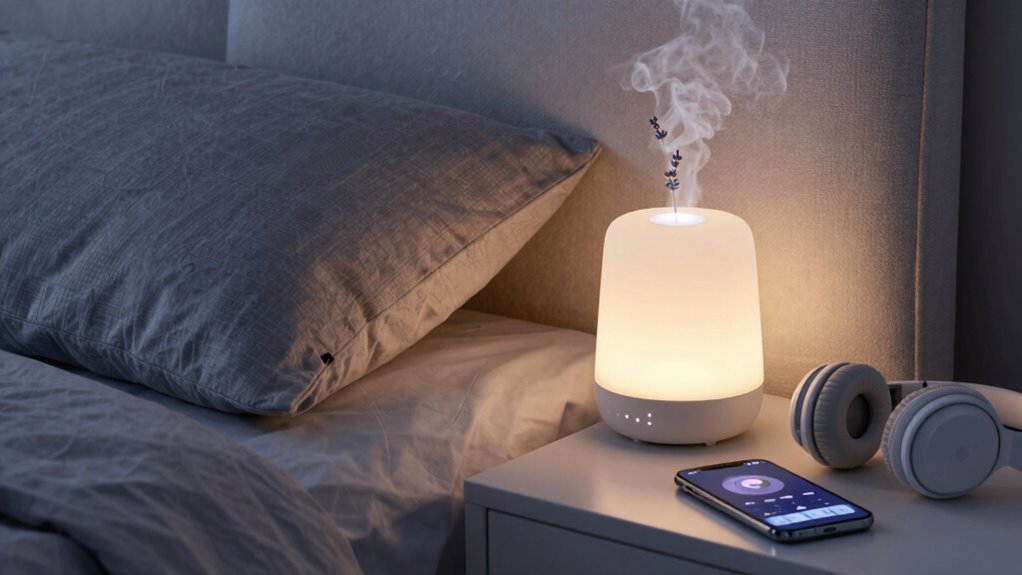
To effectively personalize your sleep sounds for tinnitus, start by experimenting with different types of noises until you find what soothes you best. You can create personalized playlists that combine your preferred sounds, such as gentle rain, white noise, or nature sounds, tailored to your needs. Customized soundscapes allow you to adjust volume levels, tone, and duration, ensuring the sound is neither too overwhelming nor too faint. Keep track of which sounds help you relax and fall asleep faster, then refine your playlist accordingly. Using these personalized approaches helps you develop a consistent sleep routine and minimizes the likelihood of aggravating your tinnitus. The key is to find what works uniquely for you and stick with it.
How Do You Create a Sleep-Friendly Environment for Tinnitus?
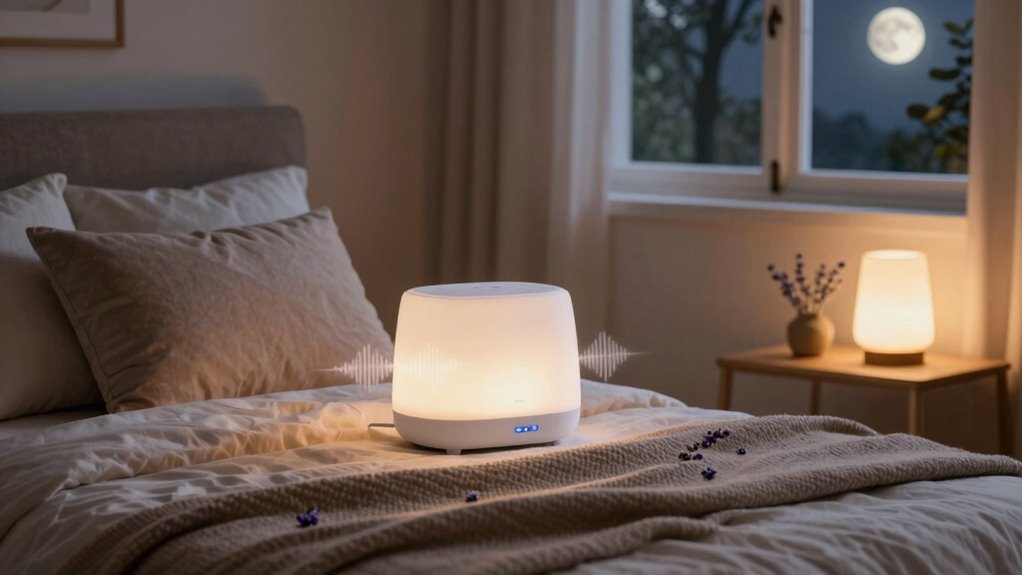
Creating a sleep-friendly environment for tinnitus starts with minimizing external noise and distractions that can interfere with your rest. Implement soundproofing strategies like sealing gaps around windows, adding heavy curtains, or using door sweeps to reduce noise infiltration. Adjust your bedroom lighting by opting for dim, warm lights or blackout curtains to create a calm atmosphere conducive to sleep. Keep electronic devices out of the bedroom or turn them off to prevent disruptive sounds and light. Use white noise machines or gentle sound machines if they help mask tinnitus without aggravating it. Consider placing rugs or soft furnishings to absorb sound and make your space quieter. These steps help establish a peaceful environment, making it easier to fall asleep and stay asleep.
What Common Mistakes Should You Avoid With Sleep Sounds?

While sleep sounds can be helpful for masking tinnitus, it’s important to avoid common mistakes that could make your sleep worse. One mistake is relying solely on sound therapy without addressing your overall sleep hygiene. Using loud or inconsistent sounds can disrupt your sleep instead of helping. Avoid playing sounds at an excessive volume or for too long, as this may cause dependence or irritation. Also, don’t pick distracting or jarring noises that can keep you awake. Overusing sleep sounds might prevent your brain from adapting naturally to silence. Instead, choose calming, steady sounds and set a consistent volume. Remember, sound therapy should complement a good sleep routine, not replace healthy sleep habits. Proper sleep hygiene ensures your sleep environment supports restful, undisturbed sleep.
When Is It Time to See a Professional About Tinnitus and Sleep?
If your tinnitus and sleep issues persist despite trying various home remedies, it’s time to consult a professional. Persistent tinnitus triggers, like loud noises or stress, can worsen sleep problems. If sleep hygiene tips no longer help, or you experience worsening symptoms, seeking expert advice is vital. You should see a healthcare provider if you notice any of these signs:
- Tinnitus that worsens or changes in pitch
- Significant sleep disruption or insomnia
- Ear pain or dizziness
- Hearing loss accompanying tinnitus
- Emotional distress or anxiety related to your symptoms
A professional can evaluate underlying causes and recommend treatments, including sound therapy or medication, to improve your sleep and manage tinnitus effectively. Don’t ignore persistent issues—timely intervention can make a difference.
Frequently Asked Questions
Can Certain Medications Affect Tinnitus and Sleep Quality?
Certain medications can definitely affect your tinnitus and sleep quality. Medication interactions may worsen tinnitus, causing more ringing or buzzing, and some drugs can interfere with sleep patterns. Hearing aid effects might also be impacted if medication alters your ear sensitivity. Always discuss potential side effects with your healthcare provider, especially if you’re taking multiple medications, to minimize any negative impacts on your tinnitus and sleep quality.
Are There Specific Lifestyle Changes That Improve Tinnitus-Related Sleep Issues?
You can beat tinnitus-related sleep issues by embracing relaxation techniques like deep breathing or meditation—think of it as giving your noise a timeout. Prioritize sleep hygiene: stick to a consistent sleep schedule, create a dark, cool environment, and avoid screens before bed. These simple lifestyle tweaks help quiet the chaos, making those restless nights a thing of the past, or at least a little quieter.
How Does Stress Influence Tinnitus and Sleep Disturbances?
Stress triggers can worsen your tinnitus and disturb your sleep, making it harder to relax at night. Anxiety impacts your overall well-being, heightening your awareness of tinnitus sounds and increasing sleep difficulties. When you’re stressed, your body’s fight-or-flight response elevates, intensifying tinnitus symptoms and making it tough to fall asleep. Managing stress through relaxation techniques, exercise, or mindfulness can help reduce these effects and improve both your tinnitus and sleep quality.
Do Dietary Factors Impact Tinnitus Severity or Sleep Quality?
Dietary triggers can markedly impact your tinnitus severity and sleep quality. Cutting back on caffeine, alcohol, and salty foods may reduce symptoms and improve rest. Nutritional interventions like increasing magnesium, zinc, and omega-3 fatty acids support ear health and sleep patterns. By choosing healthier foods, avoiding triggers, and embracing better nutrition, you empower yourself to manage tinnitus and sleep disturbances more effectively, fostering a calmer mind and better rest.
Is Tinnitus Louder at Night Due to Environmental Factors?
Yes, your tinnitus may seem louder at night because environmental noise drops, making internal sounds more noticeable. Bedroom lighting can also influence your perception, as dimmer settings might make you more aware of the ringing. By introducing calming background noise or using soft, consistent sounds, you can help mask tinnitus and reduce its perceived intensity, making it easier to fall asleep and stay asleep.
Conclusion
By carefully selecting soothing sounds and creating a calm, consistent environment, you can transform your nights into a peaceful refuge from tinnitus. Imagine drifting into sleep like a gentle river flowing softly past, where every sound calms and comforts. When you personalize your approach and avoid common pitfalls, restful nights become attainable. Embrace these gentle melodies and let your mind ease into a tranquil slumber, leaving the noise behind like dawn breaking over a quiet, renewed world.
Halloween Picks
halloween
As an affiliate, we earn on qualifying purchases.