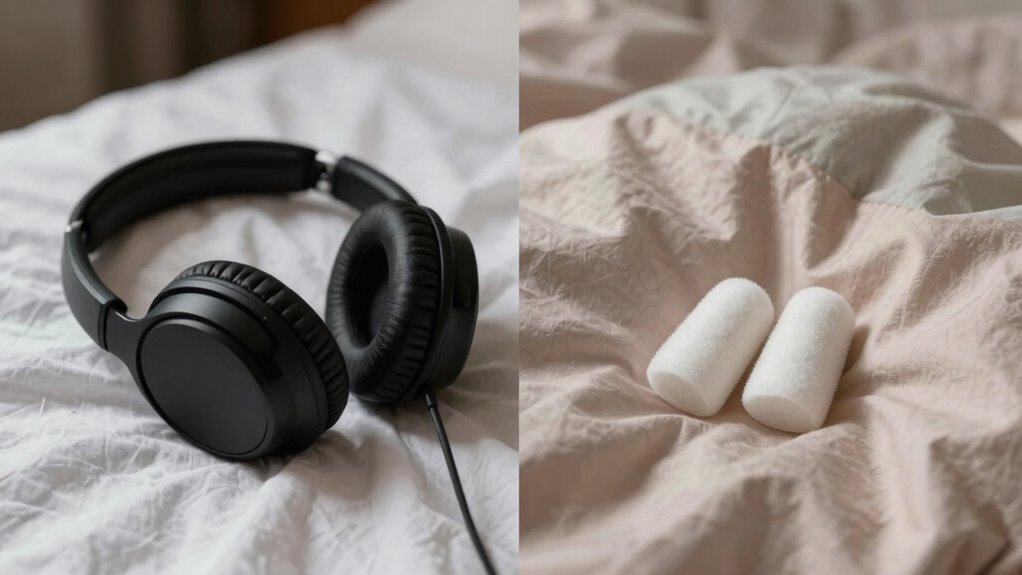

If you want to block out noise while sleeping, passive earplugs are a good choice if comfort and simplicity matter most, especially for high-frequency sounds like chatter or snoring. Noise-canceling headphones work best against steady, low-frequency sounds like traffic, using active technology to create anti-noise signals. Both options have their pros and cons regarding comfort, safety, and effectiveness. To find out which method suits your environment and sleep needs best, keep exploring your options.

Get home appliances delivered free with Prime
- Fast, free delivery on millions of items
- Prime Video, Amazon Music and more included
- Member-only deals all year
Key Takeaways
- Passive isolation with earplugs effectively blocks high-frequency sounds like chatter and snoring, providing physical soundproofing during sleep.
- Active noise cancelling headphones are best suited for steady, low-frequency noises such as traffic or engine sounds.
- Earplugs are lightweight, easy to use, and generally more affordable, making them popular for sleep environments.
- Noise cancelling headphones offer adaptive, real-time sound reduction but can be bulkier and less comfortable for side sleepers.
- Combining passive isolation and active noise cancelling can maximize noise reduction depending on the environment and noise type.
noise cancelling sleep headphones
As an affiliate, we earn on qualifying purchases.
As an affiliate, we earn on qualifying purchases.
How Do Noise Cancelling Headphones and Earplugs Compare for Sleep?
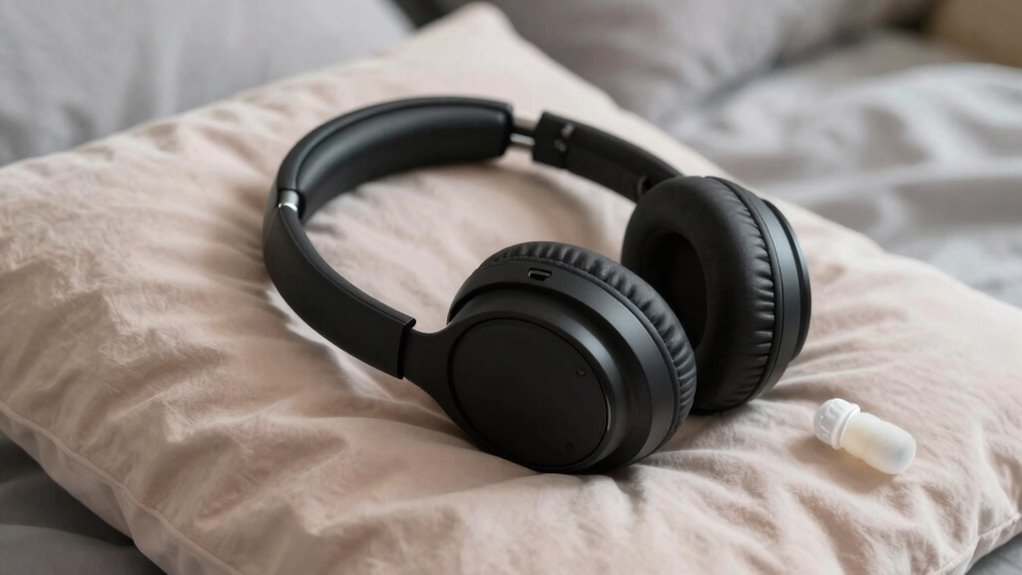
When it comes to improving sleep quality in noisy environments, noise-cancelling headphones and earplugs offer different advantages. Your sleep environment and noise sensitivity play key roles in choosing the right option. Noise-cancelling headphones actively reduce ambient noise, creating a quieter space by eliminating background sounds. They’re ideal if you want to listen to calming music or white noise without distraction. Earplugs, on the other hand, provide passive isolation by blocking out sound physically, making them effective for those who are highly sensitive to noise. They’re lightweight and portable, perfect for travel or irregular sleep environments. Both options help improve sleep by minimizing disturbances, but your personal noise sensitivity and comfort preferences determine which device works best for you. Additionally, understanding the concept of free floating noise can help you identify which method may better suit your needs. Considering noise exposure levels in your environment can also guide your choice for more effective sleep protection. Recognizing how ambient sound levels fluctuate can further inform your decision on the most suitable solution. Moreover, choosing the right option can be influenced by your sleep environment and how much external noise intrudes on your rest. Being aware of your noise sensitivity can help tailor your sleep setup to achieve the best results.
As an affiliate, we earn on qualifying purchases.
How Noise Cancelling Technology Works in Headphones?
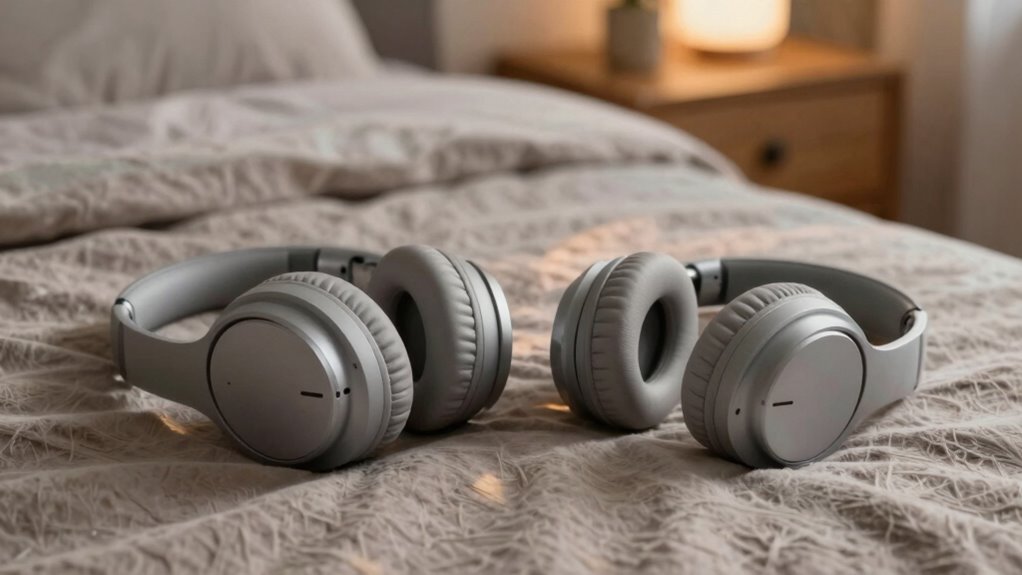
Noise cancelling headphones use active noise reduction, which involves creating sound waves that oppose incoming noise. They do this through sound wave cancellation, where the headphones generate anti-noise signals that neutralize external sounds. This technology helps you experience a quieter environment, even in noisy settings. Additionally, some models incorporate adaptive technology that dynamically adjusts noise cancellation levels based on your environment for optimal comfort and effectiveness. The effectiveness of noise canceling also depends on sound wave interference, which is carefully managed within the headphones to maximize noise reduction without affecting audio quality. To enhance performance, manufacturers continually refine passive isolation methods to complement active noise reduction strategies. Moreover, ongoing advancements in technological integration ensure that noise cancelling devices are more efficient and user-friendly, providing better sleep quality for users seeking rest in noisy environments. Furthermore, integrating smart sensors allows these devices to better adapt to individual user preferences and environment changes.
Active Noise Reduction
Active noise reduction works by using microphones inside or outside the headphones to pick up ambient sounds. These microphones send signals to a processor that analyzes the noise, then creates an anti-noise signal to cancel it out. Adaptive algorithms play a key role, continuously adjusting to changing environmental factors like background noise levels and movement. This real-time processing allows the headphones to effectively reduce a wide range of sounds, from engine hums to chatter. Environmental adaptability enables the system to maintain consistent noise cancellation even as surroundings change. Because the system adapts to your surroundings, you experience consistent noise cancellation without needing to manually adjust settings. Additionally, noise cancellation effectiveness can vary depending on the quality of the microphone and processing hardware used in the headphones. Keep in mind, though, that environmental factors such as wind or irregular sounds can sometimes challenge the system’s ability to cancel noise perfectly. Cookies and other data help optimize the system’s performance and user experience. Nonetheless, active noise reduction provides a dynamic, responsive way to create a quieter listening experience.
Sound Wave Cancellation
Sound wave cancellation works by generating anti-noise signals that directly oppose incoming sounds. When your headphones detect external noise, they create sound waves with the same amplitude but opposite phase, leading to sound wave interference. This process results in acoustic energy cancellation, reducing the noise you hear. Essentially, the anti-noise signals cancel out the original noise waves through destructive interference, diminishing unwanted sound. This technology relies on precise microphones and real-time processing to adapt instantly to changing noise environments. As a result, your headphones can effectively block out background sounds, making your listening experience quieter and more immersive. Sound wave cancellation offers a sophisticated way to reduce noise without physically isolating your ears, providing a seamless and efficient noise reduction method.
As an affiliate, we earn on qualifying purchases.
How Passive Earplugs Block Out Sound?
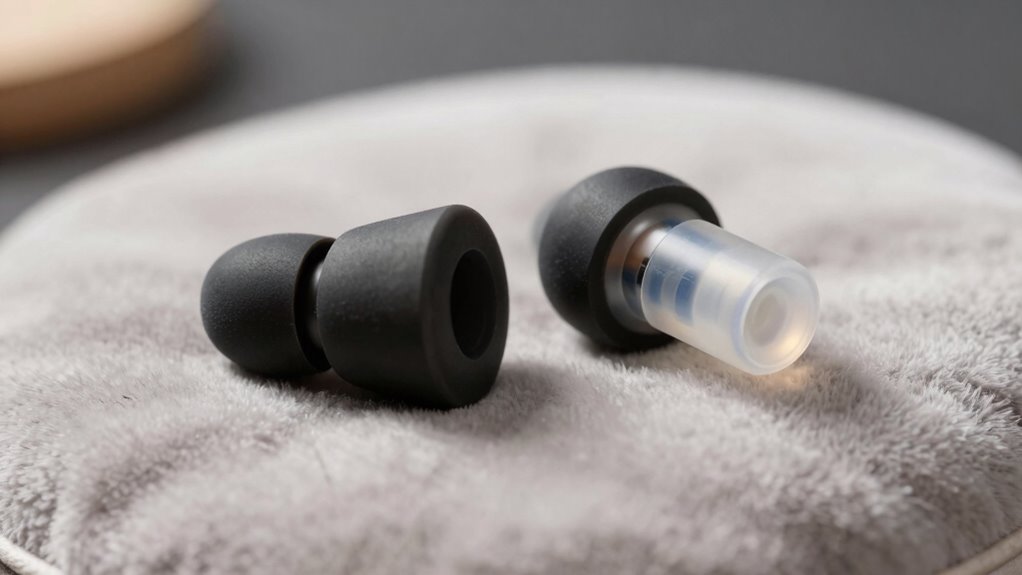
Passive earplugs block out sound mainly through their material density and thickness, which absorb and reduce noise. A proper seal and fit are essential to prevent sound leaks and maximize effectiveness. Additionally, their ability to block specific sound frequencies depends on the design and material used. Properly fitted earplugs can also help maintain a consistent performance metric over time. The material properties of earplugs influence their durability and comfort, ensuring effective noise reduction during extended use. Ensuring the correct body jewelry measurements can also contribute to a better fit and optimal sound blocking. The design and material play a crucial role in their overall effectiveness and user comfort, especially when considering the noise reduction capabilities of different types of earplugs.
Material Density and Thickness
Material density and thickness play crucial roles in how well passive earplugs block out sound. Higher material density means sound waves have a harder time passing through, providing better noise reduction. Thicker earplugs also improve sound attenuation by increasing the barrier’s mass, making it more difficult for noise to penetrate. When selecting earplugs, look for those made from dense, pliable materials like silicone or foam, which effectively absorb sound. Combining ideal density with appropriate thickness ensures your earplugs provide maximum isolation. Additionally, material safety should be considered to ensure that the materials used are safe for prolonged skin contact and sleep comfort. Material durability can also influence how well the earplugs maintain their noise-blocking properties over time. Keep in mind that overly thick or dense earplugs might become uncomfortable, so it’s about balancing soundproofing with comfort for a good night’s sleep. Using material technology can further enhance the effectiveness of your earplugs by optimizing sound absorption properties. Moreover, manufacturing quality plays an essential role in ensuring consistent performance and durability of the earplugs over repeated use. Understanding appliance maintenance plans can also help you choose earplugs that remain effective through proper cleaning and care.
Seal and Fit Effectiveness
The effectiveness of passive earplugs largely depends on how well they seal your ears and fit your canal. A proper seal fit prevents sound from leaking in, ensuring you get maximum noise reduction. Comfort level also plays a role; if earplugs are uncomfortable, you’re less likely to wear them consistently. To achieve ideal seal and fit, consider these points:
- Choose the right size and shape for your ear canal
- Ensure a snug, but not overly tight, seal
- Use earplugs made from comfortable, soft materials
- Test different styles to find the best fit for your ears
A good seal fit minimizes sound leakage and increases comfort, making passive earplugs more effective at blocking out noise during sleep. Proper fit is essential for consistent noise isolation. Additionally, selecting earplugs with smart design features can further improve their effectiveness and comfort over prolonged use.
Sound Frequency Blocking
Passive earplugs work by filtering out specific sound frequencies or reducing a broad range of noise, depending on their design. They achieve this through sound wave interference, where sound waves are dampened or canceled within the ear canal. The material of the earplugs plays a vital role in frequency attenuation, blocking certain sound waves more effectively than others. For example, foam earplugs absorb and diffuse sound across a wide range of frequencies, reducing overall noise. Molded or silicone earplugs may target specific frequencies, providing tailored noise reduction. By interfering with sound wave propagation, passive earplugs minimize disruptive noises, especially in the mid to high-frequency ranges like snoring or chatter. This selective filtering enhances your sleep quality without active electronic noise cancellation.
active noise cancelling headphones for sleep
As an affiliate, we earn on qualifying purchases.
As an affiliate, we earn on qualifying purchases.
Which Blocks Different Noises Better—Street, Snoring, or Others?
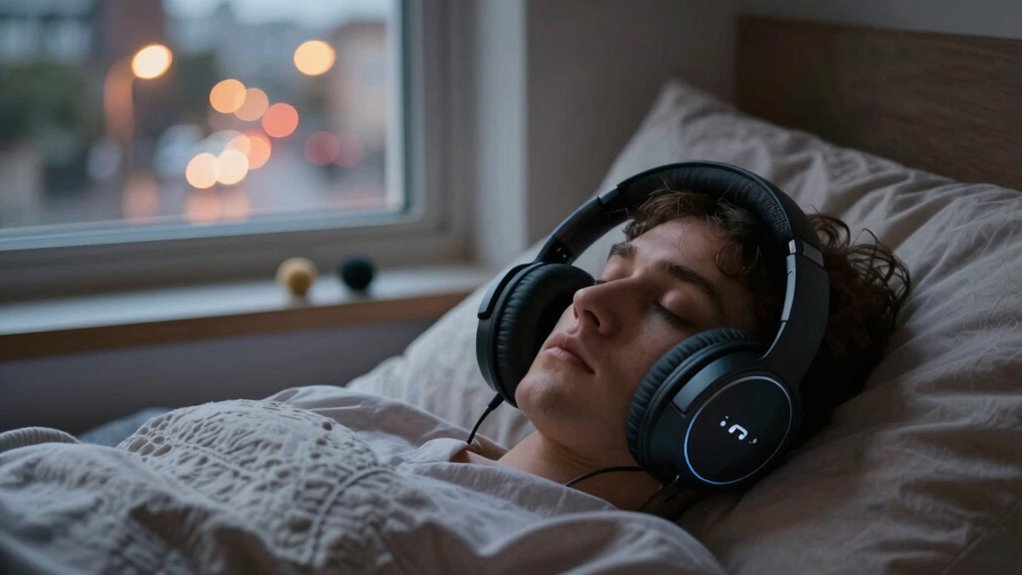
When it comes to blocking different types of noise, the effectiveness of noise cancelling versus passive isolation depends on the specific sound source. For urban noise like traffic or street activity, active noise cancelling (ANC) works better because it actively reduces consistent sounds. Passive isolation, such as thick ear cups or earplugs, can block out street noise effectively through physical barriers. For snoring sounds, passive isolation is often more reliable since loud, sudden noises are less affected by ANC.
- ANC is great for steady, low-frequency sounds like traffic
- Passive isolation blocks high-frequency sounds more effectively
- Snoring sounds are better dampened with physical barriers
- Different noise sources require different approaches for ideal sleep
Are Headphones or Earplugs More Comfortable for Sleeping?
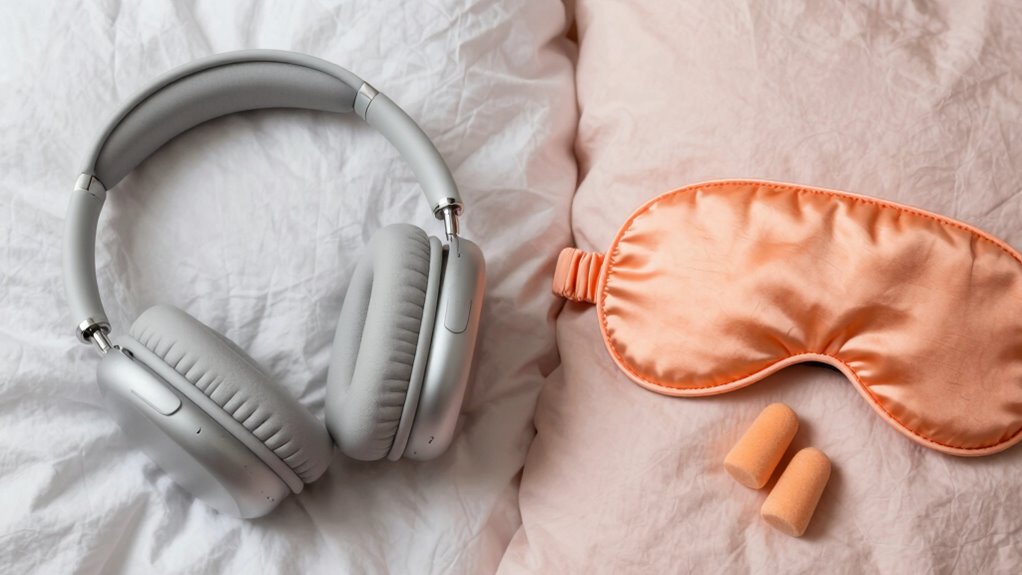
Choosing between headphones and earplugs for sleeping largely depends on your comfort preferences and sleep environment. Earplugs are small, lightweight, and less intrusive, making them ideal for maintaining good sleep hygiene and minimizing ambient noise. Headphones, especially soft and padded ones, can be more comfortable if you dislike the feeling of something in your ear, but they may cause discomfort or disrupt sleep if bulky. Consider your sleep position and sensitivity to pressure when choosing. Here’s a quick comparison:
| Comfort Level | Ease of Use | Suitability for Side Sleep |
|---|---|---|
| Headphones | Moderate | Moderate |
| Earplugs | High | High |
| Noise Reduction | Variable | Variable |
| Sleep Hygiene | Better with earplugs | Better with earplugs |
| Ambient Noise | Blocked effectively | Blocked effectively |
Your choice impacts sleep quality and hygiene, so pick what feels best.
Can You Sleep Easily With Headphones or Earplugs?
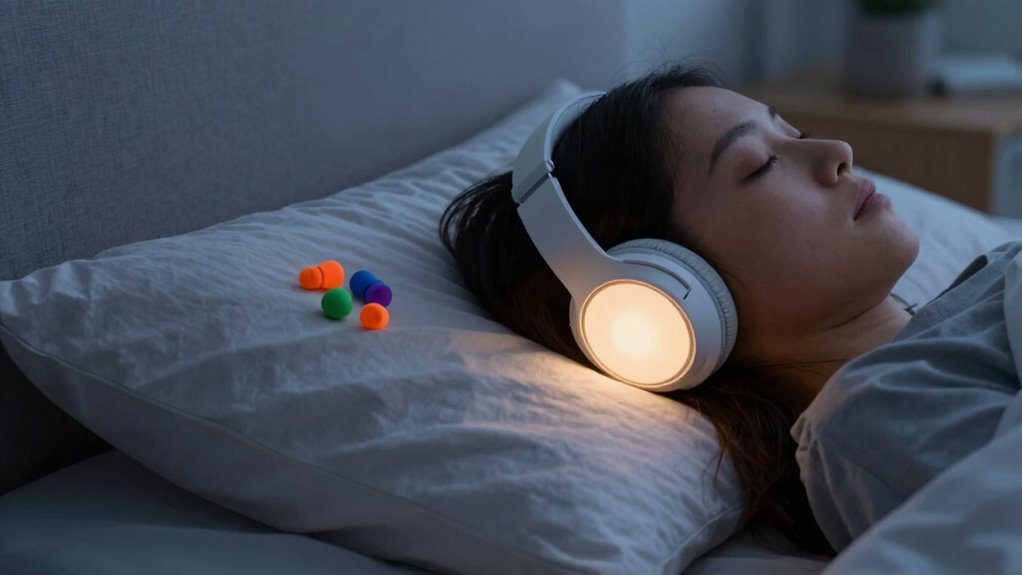
Sleeping with headphones or earplugs can be comfortable for some, but it may cause discomfort or even risks for others. Their effectiveness in blocking noise varies, depending on fit and type, which can impact your sleep quality. Consider your comfort and safety to determine if these options work well for you.
Comfort Levels During Sleep
While headphones and earplugs can block out noise effectively, they may not always feel comfortable or natural during sleep. Your sleep environment should promote relaxation, but wearing bulky gear can sometimes hinder that. Comfort levels vary depending on the type of device and individual preferences. If you’re sensitive to pressure or heat, prolonged wear might cause discomfort. To improve your sleep experience, consider relaxation techniques that don’t involve gadgets.
- Opt for soft, lightweight earplugs designed for sleep
- Choose ergonomic headphones with minimal pressure
- Use breathable materials to reduce heat buildup
- Experiment with different positions to find what feels best
Ultimately, comfort depends on your personal preferences and the design of your sleep accessories.
Effectiveness in Noise Reduction
Headphones and earplugs can substantially reduce ambient noise, making it easier to fall asleep in noisy environments. They block out or dampen sounds that might otherwise disturb your rest. When choosing between them, consider sound quality; headphones often provide clearer audio, which can enhance your sleep experience if you use calming music or white noise. Earplugs, on the other hand, offer a more straightforward noise reduction and are typically more discreet. User comfort is vital—headphones should be lightweight and snug without causing pressure, while earplugs need to fit well without discomfort. Both can effectively minimize external noise, but their success depends on the quality of the product and your ability to wear them comfortably through the night.
Potential Discomfort or Risks
Using headphones or earplugs to block out noise can improve your sleep, but they also come with potential discomforts and risks. You might experience ear canal irritation from prolonged use or improper fit. Allergic reactions to materials like latex or certain plastics can cause redness, itching, or swelling. Additionally, wearing devices overnight may lead to discomfort, pressure, or even accidental injury if they shift during sleep. It’s important to use clean, well-fitting products and limit duration to reduce these risks. Be mindful of signs like persistent pain or irritation, which may require removing the device and consulting a healthcare professional. Proper hygiene and fit are essential for safe, comfortable sleep with headphones or earplugs.
How Do Headphones and Earplugs Affect Sleep Sound Quality?
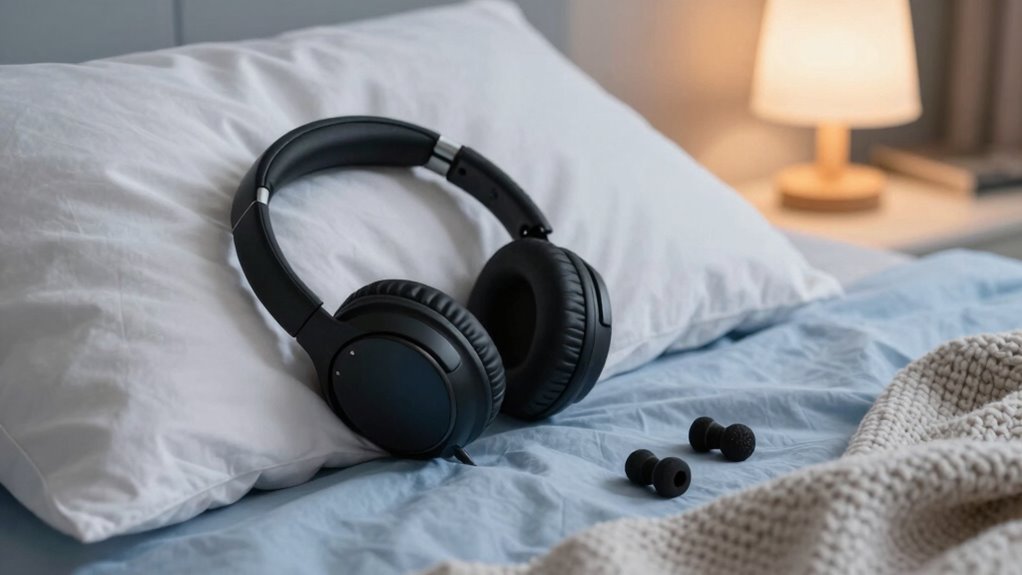
If you’re trying to improve your sleep quality, understanding how headphones and earplugs affect your sound environment is essential. Using these devices can notably influence your sound quality during sleep. High-quality earplugs or noise-canceling headphones can block out disruptive sounds, reducing sleep disruption and helping you fall asleep faster. However, poorly fitted or cheap options may introduce muffled sounds or cause discomfort, which can interfere with your sleep. Some headphones may also create pressure or heat, affecting your comfort and potentially disturbing your rest. While they can enhance quietness, it’s important to choose devices that balance effective sound blocking with comfort. Properly used, headphones and earplugs can improve sleep quality by minimizing external noise without compromising sound clarity.
Are There Discomfort Risks or Long-Term Use Concerns?
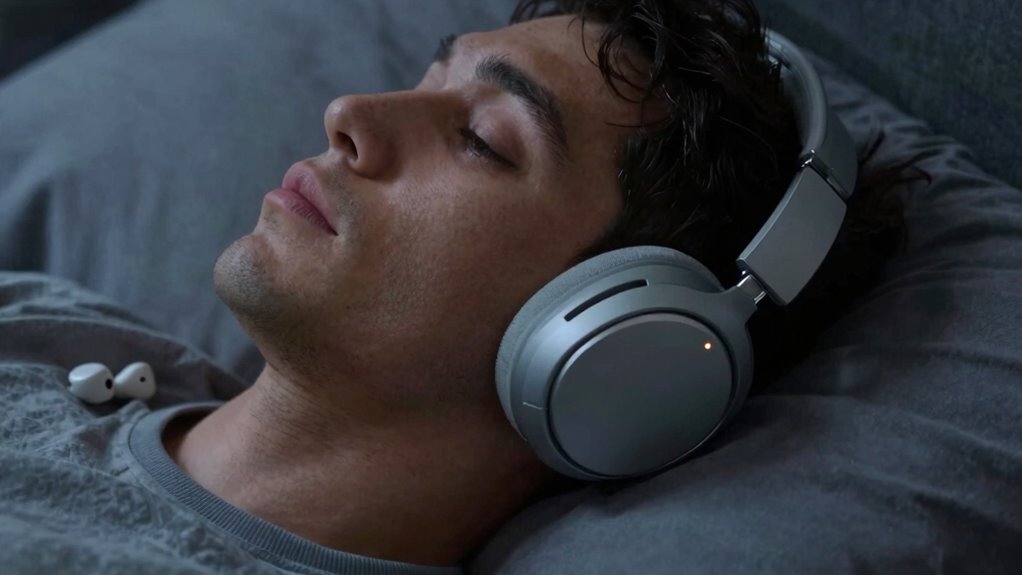
While headphones and earplugs can improve sleep by blocking out noise, prolonged or improper use may pose discomfort risks. You might experience soreness, pressure, or irritation from extended wear. Over time, these discomfort risks can lead to ear pain or even infections if hygiene isn’t maintained. Long-term concerns include potential damage to your ears or dependency on devices for sleep.
- Using poorly fitted earplugs or headphones can increase discomfort risks
- Continuous pressure may cause ear soreness or pain
- Hygiene issues can lead to infections
- Relying heavily on devices might impact natural sleep patterns
Being mindful of fit, hygiene, and duration helps minimize long-term use concerns, ensuring you sleep comfortably without risking your ear health.
What Are the Costs, Maintenance, and Durability of Each?
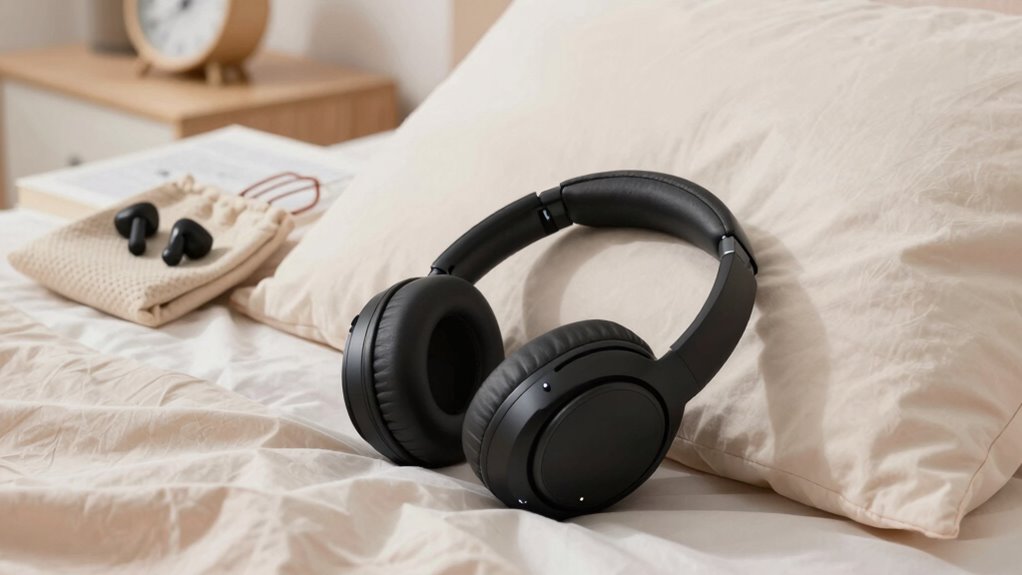
When comparing noise-canceling headphones and passive isolation earplugs, understanding the costs, maintenance, and durability is essential. In a thorough cost analysis, you’ll find that passive earplugs are more affordable upfront, often costing just a few dollars, while noise-canceling headphones tend to be pricier, sometimes exceeding a hundred dollars. Maintenance for earplugs is minimal—simply replace them when worn out—whereas headphones require regular cleaning and occasional repairs. Durability factors also differ: earplugs are usually disposable or reusable for a short period, while quality noise-canceling headphones can last several years if cared for properly. Considering these aspects helps you choose a solution that fits your budget and longevity expectations for better sleep comfort.
When Should You Use Noise Cancelling Headphones or Earplugs in Bed?
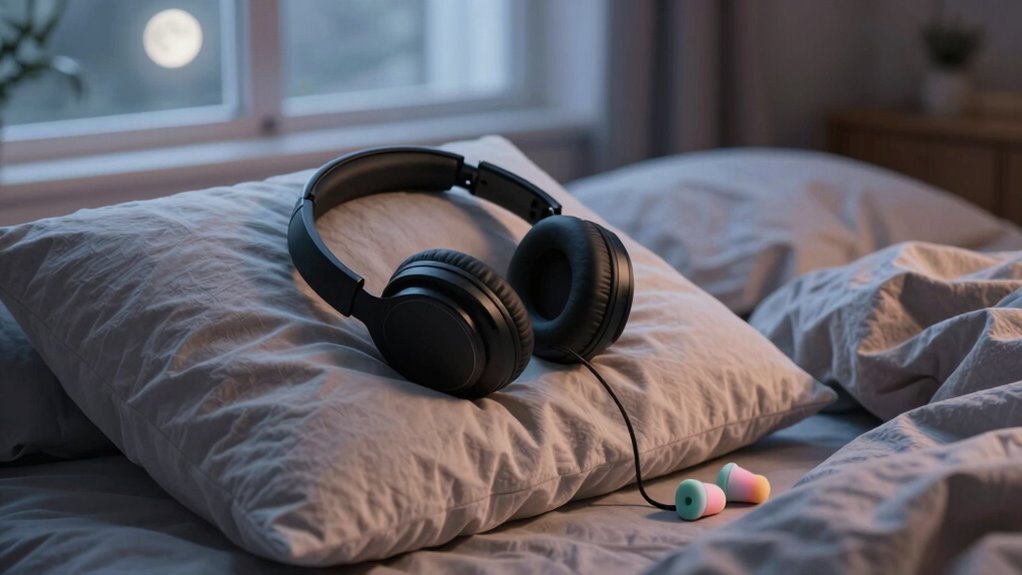
Choosing the right hearing protection for bed depends on your specific needs and the type of noise you’re trying to block out. Use noise cancelling headphones or earplugs when your sleep environment is noisy, such as city sounds or snoring partners. They’re also ideal if you’re sensitive to sound or need complete silence for restful sleep. Personal preference plays a key role, as some find headphones more comfortable, while others prefer earplugs. Consider these points:
- If you want active noise reduction for consistent noise
- When comfort and sleep position matter
- To block sudden loud sounds effectively
- If you dislike feeling isolated or need awareness of your surroundings
Ultimately, choose based on your sleep environment and what feels best for your comfort and sleep quality.
Frequently Asked Questions
Can Noise Cancelling Headphones Be Safely Used Throughout the Night?
Yes, you can safely use noise-cancelling headphones throughout the night if your sleep environment benefits from them. Just make certain they fit comfortably and don’t cause pressure or discomfort, which could impact your hearing health over time. Be cautious of sound levels; listening too loudly can damage your hearing. If used responsibly, noise-cancelling headphones can improve your sleep environment without risking your hearing health.
Do Passive Earplugs Cause Earwax Buildup Over Time?
Yes, passive earplugs can cause earwax buildup over time if you don’t clean your ears regularly. Wearing them frequently may push wax deeper or block its natural exit, affecting ear health. To prevent issues, remove the earplugs daily, clean your ears gently, and give your ears regular breaks. If you notice discomfort or wax buildup, consider consulting an audiologist or healthcare professional for proper ear care.
Are There Health Risks Associated With Long-Term Noise Cancelling Headphone Use?
Long-term noise cancelling headphone use can pose health risks like ear infections if you don’t clean them properly. They can also contribute to hearing loss if you listen at high volumes for extended periods. To protect your ears, keep headphones clean, avoid listening at loud levels, and take breaks. Regularly inspect your ears for discomfort or signs of infection, and consult a healthcare professional if you notice any issues.
How Does Ambient Noise Influence the Effectiveness of Each Method?
Ambient noise can considerably affect how well noise cancelling and passive isolation work in bed. When ambient noise is high, noise cancelling headphones actively reduce sound, maintaining your sleep quality. Passive isolation, however, relies on physical barriers, so loud surroundings can still disrupt your rest. You need to choose based on your environment—if noise levels fluctuate, noise cancelling offers more consistent protection, helping you sleep more peacefully.
What Are the Best Brands or Models Recommended for Sleep?
If you’re seeking the best for sleep comfort and brand reliability, consider the Sony WH-1000XM5 or Bose QuietComfort 45. These models excel in noise cancelling, creating a peaceful environment, especially in noisy settings. They’re known for durability and comfort, making them reliable choices. Both brands prioritize quality, ensuring you get a restful sleep even when external noise is high. Choose one based on your comfort preferences and budget.
Conclusion
Ultimately, choosing between noise-cancelling headphones and passive earplugs depends on your comfort and noise environment. Do you prioritize convenience and tech features or simplicity and durability? Both options can help improve your sleep, but consider what suits your needs best. Isn’t a good night’s rest worth exploring which method works perfectly for you? Find what helps you relax most and wake up refreshed—because better sleep starts with better sound control.
Cold & flu season Picks
humidifiers
As an affiliate, we earn on qualifying purchases.