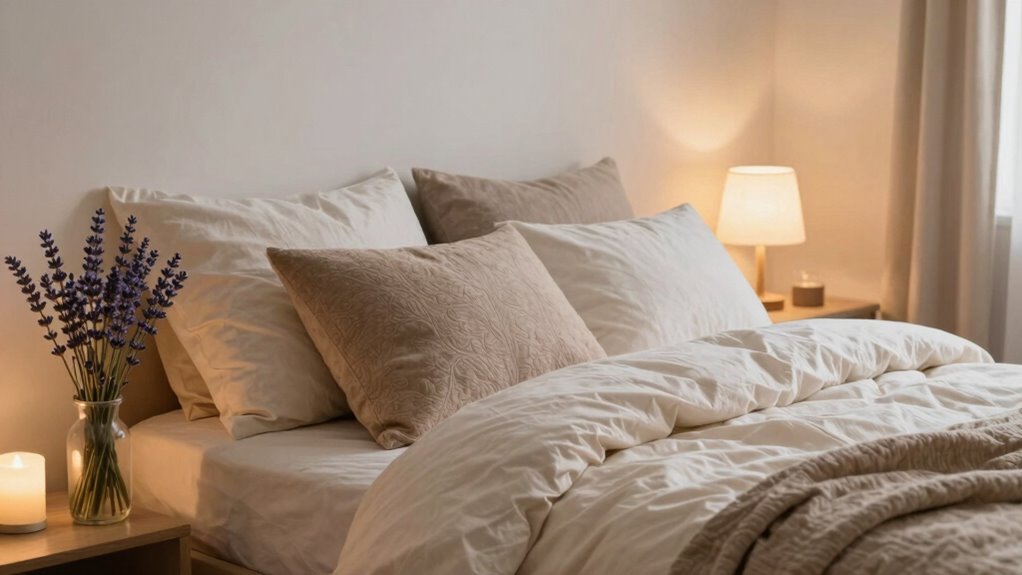

Your bedroom smells influence how you perceive your sleep by triggering subconscious feelings of comfort or discomfort. Pleasant scents like lavender create relaxing memories and signal safety, helping you unwind faster. Conversely, unpleasant odors may cause restlessness or stress, disrupting your sleep cycle. These smells activate your brain’s limbic system, shaping your mood and perception of restful sleep. To learn more about how scent choices impact your sleep environment, keep exploring these ideas.

Get home appliances delivered free with Prime
- Fast, free delivery on millions of items
- Prime Video, Amazon Music and more included
- Member-only deals all year
Key Takeaways
- Lingering odors can subconsciously influence mood, relaxation, and overall perception of sleep quality.
- Unpleasant or stale scents signal neglect, increasing discomfort and restlessness during sleep.
- Pleasant, familiar smells evoke calming memories, enhancing feelings of safety and relaxation.
- Olfactory stimuli activate the limbic system, directly affecting emotional states related to sleep.
- Consistent use of soothing scents reinforces positive sleep associations, improving sleep perception over time.
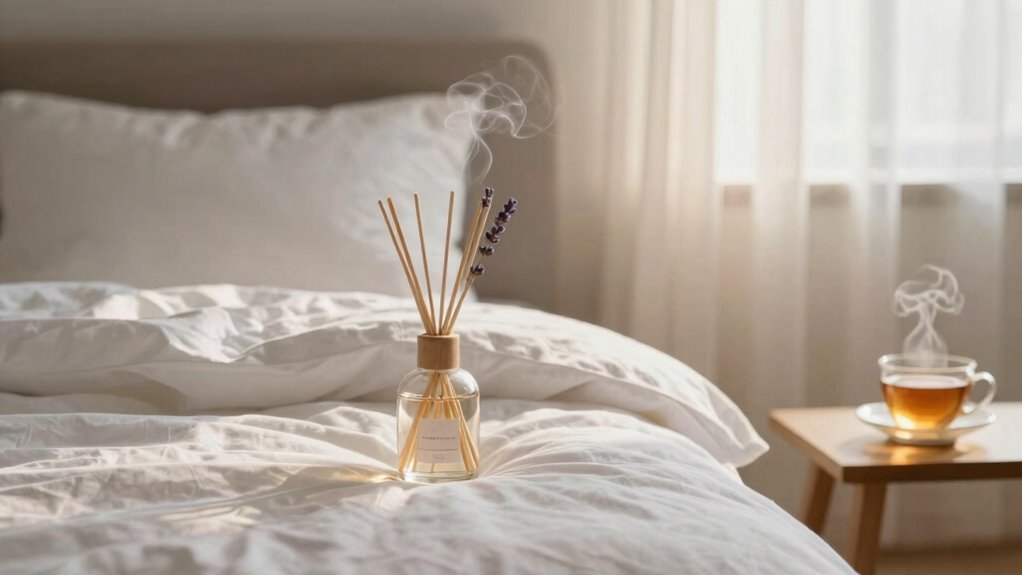
Your bedroom’s smell can greatly influence how well you sleep, even if you don’t realize it. The scents lingering in your space do more than just fill the air; they can shape your mood, relaxation levels, and overall perception of sleep quality. When you breathe in certain aromas, you activate your olfactory system, which is directly connected to the brain’s limbic system—the area responsible for emotions and memories. This connection explains how scents can trigger powerful responses, often without your conscious awareness. For example, a familiar smell may evoke comforting memories, making you feel safer and more relaxed. Conversely, unpleasant or unfamiliar odors can cause discomfort or restlessness, disrupting your sleep cycle.
Aromatherapy benefits play a significant role here. When you use essential oils like lavender, chamomile, or ylang-ylang, you’re tapping into a method proven to promote relaxation and reduce anxiety. These scents help lower your heart rate and blood pressure, signaling your body that it’s time to wind down. The calming effects of aromatherapy extend beyond just momentary relaxation; they can create a mental association with restful sleep. Over time, your brain begins to link specific aromas with a sense of calm, enhancing your ability to fall asleep faster and stay asleep longer. This is where olfactory memory becomes relevant. Your brain forms strong associations between certain smells and previous feelings of comfort or stress. When you smell a particular scent in your bedroom, it can either trigger a sense of tranquility or alertness based on these past experiences. By intentionally introducing soothing aromas into your space, you can reinforce positive olfactory memories that promote better sleep perception.
The power of smell also explains why some rooms feel more restful than others. If your bedroom has a stale or musty odor, your brain might interpret that as a sign of neglect or discomfort, making it harder for you to relax fully. On the other hand, a fresh, clean scent can signal cleanliness and safety, encouraging your mind to associate the environment with restfulness. You can leverage this by regularly maintaining good hygiene and incorporating scent diffusers or scented linens. Additionally, scent marketing techniques in your environment can influence your subconscious perceptions of comfort and safety. Incorporating pleasant aromas into your bedroom environment can also help establish a consistent sensory cue for sleep, reinforcing positive associations over time. Recognizing how olfactory cues impact your mental state can help you optimize your sleep environment more effectively. Creating a calming olfactory environment can also help drown out disruptive noises that might interfere with sleep. Over time, these deliberate choices help shape your olfactory environment, strengthening the positive memories and benefits associated with sleep.
In essence, your bedroom’s smell isn’t just about cleanliness; it’s a subtle yet powerful factor that influences your perception of sleep. By understanding how aromatherapy benefits and olfactory memory work, you can intentionally craft an environment that promotes relaxation and restful nights. It’s all about creating a sensory landscape that signals to your brain that it’s time to unwind, making each night’s sleep more restorative and satisfying.
lavender essential oil for sleep
As an affiliate, we earn on qualifying purchases.
As an affiliate, we earn on qualifying purchases.
Frequently Asked Questions
Can Certain Scents Improve Sleep Quality Long-Term?
Yes, certain scents can improve your sleep quality long-term. Aromatherapy benefits, like lavender or chamomile, are known to promote relaxation and reduce stress, helping you fall asleep faster and stay asleep longer. Your scent memory influence also plays a role; familiar, calming scents can create a soothing environment that signals your brain it’s time to sleep. Consistently using these scents can reinforce positive sleep habits over time.
Do Bedroom Smells Affect Dreams?
Yes, bedroom smells can influence your dreams. Pleasant scents like lavender may enhance your mood and promote relaxation, potentially leading to more positive dreams. They also aid in memory recall by creating calming associations before sleep. When you wake up, these scents can leave lasting impressions, shaping your dream experiences and overall sleep quality. Incorporating calming aromas might help you enjoy more restful, memorable, and mood-boosting dreams.
How Quickly Do Smell Changes Impact Sleep?
Olfactory adaptation means your sense of smell adjusts quickly, often within minutes, so scent changes can influence your sleep perception rapidly. Even subtle shifts in scent intensity, like a fresher pillow or lingering perfume, can alter your mood and relaxation levels almost instantly. You might not notice the change immediately, but your brain responds swiftly, affecting how restful your sleep feels. Usually, these effects start within a few minutes of scent variation.
Are Natural Scents Better Than Artificial Fragrances?
Natural scents like essential oils are generally better than artificial fragrances because they’re purer and less likely to cause irritation or allergies. Essential oils, derived from plants, can promote relaxation and improve sleep quality. Synthetic fragrances, on the other hand, often contain chemicals that may disrupt your sleep or cause sensitivities. You’ll likely find that natural scents create a healthier, more calming environment, making it easier to unwind and rest peacefully.
Can Allergies Influence Smell and Sleep Perception?
Allergies can definitely influence your smell and sleep perception, acting like a fog that distorts your senses. Environmental allergens, such as dust mites or pet dander, heighten your olfactory sensitivity, making you more aware of certain odors. This increased sensitivity can interfere with your ability to relax and fall asleep, as you may become more conscious of lingering smells. Managing allergens in your bedroom can restore clarity and help improve your sleep quality.
aromatherapy diffuser for bedroom
As an affiliate, we earn on qualifying purchases.
As an affiliate, we earn on qualifying purchases.
Conclusion
So, next time your bedroom smells off, remember it might be affecting how you sleep without you even realizing. Could that strange scent be hiding more than just bad odors? Your sleep quality might be hanging in the balance, waiting to be uncovered. Don’t ignore the hints your environment gives you—something could be changing right under your nose. Are you ready to reveal the secret connection between smells and your dreams? The answer might surprise you.
As an affiliate, we earn on qualifying purchases.
As an affiliate, we earn on qualifying purchases.
Cold & flu season Picks
humidifiers
As an affiliate, we earn on qualifying purchases.