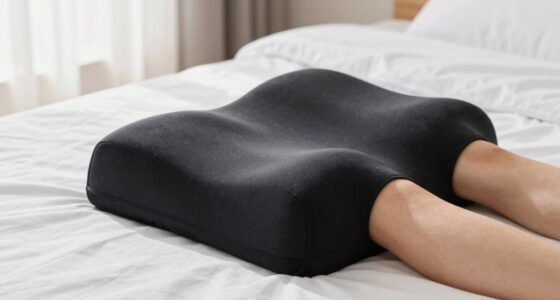

The tension of your mattress supports or strains the small of your back depending on its firmness. If it’s too soft, your hips and lower back may sink, causing misalignment and lumbar pain. If it’s too firm, it can create pressure points that lead to discomfort. Proper tension helps keep your spine naturally curved and muscles relaxed. If you want to understand how to find the right support for your sleep style, there’s more to discover.

Get home appliances delivered free with Prime
- Fast, free delivery on millions of items
- Prime Video, Amazon Music and more included
- Member-only deals all year
Key Takeaways
- Proper mattress tension maintains natural spinal curves, reducing strain on the small of the back during sleep.
- Too soft or firm mattresses can cause misalignment, leading to lumbar discomfort and pain.
- Correct tension supports the lumbar region, preventing excessive pressure and muscle tension in the lower back.
- Optimal tension helps distribute body weight evenly, minimizing pressure points that affect the small of the back.
- Matching mattress tension to sleep posture promotes spinal alignment and reduces waking stiffness or soreness.

Have you ever wondered how your mattress tension affects the small of your back? Your sleep posture plays a vital role in how your back feels when you wake up, and the tension of your mattress directly influences that. When your mattress is too soft or too firm, it can cause your spine to misalign, leading to discomfort or even pain in the lumbar region. The right tension allows your body to rest in a neutral position, supporting the natural curve of your spine and reducing strain on muscles and ligaments. Conversely, if the mattress tension is off, it can force your back into awkward positions, which might cause waking up stiff or sore.
Proper mattress tension supports spinal alignment and reduces morning back pain.
Your choice of mattress material greatly impacts how tension affects your back. Memory foam, for instance, contours to your body, providing even support and helping to distribute weight evenly. This material can minimize pressure points that often cause tension buildup in the small of your back. On the other hand, innerspring mattresses tend to offer more bounce and less conforming support, which can sometimes lead to uneven pressure distribution if not selected carefully. Latex mattresses are another option, offering a balance of support and flexibility, which can help maintain proper sleep posture by adapting to your body’s contours. The material’s firmness level influences how much tension the mattress applies to your back — softer materials tend to relieve pressure but may lack support, while firmer options provide more stability, though they can sometimes cause pressure points if too stiff.
Your sleep posture also influences how mattress tension affects your back. If you sleep on your side, a medium to soft mattress might ease pressure on your hips and shoulders, but ensure it still supports your lumbar region. If you sleep on your stomach, a firmer mattress can prevent your hips from sinking too low, maintaining proper alignment. Back sleepers generally benefit from a mattress that balances support and softness, keeping the small of the back properly supported without creating excessive tension. It’s vital to match your sleep posture with the right mattress material and tension level to avoid unnecessary strain on your lumbar area. Additionally, understanding how mattress tension interacts with your sleep habits can help guide you toward better back health and more restful sleep. Properly adjusting your sleep environment can significantly contribute to alleviating back discomfort and promoting healthier sleep patterns. Maintaining an awareness of how mattress firmness affects your comfort can also help you make better purchasing decisions, ultimately leading to improved back health.
Ultimately, understanding how mattress tension interacts with your sleep posture and mattress material helps you choose the right setup for a healthier, more comfortable sleep. Paying attention to these factors guarantees your spine remains aligned and your muscles relaxed, reducing the risk of waking up with back pain. When you pick a mattress with appropriate tension, you’re investing in your overall back health and quality of rest.
memory foam mattress for lower back support
As an affiliate, we earn on qualifying purchases.
As an affiliate, we earn on qualifying purchases.
Frequently Asked Questions
How Can I Determine My Ideal Mattress Tension?
To determine your ideal mattress tension, start by evaluating your preferred mattress firmness level—whether you like soft, medium, or firm. Try lying on different mattresses, paying attention to how your back feels and if there’s any tension or discomfort. Look for a mattress that provides enough support without causing pressure points. Many beds offer tension adjustment features, so choose one that allows you to customize the firmness to suit your needs.
Does Mattress Tension Affect Sleep Quality?
Yes, mattress tension affects your sleep quality by influencing your sleep posture and comfort. If your mattress tension is too firm or too soft, it can cause misalignment or pressure points, leading to tossing and turning. The right mattress material and tension support your body’s natural curves, promoting proper spinal alignment. When you find a good match, you’ll likely experience deeper, more restful sleep, waking up refreshed and pain-free.
Are There Specific Mattress Tensions for Different Back Issues?
About 80% of people with back pain find relief on medium-firm mattresses. For different back issues, choose mattress firmness carefully: softer options help with herniated discs, while firmer ones support spinal alignment for muscle strain. Tailoring mattress firmness to your specific back problem can markedly improve back pain relief, ensuring you wake up refreshed and pain-free. Always consider consulting a specialist for personalized recommendations.
How Often Should I Replace a Mattress Based on Tension?
You should replace your mattress every 7-10 years, especially if your sleep posture worsens or you notice persistent back pain. Mattress tension can decrease over time, affecting support and comfort. Consider the mattress materials—memory foam, latex, or innerspring—as they influence durability. If your mattress no longer supports your back properly or feels uncomfortable, it’s time for a replacement to maintain good sleep posture and prevent back issues.
Can Mattress Tension Influence Other Areas of My Body?
Did you know that improper mattress tension can affect your entire body? It influences posture alignment, leading to misaligned hips or shoulders, and can cause muscle tension elsewhere. When your mattress isn’t supportive enough, your muscles struggle to relax properly, resulting in discomfort and stiffness. So, yes, mattress tension can impact other areas, making it essential to choose a mattress that promotes ideal posture and muscle relaxation for your overall well-being.
As an affiliate, we earn on qualifying purchases.
Conclusion
Choosing the right mattress tension is like finding the perfect dance partner—you want support that moves with you, not against you. When you pick the right level, it cradles your small of your back like a gentle wave, easing tension and inviting restful sleep. Skip the misstep of mismatched firmness, and let your mattress be the steady anchor in your nightly voyage. Your back will thank you, waking refreshed and ready to conquer the day.
innerspring mattress with lumbar support
As an affiliate, we earn on qualifying purchases.
As an affiliate, we earn on qualifying purchases.
adjustable firmness mattress for side sleeper
As an affiliate, we earn on qualifying purchases.
As an affiliate, we earn on qualifying purchases.
Fall Picks
fall essentials
As an affiliate, we earn on qualifying purchases.