
The height of your mattress plays a key role in how easily you get in and out of bed each day. Too high, and you might strain your back or knees; too low, and bending becomes awkward. Choosing the right height—around 20 inches for most—makes shifts smoother and supports your natural movement. If you want to discover how to find that perfect fit for your needs, there’s more to explore below.
Key Takeaways
- Proper mattress height aligns with your standing height, making it easier to get in and out of bed smoothly.
- A mattress that’s too high or too low can cause awkward movements, increasing strain on muscles and joints.
- Optimal height supports good sleep posture, reducing discomfort and enhancing overall comfort during transitions.
- Incorporating ergonomic accessories like bed steps or stools improves safety and reduces effort when entering or exiting.
- Choosing the right mattress height based on mobility and body needs promotes better comfort and easier bed routines.
Why Mattress Height Matters for Daily Comfort and Accessibility
The height of your mattress directly affects how easily you can get in and out of bed each day. If your mattress is too high or too low, it can disrupt your sleep posture, causing discomfort and strain. A mattress with appropriate firmness supports proper alignment, making it easier to move comfortably. When the mattress height matches your body’s needs, you won’t have to strain or exert extra effort to get in or out of bed. This is especially important if you have joint or mobility issues. Proper sleep posture is essential for overall comfort and health. A well-chosen mattress height promotes easier changeover between sleep and wakefulness, reducing the risk of pain and improving your overall comfort. Ultimately, the right height enhances your daily routine by making bed entry and exit smoother and more natural.
How Mattress Height Makes Getting In and Out of Bed Easier

A mattress height can considerably improve how easily you get in and out of bed. When the mattress is at the right level, standing up becomes smoother, especially for those with mobility concerns. This simple change can make your daily routine safer and more comfortable. Additionally, choosing the right bedside technology can further enhance safety and ease of movement during your daily transitions.
Easier Standing Up
When your mattress height aligns well with your natural standing height, getting in and out of bed becomes considerably easier. This alignment helps maintain a good sleep posture, reducing strain on your muscles and joints as you rise. A mattress with the right firmness supports your body properly, preventing unnecessary effort during movement. If the mattress is too high, you might strain your back or knees when standing up. Too low, and you may have to bend awkwardly, making the process more difficult. By choosing a mattress height suited to your height and firmness preferences, you minimize discomfort and effort. Additionally, high-quality materials used in the mattress construction can enhance comfort and support, further easing the transition in and out of bed. This simple adjustment can make a significant difference in your morning routine, helping you start the day more comfortably and with less physical stress.
Better Bed Accessibility
Choosing the right mattress height can considerably improve your ability to get in and out of bed with ease. When your mattress is at an ideal height, it aligns better with your sleep posture, reducing strain on your joints and muscles. A mattress that’s too low may require more effort and strain, especially if you have limited mobility. Conversely, a mattress that’s too high can make standing up or sitting down uncomfortable. Mattress firmness also plays a role; a firmer mattress provides better support, helping you maintain proper sleep posture during transfers. By selecting a mattress height that matches your body size and firmness preference, you make bed access smoother, minimizing discomfort and making your mornings easier. Additionally, considering the safety and transfer switch aspects of your bedroom setup can contribute to safer and more accessible bed entry and exit.
What’s the Best Mattress Height for Different Needs: Mobility, Age, and More
The ideal mattress height varies depending on your mobility, age, and specific needs. If you have limited mobility or joint issues, a higher mattress—around 25 inches—can make getting in and out easier, especially if combined with the right mattress firmness. For those with good mobility, a standard height of 20 inches often works well. Your sleep posture also matters; side sleepers might prefer a slightly lower height for comfort, while back sleepers may benefit from a firmer mattress at a higher level. The right height should support your body’s natural alignment, reducing strain and making movement seamless. Considering Free Floating concepts, a mattress that allows easier movement without being too high can improve overall sleep quality. Consider your daily activities and comfort preferences to choose a mattress height that promotes better sleep and easier progressions.
The Main Mattress Height Ranges and Their Benefits

Mattress height ranges typically fall into three main categories, each offering distinct advantages depending on your needs. Low-profile mattresses, usually 4-8 inches high, are lightweight and easier to get in and out of, especially if you prefer a firmer mattress or have mobility concerns. Standard heights, around 10-14 inches, balance support and accessibility, often made with a mix of mattress materials like foam and innerspring, providing a variety of firmness options. Tall mattresses, over 14 inches, are ideal if you want plush comfort or need extra support layers, often featuring multiple materials like memory foam and pocket coils. Your choice impacts ease of movement and comfort, with mattress firmness and materials playing key roles in how the height feels and functions for you.
What Factors Should You Consider When Picking Your Mattress Height

When choosing your mattress height, think about how easy it is for you to get in and out of bed daily. You should also consider whether your bed frame can support the height comfortably. These factors help guarantee your bed is both convenient and compatible with your existing setup.
Accessibility and Ease of Use
Ever wonder how your mattress height can impact your daily comfort and independence? Your sleep posture and mattress firmness play key roles in accessibility. If your mattress is too high, getting in and out may strain your joints or cause discomfort, especially if you have mobility issues. A lower mattress can make it easier to sit on the edge and stand up without effort. Consider how your sleep posture affects ease of movement—if you tend to roll or shift during sleep, the height can influence your ability to reposition comfortably. The right height should balance comfort, support, and ease of use, so you can get in and out of bed effortlessly while maintaining proper sleep posture. Proper mattress height can also help prevent unnecessary strain and improve overall sleep quality, ensuring both convenience and a healthier sleep experience.
Bed Frame Compatibility
Choosing the right mattress height involves guaranteeing compatibility with your bed frame, which can substantially affect stability and safety. Your bed frame’s design and height limitations influence which mattress material and thickness work best for you. For example, a sturdy platform frame supports heavier or thicker mattresses, while a slatted frame might require a thinner option to prevent sagging. Consider your sleep posture—if you sleep on your side or back, a certain height may make getting in and out easier or harder. An incompatible mattress height can cause instability or even risk falling. Always measure your frame’s dimensions and check the mattress specifications to guarantee a proper fit. Compatibility ensures safety, stability, and a comfortable sleep experience tailored to your needs. Additionally, understanding mattress height can help optimize your overall sleep comfort and accessibility.
How to Adjust Your Bed Setup to Make Getting In and Out Easier
Adjusting your bed setup can considerably ease the process of getting in and out of bed. To improve accessibility, consider the height of your mattress and bedding choices. Here are some tips:
- Use a bed frame with adjustable height to match your needs.
- Opt for luxury bedding that’s lightweight and easy to handle.
- Incorporate a bed step or sturdy stool for added support.
- Choose thinner pillows to prevent unnecessary height.
- Guarantee your mattress supports pediatric sleep comfort, especially for children or those with mobility issues.
- Understanding ergonomic principles behind bed design can help tailor your setup for maximum comfort and safety.
Making these adjustments can reduce strain and make your bedtime routine smoother. Proper bed setup benefits everyone, creating a safer, more comfortable environment that encourages restful sleep and easier transitions in and out of bed.
How to Match Mattress Height With Bedding and Bed Frame Choices
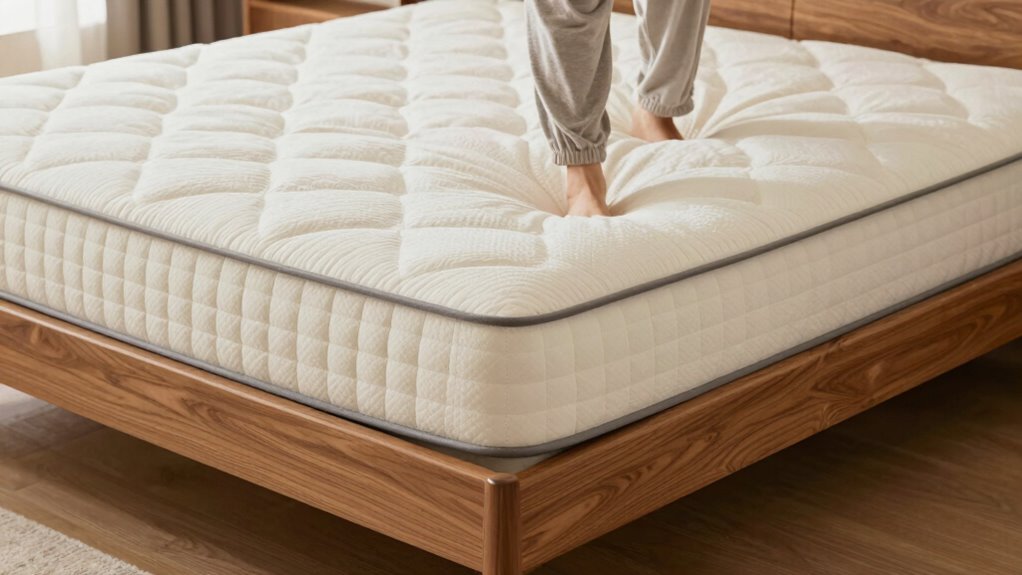
Matching your mattress height with your bedding and bed frame choices guarantees easier getting in and out of bed. To guarantee proper bed height, consider the overall height of your mattress combined with your bed frame. A mattress that’s too low or too high can make it difficult to sit or stand comfortably. When selecting bedding, check bedding compatibility with your mattress and bed frame to prevent slipping or uneven surfaces. For example, thicker mattresses often require deeper fitted sheets, while thinner ones may need less. Adjusting your bed frame height or choosing a mattress with the right height helps create a balanced setup. This alignment minimizes strain, improves comfort, and makes getting in and out of bed effortless every day. Additionally, understanding mattress height standards can help you make informed choices for optimal comfort.
Frequently Asked Questions
How Does Mattress Height Impact Sleep Quality Beyond Accessibility?
You might not realize it, but mattress height affects sleep quality by influencing your bedroom aesthetics and mattress storage options. A taller mattress can make your space look more modern and spacious, boosting your mood. It also offers extra clearance for under-bed storage, helping keep your room tidy. However, if it’s too high, getting in and out becomes harder, potentially disrupting restful sleep. Find a height that balances style, storage, and comfort.
Are Taller Mattresses Better for Certain Health Conditions?
Taller mattresses, with greater bed height and mattress thickness, can be a blessing for certain health conditions. If you suffer from joint pain or arthritis, a higher bed might ease your movement, like a gentle ramp guiding you home. For some, the extra height offers better pressure relief and easier access, making daily routines smoother. Ultimately, choosing the right bed height depends on your specific health needs and comfort preferences.
How Does Mattress Height Influence Partner Movement and Sleep Disturbance?
A taller mattress can reduce partner disturbance because it minimizes mattress interaction when one person moves, leading to smoother shiftings. When your mattress is higher, it’s easier for you to get in and out without jolting your partner. This improved design helps both of you sleep better, as less partner disturbance means fewer awakenings and more restful sleep for everyone involved.
Can Adjustable Beds Compensate for Unsuitable Mattress Heights?
Adjustable beds can be your secret weapon for height compensation, making it easier to get in and out of bed regardless of mattress height. Think of the adjustable bed as a chameleon, blending smoothly to match your needs. By raising or lowering the frame, it compensates for unsuitable mattress heights, ensuring comfort and ease. So yes, an adjustable bed can effectively offset mattress height issues and improve your overall sleep experience.
What Are the Long-Term Durability Considerations Related to Mattress Height?
Long-term, your mattress height affects durability by influencing bed frame stability and potential mattress sagging. If your mattress is too high or low, it might strain the frame, causing instability and uneven weight distribution. Over time, this can lead to sagging and reduced comfort. To guarantee longevity, choose a height that offers stable support and prevents excessive stress on the frame, preserving your mattress’s integrity for years.
Conclusion
Choosing the right mattress height transforms your nightly routine from a struggle to a smooth, satisfying slip. By balancing boldness with comfort, you craft a cozy, convenient cocoon that caters to your needs. Remember, the perfect height helps you hop in and out effortlessly, enhancing everyday ease. So, select smartly, set up seamlessly, and sleep soundly—your bed’s height is the hidden hero of happy, hassle-free mornings.