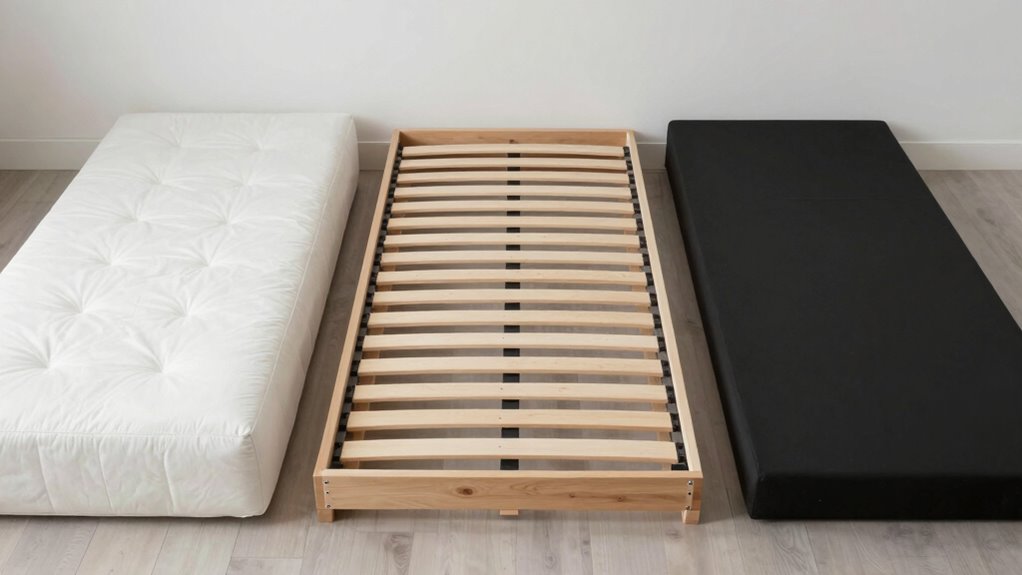
A box spring is a support system with springs that boost height and provide bounce, ideal for traditional mattresses. A foundation is a flat, sturdy platform that prevents sagging and offers a sleek look, suitable for foam or latex mattresses. A bunkie board is a low-profile, firm support piece used on frames or platforms, often for better support with thin mattresses. Understanding these options helps you choose what’s best for comfort and durability—more details follow.

Get home appliances delivered free with Prime
- Fast, free delivery on millions of items
- Prime Video, Amazon Music and more included
- Member-only deals all year
Key Takeaways
- A box spring is a supportive, spring-based foundation that adds height and bounce to a mattress.
- A foundation is a flat, sturdy platform, either solid or slatted, supporting various mattress types and preventing sagging.
- A bunkie board is a thin, low-profile support used on frames or foundations to maintain height and provide stable support.
- Box springs are ideal for traditional coil mattresses, while foundations suit foam or latex mattresses; bunkie boards are versatile for low-profile setups.
- Choosing between them depends on mattress type, desired height, support needs, and compatibility with your bed frame.
As an affiliate, we earn on qualifying purchases.
What Is a Box Spring and How Does It Help Your Mattress?
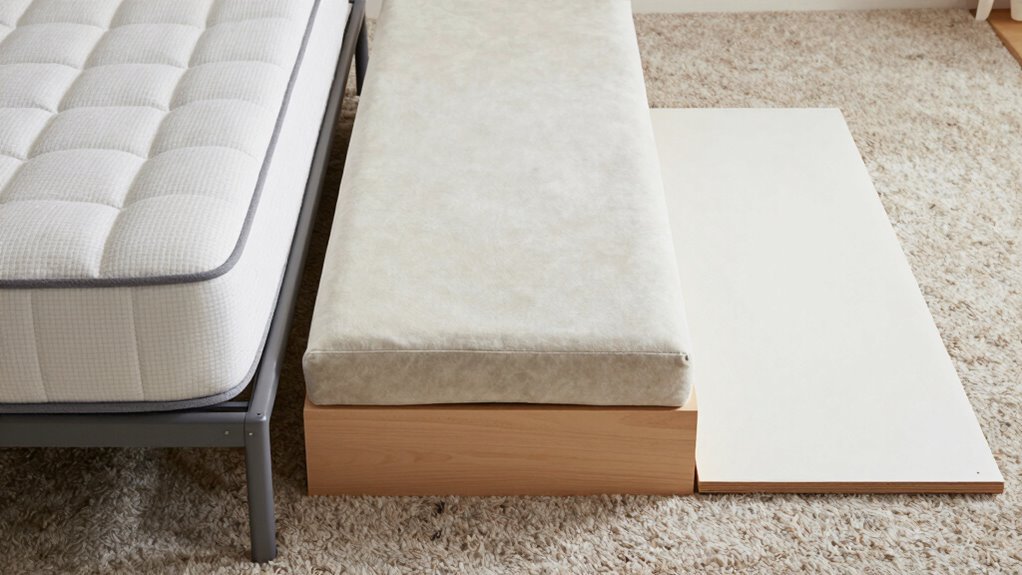
A box spring is a sturdy, box-shaped foundation that sits beneath your mattress to provide support. It helps improve bed frame compatibility by matching various frame styles and sizes, ensuring a secure fit. Additionally, it influences mattress height options, making your bed more accessible and visually balanced. By absorbing shock and distributing weight evenly, a box spring extends your mattress’s lifespan and enhances comfort. It also prevents sagging and maintains proper mattress alignment. Choosing the right box spring depends on your bed frame and personal preference for bed height. Whether you want a lower profile or a taller setup, a box spring can be selected accordingly. Overall, it’s a key component that boosts support, comfort, and the overall look of your bed, contributing to bed longevity and safety.
As an affiliate, we earn on qualifying purchases.
What Exactly Is a Mattress Foundation?
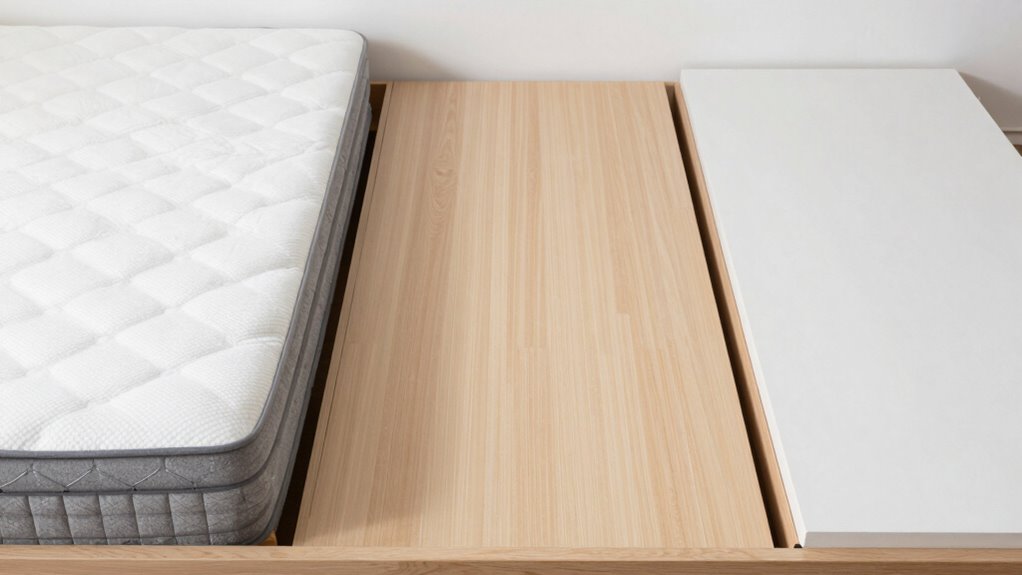
A mattress foundation is a flat, supportive platform designed to hold your mattress firmly in place and provide essential stability. It helps prevent sagging and enhances durability. Foundations come in various styles to match your bed frame compatibility, ensuring they work seamlessly with your existing setup. They also offer mattress height options, allowing you to customize your bed’s overall height for comfort and accessibility. Some foundations are solid, while others feature slats for better breathability. Additionally, choosing the right foundation type can impact ventilation and longevity. Properly selected foundations can also contribute to overall sleep quality by maintaining mattress integrity over time. For example, slatted foundations are often preferred for their improved airflow and support, which can extend the life of your mattress. Here’s a quick visual: bed frame compatibility.
bunkie board low profile support
As an affiliate, we earn on qualifying purchases.
As an affiliate, we earn on qualifying purchases.
How Do a Box Spring and a Foundation Differ?
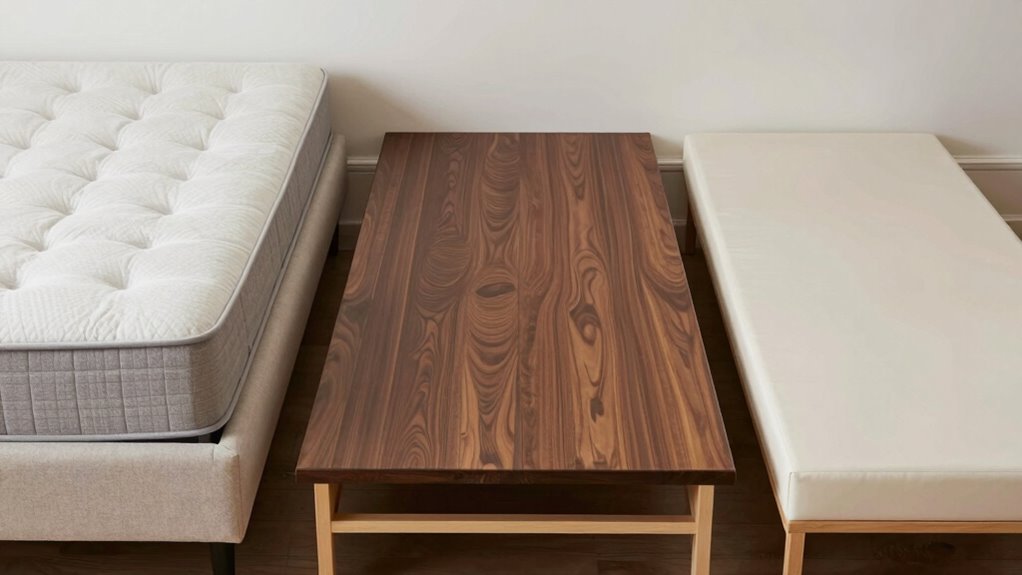
While mattress foundations and box springs both serve to support your mattress, they are designed with different purposes and structures in mind. A box spring typically features a wooden frame with springs inside, offering bounce and shock absorption, and it often raises the mattress to a traditional height. Foundations are usually solid or grid-like, providing sturdy support without added bounce, and they are designed for specific bed frame types. Bed frame differences are key here—box springs are often compatible with traditional frames, while foundations work with platform beds or slatted frames. Additionally, foundations can offer adjustable mattress height options, giving you more customization. Support system options and their compatibility are important factors to consider when selecting the appropriate support system. Understanding these differences helps you choose the right support for your comfort, style, and bed setup. For example, some foundations are designed to be stackable or modular, allowing for flexible configurations. Moreover, considering the market options can help ensure you select a foundation or support that fits your budget and preferences. It’s also helpful to explore material types used in different support systems to match your durability and aesthetic preferences.
What Is a Bunkie Board and When Should You Use One?
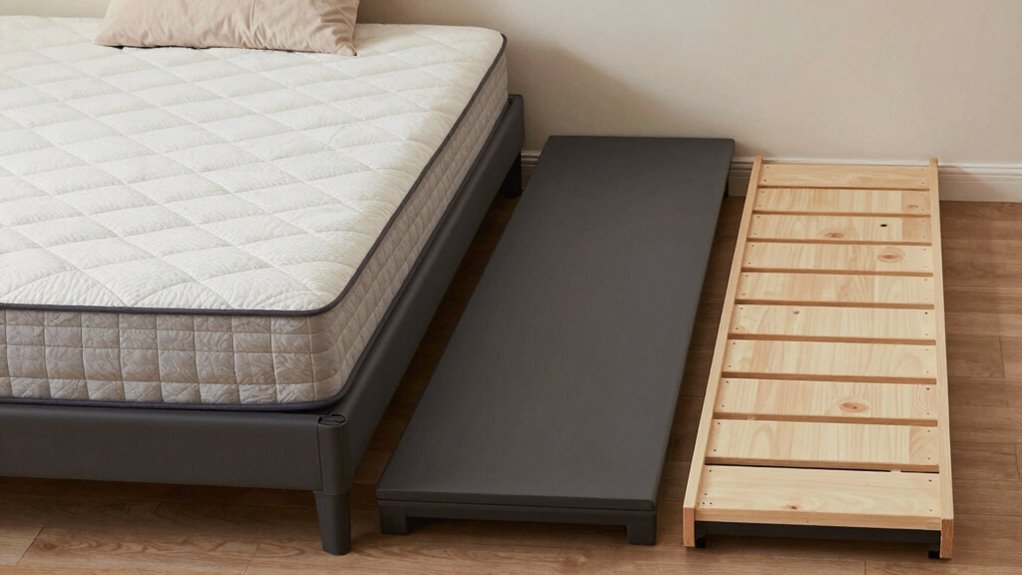
A bunkie board is a thin, sturdy platform that provides support for your mattress. You should consider using one if you want a lower profile or need extra support in limited space. It offers benefits over traditional box springs and foundations, making it a versatile choice for many setups.
Bunkie Board Definition
A bunkie board is a thin, sturdy platform designed to provide support for your mattress, typically placed directly on a bed frame, pallet, or other foundation. It helps improve frame durability by offering a solid, even surface, reducing sagging and wear. Additionally, it enhances mattress ventilation, preventing moisture buildup and prolonging mattress life. You might choose a bunkie board if your current foundation is too soft or uneven, or if you want a minimalist, space-saving support option. Here’s a quick comparison:
| Feature | Bunkie Board | Foundation | Box Spring |
|---|---|---|---|
| Support Thickness | Thin | Thick | Thick |
| Frame Durability | Improves support | Protects frame | Absorbs shock |
| Ventilation | Enhances airflow | Varies | Limited |
A bunkie board also offers a cost-effective alternative to traditional foundations, making it a popular choice for budget-conscious consumers.
Ideal Usage Scenarios
Wondering when to choose a bunkie board? You should consider it if your mattress needs extra support without altering your decorative styles. Bunkie boards are ideal for platform beds, loft beds, or any setup where a traditional box spring feels too bulky or incompatible. They work well with foam, memory foam, or latex mattresses, especially when a low-profile look is desired. Material options include wood, plywood, or metal, allowing you to match your bedroom’s aesthetic. Use a bunkie board when you want a clean, minimalist appearance or need a sturdy base that doesn’t compromise your bedroom’s design. It’s perfect for those seeking a simple, supportive solution that fits seamlessly into various decorative styles.
Benefits Over Alternatives
Compared to traditional box springs and foundation options, bunkie boards offer a lightweight, low-profile support solution that can enhance both comfort and aesthetics. They are ideal for platform beds or when you want a sleek, minimal look. Bunkie boards provide firm, even support without adding height, making them perfect for adjustable bases, which often don’t require a box spring. Unlike heavier foundations, they’re easy to move and install. If you’re seeking a modern, space-saving option that preserves the clean lines of your bed, a bunkie board is a smart choice. It also reduces motion transfer and can extend the life of your mattress by providing stable support. Overall, bunkie boards combine simplicity, functionality, and style, making them an excellent alternative to bulkier support systems. Support systems are an important aspect of maintaining mattress longevity and comfort.
Should You Use a Box Spring? Here’s When It Makes Sense
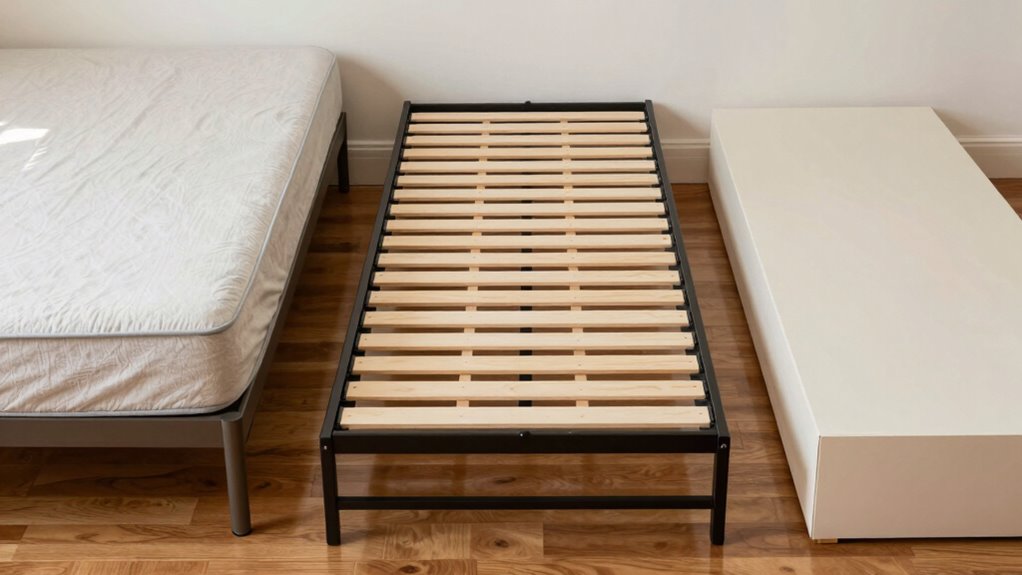
Whether you should use a box spring depends on your mattress type and personal preferences. If you prefer a traditional look and feel, a box spring offers added height and support. It can also improve airflow and extend your mattress’s lifespan. Consider your bed frame options and mattress height considerations to guarantee a comfortable setup. Visualize a sturdy foundation beneath your mattress, elevating it to eye level, making it easier to get in and out of bed. Picture a box spring with:
Choosing a box spring adds height, support, and airflow, enhancing comfort and extending your mattress’s lifespan.
- A soft, padded surface
- A solid, supportive wooden frame
- Layers of springs or coils
- Easy access to storage underneath
Understanding support systems in bedding can help you choose the right base for optimal comfort and longevity. If you value a classic aesthetic and compatibility with certain mattresses, a box spring might be the right choice for you.
When Is a Foundation the Better Support Choice?
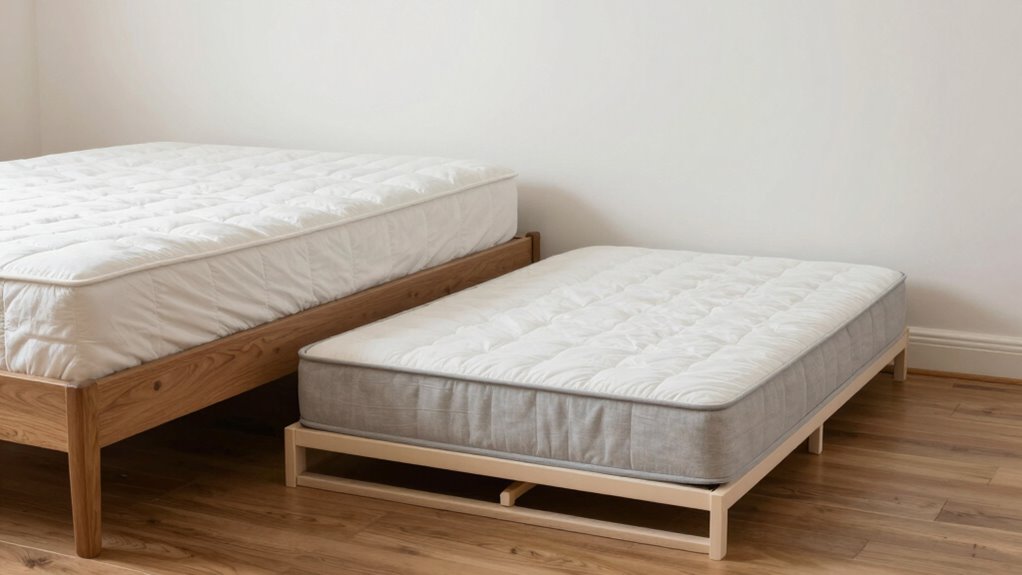
A foundation is often the better support choice when you need a flat, sturdy surface that works with a variety of mattress types, especially foam, latex, or memory foam. It provides excellent support and durability, ensuring your mattress stays in good shape. Foundations also excel in bed frame compatibility, fitting seamlessly with most existing frames or acting as a standalone base. Additionally, if aesthetic considerations matter, a foundation offers a clean, uniform look that can enhance your bedroom’s style. Here’s a quick comparison:
| Aspect | Benefits of a Foundation |
|---|---|
| Bed frame compatibility | Works with most bed frames or as standalone |
| Aesthetic considerations | Offers a sleek, uniform appearance |
| Mattress support | Provides solid, even support |
| Durability | Long-lasting and stable |
A foundation is especially suitable for supporting heavier mattresses, offering a stable base that prevents sagging and prolongs the lifespan of your bed, and it can also help with moisture resistance and ventilation. Moreover, a foundation can contribute to improved airflow, helping keep your sleeping environment cooler and more comfortable. In addition, many foundations are designed with eco-friendly materials, aligning with sustainable choices in home furnishings. Additionally, choosing a foundation can be advantageous for bed stability and noise reduction, making your sleeping experience more peaceful.
What Is a Bunkie Board For, and Why Might You Need One?
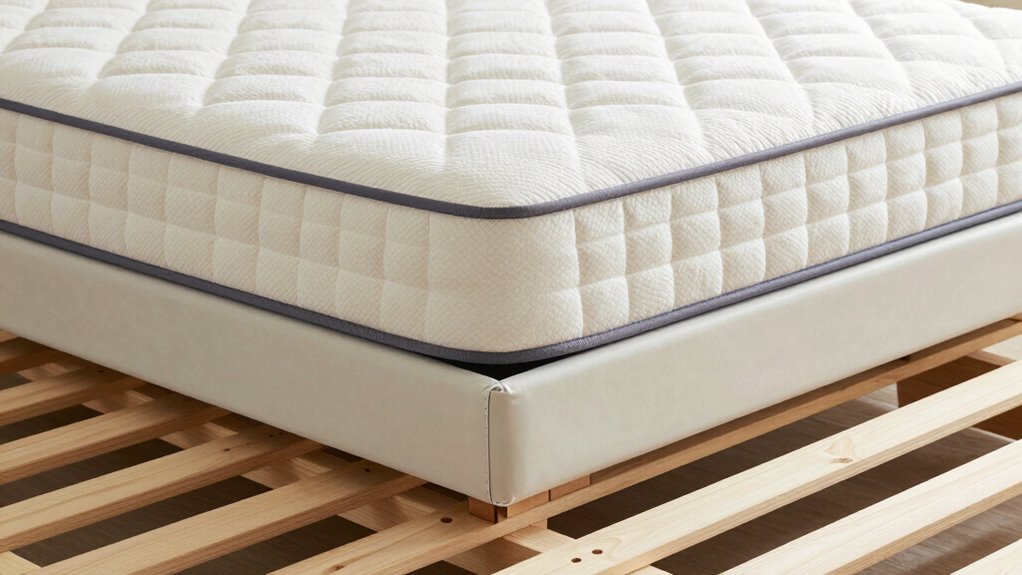
A bunkie board serves as a low-profile support platform that sits between your mattress and the bed frame or box spring. It helps maintain the ideal bed height and guarantees mattress compatibility with your existing setup. You might need a bunkie board if you prefer a lower profile or want to improve stability. Imagine:
- A sleek, minimal look without bulky materials
- An even, level surface for your mattress
- Enhanced support for thin or memory foam mattresses
- Better alignment with your bed frame or platform
This simple addition can make your bed feel more solid and comfortable, while also customizing your bed’s height to suit your preferences. It’s perfect if you’re seeking a streamlined, supportive base that doesn’t add extra height or interfere with your mattress choice.
What Are the Pros and Cons of Box Springs, Foundations, and Bunkie Boards?
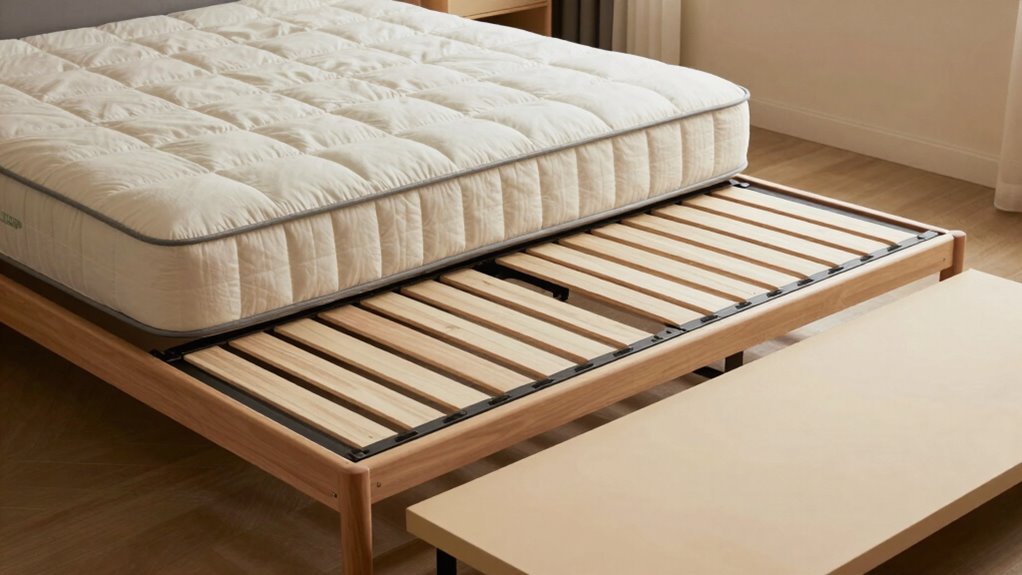
Choosing the right support for your mattress depends on understanding the main advantages and disadvantages of box springs, foundations, and bunkie boards. Box springs boost mattress height and improve bed frame compatibility, but they can be bulky and may add unnecessary height if you prefer a low-profile look. Foundations offer a sturdy, flat surface that supports weight evenly, reducing sagging, but they might limit options for certain bed frames. Bunkie boards provide a low-profile solution, preserving your mattress height without raising the overall bed height, and work well with platform beds. However, they may not be as durable as foundations and could require replacement sooner. Your choice impacts comfort, style, and how well your mattress stays supported over time.
How Do You Pick the Best Support System for Your Mattress?
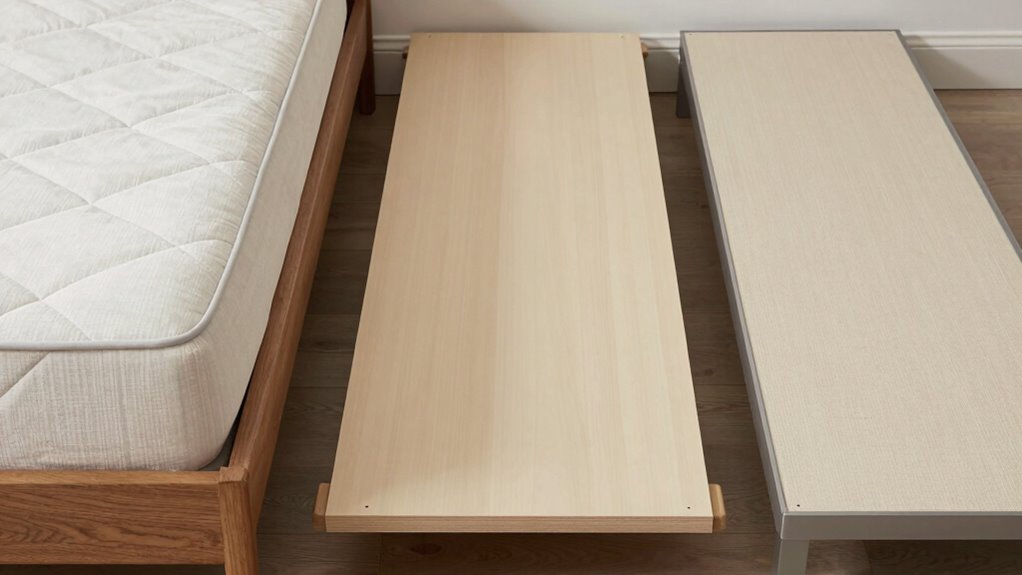
Selecting the right support system for your mattress depends on your specific needs, preferences, and the type of bed frame you have. Consider how the support impacts mattress height and comfort. For example, a sturdy foundation can raise your bed for easier access, while a bunkie board keeps your mattress close to the same height as a box spring. Visualize these options:
- A low-profile support that makes your bed easier to get in and out of
- A high-profile foundation for added storage space underneath
- A firm support for a box spring or foundation to prevent sagging
- A thin, flat bunkie board that preserves your mattress height without adding bulk
Your choice should align with your bed frame’s design and your preferred mattress height for ideal comfort. Understanding the different types of support systems can help you make the best decision for your sleep setup.
How Can You Maintain Support Systems to Ensure Longevity?
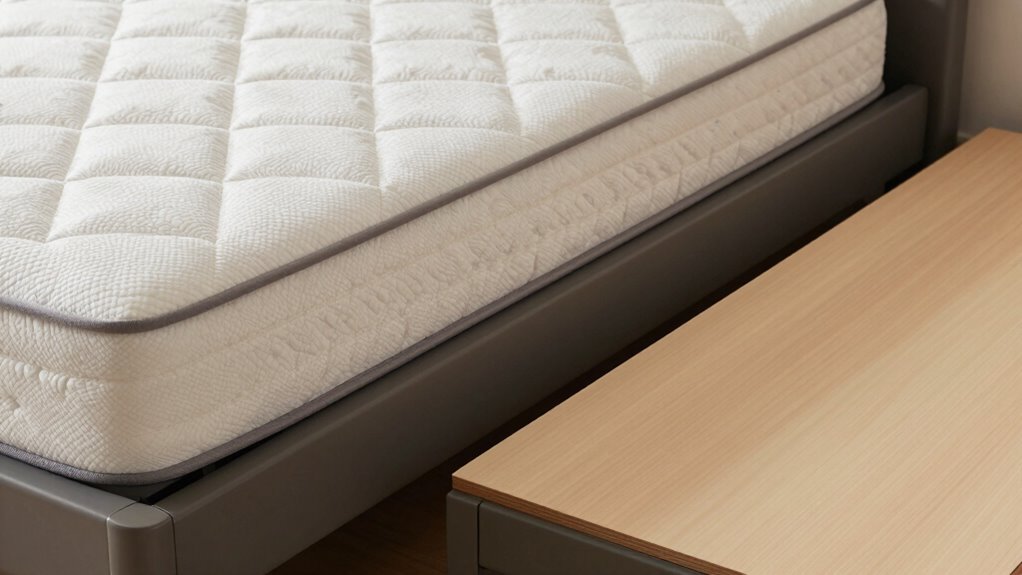
To keep your support system in top shape, regularly inspect it for signs of wear or damage. Make sure you distribute your weight evenly across the surface to prevent undue stress. By staying proactive, you’ll extend the life of your support system and enjoy consistent comfort. Additionally, understanding proper art care techniques can help maintain your furniture’s condition and appearance over time. Incorporating ergonomics principles into your setup ensures long-term durability and user comfort. Recognizing auditory processing challenges and addressing them with targeted strategies can also contribute to overall comfort and functionality.
Regular Support Inspection
Regularly inspecting your support system is essential for maintaining its durability and performance. Check your support frame for signs of wear, such as cracks or warping, which can compromise mattress stability. Look underneath the bed and feel for any sagging or uneven spots that could indicate weakened support. Ensure that all connections and joints are tight and secure. Additionally, examine the surface of the support system for loose or broken slats. Consider these visual and tactile cues:
- Cracks or splinters on the support frame
- Sagging or uneven areas
- Loose or broken slats
- Unsecured joints or connections
Addressing issues early helps prevent further damage, prolongs the lifespan of your support system, and guarantees your mattress remains stable and comfortable night after night.
Proper Weight Distribution
Ensuring proper weight distribution across your support system is key to preventing uneven wear and extending its lifespan. You want to achieve good weight balance so that the load is evenly spread across the foundation, box spring, or bunkie board. Proper pressure distribution minimizes stress points that could cause sagging or damage over time. To maintain this, avoid placing heavy objects or uneven weight on one side. Regularly rotate your mattress or reposition it to promote even wear. Check your support system periodically for signs of sagging or discomfort, and tighten any loose components. By keeping an eye on weight balance and pressure distribution, you help ensure your support system remains durable and supportive, ultimately prolonging its functional life.
Frequently Asked Questions
Can I Use a Box Spring With Any Mattress Type?
Yes, you can use a box spring with many mattress types, but it depends on mattress compatibility. If you have an adjustable bed, a box spring may not work well since it can hinder movement. Always check your mattress manufacturer’s recommendations to verify compatibility. For some mattresses, like memory foam or latex, a solid foundation or bunkie board might be better for support and longevity.
Are Foundation and Platform Bed the Same?
No, a foundation and a platform bed aren’t the same, though both serve as bed frame alternatives and mattress support options. A foundation is a solid, box-like structure usually made of wood or metal, providing sturdy support. A platform bed has a built-in slatted or solid surface, eliminating the need for a box spring. Choose based on your mattress type and aesthetic preferences for ideal comfort and support.
Do Bunkie Boards Affect Mattress Warranty?
Yes, bunkie boards can affect your mattress warranty if they aren’t compatible with your bed. Using an incompatible bunkie board might void warranty coverage because manufacturers require proper bed compatibility for support and safety. Always check your mattress and bunkie board specifications to make sure they match. Proper support prevents damage, maintains warranty implications, and helps your mattress last longer, so don’t overlook matching your bed components carefully.
How Do Support Systems Influence Mattress Lifespan?
Support systems are the backbone of your mattress’s lifespan, acting like the steady hands guiding a delicate dance. When you choose a support system compatible with your mattress, you protect spring durability and prevent sagging. Proper support guarantees even weight distribution, reducing wear and tear. Neglecting this can shorten your mattress’s life and compromise comfort, so always match support systems with your mattress for lasting comfort and durability.
Is a Box Spring Necessary for a Memory Foam Mattress?
A box spring isn’t always necessary for a memory foam mattress, but it can improve spring compatibility and mattress stability. If your bed frame is sturdy and flat, you might skip the box spring. However, using one can extend your mattress’s lifespan by providing extra support, reducing sagging, and ensuring proper weight distribution. Ultimately, consider your frame’s support and the mattress’s manufacturer recommendations for the best setup.
Conclusion
Choosing the right support system can transform your sleep experience, but the decision isn’t always straightforward. Will a traditional box spring, a sturdy foundation, or a sleek bunkie board best suit your needs? The answer depends on your mattress, space, and comfort preferences. So, are you ready to make the smart choice that could change your nights forever? The right support might just be closer than you think—are you prepared to find out?
NFL season / tailgating Picks
team gear
As an affiliate, we earn on qualifying purchases.