
TL;DR

Get home appliances delivered free with Prime
- Fast, free delivery on millions of items
- Prime Video, Amazon Music and more included
- Member-only deals all year
A dehumidifier size calculator estimates the moisture-removal capacity needed by considering room size, humidity, and conditions. Proper sizing prevents mold, odors, and unnecessary costs.
Ever dragged home a dehumidifier only to find it struggles or runs nonstop? That’s because sizing matters—way more than most realize. Picking the right pint capacity isn’t just about square footage; it’s about understanding moisture sources, climate, and room details.
In this guide, you’ll learn how to use a straightforward dehumidifier size calculator. We’ll cover the key inputs, how to interpret results, and practical tips to avoid common pitfalls—so you get a unit that keeps your space dry without wasting energy.
Use a dehumidifier size calculator to match capacity to your space’s moisture levels and size.
Adjust for ceiling height, climate, and moisture sources for more accurate sizing.
Compare current and old pint ratings carefully—new standards use colder, more realistic testing conditions.
Oversizing slightly can help in damp environments but avoid excessive capacity to prevent inefficiency.
Drainage options and placement are just as important as capacity for effective moisture control.
What a dehumidifier size calculator really does for you
A dehumidifier size calculator estimates the needed capacity in pints per 24 hours to keep your space dry. It considers room size, moisture problem severity, and environmental factors. For example, a damp basement of 1,000 sq. ft. might need a 40–50 pint unit, while a small bathroom only requires 20–30 pints.
But why does this matter? Because an undersized unit will struggle to remove enough moisture, leading to persistent dampness, mold growth, and potential health issues. Conversely, an oversized unit might cycle on and off frequently, wasting energy and causing unnecessary wear. Proper calculation ensures a balance—removing enough moisture efficiently without excess energy consumption or noise. It’s about understanding the tradeoffs: overcapacity increases upfront costs and operational inefficiency, while undercapacity compromises air quality and comfort.
dehumidifier with 50 pint capacity
As an affiliate, we earn on qualifying purchases.
As an affiliate, we earn on qualifying purchases.
How to accurately measure your space for the calculator
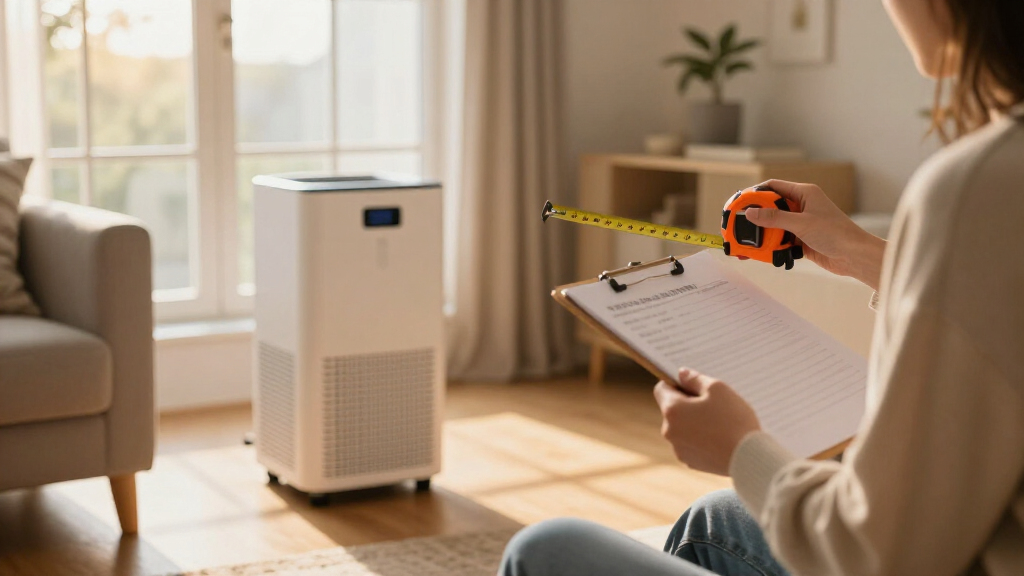
- Measure the length and width of each room in feet. Example: 20 ft x 25 ft = 500 sq. ft.
- Calculate total square footage if multiple rooms connect. Add their areas together.
- Adjust for ceiling height: if over 8 ft, multiply the area by height/8. For 10 ft ceilings: 500 sq. ft. × 10/8 = 625 sq. ft.
- Estimate moisture severity: Is your space damp, very damp, or wet? This helps determine if you need to add capacity.
Understanding these measurements is crucial because they directly influence the moisture load your dehumidifier must handle. For instance, a high ceiling increases the volume of air and moisture that needs to be dried, meaning a unit with higher capacity is necessary. Similarly, a space with persistent dampness or visible condensation indicates higher moisture levels, which can significantly increase the required capacity. Ignoring these details can lead to choosing a unit that’s either too weak or excessive, both of which have implications for efficiency, cost, and comfort.
small bathroom dehumidifier 20 pints
As an affiliate, we earn on qualifying purchases.
As an affiliate, we earn on qualifying purchases.
Interpreting the calculator’s results — what do the numbers mean?
The calculator gives you a range of pints, like 30–40. But what does that mean in practice? A higher number within that range indicates a need for greater moisture removal capacity, which is especially important in environments prone to high humidity or persistent dampness. For example, if your space is only mildly damp, aiming for the lower end of the range conserves energy and reduces wear on the unit. If your space has severe moisture issues, going toward the higher end ensures adequate drying, preventing mold growth and structural damage.
It’s important to understand that these figures are estimates based on average conditions. Real-world factors such as outdoor climate, ventilation quality, and occupancy levels can shift your actual needs. Choosing a capacity slightly above the calculated high end offers a buffer—helping your dehumidifier handle unexpected moisture surges or seasonal humidity increases. This proactive approach reduces the risk of persistent dampness and the associated health hazards, but oversizing too much can lead to unnecessary energy costs and cycling inefficiencies. Striking the right balance is key for long-term comfort and cost savings.
As an affiliate, we earn on qualifying purchases.
Why comparing old vs. new pint ratings can be confusing
Old dehumidifiers often had higher pint ratings because they used warmer test conditions—around 80°F. Newer models test at cooler temps, like 65°F, which can make a 50-pint unit seem weaker than an older 70-pint one. This difference isn’t about performance decline but about testing standards. The lower rating on newer models reflects a more realistic scenario, especially in cooler environments where humidity control is often more challenging.
Understanding this distinction is vital because it prevents you from unfairly dismissing newer, more efficient models. When shopping, always check the test conditions listed by the manufacturer. A 40-pint newer model tested at 65°F may perform similarly to an older 50- or 60-pint unit tested at 80°F in real-world scenarios. This knowledge helps you make better comparisons and avoid overpaying for higher ratings that aren’t necessarily indicative of better performance in actual use.
energy efficient dehumidifier for damp rooms
As an affiliate, we earn on qualifying purchases.
As an affiliate, we earn on qualifying purchases.
Frequently Asked Questions
How do I know if I need a bigger or smaller dehumidifier?
If your space stays damp, smells musty, or shows condensation, you probably need a larger unit. If it cycles on and off frequently or feels overly dry, it might be too big. Use the calculator with environmental details to find the sweet spot.
Can I size a dehumidifier by square footage alone?
Square footage is a good starting point but ignore moisture severity, ceiling height, and climate. For accurate sizing, include these factors; otherwise, you risk under- or oversizing.
Why are newer pint ratings often lower than older units?
New ratings use cooler, more realistic test conditions—around 65°F—so a lower number doesn’t mean less effective. Always check the testing standards when comparing models.
Is it better to oversize slightly?
Yes, modest oversizing can help especially in high humidity or poorly ventilated spaces. Just avoid going too large, which can increase costs and cause cycling issues.
How often should I run my dehumidifier after setting it up?
Initially, it might run almost nonstop for a few days as it dries out the air. Once humidity stabilizes around 45–50%, it should cycle on and off automatically, saving energy.
Conclusion
Picking the right dehumidifier isn’t just about numbers—it’s about matching capacity to real-world conditions. A good calculator guides you to a unit that keeps your space comfortable and mold-free without wasting energy.
Remember, a well-sized dehumidifier becomes silent, efficient, and long-lasting. Think of it as a moisture-fighting partner that’s perfectly tuned to your home’s needs.
Dehumidifier Size Calculator
Estimate daily pint capacity from room size and how damp the space feels.
Your room likely starts in the 20 to 30 pint range. Compare compact dehumidifiers for smaller spaces.
See compact dehumidifier matchesYour room points to a 35 to 40 pint unit. Compare mid-size dehumidifiers and check drainage options.
See mid-size dehumidifier matchesYour conditions call for a 50 pint or larger unit. Compare larger dehumidifiers and confirm room moisture sources.
See larger dehumidifier matchesEstimate only. Check product specs, local rates, and site conditions before buying or planning around these numbers.
Columbus Day / Indigenous Peoples' Day Picks
long weekend sales
As an affiliate, we earn on qualifying purchases.