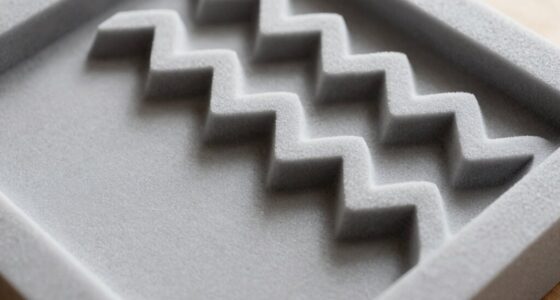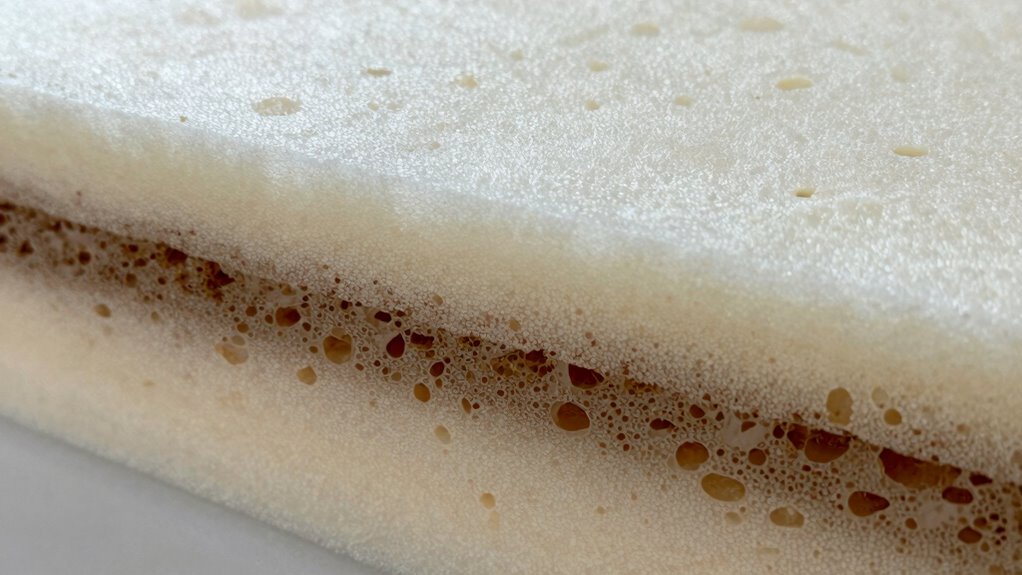

You might notice some foam layers feeling “dead” faster because their cellular structures break down over time, reducing resilience and support. Cheaper or softer foams tend to wear out quicker as their cellular networks weaken, leading to less bounce and more permanent dents. Environmental factors like heat, moisture, and regular use also accelerate this deterioration. If you want to understand how different foam qualities impact longevity and what you can do to prolong comfort, keep exploring.

Get home appliances delivered free with Prime
- Fast, free delivery on millions of items
- Prime Video, Amazon Music and more included
- Member-only deals all year
Key Takeaways
- Lower-quality foams with inferior materials break down faster, losing resilience and support.
- Softer or less dense foams tend to wear out more quickly, becoming flat and unresponsive.
- Exposure to heat, moisture, and regular use accelerates foam deterioration.
- Poor maintenance, like infrequent rotation and lack of protective covers, shortens foam lifespan.
- Initial foam density and composition significantly influence how long it maintains its “alive” feel.
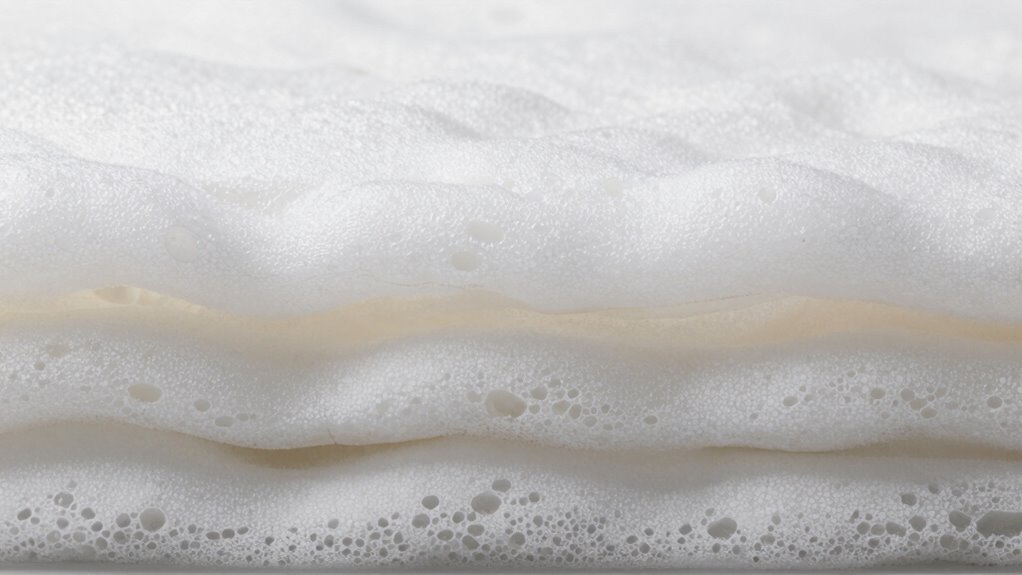
Have you noticed your foam mattress layers losing their plushness more quickly than expected? It can be frustrating to invest in a mattress that’s supposed to offer comfort and support, only to find that the foam feels flat and “dead” sooner than you’d like. One reason could be that the foam’s ability to rebound and maintain its shape diminishes over time, which directly impacts your sleep quality. When foam layers lose their resilience, it can disrupt your sleep cycle—causing you to wake more often or feel less rested—ultimately reducing your mattress’s longevity. A mattress that doesn’t support proper alignment can lead to discomfort and even back pain, making it harder to fall asleep and stay asleep through the night.
The quality of foam plays a significant role here. Cheaper foams tend to break down faster because they’re made with lower-grade materials that don’t hold up well under daily use. Over time, these foams develop permanent indentations, and their ability to bounce back diminishes. This breakdown is accelerated by factors like heat, moisture, and regular use, which cause the foam’s cellular structure to weaken. As the foam deteriorates, it no longer offers the same level of support, making it feel “dead” and less responsive. This loss of responsiveness means your body doesn’t get the proper pressure relief or alignment, which can interrupt your sleep cycle and reduce overall sleep quality. Additionally, the cellular structure of the foam influences how well it maintains its resilience over time. Proper foam composition is crucial for durability and longevity. A well-designed foam will have a more stable cellular network, helping it resist breakdown and maintain its plushness longer. Moreover, the manufacturing process can also impact the foam’s durability, with some techniques producing more resilient foam layers.
Another key factor influencing foam longevity is how you care for your mattress. Using a protective cover, rotating the mattress regularly, and avoiding excessive heat exposure can slow down foam degradation. Environmental factors, like temperature and humidity, can significantly accelerate foam deterioration, so controlling these conditions can help extend your mattress’s lifespan. However, even with good maintenance, some foams simply aren’t built to last forever. High-density foams tend to be more durable, but they still may lose their initial plushness after several years. It’s essential to choose a mattress with quality materials if you want to extend its lifespan. Keep in mind that the initial comfort level might also influence how long it feels “alive.” Softer foams may feel plush at first but could break down faster, whereas firmer, denser foams often maintain their supportive qualities longer.
Ultimately, understanding why some foam layers feel “dead” faster helps you make smarter choices when selecting and caring for your mattress. Knowing that product quality, maintenance, and your sleep habits all influence the lifespan of foam can help you invest in a mattress that supports your sleep cycle longer and provides consistent comfort for years to come.
As an affiliate, we earn on qualifying purchases.
Frequently Asked Questions
How Can I Test Foam Durability at Home?
You can test foam durability at home by examining foam quality and following some consumer tips. Press the foam firmly with your hand; if it bounces back quickly, it’s likely durable. Perform a visual inspection for sagging or cracks. Also, try pressing different areas to see if they feel consistent. These simple tests help you gauge foam longevity, ensuring you choose a high-quality, long-lasting product.
Do Foam Density and Firmness Affect Longevity?
Foam density and firmness are like the armor and backbone of your mattress—they directly impact longevity. Higher density foam resists foam compression better and slows material degradation, making it last longer. Firmer foam is less prone to sagging and feels more supportive over time. Conversely, softer, lower-density foam compresses faster, leading to quicker wear and a “dead” feel. So, choose carefully to keep your mattress feeling fresh for years.
Are There Specific Brands Known for Longer-Lasting Foam?
Some brands are known for longer-lasting foam thanks to their strong reputation and focus on material innovation. You should look at companies like Tempur-Pedic, Purple, or Casper, which use advanced materials designed for durability. Their commitment to quality guarantees their foam layers resist sagging and feel “dead” less quickly. Choosing these brands gives you better longevity and sustained comfort, making your investment worthwhile over time.
Can Foam Be Repaired After It Feels “Dead”?
Yes, foam can be repaired after it feels “dead.” You can try revitalizing it by rotating or flipping the foam, or adding a new top layer for extra support. Consider eco-friendly materials or foam recycling options to extend its life and reduce waste. While extensive damage might require replacement, these methods help restore comfort and support, making your foam last longer while staying environmentally conscious.
How Does Temperature Influence Foam Lifespan?
Temperature effects profoundly influence foam lifespan. When exposed to high temperatures, foam ages faster because heat accelerates the breakdown of its materials, leading to a “dead” feel sooner. Conversely, cooler temperatures slow down foam aging, helping it maintain its supportive qualities longer. You should keep foam in a temperature-controlled environment, avoiding extreme heat or cold, to extend its durability and prevent premature deterioration.
high density foam mattress topper
As an affiliate, we earn on qualifying purchases.
As an affiliate, we earn on qualifying purchases.
Conclusion
So, if your foam layer feels “dead” faster, don’t assume it’s a flaw. Different foam types wear differently, and some just naturally lose their bounce sooner. Remember, choosing the right foam depends on your preferences—whether you prioritize softness, durability, or responsiveness. Don’t be discouraged; with proper care and selection, you can find a foam that balances comfort and longevity. After all, understanding these nuances helps you make smarter, more satisfying choices for your space.
foam cushion with durable cellular structure
As an affiliate, we earn on qualifying purchases.
As an affiliate, we earn on qualifying purchases.
As an affiliate, we earn on qualifying purchases.
NFL season / tailgating Picks
team gear
As an affiliate, we earn on qualifying purchases.