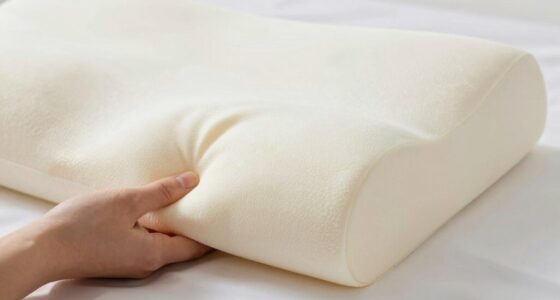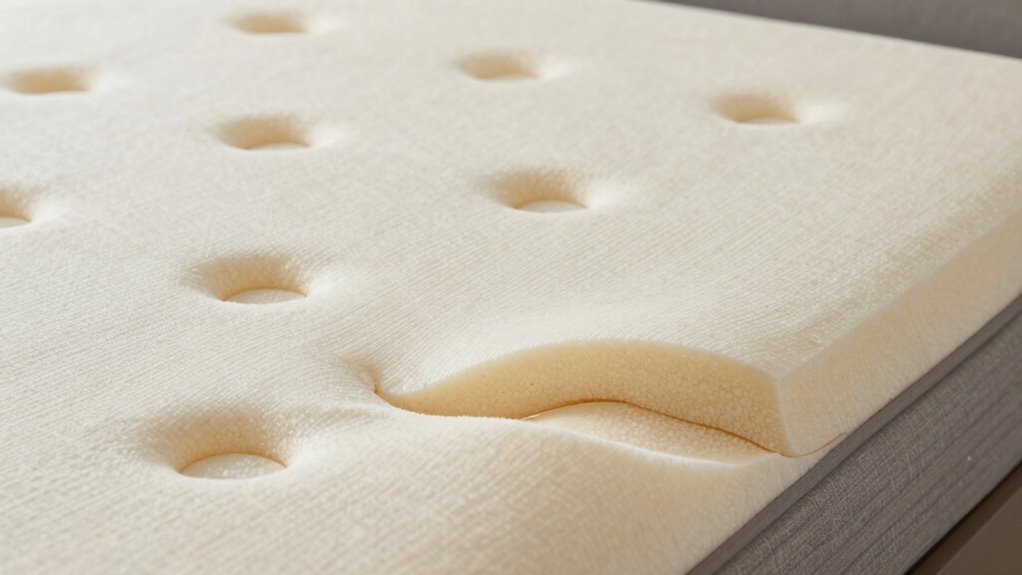

Mattresses tend to bottom out when their support core weakens or deteriorates over time. This core, made of foam, coils, or hybrid materials, provides essential support and shape, but low-quality or low-density materials can lead to sagging and loss of support. Heavy use, poor construction, or neglect can accelerate this decline. If you want to understand more about how to identify and prevent support core failure, keep exploring the key basics.
What Is a Mattress Support Core and Why Does It Matter?
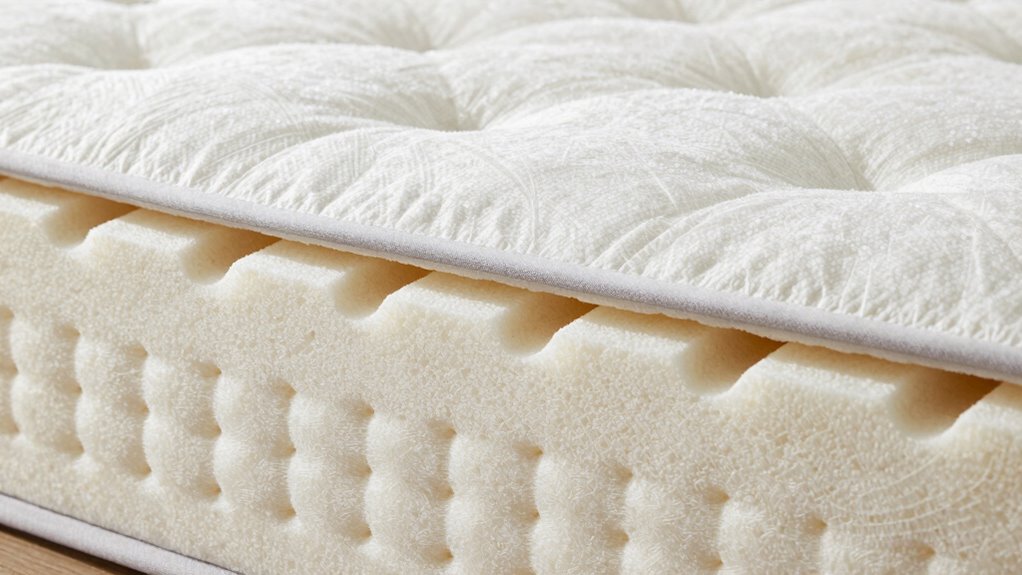
Have you ever wondered what keeps your mattress supportive and comfortable? It’s the support core, a vital layer that provides structure and resilience. The support core determines how well your mattress maintains its shape and supports your body weight. Bed frame compatibility matters because some support cores work better with certain frames, ensuring stability and preventing sagging. Mattress material differences, like innerspring, foam, or hybrid cores, influence firmness, durability, and motion transfer. A sturdy support core aligns with your chosen bed frame to maximize comfort and longevity. Without a proper support core, your mattress can bottom out or develop uneven wear, reducing its lifespan. Understanding this layer helps you pick a mattress that offers the right support for your sleep needs.
high density foam mattress support core
As an affiliate, we earn on qualifying purchases.
As an affiliate, we earn on qualifying purchases.
Which Support Core Types Are Common and What Are Their Pros and Cons?
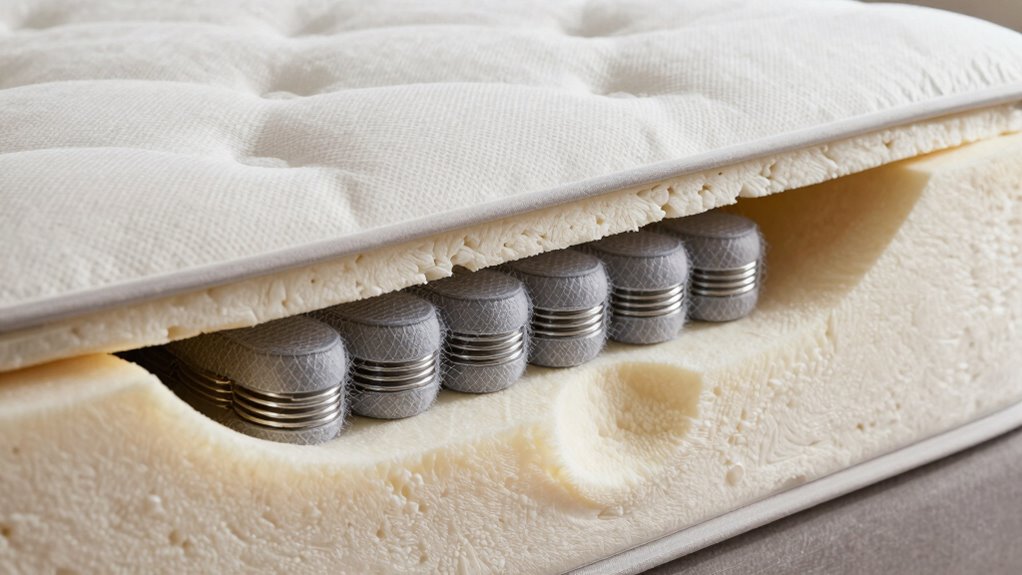
There are several common support core types used in mattresses, each with its own advantages and disadvantages. Foam cores vary by foam density, affecting durability and support; higher density foam provides better support but can feel firmer. In coil mattresses, the coil gauge influences firmness and support; lower gauge coils are thicker and more supportive. The table below summarizes these options:
| Support Core Type | Pros | Cons |
|---|---|---|
| Foam (High Density) | Durable, good support, less motion transfer | Heavier, may retain heat |
| Foam (Low Density) | Softer, lighter, more affordable | Less durable, may bottom out |
| Innerspring (Lower Gauge) | Strong support, good bounce | Less conforming, noise potential |
| Innerspring (Higher Gauge) | Softer, more contouring | Reduced durability, less support |
| Hybrid | Combines support and comfort | Usually more expensive |
Additionally, understanding the support core basics can help consumers make informed choices about mattress durability and comfort. Recognizing the material types used in cores can also influence long-term satisfaction with a mattress. Moreover, selecting the right support core can prevent issues like bottoming out over time. Being aware of support core design principles can further enhance your mattress selection experience, especially when considering factors like foam density and coil gauge.
coil gauge support mattress
As an affiliate, we earn on qualifying purchases.
As an affiliate, we earn on qualifying purchases.
Why Do Support Cores Fail and How Does “Bottoming Out” Happen?

Support cores can wear out over time, especially if they’re subjected to heavy use or poor quality materials. Low foam density or thin coil gauge can lead to quicker deterioration. When support cores weaken, you may notice “bottoming out,” where your mattress no longer provides proper support. Factors contributing to failure include:
- Low foam density, which compresses easily and loses support
- Thin coil gauge, resulting in less durability and quicker sagging
- Excessive weight or pressure on specific areas
- Continuous use without proper maintenance
- The choice of Gold IRA markets and investment strategies can influence the longevity of your investment in precious metals. Additionally, improper handling or moving the mattress frequently can accelerate wear on the support core, further increasing the risk of bottoming out. Regularly rotating your mattress can help distribute wear more evenly and extend its lifespan, especially in high-use areas. Over time, these issues cause the support core to break down, leading to uneven surfaces and reduced comfort. Recognizing these signs early helps prevent complete failure and prolongs your mattress’s lifespan.
hybrid mattress with durable support core
As an affiliate, we earn on qualifying purchases.
As an affiliate, we earn on qualifying purchases.
How Can You Tell If Your Support Core Is Starting to Fail?

As your mattress begins to show signs of wear, subtle changes can indicate that your support core is starting to fail. Support core deterioration often manifests through sagging indicators, such as visible indentations or uneven surfaces. You might notice that you sink more deeply into certain areas, especially around your hips and shoulders, despite using the same bedding. If you feel less support and your body doesn’t align properly, it’s a sign the core is losing its integrity. Over time, these warning signs become more pronounced, making it harder to get comfortable. Catching these sagging indicators early can help you decide if it’s time to replace your mattress before complete support failure occurs. Recognizing early support decline can extend the lifespan of your mattress and improve your sleep quality. Regularly inspecting your mattress for support deterioration can help prevent discomfort and further damage, especially as the support core degrades gradually with use. Additionally, understanding the signs of support failure can guide you in choosing the right replacement or repair options to maintain optimal comfort.
mattress support core replacement
As an affiliate, we earn on qualifying purchases.
As an affiliate, we earn on qualifying purchases.
What Are the Best Ways to Prevent or Reduce Support Core Sagging?

Regularly rotating and flipping your mattress can substantially reduce the risk of support core sagging. This practice helps distribute wear evenly, preventing certain areas from collapsing faster. To maximize benefits, consider the foam density of your mattress; higher foam density usually means better support and durability. Additionally, avoid placing heavy objects on specific spots, as uneven pressure accelerates sagging. Keep your mattress clean and use a supportive foundation to maintain proper weight distribution. Regular mattress rotation helps maintain the integrity of the support core by reducing uneven stress. Being aware of foam density can help you select a more durable mattress that resists sagging over time. Choosing a mattress with a quality support core construction and appropriate materials further enhances longevity. Furthermore, understanding support core design can guide you in selecting a mattress that provides long-term stability. Remember, a well-maintained mattress with appropriate foam density and consistent rotation extends its lifespan, keeping your sleep supportive and comfortable.
How Do You Pick a Mattress With a Durable Support Core That Lasts?

Choosing a mattress with a durable support core involves paying close attention to the materials and construction quality. For memory foam, look for high-density options, as they resist sagging and maintain support over time. When it comes to coil durability, choose mattresses with individually wrapped coils or reinforced steel coils, which distribute weight evenly and resist wear. It’s also helpful to check manufacturer warranties and reviews to gauge long-term performance. Consider the overall design, ensuring the support core is thick enough to provide lasting support without bottoming out. Combining high-quality memory foam with a sturdy coil system gives you a mattress that maintains its shape and support for years. Additionally, understanding how smartphone accessories are designed emphasizes the importance of choosing high-quality, durable components to ensure longevity. Ultimately, investing in reputable brands with proven durability ensures your mattress won’t bottom out prematurely.
Frequently Asked Questions
How Long Should a Mattress Support Core Typically Last?
Your mattress support core typically lasts about 7 to 10 years, depending on use and quality. Over time, support core deterioration occurs, leading to sagging and discomfort. After this period, your mattress may lose its ability to provide proper support, causing you to feel like it’s bottoming out. To maintain comfort and avoid early replacement, consider rotating your mattress regularly and investing in a high-quality support core.
Are Certain Sleep Positions More Prone to Support Core Sagging?
You might notice support core sagging more with side sleeping, as this position puts uneven pressure on the mattress’s edges and center. Your sleep posture creates pressure points that can strain the support core over time. Back sleepers distribute weight more evenly, reducing sagging risks. If you often change positions or sleep on your stomach, you could also influence how quickly support core issues develop.
Can Mattress Warranties Cover Support Core Issues?
Yes, mattress warranties can cover support core issues if they’re due to manufacturing defects. When you file Warranty Claims, the manufacturer typically assesses whether the sagging or support failure is from a defect rather than normal wear and tear. Be sure to review your warranty details, as coverage varies, and proper documentation can help you get repairs or a replacement if support core problems are confirmed to be manufacturing defects.
How Does Body Weight Influence Support Core Durability?
Ever wonder how your weight impacts your mattress’s support core? Heavier individuals exert more pressure points, pushing the mattress to its limits and causing quicker wear. Poor weight distribution concentrates stress on specific areas, leading to sagging or bottoming out. If you have a higher body weight, choose a mattress with a stronger support core designed to withstand this pressure. Otherwise, your mattress won’t last as long, and comfort suffers.
Are Hybrid Mattresses More Resistant to Support Core “Bottoming Out”?
Yes, hybrid mattresses tend to be more resistant to support core “bottoming out” because their durability combines durable innerspring components with high-quality foam. This mix helps prevent foam breakdown, which often causes support cores to weaken over time. You’ll likely find that hybrids maintain their shape and support longer, even under varying body weights, making them a more resilient choice if you’re concerned about support core durability.
Conclusion
Choosing a mattress with a durable support core is like planting a sturdy tree—you want strong roots to stand tall through the years. By understanding how support cores work and taking steps to care for your mattress, you can avoid the sinking feeling of “bottoming out.” Remember, investing in quality support means your sleep won’t just be restful tonight but will stand firm for years to come, keeping you comfortable and supported like a trusted friend.