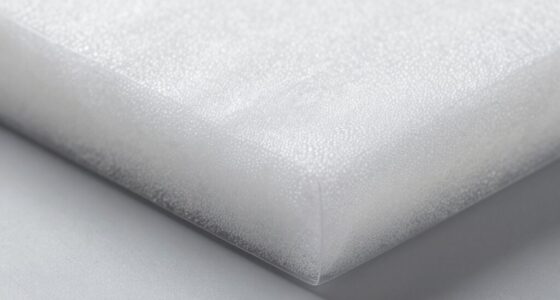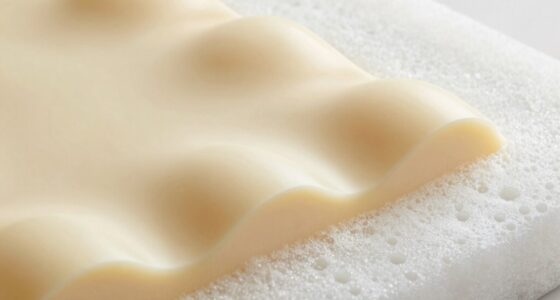
Viscoelastic in memory foam means the material slowly responds to pressure and temperature changes, allowing it to contour closely to your body shape while gradually returning to its original form. It combines elasticity and viscosity, so it molds gently to your curves and distributes weight evenly. This unique ability helps reduce pressure points and provides comfort. If you’d like to discover how this feature impacts your sleep quality, keep exploring the details.

Get home appliances delivered free with Prime
- Fast, free delivery on millions of items
- Prime Video, Amazon Music and more included
- Member-only deals all year
Key Takeaways
- Viscoelasticity refers to a material’s ability to both stretch and flow, combining elasticity and viscosity.
- In memory foam, it enables slow response to pressure and temperature, allowing gradual conforming to the body.
- It allows the foam to temporarily deform under pressure and then return to its original shape, providing support.
- Viscoelastic properties help distribute body weight evenly, reducing pressure points and enhancing comfort.
- This characteristic explains why memory foam responds gradually and adapts closely to body contours.
As an affiliate, we earn on qualifying purchases.
What Is Viscoelasticity and How Does It Work?
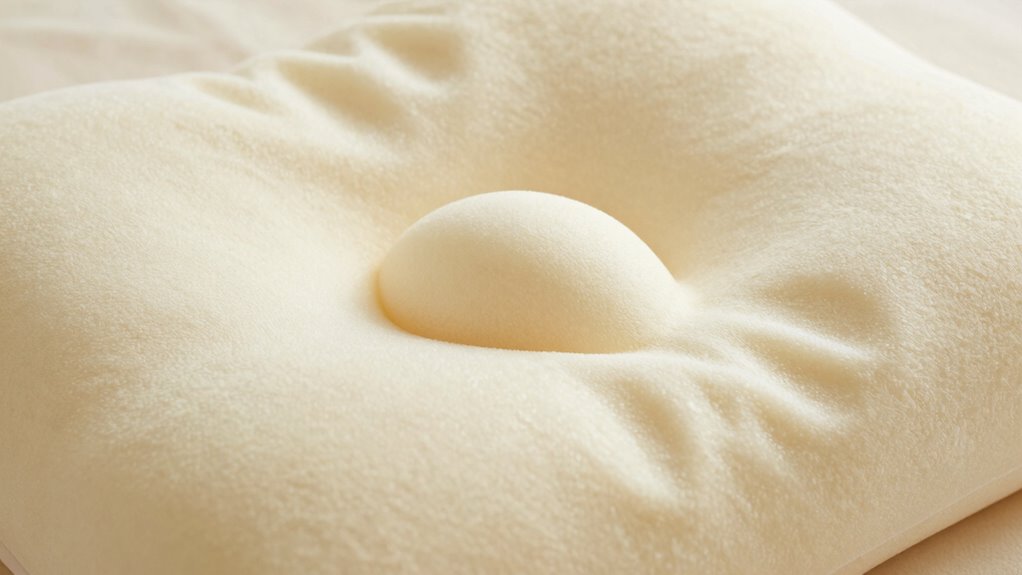
Viscoelasticity describes a material’s ability to both stretch and flow when subjected to stress, combining properties of elasticity and viscosity. When you apply pressure to memory foam, it undergoes elastic deformation, meaning it temporarily changes shape but returns to its original form once the force is removed. Over time, the foam experiences stress relaxation, where the internal forces gradually diminish, allowing the material to adapt to your body’s shape. This dual behavior lets memory foam absorb and distribute pressure effectively, providing support and comfort. The foam’s unique viscoelastic nature ensures it responds slowly to changes in pressure and temperature, making it ideal for conforming to your body while also returning to its shape when the pressure is released. Additionally, understanding the material properties of viscoelastic substances helps in choosing the right foam for different comfort and support needs.
As an affiliate, we earn on qualifying purchases.
What Makes Memory Foam Different From Other Foams?
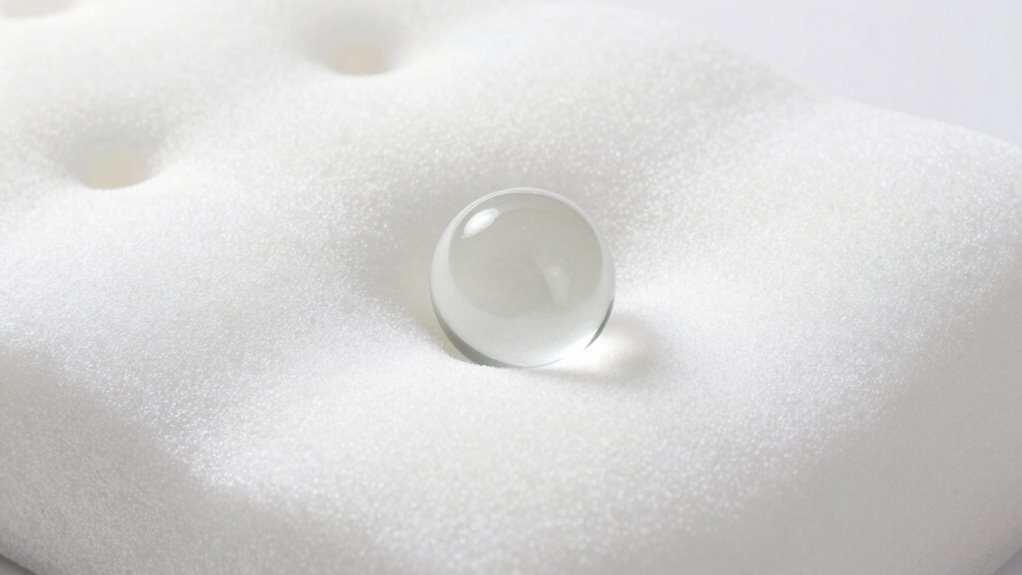
Memory foam has a unique material composition that sets it apart from other foams, giving it distinct properties. When you apply pressure, it responds slowly and molds to your shape, providing personalized support. This responsiveness is what makes memory foam different and highly sought after for comfort.
Unique Material Composition
What sets memory foam apart from other types of foam is its unique chemical structure that allows it to contour closely to your body. This material difference is rooted in its viscoelastic properties, which respond to heat and pressure. Memory foam is typically made from polyurethane combined with additional chemicals to enhance its elasticity and softness. The manufacturing processes involve carefully mixing these components to create a dense, uniform foam that molds to your shape. Unlike traditional foams, its ability to slowly conform and return to shape is a direct result of its special material composition. Additionally, the material properties of memory foam contribute to its ability to reduce pressure points and improve comfort.
Response to Pressure
Because of its unique chemical makeup, memory foam responds to pressure by gradually molding to your body rather than instantly compressing like traditional foams. This slow pressure response is due to its high material elasticity, allowing it to deform under weight and then slowly return to its original shape once pressure is removed. Unlike other foams that quickly bounce back, memory foam absorbs impact and distributes weight evenly, providing targeted support. Your body heat also plays a role, softening the foam and enhancing its ability to conform. This combination of material elasticity and temperature sensitivity creates a cushioning effect, making memory foam ideal for pressure relief and comfort. Additionally, its innovative design aligns with the principles of sustainable and secure cloud solutions, emphasizing energy efficiency and durability.
pressure relief memory foam topper
As an affiliate, we earn on qualifying purchases.
As an affiliate, we earn on qualifying purchases.
How Does Viscoelasticity Distribute Pressure?
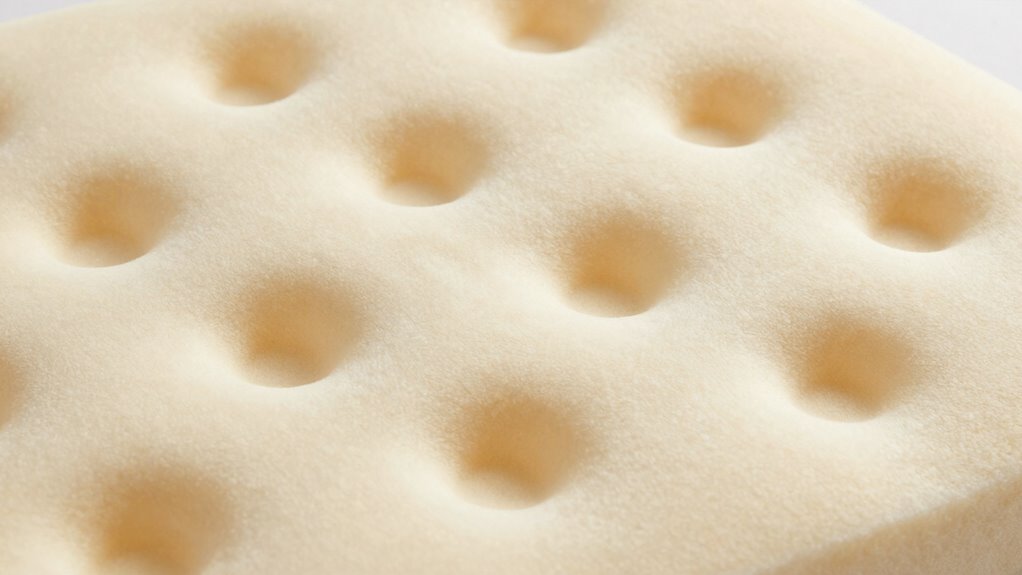
Viscoelasticity helps memory foam adapt to your body’s shape, providing personalized support. As you move, the foam redistributes pressure evenly, reducing pressure points. This guarantees a more comfortable, balanced sleep experience. Additionally, smartphone accessories like memory foam cushions can enhance comfort and support during daily use.
Adaptive Shape Conformation
When pressure is applied to memory foam, its viscoelastic properties allow it to adapt and mold to the shape of your body. This is due to its gel properties, which help dissipate heat and improve comfort. As you rest, stress relaxation occurs, enabling the foam to gradually conform and support your contours. This adaptive shape conformation distributes your weight evenly, reducing pressure points. Key aspects include:
- Gel properties enhance cooling and responsiveness
- Stress relaxation allows gradual molding without quick rebound
- The foam conforms precisely, offering personalized support
- Temperature sensitivity ensures the foam adapts to your body heat
- Material behavior in viscoelastic substances explains how they respond over time under stress
This synergy creates a supportive, pressure-relieving surface tailored to your body’s unique shape and movements.
Even Pressure Redistribution
As pressure is applied to memory foam, its viscoelastic properties enable it to evenly distribute weight across the surface. This pressure distribution occurs because foam elasticity allows the material to mold smoothly around your body, spreading out your weight rather than concentrating it. When you rest on the foam, it responds gradually, absorbing and dispersing pressure evenly. This helps reduce pressure points that can cause discomfort or pain. The foam’s ability to adapt shape under load ensures that your body weight is supported uniformly, preventing sagging or uneven pressure build-up. Thanks to viscoelasticity, memory foam offers a balanced pressure distribution, making it comfortable for extended sleep or rest. This characteristic is key to its reputation for providing supportive, pain-relieving comfort. Understanding foam elasticity is essential for recognizing how memory foam contributes to overall sleep comfort.
As an affiliate, we earn on qualifying purchases.
Why Is Temperature Important for Memory Foam?
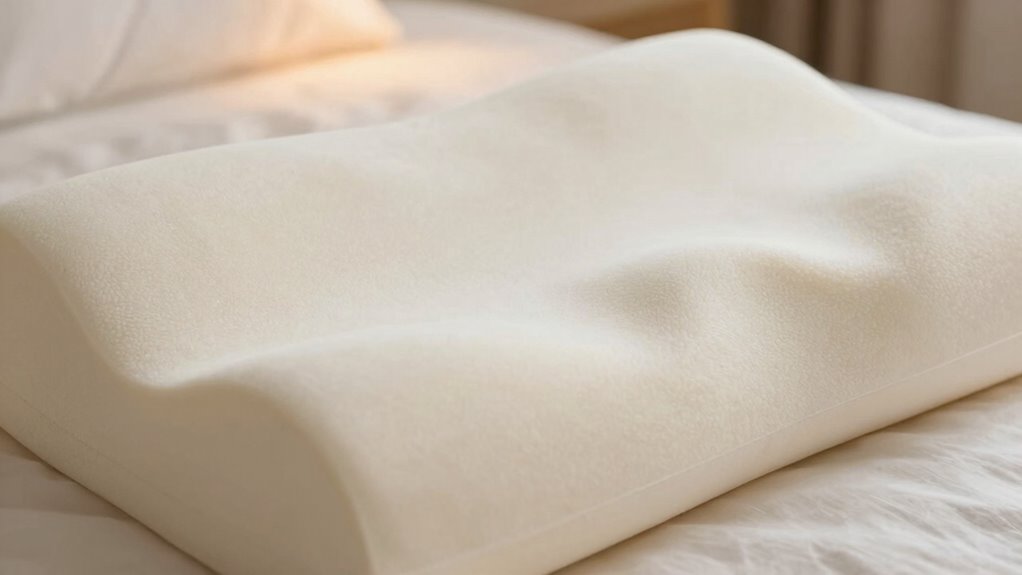
Temperature plays a crucial role in how memory foam responds to your body. Its temperature sensitivity influences how quickly and effectively the foam molds to your shape, affecting comfort and support. When the foam reaches your body heat, it undergoes a thermal response, softening and conforming accordingly. Conversely, cooler temperatures make the foam firmer and less responsive. This means your sleeping environment can impact your sleep quality. Proper temperature regulation is essential for optimal foam performance, ensuring the material reacts as intended. Maintaining an ideal temperature ensures your memory foam performs at its best.
How Does Memory Foam Mold to Your Body?
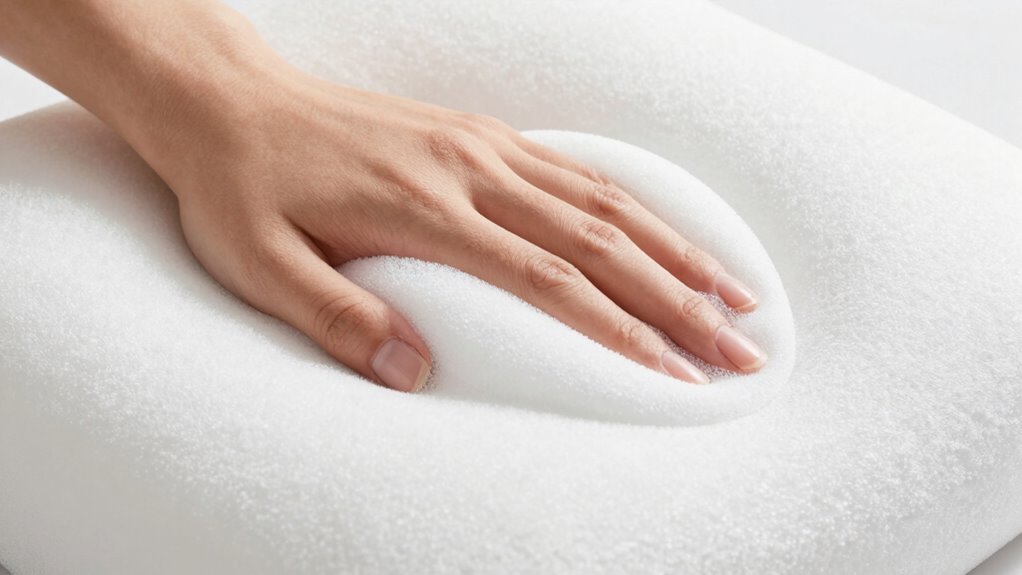
Memory foam molds to your body by responding to your heat and pressure, softening instantly where you apply force. This allows the foam to conform closely to your unique shape, providing targeted support and comfort. As you lie down, the foam redistributes pressure evenly across your body, reducing stress points and enhancing relaxation. Thanks to its shape memory, the foam remembers your body’s contours, returning to its original form once you leave. This ability to adapt and maintain support is what makes memory foam so effective at relieving pressure distribution issues. The foam’s viscoelastic properties enable it to respond slowly to your movements, ensuring consistent support while you sleep or rest. Additionally, Vetted – Serat Nest features in some memory foam products enhance durability and support. In essence, memory foam gently molds to your body, offering personalized comfort every time.
How Does Viscoelastic Memory Foam Compare to Traditional Foam?

Viscoelastic memory foam differs markedly from traditional foam in how it responds to pressure and shape. It gently conforms to your body, providing better pressure relief and support due to its unique viscoelastic properties. Traditional foam, often with higher foam density, tends to recover shape quickly, offering less contouring. When comparing durability factors, viscoelastic memory foam generally maintains its shape longer, resisting sagging better than standard foam. Additionally, its viscoelastic properties enable it to respond to temperature changes, which can enhance comfort and support over time.
What Are the Main Benefits of Viscoelastic Materials in Sleep Products?
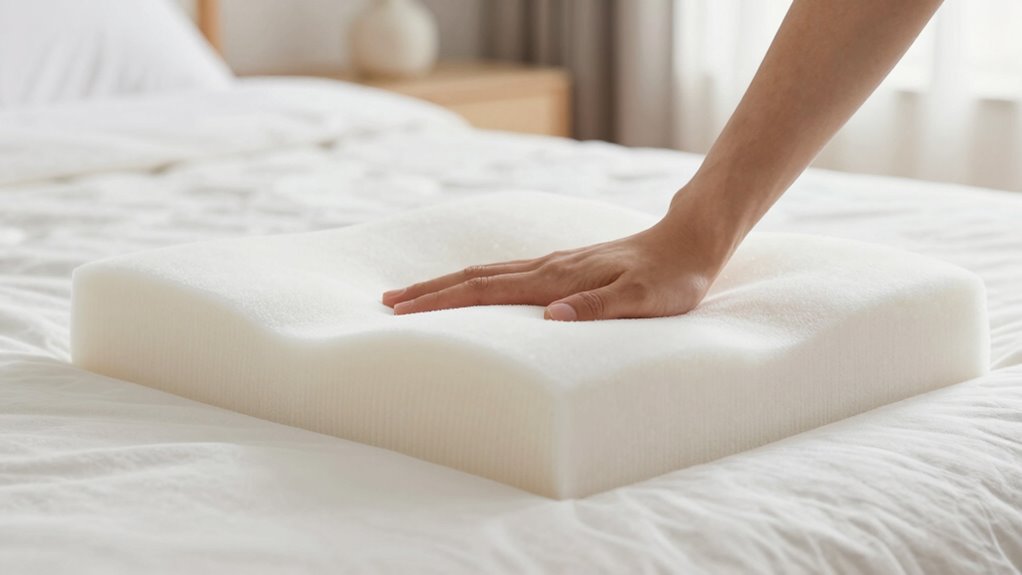
Viscoelastic materials offer significant pressure relief, helping to reduce discomfort and prevent pressure points while you sleep. This leads to a more comfortable and restful night, especially for those with joint or muscle issues. As a result, you’ll enjoy enhanced sleep quality and wake up feeling more refreshed. Incorporating sustainable material choices in the production of memory foam can further improve its benefits and reduce environmental impact.
Pressure Relief Benefits
Have you ever wondered why sleep products with viscoelastic materials provide such effective pressure relief? It’s because viscoelastic foam adapts closely to your body, reducing pressure points. This is enhanced by features like gel layering, which helps dissipate heat and maintain comfort. Additionally, firmness customization allows you to select the best level of support, further easing pressure on sensitive areas. The benefits include:
- Minimizing discomfort in joints and shoulders
- Reducing tossing and turning
- Supporting proper spinal alignment
- Improving overall sleep quality
Enhanced Sleep Comfort
By molding closely to your body, viscoelastic materials considerably enhance sleep comfort, making it easier to relax and fall asleep. Gel technology is often integrated into memory foam to improve heat dissipation, preventing overheating and ensuring a cooler sleep experience. This cooling feature allows you to stay comfortable throughout the night. Additionally, foam density plays a critical role; higher-density foams provide better support and durability, creating a supportive surface that adapts to your movements. These combined benefits mean less tossing and turning, more restful sleep, and waking up feeling refreshed. Viscoelastic materials, with their ability to contour precisely to your shape, deliver a personalized sleep environment that promotes comfort, relaxation, and overall sleep quality.
Common Myths About Memory Foam and Viscoelasticity
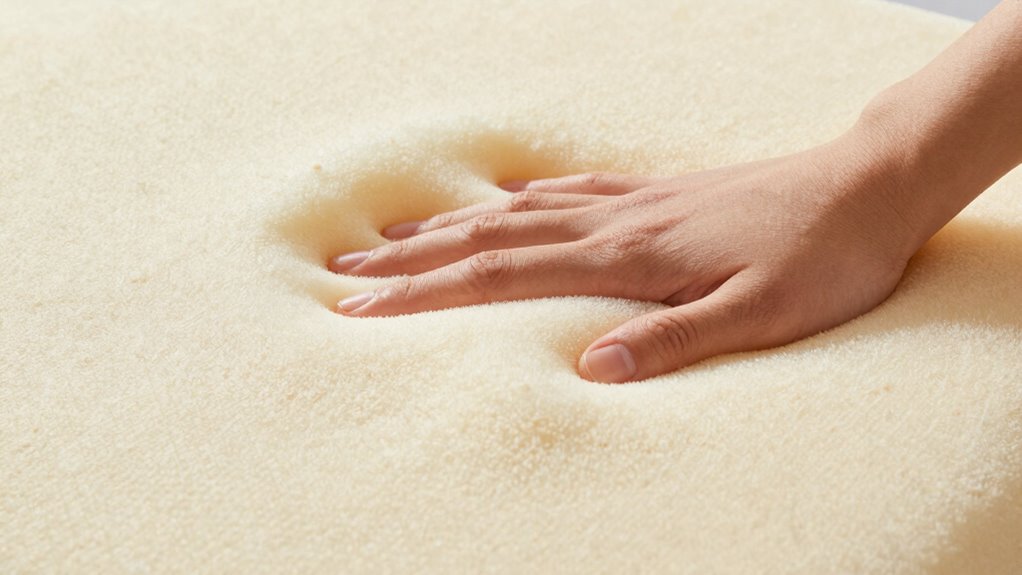
Many people believe that memory foam instantly conforms to their body and provides perfect support, but this is a common misconception. In reality, it takes time for viscoelastic materials to adapt, and support varies with firmness levels. Some also think that gel technology makes memory foam cooler and more responsive, but it doesn’t eliminate heat retention completely. Additionally, many assume all memory foam is soft, ignoring adjustable firmness options. finally, there’s a myth that viscoelastic foam reacts immediately to movement, but it actually responds gradually, offering better pressure relief over time. Understanding these myths helps you set realistic expectations about memory foam’s capabilities and limitations, especially when considering different firmness levels and gel-enhanced options.
How Does Viscoelasticity Enhance Comfort and Support?

Viscoelasticity is what allows memory foam to provide its unique combination of comfort and support. It responds to your body’s shape, distributing pressure evenly and reducing stress points. This adaptive feature enhances ergonomic design by aligning your spine and promoting proper posture, which helps prevent discomfort over time. Because of its material durability, memory foam maintains its supportive qualities even after extended use. Viscoelasticity enables the foam to gently cradle your body, offering a soft feel while still providing enough resilience to support your movements. This balance creates a sensation of sinking in without feeling stuck, giving you both comfort and stability. As a result, you experience restful sleep and reduced aches, thanks to the intelligent design of viscoelastic memory foam.
What’s Next for Viscoelastic Memory Foam Innovation?
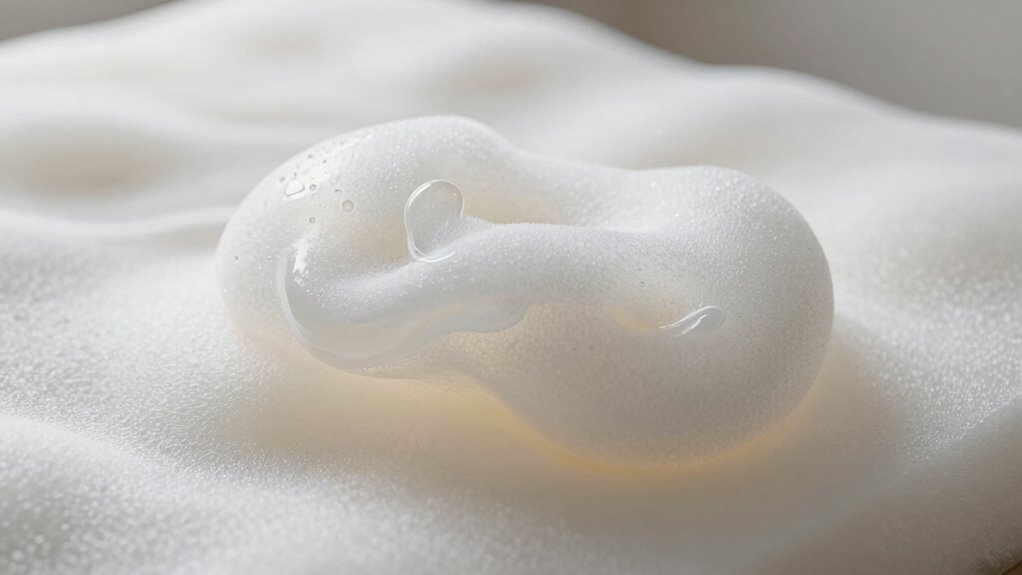
Advancements in material science and engineering are driving the next wave of innovation in viscoelastic memory foam. Researchers are focusing on improving gel stability to guarantee consistent performance over time, preventing issues like gel displacement or separation. Durability testing is becoming more rigorous, helping manufacturers create longer-lasting products that maintain their supportive qualities. Expect to see innovations such as enhanced cooling gels that retain their temperature-regulating properties and stronger foam structures that withstand daily use. These developments aim to deliver better comfort, support, and longevity. As a result, your future memory foam mattress or pillow will likely be more reliable, resilient, and tailored to your needs. Staying informed about these advancements ensures you get the most durable and comfortable sleep solutions available.
Frequently Asked Questions
Can Viscoelastic Materials Cause Heat Retention Issues?
Yes, viscoelastic materials can cause heat buildup, making you feel warmer during sleep. This happens because their dense structure traps heat, leading to discomfort. To address this, look for cooling solutions like gel-infused memory foam, breathable covers, or airflow-enhanced mattresses. These features help dissipate heat, improve airflow, and keep you cooler, ensuring a more comfortable sleep experience without sacrificing the benefits of viscoelastic properties.
How Long Does Viscoelastic Memory Foam Typically Last?
You can expect viscoelastic memory foam to last around 8 to 10 years, depending on usage and quality. Its durability lifespan varies based on how well you care for it and the specific manufacturing process. To maximize material longevity, rotate your mattress regularly and use a proper foundation. High-density foams generally offer better durability, so investing in quality can extend the lifespan and maintain comfort over time.
Is Viscoelasticity the Same in All Types of Memory Foam?
You’ll find that viscoelasticity isn’t the same in all memory foam types; about 30% of variations come from different formulations. This means material consistency varies across products, affecting how the foam responds to pressure and temperature. Foam variation impacts durability and comfort, so you should consider these differences when choosing your mattress. Understanding these nuances helps you select a product that best matches your sleep needs.
How Does Moisture Affect Viscoelastic Memory Foam Performance?
Moisture affects viscoelastic memory foam by increasing moisture absorption, which can make the foam feel less supportive and softer over time. Excess moisture can lead to foam deterioration, causing it to break down faster and lose its shape. To maintain performance, keep your memory foam dry and well-ventilated, as moisture buildup accelerates deterioration and diminishes the foam’s ability to respond effectively to your body.
Are There Eco-Friendly Options for Viscoelastic Memory Foam?
Yes, you can find eco-friendly options for viscoelastic memory foam. Look for products made from sustainable sourcing, which reduces environmental impact. Some brands offer biodegradable alternatives that break down naturally over time, minimizing waste. By choosing these options, you support environmentally responsible manufacturing and enjoy comfort without compromising your eco-conscious values. Always check labels for certifications indicating eco-friendly practices to guarantee you’re making a sustainable choice.
Conclusion
So, now that you know viscoelasticity’s secret sauce, go ahead—embrace your memory foam mattress. After all, who wouldn’t want a material that molds perfectly to your body and makes you feel like royalty? Just remember, it’s not magic, but it’s pretty close. Sleep like a king or queen on a foam that’s smarter than your average mattress. Sweet dreams, and don’t forget to thank science for your newfound sleep superiority!
Cold & flu season Picks
humidifiers
As an affiliate, we earn on qualifying purchases.