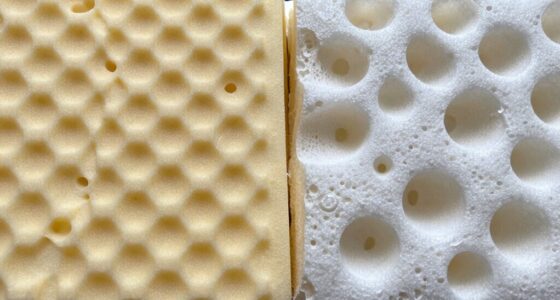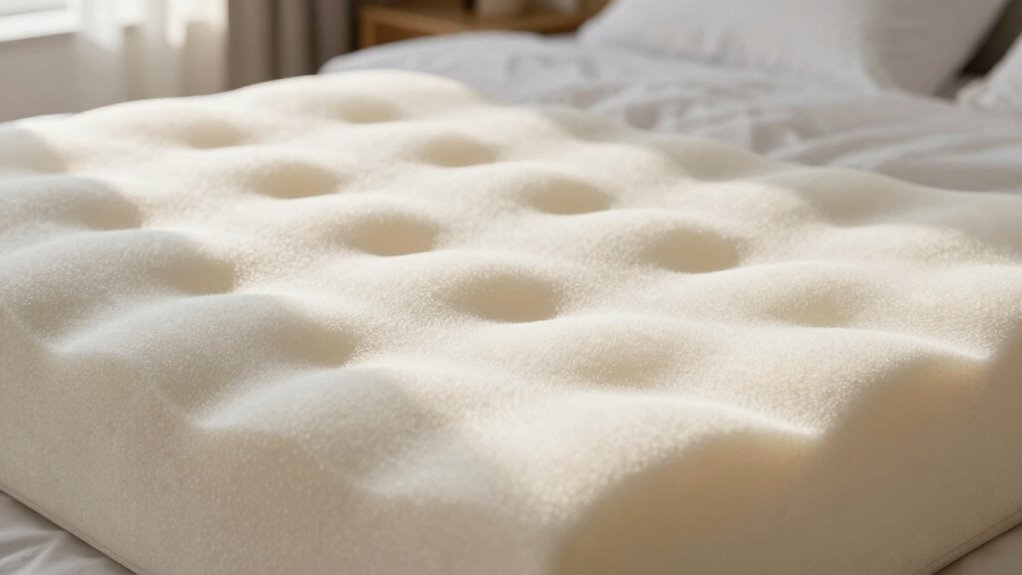
When choosing a memory foam topper, understanding density helps you pick the right support and durability. Higher density foam (4-5 lbs/cu ft) offers better support, lasts longer, and tends to trap more heat, which can cause overall warmth during sleep. Lower density foam (around 2-3 lbs) feels softer, breathes better, and stays cooler but wears out faster. Exploring how density influences heat retention can help you find a topper that balances comfort and temperature control. If you want the details, discover more below.
Key Takeaways
- Higher-density memory foam (4-5 lbs/cu ft) offers better support but tends to retain more heat.
- Lower-density foam (2-3 lbs/cu ft) promotes better airflow, reducing heat buildup and providing a cooler sleep surface.
- Gel-infused and open-cell memory foams help dissipate heat, improving temperature regulation regardless of density.
- Foam density influences heat retention: denser foams trap more warmth, while lighter foams allow for enhanced breathability.
- Combining lower-density foam with ventilation features or cooling covers can optimize heat management for memory foam toppers.
What Does Memory Foam Density Mean for Your Mattress Topper?
Understanding what memory foam density means is essential when choosing a mattress topper. Higher density foam, usually between 4 to 5 pounds per cubic foot, offers better support and durability, making it ideal if you prefer firmer firmness levels. Lower density foam, around 2 to 3 pounds, tends to be softer and more plush but may wear out faster. If you’re concerned about heat retention, look for gel cooling features embedded in higher-density foam, which help dissipate heat and keep you comfortable. Density influences how your body interacts with the topper; a denser material provides more substantial support, while a lower density offers a softer, more cushioned feel. Selecting the right density depends on your support needs and comfort preferences.
How Does Density Affect Comfort and Support?
Density plays an essential role in how your mattress topper feels and functions, directly impacting both comfort and support. Higher-density foam offers better support, helping align your spine and reduce pressure points. It also provides a firmer surface that can enhance orthopedic support, especially if combined with gel infusion for cooling relief. Conversely, lower-density foam feels softer and more plush, creating a cloud-like surface that’s ideal for those seeking comfort over firm support. When choosing, consider:
- A dense topper for targeted orthopedic support and durability.
- Gel infusion to help regulate temperature and improve comfort.
- Medium density for a balance between softness and support, suitable for most sleepers.
Understanding foam density helps you select the right level of comfort and support for your sleep needs. Choosing the right density can enhance the longevity of your mattress topper and maintain its supportive qualities over time. Additionally, selecting the appropriate density can influence the projector image quality, ensuring your sleep environment remains comfortable and supportive for years to come. A well-chosen density can also contribute to overall sleep quality, promoting better rest and recovery. Moreover, paying attention to foam density can optimize both comfort and durability, making your investment more worthwhile.
Does Density Impact Memory Foam Durability?

The durability of your memory foam topper often depends on its density. Higher density foam generally offers better durability factors because it’s made with more material, which can withstand prolonged use. This increased material longevity means the topper resists sagging, impressions, and breakdown over time. Additionally, higher-density foam tends to provide better support and comfort, making it a preferred choice for long-term use. The longevity of materials is crucial when selecting a topper, as it directly affects how long it will maintain its supportive qualities. Conversely, lower-density foams tend to wear out faster, especially with frequent use, reducing the overall lifespan of your topper. Density directly influences how well the foam maintains its shape and support, impacting its long-term performance. If you want a topper that lasts longer and retains its supportive qualities, choosing a higher-density option is a smart move. Keep in mind that material longevity is vital when investing in a topper, as it determines how well it will serve you over the years. Regularly airing and cleaning your memory foam can also help prolong its lifespan and maintain its supportive properties.
What Are the Common Density Ranges for Memory Foam Toppers?
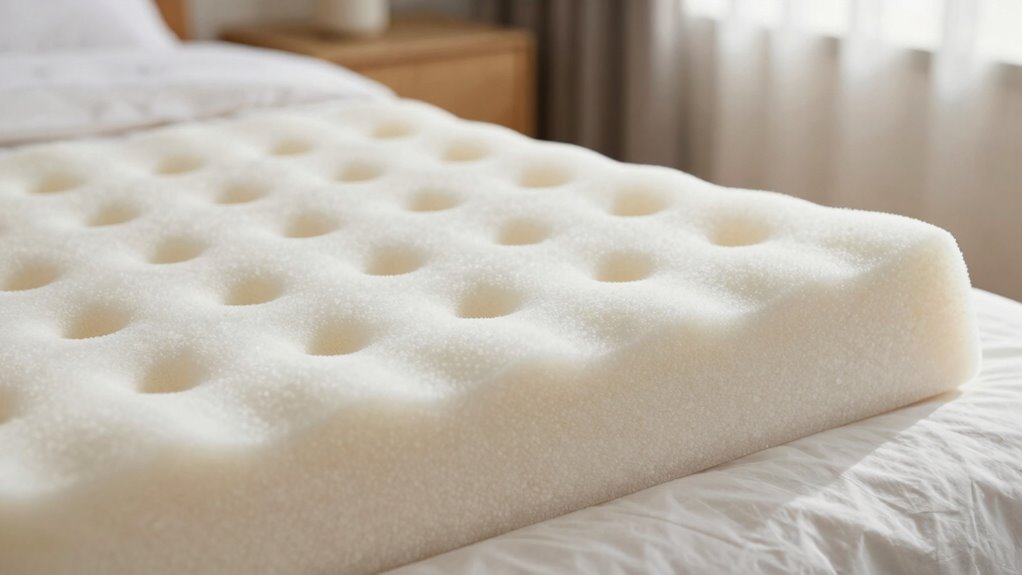
Memory foam toppers typically come in a range of densities that affect comfort and longevity. Understanding these common density ranges helps you choose the right one for your needs. Let’s explore how different densities can impact your sleep experience. Higher density foams generally offer better support and durability, but may feel firmer, while lower densities tend to be softer and more plush. Additionally, material quality plays a significant role in the overall performance of the topper.
Typical Density Ranges
Understanding the typical density ranges for memory foam toppers can help you choose the right level of support and durability. Generally, these toppers fall within a density comparison of 3 to 5 pounds per cubic foot (pcf). Here’s what you can expect:
- Low-density foam (3 pcf): Offers softer support, lightweight, and more affordable but less durable. This type of foam may also have increased heat retention due to its lower density, which can affect comfort for hot sleepers. Additionally, lower-density foams may be more prone to wear and tear over time, impacting longevity.
- Medium-density foam (4 pcf): Strikes a balance between comfort and longevity, suitable for most sleepers. It also tends to provide better support and durability compared to lower-density options.
- High-density foam (5 pcf): Provides firmer support and increased durability, often preferred for lasting quality. These higher-density foams generally have a more substantial feel and can better resist sagging over time.
These ranges reflect foam composition differences, influencing support, heat retention, and lifespan. Proper foam density can also affect heat retention and overall comfort, helping you select the best topper for your needs. Knowing this can help you narrow down your options based on your preferences and needs.
Choosing the Right Density
Choosing the right density for your memory foam topper depends on your specific comfort preferences and durability needs. Typically, densities range from 3 to 5 pounds per cubic foot, with higher densities offering more support and longevity. If you prefer a softer feel, look for a lower-density foam, around 3 pounds, which provides gentle cushioning. For firmer support, opt for a density closer to 5 pounds. Gel infusion can enhance heat dissipation, especially in higher-density foams, making sleep cooler. Keep in mind that memory foam firmness correlates with density—higher density generally means a firmer feel. Selecting the appropriate density ensures your topper offers the right balance of comfort, support, and durability to match your sleep style. Additionally, understanding inverter generator use-case can help you choose the most efficient and suitable options for different needs.
How Do You Choose the Best Density for Your Sleep Style?

Selecting the right density for your memory foam topper depends on your sleep style and personal preferences. To find the best fit, consider these factors:
- Sleep position: Side sleepers often prefer a softer, lower-density topper for pressure relief, while back or stomach sleepers might need a firmer, higher-density option for support. Understanding your sleep position can help you choose the appropriate density. Additionally, knowing the neighborhood where a celebrity resides can sometimes influence your choice if you wish to emulate a certain lifestyle, similar to how Kate from Breaking Amish transitioned into a different career path. Recognizing the environmental impact of your bedding choices can also guide you toward more sustainable options that align with eco-friendly values. When selecting a topper, it’s also helpful to consider the material composition to ensure it meets your durability and comfort expectations.
- Comfort levels: If you like a plush feel, choose a lower density; for more firmness and support, go higher.
- Budget considerations: Higher-density toppers tend to cost more but last longer, so balance your comfort needs with your budget.
- Design elements such as hidden features and textures can also influence the overall feel and longevity of your topper, ensuring it complements your sleep environment effectively.
Why Is Heat Retention an Important Factor in Memory Foam?
Heat retention affects how comfortable your memory foam feels throughout the night, balancing warmth with breathability. Proper temperature regulation can help you stay cozy without overheating, improving your sleep quality. Understanding this factor helps you choose a topper that supports restful, uninterrupted sleep. Additionally, air quality plays a role in overall comfort by reducing indoor pollutants that can cause discomfort during sleep. Good airflow and ventilation can further enhance sleep comfort by minimizing heat buildup within your mattress, and selecting materials with proper thermal regulation properties can also make a significant difference. Being aware of sleep environment factors, such as room temperature and humidity, can further optimize your sleep experience. Incorporating smart temperature control features into your sleep setup can also help regulate heat retention and promote better rest.
Heat and Comfort Balance
Memory foam’s ability to retain heat plays a crucial role in how comfortable it feels throughout the night. This heat retention affects your sleep quality by influencing warmth and pressure relief. Depending on the memory foam composition, some toppers trap heat more than others. To find the right balance, consider these factors:
- Material Density: Higher density foam retains more heat but offers better support.
- Mattress Firmness Options: Softer mattresses may cradle you in warmth, while firmer options promote cooler sleep.
- Design Features: Some toppers include cooling gels or breathable covers to offset heat buildup.
Understanding how these elements interact helps you choose a topper that offers the perfect heat and comfort balance for restful sleep.
Temperature Regulation Benefits
Temperature regulation is a key factor in choosing a memory foam topper because it directly impacts how comfortably you sleep through the night. Heat retention helps maintain a consistent bed temperature, so you don’t wake up feeling cold or sweaty. This can also influence your bed height, as a topper that traps heat can make your mattress feel firmer or more plush. If you’re allergy concerns, heat retention can reduce airflow, trapping dust and allergens beneath the surface. A topper with good temperature regulation prevents overheating, which can disrupt sleep and cause discomfort. By choosing a memory foam topper that balances heat retention, you ensure a cozy, stable sleep environment, helping you stay comfortable and support a healthy sleep cycle.
Impact on Sleep Quality
When a memory foam topper effectively retains heat, it can substantially enhance your sleep quality by creating a consistently cozy environment. This warmth encourages relaxation, helping you fall asleep faster and stay asleep longer. Your sleep position plays a role; side sleepers, for example, benefit from the comforting pressure relief. Additionally, heat retention can reduce tossing and turning, resulting in more restful sleep. However, if you have allergy concerns, choose a topper with a breathable cover to prevent dust mites and mold buildup. Here’s what heat retention influences:
- Comfort level, making your bed feel inviting.
- Sleep stability, reducing interruptions.
- Overall sleep quality, leading to more restorative rest.
How Does Density Influence Heat Retention and Temperature Control?
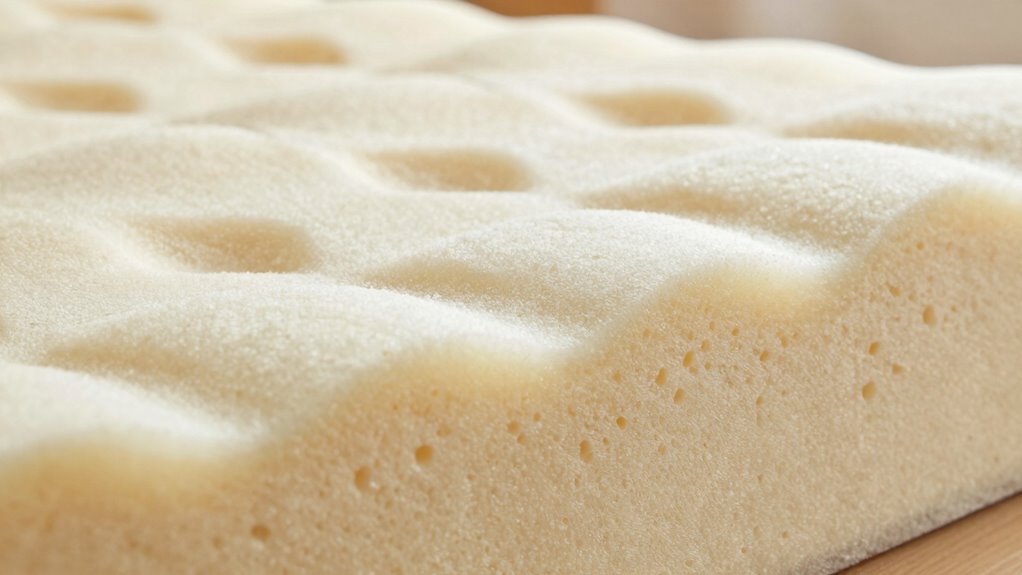
The density of a memory foam topper plays a crucial role in how it manages heat retention and temperature control. Higher-density foams tend to trap more heat, making you feel hotter during the night. Conversely, lower-density options promote better air circulation, helping you stay cooler. Some toppers include cooling gels designed to offset heat buildup, especially in dense foams. To improve temperature regulation, look for toppers with open-cell structures that enhance airflow. The table below highlights how density impacts heat and comfort:
| Density Level | Heat Retention | Air Circulation | Comfort Level | Temperature Control |
|---|---|---|---|---|
| Low | Less heat | Better airflow | Softer | Cooler nights |
| Medium | Moderate | Moderate | Balanced | Steady temperature |
| High | More heat | Less airflow | Firm | Potential overheating |
What Materials and Technologies Help Manage Heat in Memory Foam?
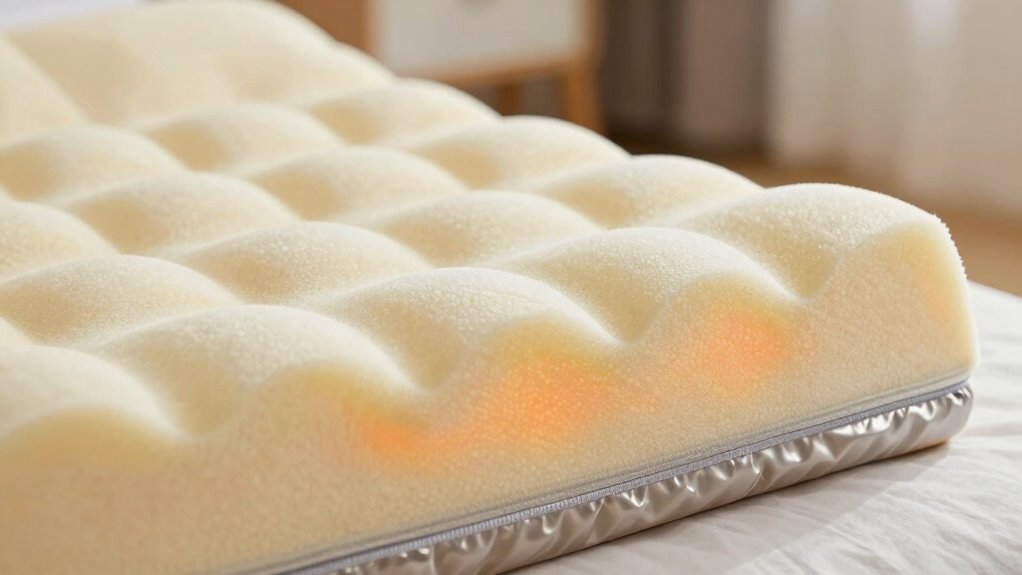
To combat heat retention in memory foam toppers, manufacturers incorporate specialized materials and innovative technologies designed to improve airflow and dissipate heat. These include:
Manufacturers add gel infusions, cooling fabrics, and ventilation channels to reduce heat retention in memory foam toppers.
- Gel infusions, which absorb and transfer heat away from your body, keeping you cooler throughout the night.
- Cooling fabrics layered on top of the foam, enhancing breathability and moisture wicking.
- Ventilation channels built into the topper, promoting airflow and reducing heat buildup.
These materials work together to create a cooler sleeping surface. Gel infusions actively regulate temperature, while cooling fabrics and ventilation systems ensure air circulation. By integrating these technologies, manufacturers help you stay comfortable and sleep more soundly, even if memory foam tends to trap heat.
How Can You Select a Memory Foam Topper With Better Heat Features?
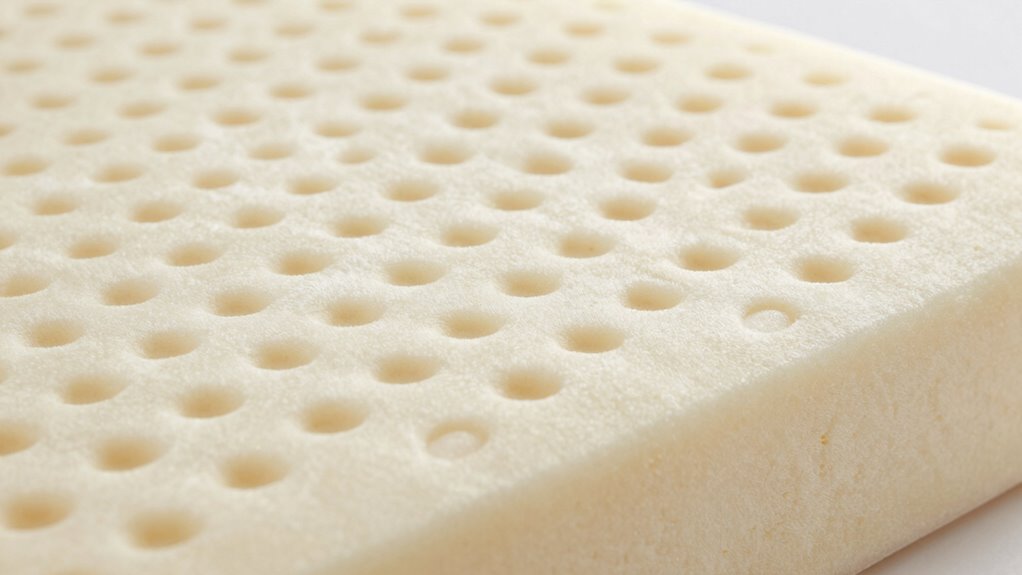
When choosing a memory foam topper with better heat features, look for materials with good breathability that allow air to flow freely. Keep in mind that foam density can influence heat retention, with lower densities often offering cooler sleep. Additionally, check if the topper has ventilation features or design elements that promote airflow and dissipate heat effectively.
Material Breathability Features
Choosing a memory foam topper with better heat features starts with understanding its breathability. Material breathability influences how well heat dissipates and moisture escapes, keeping you cooler overnight. To identify this, look for:
- Open-cell structures that promote airflow enhancement, preventing heat buildup.
- Ventilation channels or perforations in the foam that boost air circulation.
- Breathable covers made from materials like bamboo or cotton, which improve overall airflow.
These features help reduce trapped heat and moisture, making your sleep environment more comfortable. Better material breathability ensures heat doesn’t get trapped, while airflow enhancement keeps cool air moving through the topper. When choosing your topper, prioritize these aspects to enjoy a cooler, more breathable sleep surface.
Foam Density Impact
Selecting the right foam density can substantially influence how well your memory foam topper manages heat. Higher foam density often leads to increased heat retention because denser foam traps more body heat, making it feel warmer. Conversely, lower foam density tends to promote better airflow, reducing heat buildup and keeping you cooler throughout the night. If your goal is to minimize heat retention, opt for a topper with a lower foam density while still providing adequate comfort and support. Keep in mind that denser foam may offer better durability but can also trap more heat, so balancing density with your personal comfort preferences is essential. Choosing the appropriate foam density helps you find a topper that offers both comfort and temperature regulation.
Ventilation Techniques Used
To improve heat dissipation in your memory foam topper, look for models that incorporate advanced ventilation techniques. These features boost memory foam breathability and help regulate temperature. When selecting, consider these methods:
- Perforated designs with small holes allow air to flow through, enhancing breathability and cooling.
- Gel-infused memory foam incorporates cooling gel infusions that absorb and dissipate heat effectively.
- Open-cell structure promotes better airflow within the foam, preventing heat buildup and maintaining a cooler surface.
How to Balance Density and Heat Retention for Better Sleep?

Balancing density and heat retention in your memory foam topper is essential for a comfortable night’s sleep. If your topper is too dense, it can trap heat, causing discomfort. To improve airflow and cooling, choose gel infused toppers that disperse heat away from your body. Additionally, look for cooling fabrics integrated into the cover or topper surface, which help wick moisture and promote breathability. Consider selecting a medium-density foam, which offers adequate support without excessive heat retention. Using a breathable mattress protector or adding a breathable pillowcase can further enhance airflow. These strategies combine to create an optimum balance, ensuring your memory foam topper provides both comfort and temperature regulation for restful sleep.
Frequently Asked Questions
Can a Higher Density Topper Cause Excessive Heat Buildup?
Yes, a higher density topper can cause excessive heat buildup because denser foam tends to trap more heat, affecting your sleeping comfort. This may also impact foam durability over time. If you sleep in a position that presses more on certain areas, the heat buildup can be even more noticeable. To avoid this, choose a density that balances support with breathability, ensuring a cooler and more comfortable sleep environment.
Is There a Recommended Density for Hot Sleeper Comfort?
For hot sleepers, a foam topper with a density around 3.0 to 4.0 pounds per cubic foot offers good balance. It helps regulate sleep temperature while maintaining foam durability. Higher densities might trap heat, causing discomfort, so sticking to this range can keep you cooler throughout the night. Remember, choosing a topper with breathable materials and cooling features also enhances comfort and supports better sleep temperature management.
How Does Topper Density Affect Movement Transfer?
A higher-density topper is like a fortress, reducing movement transfer and providing better pressure distribution. You’ll notice less disturbance when your partner moves, making your sleep more restful. Keep in mind, though, that increased density can affect durability considerations, so choose a balance that offers both effective motion isolation and long-lasting support. This way, you enjoy peaceful nights and a durable topper that keeps up with your sleep habits.
Are There Memory Foam Toppers With Cooling Gel or Infused Materials?
Yes, you can find memory foam toppers with gel-infused or cooling technology. These toppers incorporate gel particles or other infused materials designed to absorb and dissipate heat, helping you stay cooler throughout the night. By using cooling technology, they enhance comfort, especially if you tend to sleep hot. Look for options labeled as gel-infused or with cooling technology to guarantee you get a topper that promotes better temperature regulation.
Does Higher Density Memory Foam Require More Maintenance?
Higher density memory foam generally requires more maintenance because it stresses durability and can be firmer, which might lead to quicker wear if not cared for properly. You should rotate your topper regularly and keep it clean to maintain its firmness options and extend its lifespan. Proper ventilation also helps manage heat buildup, ensuring your topper stays comfortable and supportive longer, regardless of its density.
Conclusion
To find the perfect memory foam topper, consider density and heat, support and comfort, durability and temperature control. Balance these factors to enhance your sleep, choose wisely to suit your needs, and prioritize materials that manage heat effectively. By understanding the relationship between density and heat retention, you can customize your sleep experience, improve your rest, and wake up refreshed. Ultimately, making informed choices leads to better sleep, better health, and better days.