
When choosing a mattress, both coil gauge and coil count matter, but they serve different roles. Coil gauge determines the thickness of each spring—lower gauge means thicker, firmer support, while higher gauge offers a softer feel. Coil count influences support and durability; more springs generally mean longer-lasting comfort. To find the best fit, it’s important to balance these two specs, and you’ll discover how they work together as you explore further.
Key Takeaways
- Coil gauge determines spring thickness; lower gauge (thicker wire) offers firmer support, while higher gauge (thinner wire) provides a softer feel.
- Coil count affects support and durability; more coils generally mean better weight distribution and longer-lasting mattresses.
- Thicker coils (lower gauge) contribute to firmness, but coil count influences how evenly support is distributed.
- For optimal comfort, balance high coil count with appropriate coil gauge based on firmness preferences.
- Overall mattress quality depends on both coil gauge and count, along with material quality and manufacturing standards.

Bednew Queen Size Mattress, 14 Inch Hybrid Pillow Top Mattresses in a Box with Gel Memory Foam & Individually Pocket Coils, Medium Firm Mattress for Back Pain, Pressure Relief, Fiberglass Free
【Pillow Top Mattress】Bednew 14-inch queen size mattress provides comfort and support for the body, with wrapped coils and…
As an affiliate, we earn on qualifying purchases.
As an affiliate, we earn on qualifying purchases.
What Does Coil Gauge Say About Mattress Support and Firmness?
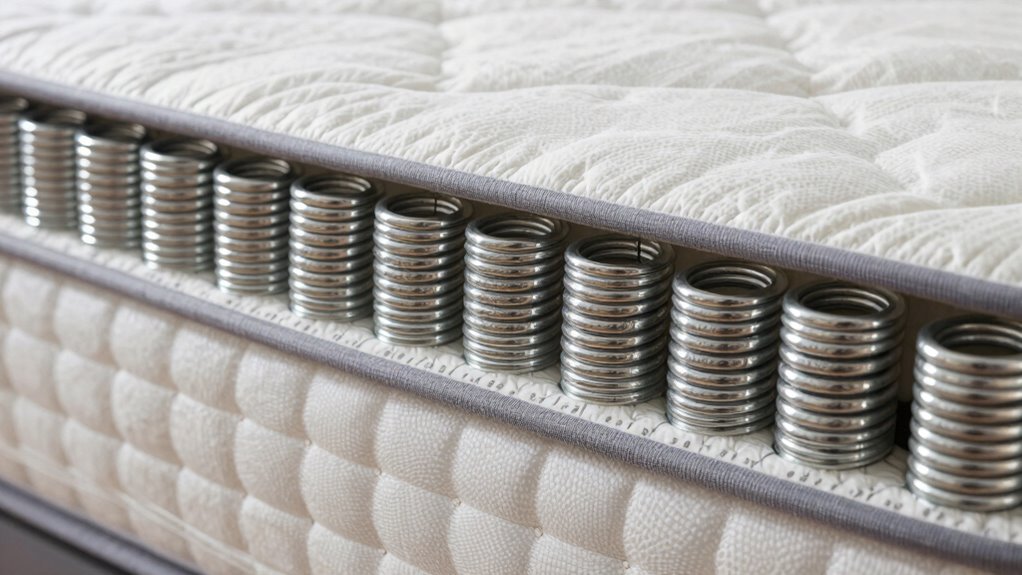
When it comes to understanding mattress support and firmness, coil gauge plays a critical role. The coil gauge indicates the thickness of the springs; a lower gauge means thicker coils, which generally provide more support and a firmer feel. Conversely, higher gauge springs are thinner, offering a softer, more plush sensation. If you prefer a mattress with strong support and minimal sinkage, look for a lower coil gauge. For a softer, more cushioned feel, opt for a higher gauge. Keep in mind that coil gauge directly influences mattress firmness, affecting how supportive or plush your sleep surface feels. Additionally, understanding the coil count can help determine the overall durability and comfort, as a higher coil count often correlates with better support and longer-lasting mattresses. The material quality of the coils also impacts the longevity and comfort of the mattress, making it an important consideration alongside coil gauge. A higher-quality manufacturing standard can ensure that the coils maintain their support and resilience over time. Being aware of manufacturing standards can help you select a mattress that maintains its support over time and ensures a better sleep experience. Furthermore, the construction design of the coil system can influence how evenly support is distributed across the mattress surface, enhancing comfort and durability. Understanding this helps you choose a mattress tailored to your comfort preferences and support needs.

Signature Design by Ashley Chime 12 Inch Hybrid Full Mattress, Memory Foam Mattresses with Lumbar Support, High-Density Foam & Pocketed Coils for Comfort & Back Support, Mattress in a Box, Full Size
HYBRID COMFORT DESIGN: This full mattress combines gel memory foam, ultra‑plush quilt foam and pocketed coils to create…
As an affiliate, we earn on qualifying purchases.
As an affiliate, we earn on qualifying purchases.
How Many Springs Are in Your Mattress? Decoding Coil Count

The number of springs in a mattress, or coil count, directly impacts its support, durability, and overall feel. A higher coil count generally means better support and longevity because more springs distribute your weight evenly. Spring material also matters; steel springs are common, but the quality can influence durability. Keep in mind your mattress weight—heavier sleepers benefit from higher coil counts to prevent sagging and maintain comfort over time. A mattress with fewer coils might feel softer initially but could wear out faster under pressure. Conversely, a higher coil count provides a firmer, more supportive surface that adapts to your body. When decoding coil count, consider both the spring material and your mattress weight to choose a mattress that offers the right support and durability. Additionally, understanding coil gauge can help you gauge the springs’ thickness and strength, further informing your mattress choice. Moreover, selecting the right support system enhances overall comfort and longevity of your mattress. Recognizing the importance of spring arrangement can also help you identify how the coils are configured to provide targeted support. Furthermore, paying attention to the spring configuration can lead to a more personalized sleep experience. Being aware of how spring support interacts with your sleeping position can significantly influence your comfort level.

Vumece 12 Inch Queen Mattress, Hybrid Mattress Queen Size Mattress in a Box with Pocketed Spring & Gel Memory Foam for Support, Pressure Relief, Reinforced Edge, CertiPUR-US Certified – Medium Firm
Relieves Back Pain Discomfort: This hybrid mattress use a combination of memory foam and coils. Foam conforms to…
As an affiliate, we earn on qualifying purchases.
As an affiliate, we earn on qualifying purchases.
How Do Coil Gauge and Coil Count Work Together to Affect Comfort and Durability?

Coil gauge and coil count work together to shape your mattress’s comfort and durability by balancing support and softness. A lower coil gauge means thicker wire, resulting in higher spring tension that provides firmer support and enhances material durability. Conversely, a higher gauge produces thinner springs, offering a softer feel but potentially less durability. Meanwhile, coil count influences how evenly support is distributed; more coils typically mean better weight distribution and increased longevity. When combined, these specs determine how well your mattress handles daily use, maintaining comfort without sagging. Higher coil count with appropriate gauge ensures your mattress remains supportive and durable over time. Understanding this synergy helps you select a mattress that offers lasting comfort and resilience.

Avenco 12 Inch Queen Mattress, Hybrid Mattress with Smarts Coil™ Pocket Springs for Targeted Support and NanoGel™ Memory Foam for Cool Night Sleep, Motion Isolation for Couples, CertiPUR-US Certified
Targeted Support: Avenco Hybrid Mattress features SmartS Coil pocket springs that offer targeted support and adapt to body…
As an affiliate, we earn on qualifying purchases.
As an affiliate, we earn on qualifying purchases.
Which Mattress Specification Should You Focus on When Buying?

Choosing the right mattress starts with understanding which features impact your comfort and longevity the most. When shopping, focus on bed frame compatibility to make sure your mattress fits securely and supports proper alignment. Consider mattress material choices, as they influence comfort, breathability, and durability. For example, memory foam offers pressure relief, while innerspring provides bounce and support. Your preferred sleeping position and personal preferences guide which materials suit you best. Avoid fixating solely on coil gauge or coil count; instead, evaluate the overall build and how the mattress aligns with your needs. A well-chosen mattress that matches your bed frame and material preferences ensures better sleep quality and longevity, making your investment worthwhile. Additionally, understanding the bed-in-a-box trend can help you find high-quality options that are convenient to purchase and transport.
Myths and Facts About Coil Gauge and Coil Count

Many buyers assume that coil gauge and coil count are straightforward indicators of a mattress’s quality, but this isn’t always the case. While a higher coil count can suggest better support, it doesn’t guarantee spring longevity or adherence to manufacturing standards. Likewise, a lower coil gauge indicates thicker wire, which may improve durability, but doesn’t automatically mean better comfort. Additionally, understanding the brewing methods can help consumers make more informed decisions about their mattress choices.
How to Balance Coil Gauge and Coil Count for Better Sleep
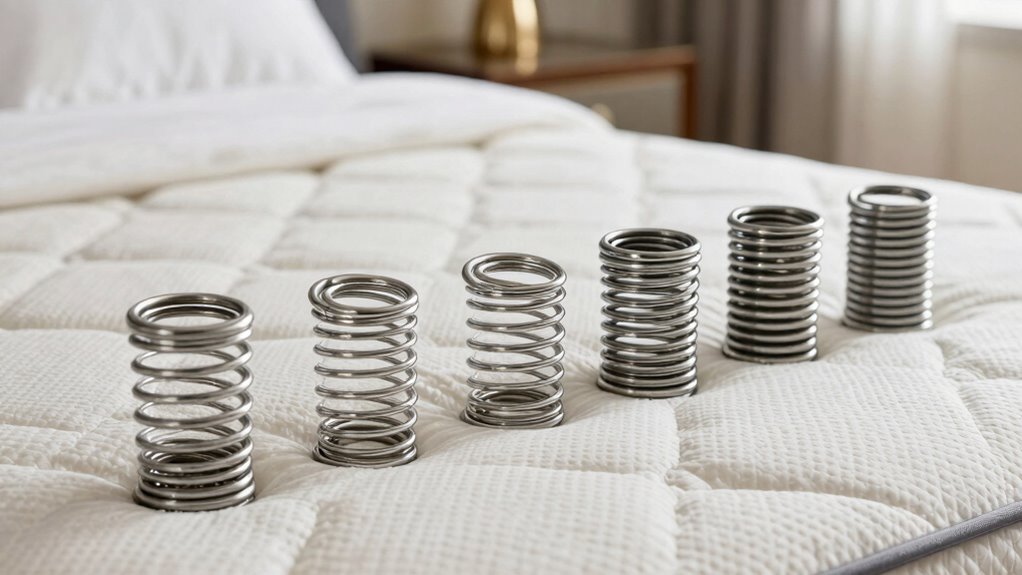
Achieving a comfortable and supportive mattress involves balancing coil gauge and coil count effectively. To optimize your sleep, consider these tips:
Balancing coil gauge and count is key to a supportive, comfortable mattress.
- Match coil gauge to sleep position—softer gauges suit side sleepers for pillow softness, while firmer gauges support stomach or back sleepers.
- Increase coil count for better overall support and durability, especially if you prefer a firmer feel.
- Use a lower coil gauge (thicker wire) for added firmness, or a higher gauge (thinner wire) for more plushness.
- Combine an appropriate coil count with the right gauge to ensure your mattress adapts to your movement and pressure points.
Finding the right balance helps improve sleep quality, ensuring you wake up refreshed and well-supported.
Frequently Asked Questions
How Does Coil Gauge Impact Mattress Weight and Portability?
A lighter coil gauge increases mattress weight and improves portability because thinner coils contribute less mass. This makes your mattress easier to move and handle. However, lower gauge coils also offer greater flexibility, enhancing comfort, but they may diminish durability over time. Conversely, thicker coils weigh more and are sturdier, but this can make your mattress heavier and less portable. Balancing coil gauge for your needs ensures comfort and ease of transport.
Can Coil Count Influence Mattress Motion Isolation Performance?
Yes, coil count can influence mattress motion isolation performance. A higher coil count means more coils, which can better distribute weight and reduce motion transfer. While coil gauge affects firmness and support, increasing coil count improves the mattress’s ability to absorb movement, making it less disruptive if you share the bed. So, both coil gauge and coil count play roles, but a higher coil count often enhances motion isolation.
Is There an Ideal Coil Gauge Range for Specific Sleep Positions?
For better coil gauge comfort tailored to your sleep position, aim for a range between 12 and 15. If you’re a side sleeper, a softer, higher gauge (around 15) offers more cushioning. Back sleepers benefit from a medium gauge (around 13), providing a balance of support and comfort. Stomach sleepers may prefer a lower gauge (around 12) for firmer support. Adjust your choice based on your preferred sleep position for ideal comfort.
How Do Coil Gauge and Count Affect Mattress Temperature Regulation?
You might think coil gauge and count don’t impact mattress temperature, but think again. Thinner coils (higher gauge) allow better airflow, keeping you cooler, while a higher coil count enhances breathability and heat dissipation. So, if you’re sweating at night, check those specs. You could be sleeping on a mattress with ideal coil gauge and count, making a cool night’s sleep surprisingly simple.
Do Higher Coil Counts Always Mean Better Mattress Quality?
Higher coil counts don’t always mean better mattress quality, but they can improve coil durability and support. More coils typically distribute weight more evenly, enhancing comfort and longevity. However, increasing coil count also raises manufacturing costs, which might be reflected in the price. So, while a higher coil count can be beneficial, it’s not the sole indicator of quality—consider overall construction and materials for the best choice.
Conclusion
Ultimately, finding the perfect mattress is like tuning a fine instrument—you want harmony between coil gauge and count. While one sets the tone for support, the other adds depth and resilience. Focus on what feels right for you, blending comfort and durability with gentle precision. With a little patience, you’ll discover the melody of better sleep, where every night becomes a peaceful lullaby, softly guiding you into restful dreams.