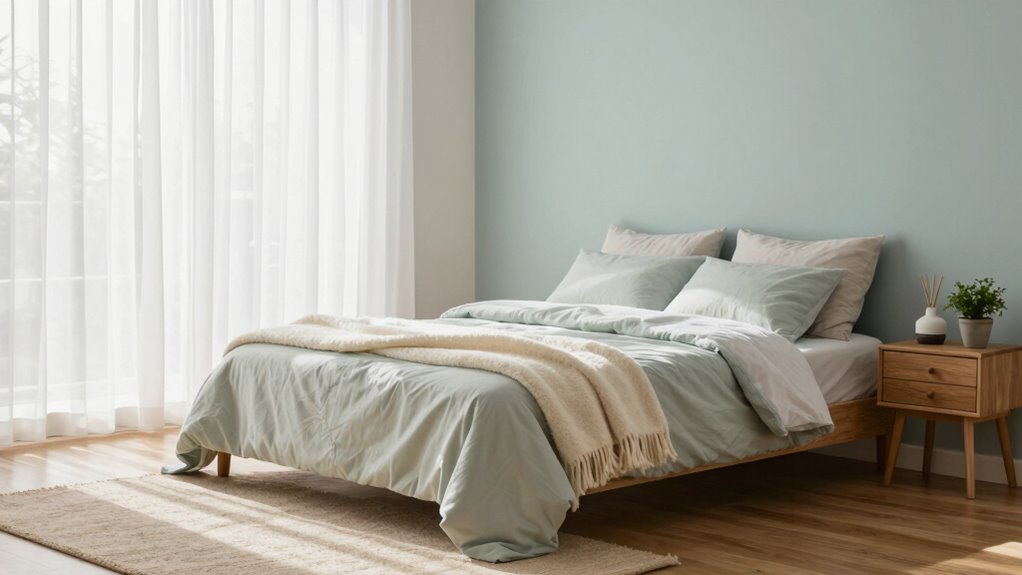

For a bedroom suited for sensitive households, choose hard surfaces like hardwood or tile instead of carpets, and opt for hypoallergenic, low-pile carpets that are cleaned regularly. Use natural, breathable bedding with hypoallergenic covers, and wash everything frequently. Select paints with low VOCs, and pick furniture made from solid wood or formaldehyde-free materials. Improve air quality with HEPA filters, proper ventilation, and maintain humidity around 40-50%. Keep going for more tips to make your space safer.

Get home appliances delivered free with Prime
- Fast, free delivery on millions of items
- Prime Video, Amazon Music and more included
- Member-only deals all year
Key Takeaways
- Use hypoallergenic, low-pile carpets and washable blinds to reduce dust and allergen buildup.
- Select bedding with natural, breathable, and hypoallergenic materials, washing frequently at high temperatures.
- Choose low or zero-VOC paints and furniture made from solid wood or formaldehyde-free composites.
- Maintain indoor humidity around 40-50% with dehumidifiers to prevent mold and dust mites.
- Incorporate HEPA air purifiers, proper ventilation, and regular cleaning to improve indoor air quality.
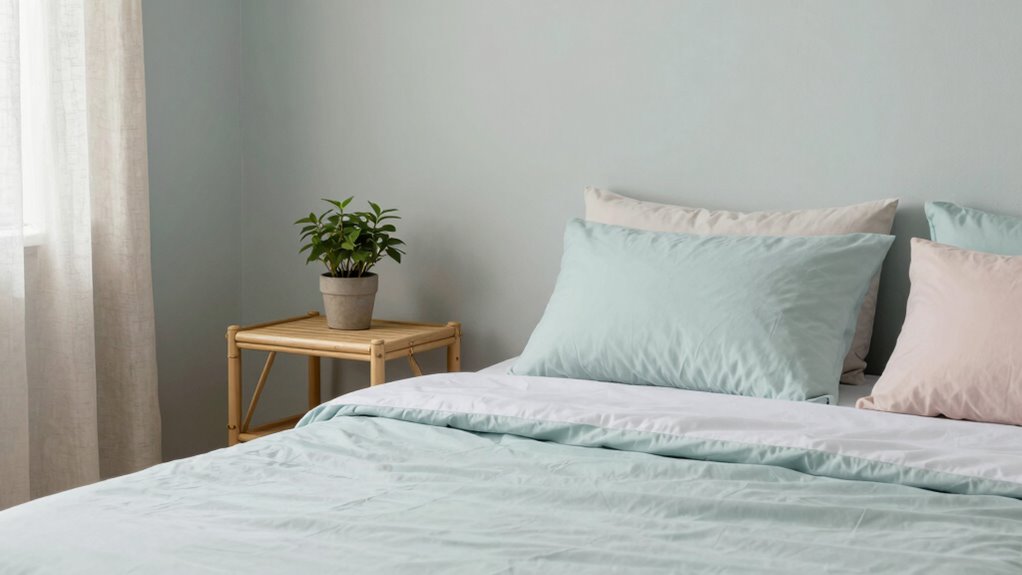
Creating a safe and comfortable bedroom for sensitive households requires careful selection of materials that minimize allergens and irritants. When focusing on air quality and allergen control, choosing the right materials becomes essential. You want to create a space where breathing is effortless, free from dust, mold, and airborne irritants that can trigger allergies or asthma. To achieve this, start with your flooring. Opt for hard surfaces like hardwood, laminate, or tile instead of carpets, which trap dust, pet dander, and pollen. If you prefer carpets, choose low-pile options made from hypoallergenic fibers and ensure they are thoroughly cleaned regularly to reduce allergen buildup.
Your bedding plays a vital role in allergen control. Use hypoallergenic mattress and pillow covers that prevent dust mites from infiltrating. Select pillows and mattresses made from natural, breathable materials like organic cotton or wool, which are less likely to harbor mold or dust mites compared to synthetic options. Wash bedding frequently in hot water, ideally at least 130°F, to kill dust mites and remove allergens. For window treatments, avoid heavy drapes that can trap dust and opt for washable blinds or shades made from non-porous materials. Ensuring proper ventilation can also significantly improve indoor air quality by reducing the buildup of airborne irritants. Additionally, regularly inspecting and maintaining HVAC systems ensures they are functioning properly and not circulating allergens throughout the room. Incorporating air exchange systems can further enhance airflow and reduce indoor pollutant levels. Using air quality monitors can help track allergen levels and maintain optimal air conditions.
Use hypoallergenic covers and natural, breathable bedding to reduce dust mites and allergens effectively.
When it comes to paint and wall treatments, choose low or zero-VOC (volatile organic compound) paints to improve air quality and prevent the release of harmful fumes. These paints help maintain a healthy indoor environment and reduce irritants that can affect sensitive individuals. For furniture, look for pieces made from solid wood or formaldehyde-free composite materials. Avoid pressed wood products that often contain volatile chemicals, which can off-gas into the air and compromise allergen control.
Air purifiers with HEPA filters can dramatically improve air quality by trapping airborne allergens like pollen, pet dander, and dust particles. Keep the bedroom well-ventilated by opening windows when possible, and consider adding an air purifier to continuously filter the air. Maintaining proper humidity levels—around 40-50%—also helps control mold growth and dust mites. Using a dehumidifier can make a big difference in maintaining these levels. Incorporating indoor air quality improvements such as ventilation systems can further reduce airborne irritants and enhance overall air cleanliness.
As an affiliate, we earn on qualifying purchases.
Frequently Asked Questions
Are There Hypoallergenic Options for Bedroom Furniture?
Yes, you can find hypoallergenic options for bedroom furniture. Look for pieces made with hypoallergenic fabrics like organic cotton or wool, which resist dust mites and allergens. Opt for furniture with non-toxic finishes to prevent chemical sensitivities. These materials help create a healthier sleeping environment and reduce allergy symptoms, making your bedroom safer and more comfortable for sensitive households. Always check product labels for hypoallergenic and non-toxic certifications.
How Often Should Bedding Be Washed for Allergy Prevention?
You should wash your bedding at least once a week to prevent dust mites and reduce allergens. Using allergen-proof bedding can make a significant difference by creating a barrier against dust mites and other irritants. Regular washing helps keep allergens at bay and supports dust mite prevention. Be sure to wash all bedding, including pillowcases, sheets, and comforters, in hot water for ideal allergy relief and a healthier sleeping environment.
Can Natural Materials Reduce Indoor Allergens?
Think of natural materials as a revitalizing breeze, clearing the fog of allergens. Natural fibers like cotton, wool, and linen can reduce indoor allergens by trapping fewer dust mites and mold, consequently improving indoor air quality. Choosing these materials for bedding, curtains, and furniture allows you to create a cleaner, healthier environment. You’ll notice less sneezing and irritation, making your bedroom a true sanctuary for sensitive households.
What Are the Best Air Purifiers for Sensitive Households?
You should choose air purifiers with advanced air purifier technology and allergen filtration systems. Look for models with HEPA filters that capture tiny particles like dust, pollen, and pet dander effectively. Some units also feature activated carbon filters to reduce odors. By selecting a purifier with these features, you create a cleaner, healthier environment that minimizes allergens, making your bedroom safer and more comfortable for sensitive households.
Are Chemical-Free Paints Safe for Bedroom Walls?
Yes, chemical-free paints are safe for bedroom walls, especially if you choose non-toxic finishes and VOC-free coatings. These paints don’t release harmful fumes, making them ideal for sensitive households. When you opt for VOC-free coatings, you reduce the risk of respiratory irritation and allergic reactions. Always check product labels to verify they’re free from chemicals and safe for indoor use, creating a healthier, more comfortable space for you and your family.
As an affiliate, we earn on qualifying purchases.
Conclusion
By carefully selecting your bedroom materials, you’re setting the stage for a healthier, more comfortable space. Remember, it’s all about paying attention to the details and making informed choices. Don’t bite off more than you can chew—start small, and gradually upgrade your bedroom. With patience and persistence, you’ll create a sanctuary that’s truly sensitive to your needs. After all, Rome wasn’t built in a day, and a cozy, safe bedroom takes time too.
As an affiliate, we earn on qualifying purchases.
As an affiliate, we earn on qualifying purchases.
Cold & flu season Picks
humidifiers
As an affiliate, we earn on qualifying purchases.