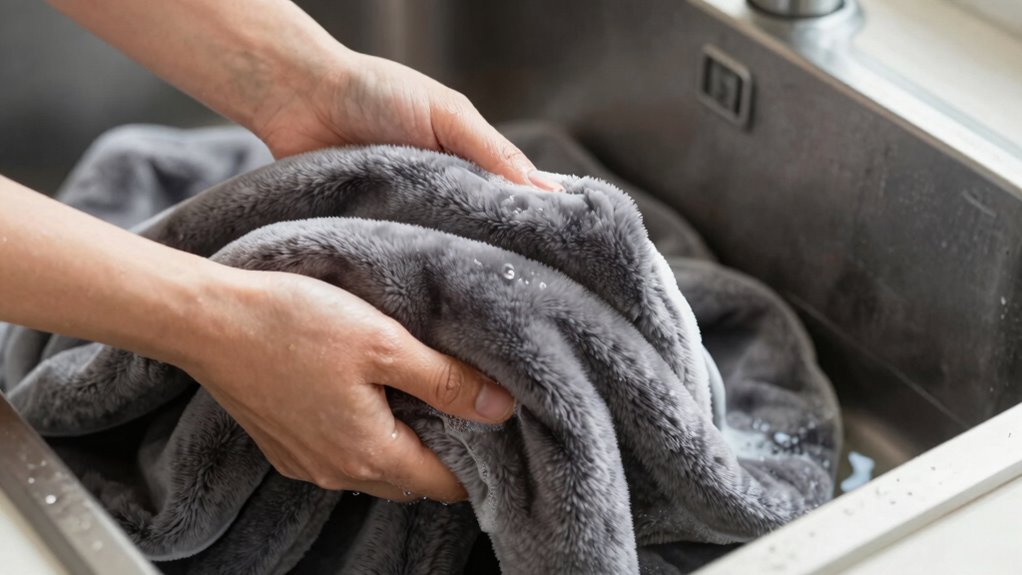

To wash your weighted blanket safely, first check its care label and fabric type. Use a gentle cycle with cold water and a mild, eco-friendly detergent for machine washing, or opt for hand washing if it’s delicate. Avoid overloading the machine and never use bleach or harsh chemicals. Air dry flat or hang in a well-ventilated space, and fluff it gently afterward. For expert tips and detailed steps, explore more tips below.
Key Takeaways
- Always check the care label for specific washing instructions before cleaning.
- Use cold water and a gentle cycle to prevent fabric damage and dye fading.
- Opt for mild, hypoallergenic detergent, avoiding bleach or harsh chemicals.
- Hand wash if the blanket is delicate, or if machine washing isn’t recommended by the manufacturer.
- Air dry flat or hang in a well-ventilated area, avoiding high heat to maintain the blanket’s integrity.
Check Your Blanket’s Material and Care Labels
Before you begin washing your weighted blanket, it’s vital to check the care labels and material tags. These labels provide essential information about fabric dyeing and thread replacement, which can influence your cleaning method. Some blankets are made from delicate fabrics that may bleed or fade if washed improperly, so knowing the fabric’s dyeing process helps prevent color transfer. Also, check if the label mentions the need for thread replacement or reinforcement, especially around seams, to avoid unraveling during washing. Understanding fabric types can help determine the safest cleaning approach. Additionally, being aware of whether the fabric is prone to shrinking or stretching can help you select the appropriate washing settings, ensuring the blanket maintains its original size and shape. It’s also helpful to consider the washing instructions provided, as they often specify the ideal water temperature and cycle to prevent damage. Properly laundering weighted blankets can extend their lifespan and keep them feeling plush and comfortable. When in doubt, consulting the care label can help you choose the most effective cleaning method. Following these instructions ensures you won’t damage the fabric or compromise the blanket’s integrity. Taking a moment to review the care labels saves you from potential mishaps and preserves your blanket’s quality over time. Proper care starts with understanding its specific material and construction details.
How to Prepare Your Blanket for Washing
Start by checking the care label to confirm washing instructions. Next, remove any debris gently and inspect for loose threads, securing them to prevent further damage. Taking these steps guarantees your blanket is properly prepared for a safe wash. Additionally, ensure you understand your blanket’s proper maintenance to avoid damage during cleaning. Knowing the appropriate washing methods can help prolong the life of your weighted blanket and keep it in optimal condition. Proper cleaning techniques are essential for preserving the quality and comfort of your blanket over time, and being aware of your safe operating procedures ensures you handle the process confidently and correctly. Understanding fabric care guidelines can further assist in preventing accidental damage during cleaning.
Check Care Label
Have you checked the care label on your weighted blanket? This step is essential to understanding the fabric care instructions and recommended washing techniques. The label provides specific guidance on water temperature, cycle type, and whether the blanket can be machine washed or needs dry cleaning. Ignoring these instructions can damage delicate fabrics or cause the filling to shift. Look for symbols or written instructions indicating how to handle your blanket properly. If the care label advises gentle washing, use a mild detergent and a delicate cycle. For blankets with special fabrics or fillings, follow the manufacturer’s recommendations precisely. Taking a moment to review the care label ensures your blanket stays intact and retains its comfort and effectiveness. Properly understanding fabric care can extend the lifespan of your weighted blanket and maintain its soothing qualities. Additionally, considering proper washing techniques can help prevent damage and preserve the blanket’s structural integrity over time. Being aware of the importance of regular maintenance can also help keep your weighted blanket in optimal condition for longer periods. Incorporating appropriate cleaning methods based on the fabric type can further ensure the longevity and comfort of your blanket. Being mindful of fabric-specific guidelines is crucial for safeguarding your investment and ensuring consistent performance.
Remove Debris Carefully
Removing debris from your weighted blanket is an important step to guarantee a thorough and safe wash. Start by inspecting the fabric carefully, looking for loose lint, pet hair, or dirt. Use a lint roller or adhesive tape to gently lift debris without damaging the fabric. Alternatively, a soft brush can help dislodge stubborn particles. Be thorough during debris removal, especially in seams and corners. Proper debris removal prevents dirt from settling deeper into the fibers and reduces the risk of clumping during washing. Additionally, understanding fabric care guidelines can help maintain the blanket’s integrity over time. Being mindful of the materials used in your blanket can also influence how you clean it effectively. Consulting industry standards and recommended cleaning methods can further ensure you avoid damaging your investment. For example, knowing the recommended washing temperature can prevent fiber deterioration and preserve the blanket’s appearance.
Secure Loose Threads
Before washing your blanket, it’s essential to secure any loose threads to prevent further fraying or unraveling. Carefully examine the edges and seams for any loose or frayed threads. Use a small pair of scissors to trim away excess or loose fibers if necessary, but avoid cutting too close to the fabric. For loose threads that are still attached, gently secure them with a needle and matching thread, stitching them back into the fabric. This step helps prevent unraveling during washing and prolongs your blanket’s lifespan. Additionally, understanding fabric care tips can further assist in maintaining the blanket’s durability over time. Properly preparing your blanket by thread reinforcement can significantly reduce the risk of damage during the wash cycle. Being aware of piercing aftercare principles can also help you handle delicate fabrics gently and avoid unnecessary stress on the material.
Should You Machine Wash or Hand Wash Your Weighted Blanket?
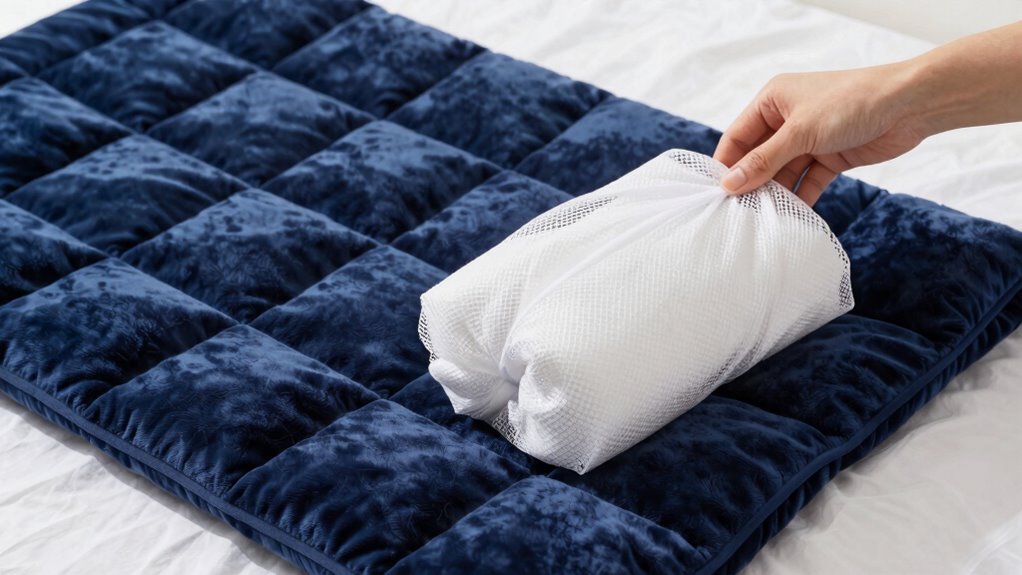
Deciding whether to machine wash or hand wash your weighted blanket depends on factors like fabric type and care instructions. Your washing machine’s settings can also affect how gently your blanket is cleaned, especially with delicate fabrics. Hand washing offers more control and is gentler on sensitive materials, but machine washing can save time if done correctly.
Fabric Type Considerations
The fabric type of your weighted blanket plays a crucial role in determining whether you should machine wash or hand wash it. Different fabrics vary in durability and dye stability, affecting how gentle or rigorous your cleaning method should be. For delicate fabrics like silk or certain microfiber blends, hand washing is usually safer to prevent damage or color fading. Conversely, sturdy fabrics such as cotton or polyester tend to be more durable and can withstand machine washing.
- Fabric durability: Choose a washing method that matches the strength of your fabric to avoid tears or fraying.
- Dye stability: More delicate dyes may fade or bleed with machine washing, so hand washing preserves color vibrancy.
- Fabric care labels: Always check labels for specific washing instructions to protect your blanket’s integrity.
Washing Machine Settings
Choosing the right washing machine settings is essential to keep your weighted blanket in good condition. Use a gentle cycle to prevent damage to the fabric and inner fill, especially if you’re concerned about fabric softeners affecting the material. Opt for cold water to avoid shrinking or weakening the fabric. Avoid using high spin speeds, as they can put stress on the stitching and filling. Be mindful of washing frequency; washing too often can wear out the fabric and reduce the blanket’s lifespan. If your machine has specific settings for bulky items or bedding, use those for better care. Always check the manufacturer’s label for recommended settings, and steer clear of harsh detergents to maintain softness and durability.
Hand Washing Benefits
While machine washing can be convenient, hand washing offers significant benefits for your weighted blanket. Hand washing minimizes the risk of fabric softeners causing buildup that can reduce the blanket’s effectiveness. It also provides gentler care, preventing damage or tears, especially for delicate fabrics. Additionally, hand washing helps prevent color bleeding, which can occur in machine cycles. You have better control over cleaning, ensuring you avoid harsh detergents or excessive agitation that could compromise the blanket’s weight or fill. Taking the time to hand wash keeps your blanket in excellent condition, prolonging its lifespan. Overall, this careful approach ensures your weighted blanket remains soft, vibrant, and functional for years to come.
How to Pick a Gentle Detergent for Your Blanket
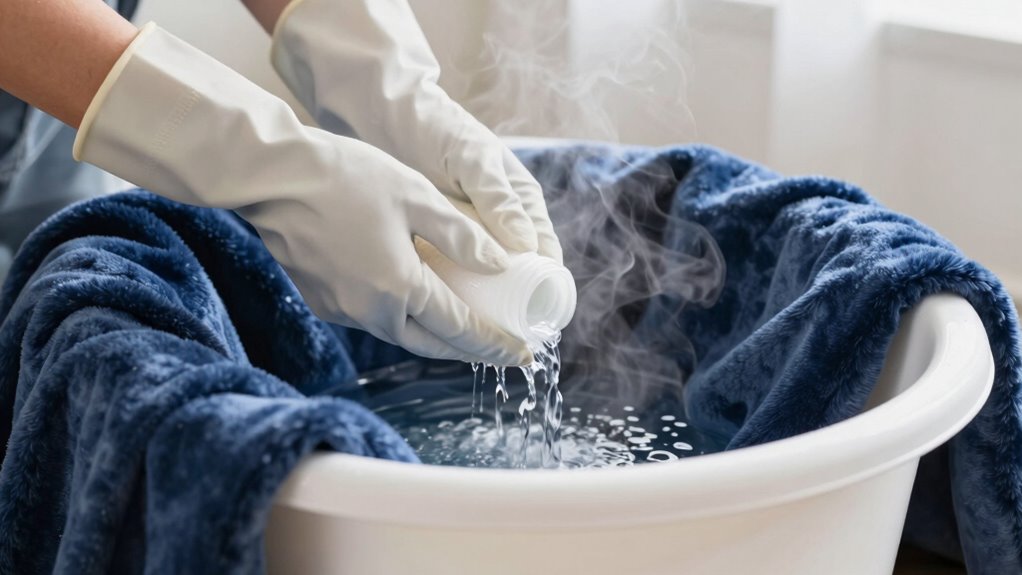
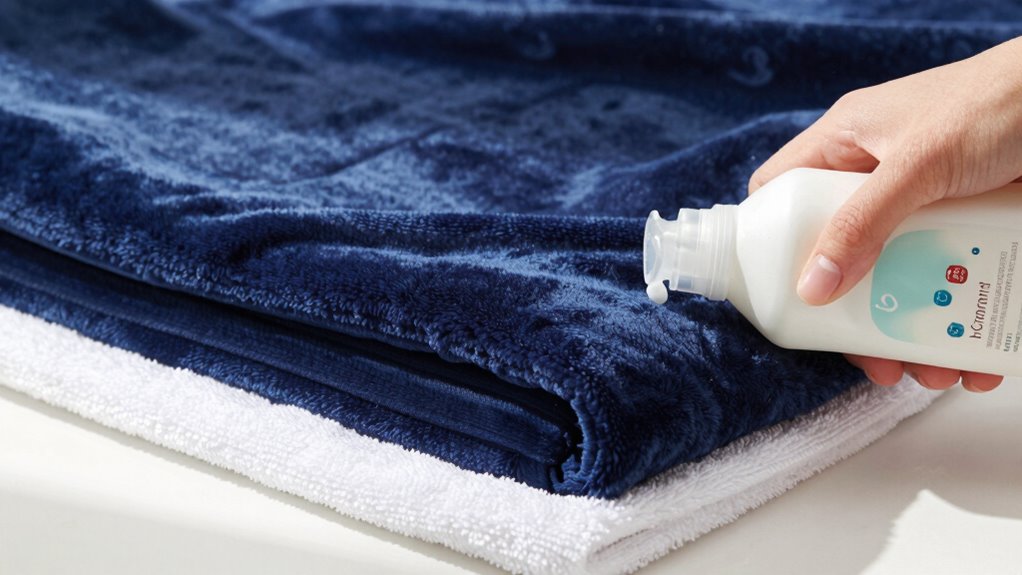
Ever wondered how to find a gentle detergent that won’t damage your weighted blanket? Start by checking the detergent ingredients. Look for options free of harsh chemicals, bleach, and optical brighteners, which can degrade fabrics over time. Instead, choose a mild, hypoallergenic detergent designed for delicate fabrics or baby clothes. Eco-friendly options are also a smart choice—they use natural ingredients that are gentle on your blanket and better for the environment. Avoid detergents with strong fragrances or dyes, as these can cause skin irritation or damage the fabric’s fibers. Read labels carefully to ensure the product is safe for delicate or sensitive materials. By selecting a gentle, eco-friendly detergent, you help preserve your blanket’s integrity while keeping it clean and fresh.
How to Wash Your Weighted Blanket Step by Step
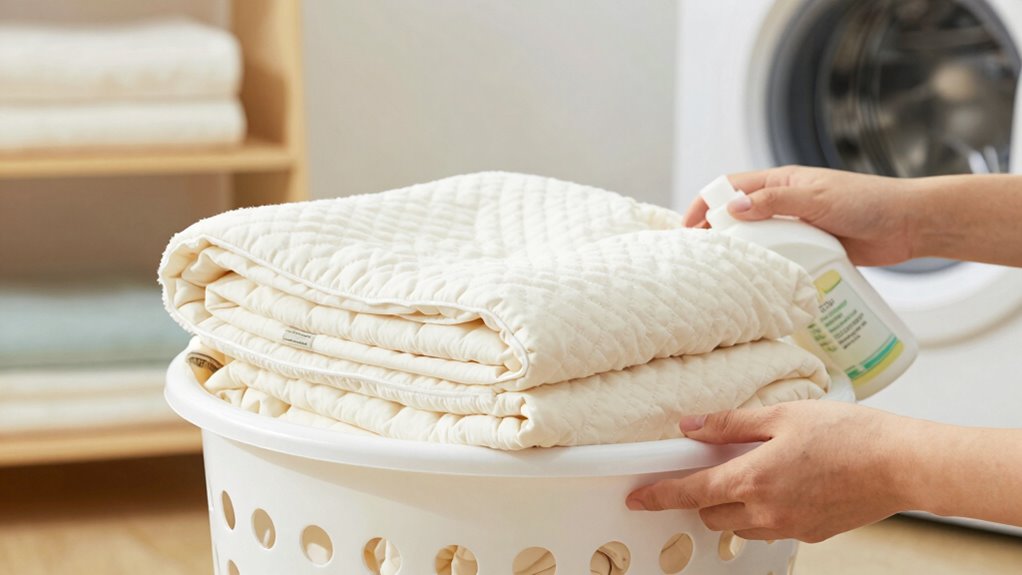
To properly wash your weighted blanket, start by checking the care label for specific instructions. This guarantees you respect the fabric’s durability and avoid damage. Next, consider the washing frequency; washing too often can wear out the fabric, while infrequent washing keeps it fresh.
Here’s a step-by-step guide:
- Use a gentle cycle with cold water to protect the fabric and stuffing.
- Choose a mild, suitable detergent, as harsh chemicals can weaken the fabric over time.
- Avoid overloading the washer to prevent unnecessary stress on the material and maintain even cleaning.
Should You Air Dry or Tumble Dry Your Blanket?

After completing the washing process, you’ll need to decide how to dry your weighted blanket. Air drying is gentle and helps preserve the fabric and filling, making it the safest option. Lay the blanket flat on a clean, dry surface or hang it to dry, ensuring good airflow to prevent mold or mildew. Avoid direct sunlight to prevent fading. Tumble drying can be faster, but only if your blanket’s care label confirms it’s safe. Use a low heat or air-dry setting to prevent damage or clumping of the filling. Keep in mind that tumble drying might cause the filling to shift or clump over time, so air drying is generally recommended for longevity. Choose the method that best suits your blanket’s material and your patience.
How to Fluff and Store Your Blanket After Washing
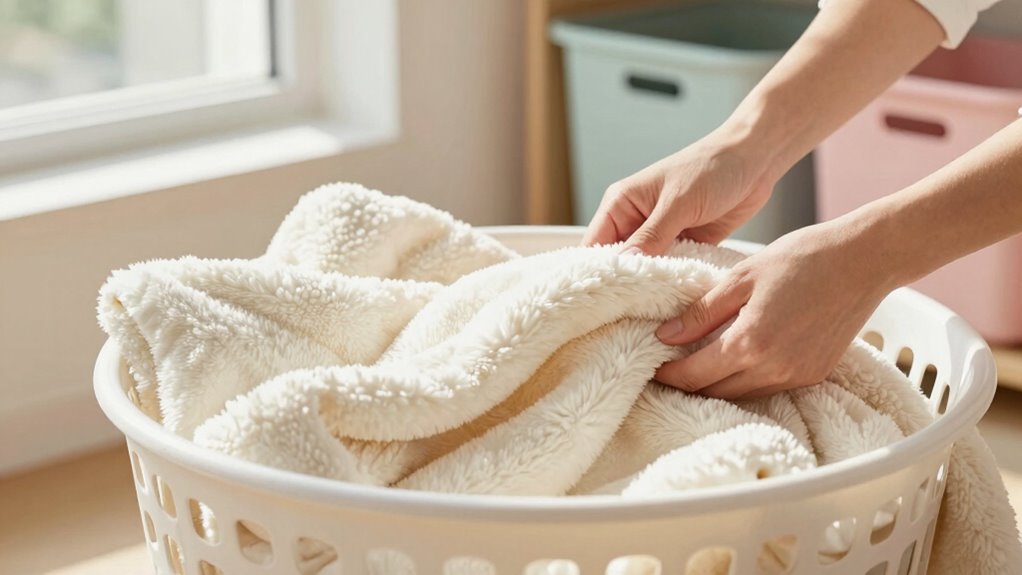
Once your blanket is dry, gently fluff it to restore its plushness and even out the filling. This helps improve fabric softness and makes it feel cozy again. To keep odors at bay and maintain freshness, give it a quick shake or lightly knead the fabric. When storing, fold it neatly to prevent misshaping and store in a breathable bag or container. Avoid plastic, which can trap moisture and cause odor buildup. Keep it in a cool, dry place away from direct sunlight to preserve the fabric’s quality. Regular fluffing and proper storage not only enhance comfort but also prolong your blanket’s lifespan, ensuring it stays soft, odor-free, and inviting for many uses.
Extra Tips to Keep Your Weighted Blanket Safe and Long-Lasting
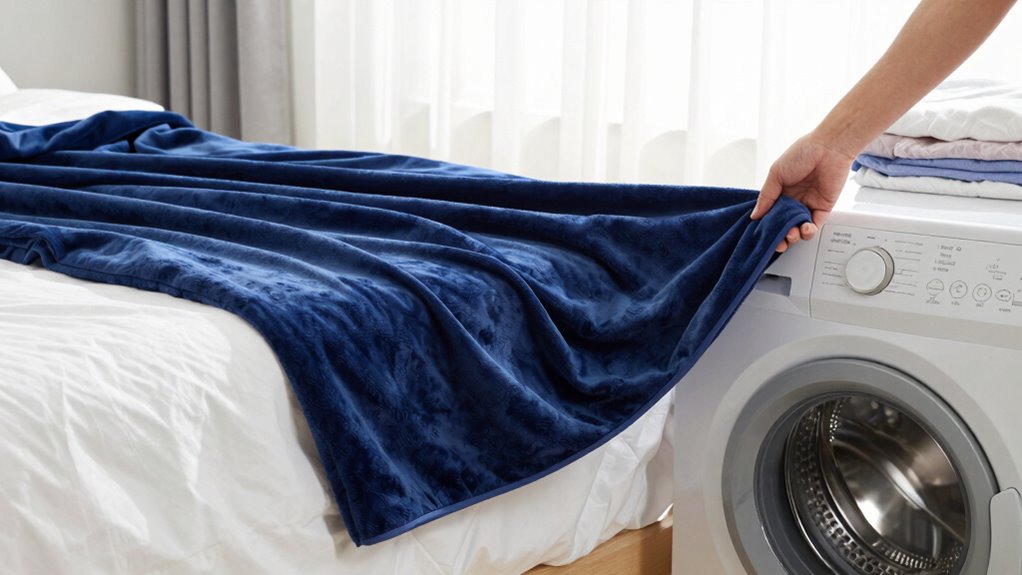
Regularly inspecting your weighted blanket for signs of wear or damage can help prevent issues before they worsen. To keep it in top shape, consider using detergent alternatives like gentle, eco-friendly soaps or diluted vinegar solutions for cleaning. These options reduce chemical exposure and preserve fabric integrity. When stains occur, act quickly with effective stain removal techniques—blot, avoid rubbing, and use mild solutions suited for delicate fabrics. Avoid harsh chemicals or bleach, which can weaken the fabric and fill channels. Proper storage also extends your blanket’s lifespan; store it in a breathable bag away from direct sunlight. Regular inspections combined with gentle cleaning, stain removal, and careful storage will help your weighted blanket stay safe, comfortable, and long-lasting.
Frequently Asked Questions
Can I Wash My Weighted Blanket More Frequently Than Recommended?
You shouldn’t wash your weighted blanket more frequently than recommended because it can wear out the fabric and filling. Follow the proper weighted blanket care guidelines to maintain its quality. If you notice it smells or gets dirty often, spot clean or air it out instead of frequent full washes. Sticking to the suggested washing frequency helps conserve the blanket’s durability and ensures it stays comfortable and functional for longer.
What Signs Indicate My Blanket Needs Professional Cleaning?
If you notice spotting mold or fabric discoloration on your weighted blanket, it’s time to seek professional cleaning. These signs indicate deep-seated issues that can’t be safely managed at home. Mold spots can be harmful, and discoloration may suggest fabric damage. Don’t delay—professional cleaning guarantees your blanket’s longevity and your health, especially if regular washing isn’t removing stubborn stains or odors.
How Can I Prevent the Filling From Clumping During Washing?
To prevent the filling from clumping during washing, you should use gentle washing techniques. Turn your blanket inside out and wash it on a delicate cycle with cold water. Add a few tennis balls or clean sneakers to help distribute the filling evenly and prevent clumping. Avoid overloading the washer, and consider hand-washing if you’re concerned about maintaining the blanket’s integrity. These tips keep your filling evenly spread and clump-free.
Is It Safe to Use Fabric Softeners on My Weighted Blanket?
Imagine your weighted blanket as a gentle hug, needing tender care. Using fabric softener may seem tempting, but it’s risky—these chemicals can damage the delicate filling and fabric. Instead, stick to safe cleaning methods like mild detergent and cold water. This keeps your blanket soft and cozy without risking clumping or damage. Protect your investment and enjoy a comforting, well-maintained blanket every night.
How Do I Repair Small Tears or Damage After Washing?
If you find small tears or damage after washing, start by cleaning the area gently. Use mending techniques like sewing with a needle and thread that matches your blanket’s fabric. For added strength, apply fabric patches on the inside of the tear, securing them with a strong stitch. This approach keeps your weighted blanket durable and comfortable, preserving its quality for continued use.
Conclusion
Think of your weighted blanket as a cherished garden plant—you want to nurture it gently to keep it thriving. By following these washing tips, you’ll extend its life and maintain its comforting weight. Remember, a little extra care makes all the difference—like watering your favorite flower. With patience and the right approach, your blanket will stay cozy and inviting for years to come, just like a well-tended garden that blooms season after season.