
Blood stains on a mattress can be tough because blood seeps deep into fibers, making surface cleaning ineffective. To remove fresh stains, act fast by dabbing with cold water and avoiding heat. Household items like hydrogen peroxide, baking soda, or salt can help lift or neutralize blood. For older stains, enzyme cleaners or commercial solutions work best. Keep blood stains at bay with preventive tips—continue exploring to uncover detailed strategies for permanently cleaning your mattress.
Key Takeaways
- Act quickly by blotting with cold water to prevent blood from penetrating deeper fibers.
- Use hydrogen peroxide or enzymatic cleaners to break down blood proteins effectively.
- Avoid hot water and scrubbing to prevent setting stains further into mattress fibers.
- Apply baking soda or salt pastes to absorb moisture and dehydrate blood stains.
- Protect your mattress with a cover and address blood spills immediately to prevent long-term staining.
Top picks for "blood stain mattres"
Open Amazon search results for this keyword.
As an affiliate, we earn on qualifying purchases.
Why Blood Stains Penetrate Mattress Fibers and How It Affects Removal
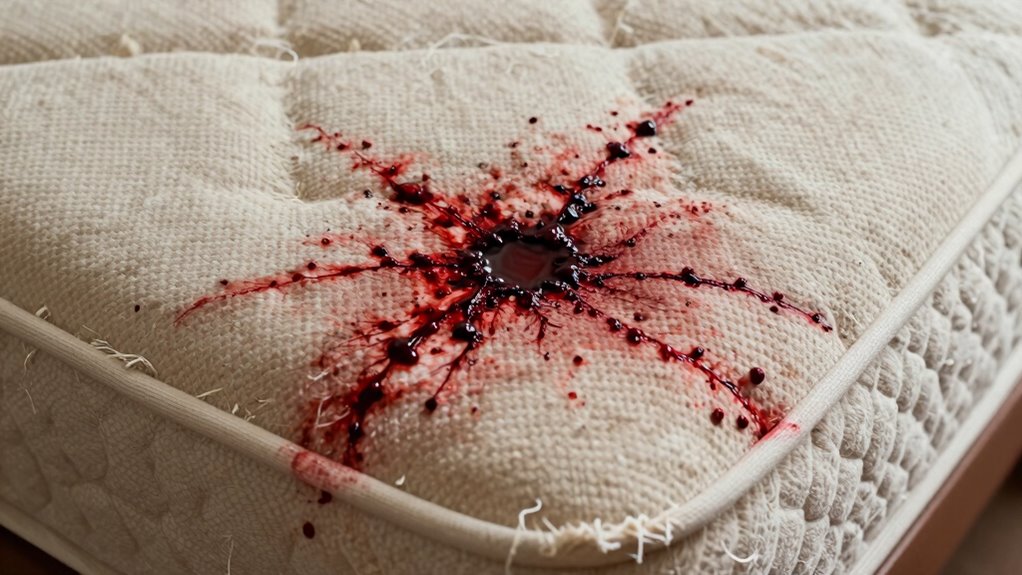
Blood stains penetrate mattress fibers because blood contains proteins and cells that easily seep into porous materials. This fiber penetration makes it difficult to fully remove stains, especially once they set. When blood dries, stain setting occurs, causing the fibers to trap the blood particles more deeply. The porous nature of mattresses allows blood to seep beyond the surface, embedding into the core fibers. As a result, surface cleaning alone often isn’t enough to fully eliminate the stain. The longer the blood remains, the more fibers absorb it, making removal increasingly challenging. Understanding how blood penetrates and sets helps you grasp why some stains persist despite initial cleaning efforts. Effective removal requires targeting these deeply embedded fibers before the stain fully sets. Additionally, using proper cleaning techniques that address both surface and embedded fibers can significantly improve stain removal outcomes.
How to Quickly Treat Fresh Blood Stains on Your Mattress

When you notice a fresh blood stain on your mattress, acting quickly can prevent it from setting deeper into the fibers. Start by gently blotting the stain with cold water to encourage blood clotting and lift some of the blood. Avoid hot water, as it can cause the stain to set further. As you work, watch for the stain color change—fading indicates the blood is breaking down. Dab rather than rub to prevent spreading. Use a clean cloth to absorb excess moisture. If needed, apply a small amount of salt or hydrogen peroxide, but be cautious—these can cause discoloration if left too long. Acting fast minimizes the stain’s penetration, making subsequent removal easier. Understanding stain removal techniques can help you choose the most effective method for different types of stains.
Household Items That Effectively Remove Blood Stains

Many common household items can effectively remove blood stains from your mattress, making cleanup straightforward and affordable. Items like hydrogen peroxide, baking soda, and salt can assist in breaking down blood due to their natural properties. Hydrogen peroxide works by causing blood to clot and break apart, making it easier to lift from various mattress materials. Baking soda, when combined with water, creates a paste that absorbs moisture and neutralizes stains. Salt helps by dehydrating blood and speeding up clotting, preventing the stain from setting deeper into the fabric. Keep in mind, different mattress materials respond differently; some are more porous and absorbent, requiring gentler treatments. Using these household items promptly can make a significant difference in removing blood stains effectively. Additionally, understanding Deaf Vibes techniques can enhance your approach to stain removal, especially when considering sensory sensitivities or environmental factors.
Best Commercial Products for Blood Stain Removal
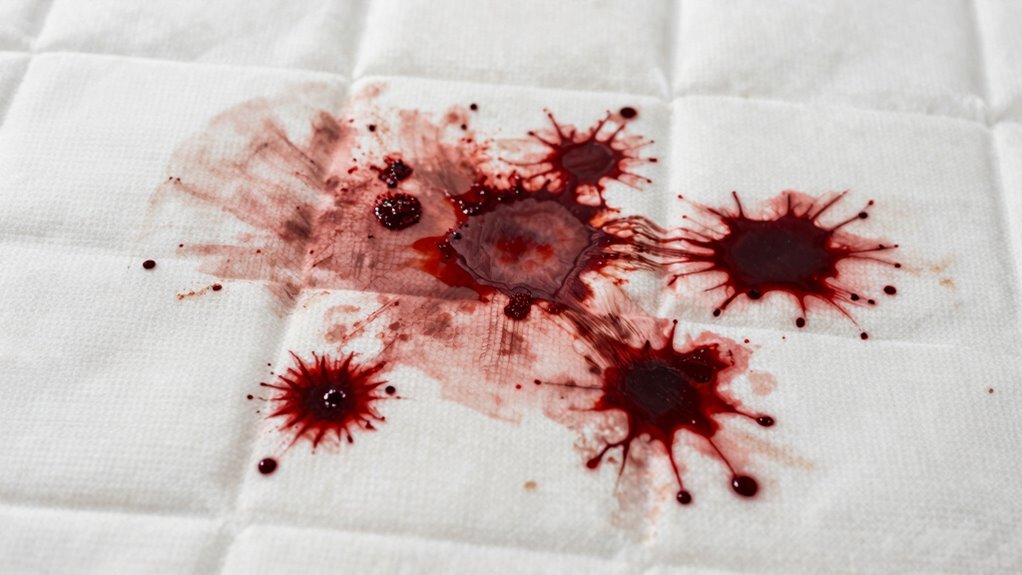
While household items can be effective for small or fresh blood stains, sometimes you need a more powerful solution. Commercial blood stain removers are formulated with enzymes and surfactants that target blood stain chemistry more effectively. These products break down proteins in blood, making stains easier to lift from your mattress fiber structure. When choosing a commercial product, look for enzymatic cleaners specifically designed for protein-based stains. They penetrate deeper into the mattress fibers, addressing the stain at a molecular level. Always follow the manufacturer’s instructions for best results. Using the right product can profoundly improve your chances of fully removing blood stains without damaging your mattress. Remember, the key is selecting a product tailored to blood’s chemical makeup and your mattress’s delicate fiber structure. Effective stain removal often depends on selecting the right treatment for your specific type of blood stain and mattress material.
How to Remove Old or Set-In Blood Stains From Your Mattress
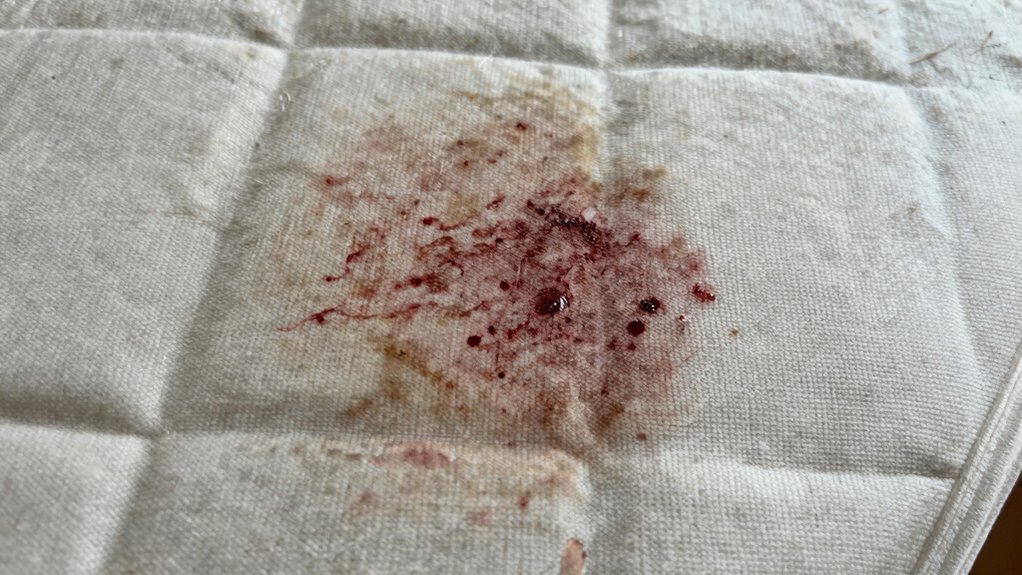
To remove old or set-in blood stains, start by blotting the area to lift as much blood as possible. Then, soak the stain with an effective cleaning solution and let it sit for a few minutes. These techniques can help loosen stubborn stains and make removal easier. Additionally, ensuring proper airflow around the mattress during cleaning can aid in thorough drying and prevent mold growth air purifier maintenance.
Blotting and Soaking Techniques
When dealing with old or set-in blood stains on your mattress, blotting and soaking are essential steps to loosen and lift the residue. Start by gently blotting the stain with a clean, damp cloth to absorb excess blood, being careful not to spread it further. To improve effectiveness, soak a cloth in a solution that maintains the proper pH balance, which helps regulate enzyme activity that breaks down blood proteins. Lightly pressing the soaked cloth onto the stain allows enzymes to work more efficiently, softening dried blood. Avoid scrubbing, as this can embed the stain deeper. Repeat blotting and soaking as needed until the stain begins to lift. Proper water chemistry can significantly influence the effectiveness of blood stain removal. Patience and gentle handling are key to preventing damage and ensuring thorough removal.
Effective Cleaning Solutions
Removing old or set-in blood stains from your mattress requires effective cleaning solutions that can break down dried proteins and eliminate lingering traces. Understanding blood stain chemistry helps you choose the right approach; dried blood binds tightly to mattress fiber structure, making removal challenging. Enzymatic cleaners are highly effective because they target proteins in blood, breaking them down for easier removal. A mixture of hydrogen peroxide and a small amount of dish soap can also work, but be cautious not to damage delicate fibers. Always test cleaning solutions on a hidden area first. The key is to apply solutions that penetrate deeply into the mattress fibers, loosening the stain without causing further damage. Proper stain removal techniques are essential for successful results. Patience and proper techniques make old stains much easier to eliminate.
Tips to Prevent Blood Stains From Happening Again
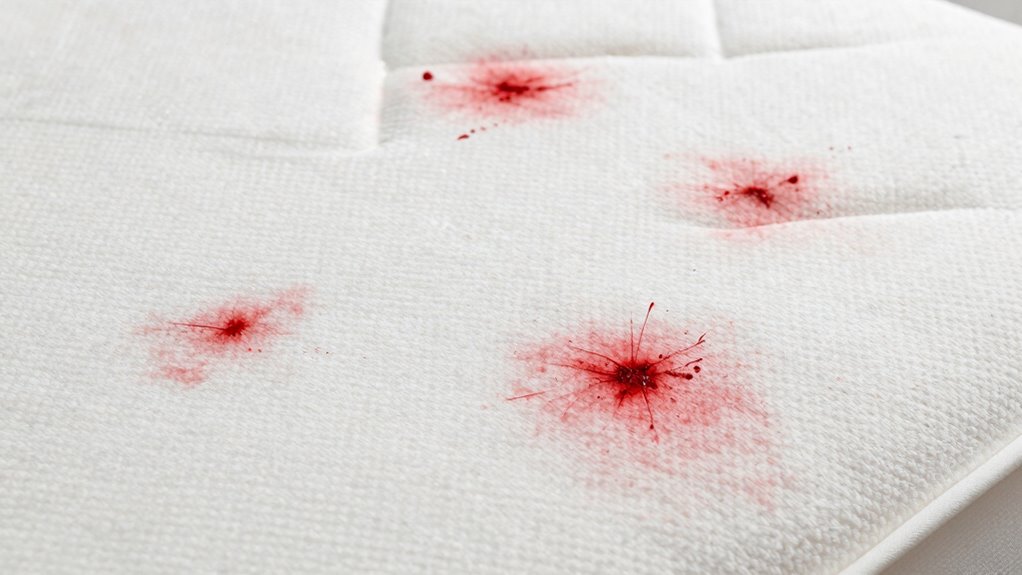
Blood stains on your mattress can be prevented with a few simple precautions. First, identify common blood stain triggers, like nosebleeds, cuts, or injuries during sleep. Using protective barriers such as mattress protectors or waterproof covers creates a barrier that makes mattress stain prevention easier. Keep your bedding clean and change sheets regularly to reduce the risk of blood transfer. Maintain good personal hygiene, especially during menstruation or if you have health issues that cause bleeding. Address any injuries immediately to prevent blood from seeping into your mattress. Additionally, consider placing pillows or barriers around your body if you tend to move during sleep or experience frequent bleeding episodes. These steps can considerably reduce the chances of blood stains and keep your mattress fresh. Ensuring proper sleep environment can also help reduce the likelihood of injuries that lead to bleeding.
Frequently Asked Questions
Can Blood Stains Be Completely Removed From All Mattress Types?
Blood stains can often be removed from most mattress types, but complete removal depends on the mattress material and how deeply the stain penetrated. For fabric surfaces, quick treatment with cold water and enzyme cleaners can help. However, for memory foam or innerspring mattresses, stain penetration might make full removal difficult. Using specific cleaning agents and acting promptly gives you the best chance of minimizing or eliminating blood stains.
Are There Any Natural Remedies to Remove Stubborn Blood Stains?
You can absolutely tackle stubborn blood stains with natural remedies, turning your mattress from a battlefield into a pristine haven. Herbal treatments and homemade solutions are effective; try mixing hydrogen peroxide with a few drops of herbal essential oil or create a paste with baking soda and water. Gently blot the stain, let it sit, then rinse. These natural methods work wonders, leaving your mattress fresh without harsh chemicals.
How Long Can Blood Stains Remain on a Mattress Before Removal Becomes Impossible?
Blood stains can become nearly impossible to remove if left for over 48 hours, especially on highly porous mattresses. Stain longevity depends on how quickly you act; the longer the stain sits, the deeper it penetrates the mattress fibers. Mattress porosity plays a big role—more porous materials absorb blood faster, making timely treatment essential. To prevent permanent damage, treat stains as soon as possible, ideally within the first day.
Does the Type of Blood (E.G., Menstrual, Wound) Affect Stain Removal Methods?
Blood type and stain composition do impact removal methods. Menstrual blood, which contains mucus and tissue, may stain more stubbornly, while wound blood is typically more liquid and easier to treat. Think of it like different paints—each requires a specific solvent. Knowing the blood type helps you choose the right cleaning solution, ensuring you target the stain effectively without damaging your mattress. Adjust your approach based on these differences for best results.
Is It Safe to Use Bleach on Blood-Stained Mattresses?
Using bleach on blood-stained mattresses isn’t the safest choice. Bleach safety concerns include strong fumes and potential fabric damage, which can compromise mattress safety. Instead, opt for safer cleaning methods like cold water and enzyme-based cleaners, which effectively break down blood stains without harmful chemicals. Always verify proper ventilation and test a small area first if you decide to use bleach, but generally, safer options protect both your health and your mattress.
Conclusion
Just like a knight’s armor shields against invaders, quick action protects your mattress from stubborn blood stains. Remember, the battle isn’t lost if you act swiftly and use the right tools—be it household items or commercial products. With patience and the right approach, you can restore your mattress to its pristine state. Don’t let stains become your personal Odyssey; instead, channel your inner hero and conquer them before they settle in forever.