As you use your mattress, high-pressure areas like the center and edges experience more wear, causing parts like springs and foam to break down. This material fatigue and structural weakening lead to increased squeaks, creaks, and rattles over time. Heavy use, misaligned support, or neglecting rotation speed up this process. If you’re curious about how these wear points cause noise and how to spot the signs, keep exploring the details behind mattress wear.
Key Takeaways
- High-pressure zones like the center and edges experience faster wear, leading to increased creaking and noise over time.
- Internal materials such as springs and foam degrade, causing components to rub or shift, which produces louder sounds.
- Spring fatigue and broken coils generate squeaks and creaks as they lose support and become less flexible.
- Structural weakening in support frames and bars causes uneven surfaces, increasing friction and noise during movement.
- Regular use, neglect, and heavy activity accelerate material breakdown, resulting in more pronounced and persistent mattress noises.
Where Do Mattresses Wear Out and Get Louder?

Mattresses tend to wear out most quickly in areas where you apply the most pressure, such as the center and edges. When you consistently sleep in the same spot, those areas experience more compression, leading to mattress sagging over time. This sagging can cause your bed frame to creak more often as it adjusts to the uneven surface. As the mattress wears down, you might notice increased noise when shifting or getting in and out of bed. The weakened structure in high-pressure zones disrupts the mattress’s support, making it more prone to creaking and louder noises. Over time, the accumulation of wear can also impact the sound vibrations produced during movement, contributing to increased noise levels. To prolong your mattress’s lifespan and reduce noise, consider rotating it regularly and checking your bed frame for looseness or damage.
How Material Breakdown Causes Your Mattress to Get Louder
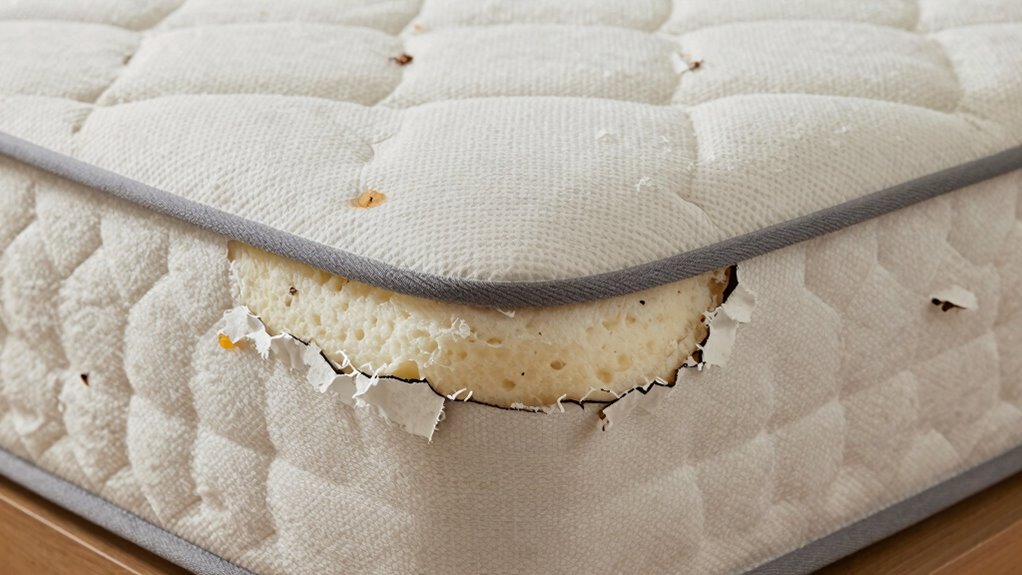
As the materials inside your mattress break down over time, they lose their original structure and integrity, which can lead to increased noise. Spring fatigue occurs when the metal coils lose their resilience, causing them to sag and produce squeaks or creaks with movement. Foam degradation happens as the polyurethane or memory foam deteriorates, becoming less dense and more brittle, resulting in crackling sounds. Over time, these worn-out components can rub against each other or the mattress cover, amplifying noise. As the internal materials weaken, they can shift or compress unevenly, creating new friction points. This breakdown process makes your mattress noisier, signaling that its parts are no longer functioning smoothly and that it may be time for a replacement. Additionally, the use of Vetted electric bike conversion kits highlights how materials can wear out under constant stress and movement, similar to mattress components.
Which Structural Parts Make Your Mattress Noisier?
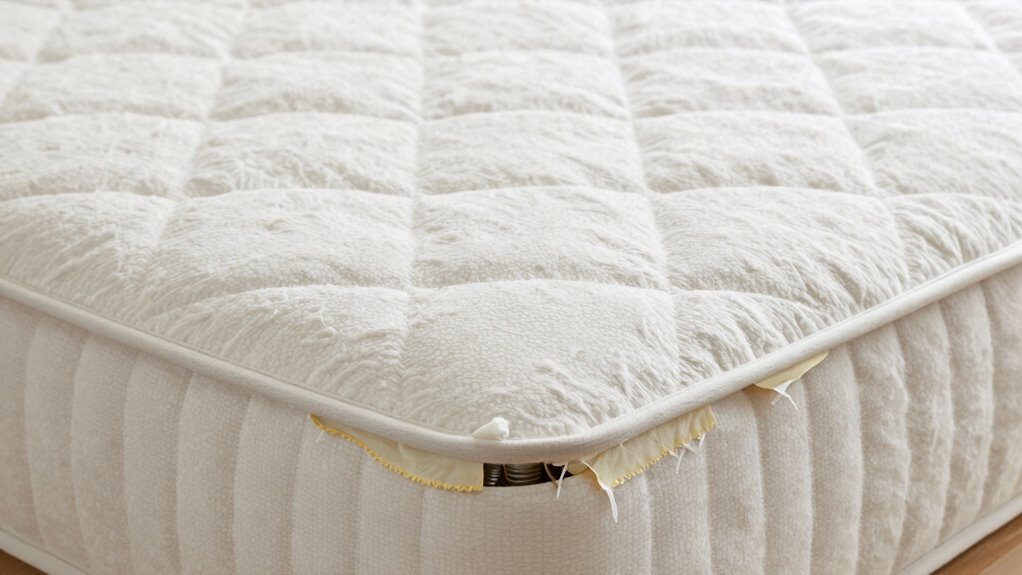
Certain structural components within your mattress are primarily responsible for the increased noise as it ages. The springs and frame are the main culprits, producing sounds like spring squeaks and frame creaks. As you use your mattress, the constant movement causes these parts to wear down or loosen, amplifying noise. Over time, connected technology such as sensors or smart materials could potentially monitor these wear points to alert you before noise becomes disruptive. Here’s a visual to help you imagine the process:
| Component | Associated Noise |
|---|---|
| Springs | Spring squeaks |
| Frame | Frame creaks |
| Support Bars | Squeaky rattling |
| Upholstery Base | Creaking with pressure |
What Factors Speed Up Mattress Wear and Increase Noise?

Several factors can accelerate the wear and tear of your mattress, leading to increased noise over time. One common issue is a bed frame squeaks, which can cause your mattress to shift and put extra stress on its materials, creating more noise. Additionally, neglecting regular mattress flipping or rotating allows certain areas to wear unevenly, speeding up deterioration. Heavy use, jumping on the bed, or jumping onto the mattress can also cause internal components to loosen or break, increasing squeaks and creaks. Improper support from a faulty or unsuitable bed frame can add unnecessary strain, leading to louder sounds as parts rub or shift against each other. Using a water-based or fluid-supported mattress can help reduce noise and improve longevity. To minimize noise, ensure your bed frame is sturdy, and regularly flip or rotate your mattress as recommended.
How Do You Know When It’s Time to Replace a Louder Mattress?
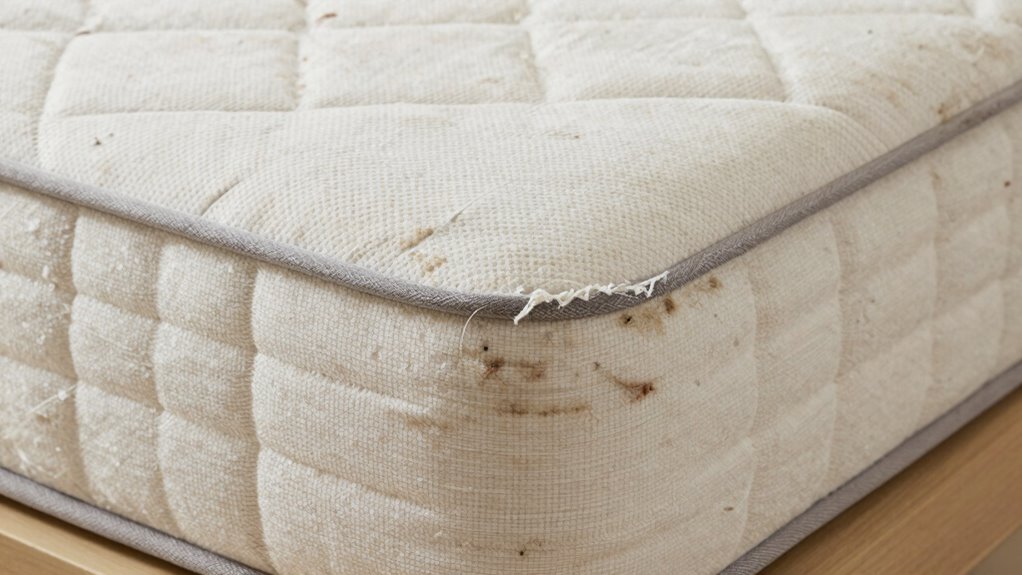
A loud, creaking mattress isn’t just annoying—it may be a sign that it’s time to replace it. If you notice that your sleep comfort has declined despite flipping or rotating the mattress, it’s a clear indicator that its mattress lifespan is nearing its end. Over time, worn springs and compressed padding reduce support, making it harder to get restful sleep. Persistent creaking or sagging signals that the mattress can no longer provide proper comfort or support. If these noises disrupt your sleep or you wake up feeling less rested, it’s time to think about a replacement. Don’t ignore these signs; a new mattress will restore sleep quality and ensure you get the comfort you need for maximum rest. Additionally, staying aware of vetted mattress features can help you choose a more durable and quieter option for the future.
Frequently Asked Questions
Can Noise From a Mattress Indicate Hidden Structural Damage?
Yes, noise from your mattress can indicate hidden structural damage. If your bed frame creaks or if you notice increased squeaking, it might signal deterioration in the mattress material or worn-out components. These sounds often point to loose joints or weakened areas that could lead to discomfort or further damage. Take notice of these noises, as they’re clues that your mattress or bed frame may need repairs or replacement to guarantee proper support.
Do Different Mattress Brands Produce Varying Noise Levels Over Time?
Yes, different mattress brands can produce varying noise levels over time. Brand consistency and manufacturing quality play key roles in how durable and quiet a mattress remains. Higher-quality materials and strict manufacturing standards help diminish noise as the mattress ages, while lower-quality options may develop squeaks and creaks sooner. Investing in reputable brands with good manufacturing practices can ensure your mattress stays quieter longer, providing a more restful sleep experience.
How Does Mattress Age Correlate With Increased Noise?
As your mattress ages, you’ll notice spring squeaks and foam creaks becoming more frequent, revealing its quiet decline. Over time, wear causes metal springs to loosen and foam layers to settle, leading to increased noise. This natural progression signals that your mattress has endured many restful nights and might soon need replacing. Embrace the sounds as a sign of aging, and consider an upgrade for better sleep comfort and tranquility.
Are There Specific Sleeping Positions That Cause More Mattress Noise?
Your sleeping posture can influence mattress noise, especially if you tend to shift or move frequently. Certain positions, like sleeping on your side or stomach, put more pressure on specific wear points, making the mattress more sensitive and prone to noise. If you’re a restless sleeper, you might notice louder creaks or squeaks. To reduce noise, try adjusting your sleeping posture or consider a mattress designed for less sensitivity.
Can Regular Maintenance Reduce Noise in Aging Mattresses?
Regular maintenance can indeed quiet your aging mattress, like tuning a musical instrument. Tightening loose bed frame vibrations reduces squeaks, and adding a mattress topper can cushion wear points, dampening noise. Flip or rotate your mattress periodically to distribute wear evenly, preventing squeaks from developing. These simple acts keep your sleep environment peaceful, extending your mattress’s quiet life and ensuring restful nights free from disruptive creaks.
Conclusion
Just like a well-worn book reveals its stories through whispering pages, your mattress tells its tale through creaks and squeaks. When it starts to get louder, it’s a sign that the wear points are speaking their truths. Don’t ignore the signs—think of it as your mattress’s way of asking for a break, a new chapter. Replacing it guarantees you keep sleeping soundly, ready for fresh dreams to come.