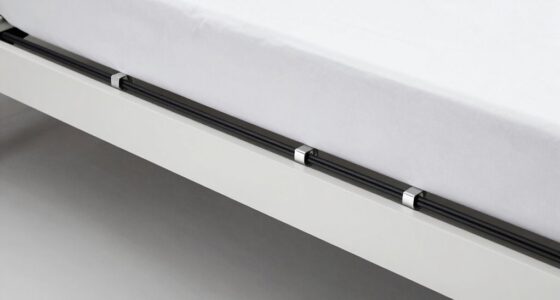

To get in and out of bed without strain, it’s vital to find the right height tailored to your body and needs. Use a bed height calculator to measure factors like your height, leg length, and mattress thickness. Proper adjustment ensures safety, reduces joint stress, and promotes better sleep quality. By considering these elements, you can set a comfortable height for everyday ease. Continue exploring to discover how to use these tools effectively and avoid common mistakes.
Key Takeaways
- Use a bed height calculator to determine the optimal height based on your body, mattress, and mobility needs.
- Measure your leg length and sitting height accurately for personalized bed height recommendations.
- Adjust mattress thickness or add risers to achieve the ideal height for safe in-and-out movements.
- Consider your overall height and mobility limitations to set a bed height that minimizes strain.
- Regularly reassess and customize bed height as your needs or conditions change over time.
Why Is Proper Bed Height So Important?

Proper bed height is essential because it directly impacts your safety and comfort. When your bed is at the right height, getting in and out becomes easier, reducing the risk of falls or injuries, especially for seniors or those with mobility issues. Proper bed safety ensures you don’t strain your muscles or joints, preventing discomfort and long-term issues. Additionally, the right bed height enhances sleep comfort by supporting proper spinal alignment and reducing pressure points. If your bed is too high or too low, you may wake up stiff or sore, disrupting restful sleep. Maintaining an ideal bed height helps create a safe, comfortable environment that promotes better sleep and overall well-being. Prioritizing this simple adjustment can considerably improve your nightly rest. Incorporating modern ergonomic solutions can further optimize your bed setup for safety and comfort.
How Does a Bed Height Calculator Help You?
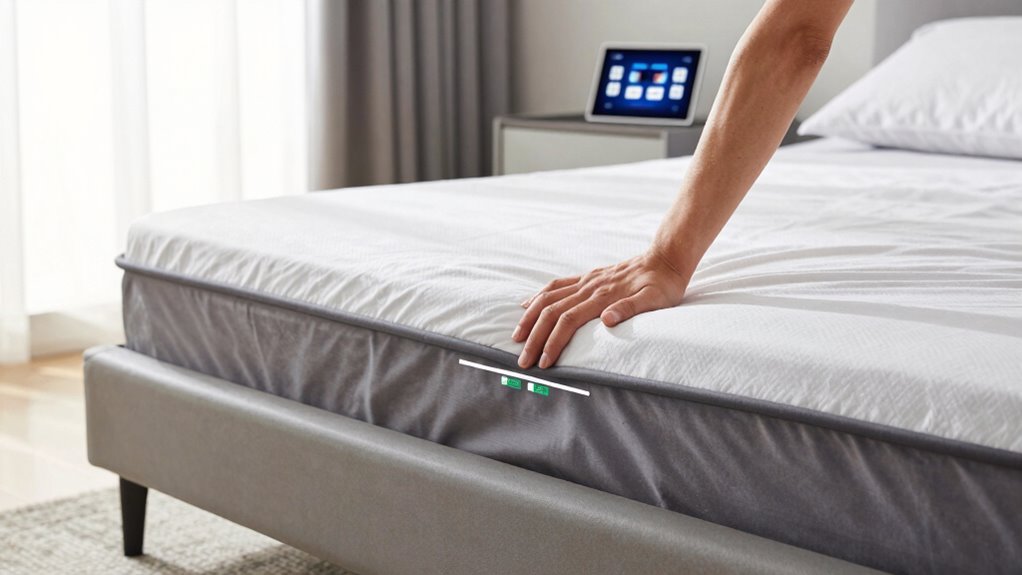
A bed height calculator simplifies the process of finding the ideal bed height by providing personalized measurements based on your body and furniture. It considers your height, leg length, and preferred sleep posture to determine the *best* bed frame height. This helps *assure* you can sit down and get up with ease, reducing strain on your joints and muscles. By customizing your bed height, you can improve comfort and support, especially if you have mobility issues or back pain. The calculator also helps you avoid choosing a bed that’s too high or too low, which can negatively impact your sleep quality. Overall, it’s a practical tool that guides you toward a bed height that promotes better posture and easier *movements* in and out of bed. Understanding bed ergonomics can further enhance your comfort and safety.
What Factors Should You Consider When Adjusting Your Bed Height?
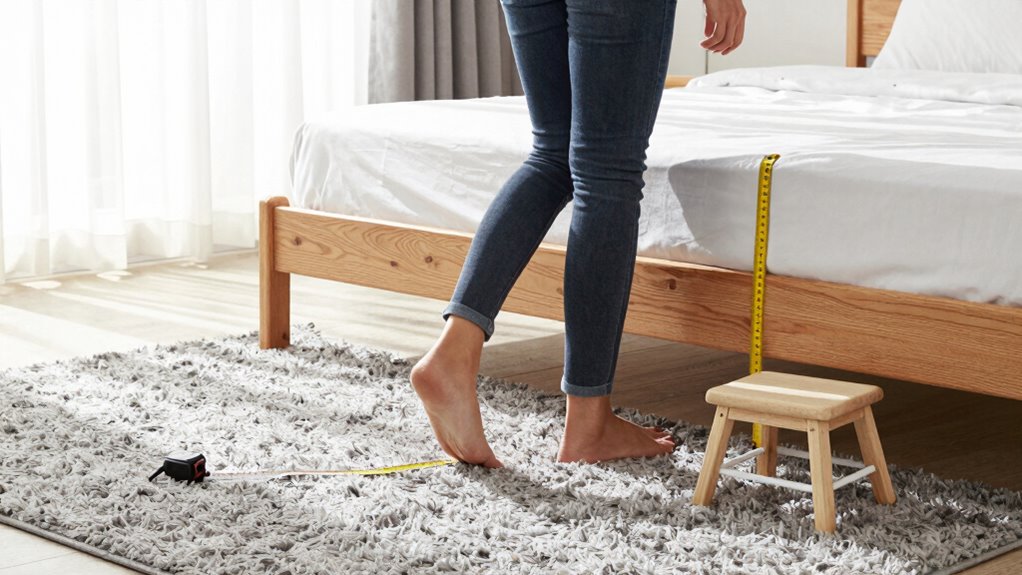
When adjusting your bed height, consider how mattress thickness impacts the overall height and comfort. Make certain your bed’s height suits your stature for easy getting in and out of bed. Also, think about any accessibility needs or features that might require specific height adjustments to guarantee safety and convenience. Additionally, understanding small appliance options can help optimize your bedroom environment for better comfort and efficiency.
Mattress Thickness Impact
Have you ever considered how mattress thickness influences your bed height? The thickness of your mattress plays a significant role in the overall height, impacting how easily you can get in and out of bed. Thicker mattresses add height, which might require you to adjust your bed frame or use a step stool for safety. Conversely, thinner mattresses can make your bed feel lower, possibly improving accessibility if you prefer a lower profile. When adjusting your bed height, consider mattress thickness alongside bed frame compatibility—some frames are designed to support specific mattress heights. Ensuring these elements work together helps you achieve a comfortable, safe height that minimizes strain and enhances your sleep experience. Additionally, bed frame compatibility should be considered to ensure your bed setup is both safe and comfortable.
User Height Compatibility
Ever wondered how your height influences the ideal bed height? Your stature determines how easily you can get in and out of bed without strain. If you’re taller, a higher bed frame might help you avoid awkwardly bending your knees or arching your back, maintaining a good sleep posture. Conversely, if you’re shorter, a lower bed frame can make it easier to sit up comfortably and reduce the risk of falls. Consider your overall body proportions and comfort when adjusting your bed height. Proper alignment of your spine during sleep is essential, so choose a height that supports your sleep posture without forcing you into unnatural positions. Matching your bed frame height to your height ensures easier movement and better rest. Additionally, understanding ergonomic principles can help you optimize your bed setup for comfort and health.
Accessibility Features Needed
Adjusting your bed height for accessibility requires considering several practical factors to guarantee safety and comfort. First, think about bedside lighting; proper illumination helps you see clearly when getting in or out, reducing the risk of falls. Next, evaluate your storage solutions—easily accessible drawers or shelves at the right height prevent you from overstretching or bending awkwardly. The bed’s height should allow you to sit with your feet flat on the floor and knees at a comfortable angle. Additionally, consider whether your bed height enables you to stand up smoothly without strain. Ensuring these features are tailored to your needs creates a safer environment, making daily routines easier and reducing the chance of accidents. For personalized comfort, exploring styleGuru.org can provide additional tips for creating a functional and accessible sleeping space.
How Do You Use a Bed Height Calculator Step by Step?
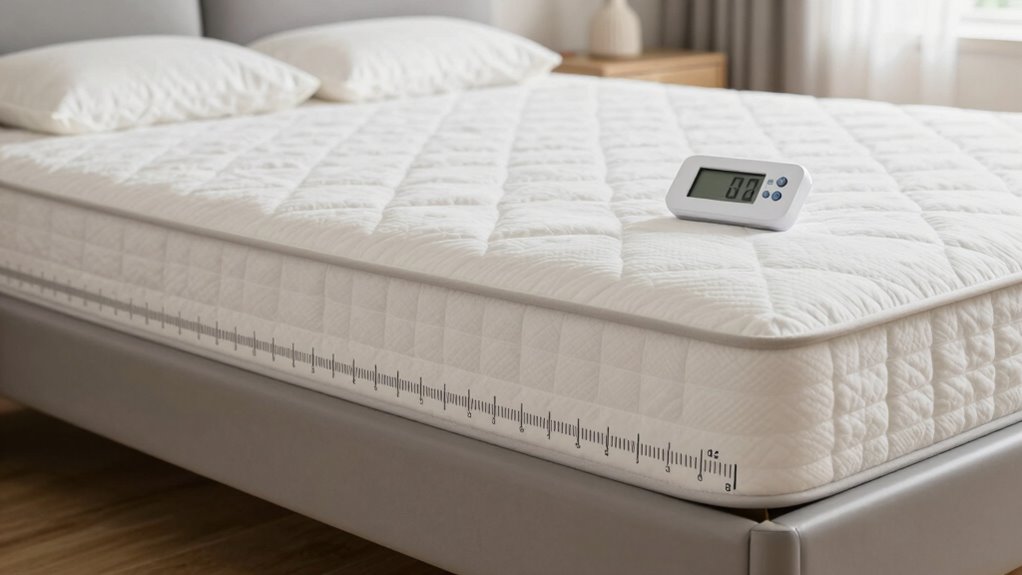
To use a bed height calculator effectively, start by gathering the necessary measurements of your bed and the space around it. First, measure your bed frame’s height from the floor to the top of the mattress. Next, note your ideal sleep posture to ensure comfort and ease of movement. Finally, record the clearance needed for activities like getting in and out safely. Once you have these measurements, input them into the calculator to determine the most suitable bed height. This process ensures your bed supports your body’s natural movements, reduces strain, and improves overall sleep quality. Remember, the right height makes all the difference in how comfortably you rise and settle into bed each day. Proper bed height can help prevent injury and promote better rest. Your perfect sleep setup is just a few simple steps away.
How Can You Naturally Achieve the Right Bed Height?

You can naturally achieve the right bed height by adjusting your mattress placement or adding bed risers or blocks. Choosing furniture with adjustable heights also makes it easier to find a comfortable level. These simple options help you customize your bed to suit your needs without complicated modifications. Incorporating simple organizing strategies can help you maintain a calm and clutter-free sleep space, making it easier to keep your bed at the ideal height.
Adjust Mattress Placement
Finding the right bed height often starts with positioning your mattress correctly on your frame or foundation. To naturally achieve ideal height, focus on how you place your mattress and bed linen. Consider these steps: 1. Make sure your mattress sits evenly, so you’re not straining to get in or out. 2. Use fitted bed linen that snugly fits your mattress, preventing shifting that can alter height. 3. Adjust the mattress height slightly by adding or removing layers of bedding, which can improve your ease of movement and sleep quality. 4. Incorporate smart home automation devices like adjustable bed frames to customize your bed height easily. Proper mattress placement reduces physical strain and creates a comfortable, inviting sleeping environment. When your bed is at the right height, you’ll find it easier to get in and out, enhancing your overall sleep quality and daily comfort.
Use Bed Risers or Blocks
Using bed risers or blocks offers an easy and effective way to naturally increase your bed’s height without major adjustments. Bed risers are sturdy, stackable supports that you place under each leg of your bed, raising it to a more comfortable height. Bed blocks work similarly; they are solid pieces placed underneath your bed frame or legs to provide extra elevation. These options allow you to customize your bed height without replacing furniture or making permanent modifications. They’re especially helpful if you find your bed too low for easy getting in and out. Simply select the right size of bed risers or blocks to match your desired height. This quick fix can considerably improve your comfort and reduce strain during daily activities. Additionally, the use of bed height adjustment methods can help maintain proper ergonomics and prevent potential discomfort.
Opt for Furniture With Adjustable Heights
Choosing furniture with adjustable heights allows you to naturally achieve the perfect bed elevation without additional tools or modifications. This option offers seamless furniture customization, ensuring your bed meets your ergonomic design needs. When selecting adjustable beds, think about:
- Enhanced Comfort – Easily find a height that reduces strain and supports your body.
- Personalized Ergonomics – Tailor your bed’s height to suit your height and mobility.
- Long-term Flexibility – Adapt your bed as your needs change, avoiding discomfort over time.
Adjustable furniture empowers you to create a sleep environment that promotes ease of movement and reduces aches. By prioritizing ergonomic design and furniture customization, you make strides toward a healthier, more comfortable sleep routine—without complicating your space.
What Are Common Mistakes to Avoid When Setting Bed Height?

One common mistake to avoid when setting bed height is neglecting to contemplate your own comfort and accessibility needs. Ignoring user needs often leads to incorrect measurements, making it difficult to get in or out of bed comfortably. To ensure proper height, consider your body size, mobility, and preferences. Avoid rushing the measurement process, as inaccuracies can cause strain over time. Use a reliable calculator and double-check your results. Here’s a quick comparison:
| Aspect | Potential Issue |
|---|---|
| Incorrect measurements | Bed height too high or low |
| Ignoring user needs | Discomfort or strain during transfers |
Always tailor the height to your specific needs to prevent unnecessary strain and improve safety.
Frequently Asked Questions
Can a Bed Height Affect Sleep Quality?
Yes, bed height affects sleep quality by influencing your bed height ergonomics and sleep position alignment. When your bed is too high or low, it can cause discomfort, strain on joints, and poor posture, leading to restless sleep. Proper bed height allows you to get in and out easily, maintains ideal sleep position alignment, and reduces aches, helping you wake up refreshed and ready for the day.
Is There a Standard Bed Height for All Adults?
They say “one size doesn’t fit all,” and that’s true for bed height standards. There’s no universal height for all adults because individual needs vary. For ideal adult bed ergonomics, aim for a height where you can sit on the edge with your feet flat on the floor and knees at a 90-degree angle. Adjust based on your comfort to make getting in and out easier and safer.
How Often Should I Reassess My Bed Height Needs?
You should reassess your bed height ergonomics whenever your comfort or mobility changes. Regularly checking guarantees your mattress firmness options still support easy in-and-out movement, reducing strain. Factors like aging, health conditions, or a new mattress may require adjustments. Aim to review your bed height every 6 to 12 months, or sooner if you notice discomfort, to maintain ideal ergonomics and prevent strain during daily transitions.
Are There Specific Tools to Measure Bed Height Accurately?
Like a trusty compass guiding your way, specific tools help you measure bed height accurately. You should use bed measurement tools like a tape measure or a ruler to get precise readings. Some digital height tools even offer quick, reliable results. These tools guarantee your bed height is just right for easy in and out, reducing strain and preventing discomfort. Keep a tape measure nearby for quick checks whenever needed.
Can Adjustable Beds Eliminate the Need for a Calculator?
Adjustable beds can reduce the need for a calculator because their features allow you to customize bed height for ideal ergonomics. By adjusting the height to match your body’s needs, you can get in and out more comfortably and safely. This flexibility enhances bed height ergonomics, minimizing strain. So, with the right adjustable bed, you gain personalized comfort without relying solely on measurements or a calculator.
Conclusion
Think of your bed as a trusty ship’s helm—set it just right, and you steer smoothly through your nights. When you adjust your bed height properly, you’re guiding comfort and safety, avoiding the rocky waters of strain and discomfort. Use tools and tips like your compass, and steer confidently toward restful, strain-free mornings. Remember, the right height keeps you steady on your journey to better sleep and easier mornings.