

To measure mattress sagging like a pro, start by removing bedding to get a clear look. Use a measuring tape and a straightedge to check for dips at the center and edges. Measure the depth of any indentations from the bed frame or support surface. Record your measurements and compare them to the typical half-inch threshold for support loss. If you want to discover more precise tips and expert advice, keep going to learn all the details.
Open a free Amazon Business account
Business pricing, bulk buying and tax-exempt orders.
As an affiliate, we earn on qualifying purchases.
What Is Mattress Sagging, and Why Should You Care?

Mattress sagging happens when the surface of your mattress dips or indentations form over time, usually due to prolonged use or material breakdown. This sagging can noticeably impact your sleep comfort, making it harder to get restful sleep. When your mattress develops uneven spots, it no longer supports your body properly, which can cause aches and discomfort. Plus, sagging shortens your mattress’s longevity, meaning you’ll need a replacement sooner than expected. Recognizing early signs of sagging helps you maintain a healthy sleep environment and avoid unnecessary discomfort. Ignoring sagging not only compromises sleep quality but also reduces your mattress’s lifespan. By understanding what causes sagging, including wear and tear from prolonged use, you can take steps to prevent it and enjoy a better night’s sleep longer. Regularly inspecting your mattress for early warning signs can help you catch issues before they become severe, especially since proper support is essential for sleep quality and health. Additionally, using proper measurement techniques can ensure you accurately assess the extent of sagging and determine if it’s time for a replacement. Being aware of correct support methods can further help in maintaining your mattress’s shape and comfort over time.
As an affiliate, we earn on qualifying purchases.
What Tools Do You Need to Measure Mattress Sagging?
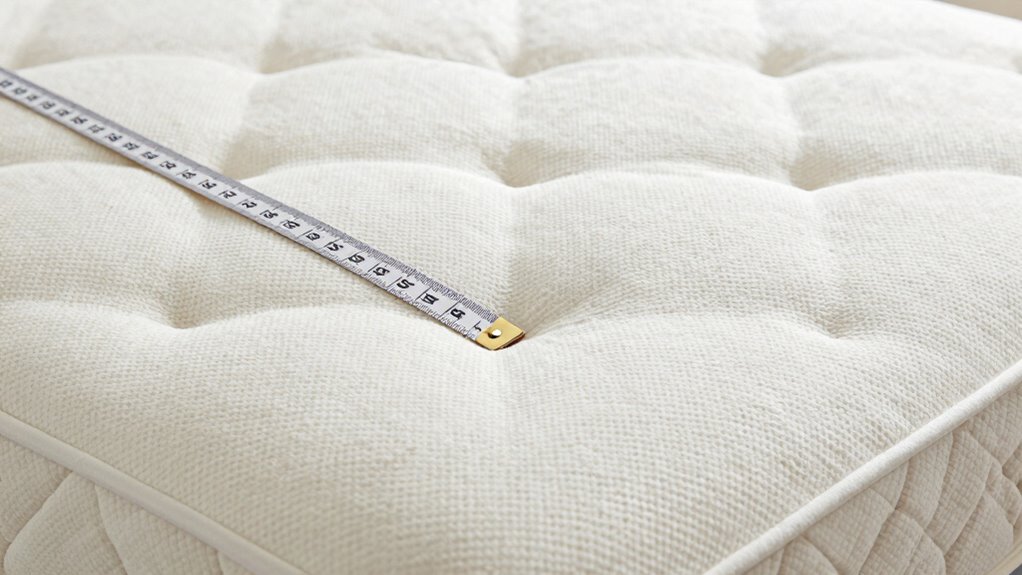
To accurately determine if your mattress is sagging, you’ll need a few simple tools that provide precise measurements. These tools help you assess the extent of sagging and ensure your bed frame compatibility. First, a measuring tape is essential for measuring depression points and comparing them to manufacturer guidelines. Second, a straightedge or ruler helps you check for uneven surfaces or dips. Third, a level can verify if the mattress maintains a consistent height, especially with different mattress material types. Fourth, a flashlight can help spot hidden indentations and assess the overall condition. Additionally, understanding the support systems in your mattress can help identify potential causes of sagging. Recognizing the importance of proper bed frame support is crucial for maintaining mattress integrity over time. Using these tools guarantees you get an accurate reading, whether your mattress is latex, memory foam, or innerspring, and whether your bed frame supports proper alignment.
As an affiliate, we earn on qualifying purchases.
How Can You Measure Your Mattress Sagging Step by Step?

Start by removing all bedding and linens from your mattress to get an unobstructed view of its surface. Next, place a straightedge or a ruler across the mattress and measure from the top of the bed frame or the mattress surface to the lowest point of any sagging areas. Confirm your bed frame is compatible with your mattress to avoid skewed results. For accuracy, perform this measurement in multiple spots—center, edges, and along the sides. This process also helps with sleep posture analysis, as uneven sagging may contribute to discomfort. Keep a record of your measurements over time to track deterioration. Regular checks help you decide when to replace or repair your mattress, ensuring better sleep quality and support. Understanding mattress degradation is essential for maintaining optimal sleep conditions and preventing potential health issues. Additionally, familiarizing yourself with mattress support systems can provide insights into preventing sagging and extending the lifespan of your mattress. Monitoring the integrity of your support structures can help you address issues early and prolong your mattress’s usability. Being aware of mattress wear patterns can further assist in determining when it’s time for a replacement or repair.
As an affiliate, we earn on qualifying purchases.
What Do Your Sagging Measurements Mean?

When you measure your mattress’s sagging, the results reveal how well your mattress is supporting your body. Significant sagging indicates that your mattress may no longer provide ideal bed comfort or maintain good sleep quality. A sag of over half an inch often means you’re losing support, leading to discomfort and potential back pain. Conversely, minimal sag suggests your mattress still offers proper support. Understanding what these measurements mean helps you decide whether to replace or repair your mattress. Keep in mind:
- Excessive sag can cause poor spinal alignment
- Moderate sag might be manageable with a mattress topper
- Minimal sag typically indicates a healthy mattress
- Consistently poor support impacts sleep quality over time
- Mattress support is crucial for maintaining proper spinal health and comfort during sleep.
- Maintaining proper bed support can extend the lifespan of your mattress and improve sleep quality. Additionally, recognizing early signs of mattress deterioration can help prevent long-term discomfort.
Accurately interpreting your measurements guides your choices for better rest and comfort. Proper support and alignment are essential for avoiding sleep disturbances and ensuring restorative sleep.

Furniture Leveler 12pcs Kit Size Variety | Multi-Purpose Rubber Shim for Leveling Feet Stable | Anti-Wobble Pad for Uneven Table, Dresser Leg, Toliet and More Furniture | Prevent from Wobbling
- Multiple Size Options: Variety of sizes for different furniture
- Customizable and Durable: Cuttable, stackable, holds 22,000 lbs
- Versatile Home Use: Suitable for furniture, doors, and outdoor
As an affiliate, we earn on qualifying purchases.
As an affiliate, we earn on qualifying purchases.
How Can You Prevent or Fix Mattress Sagging?

Regularly inspecting your mattress’s sagging measurements can help you catch support issues early. To prevent sagging, ensure your bed frame provides solid support; a weak or broken frame can accelerate sagging. Check that the slats are evenly spaced and sturdy enough to hold the mattress properly. Rotating your mattress every three to six months distributes wear evenly, preventing uneven sagging in specific areas. If you notice sagging developing, consider replacing worn support components or adding a bunkie board for extra support. Keeping your mattress fresh through rotation, paired with a supportive bed frame, extends its lifespan and maintains comfort. Addressing issues promptly can save you from costly repairs or replacements down the line. Understanding mattress support systems can help you choose the best foundation to prevent sagging. Additionally, understanding support system options can guide you in selecting the most effective foundation for your mattress, which can further enhance durability and comfort. Incorporating knowledge about field-of-view and imaging-scale from deep-sky imaging can also help you visualize and assess the support structure’s alignment and stability, ensuring optimal support for your mattress. A thorough understanding of support system design principles can further improve your mattress support strategy.
Frequently Asked Questions
How Often Should I Check My Mattress for Sagging?
You should check your mattress for sagging every six months as part of regular mattress maintenance. Your sleep position can influence how quickly a mattress develops sags, especially if you tend to sleep on one side. Regular inspections help you catch early signs of sagging, ensuring you maintain proper support and comfort. By staying proactive, you extend your mattress lifespan and improve your sleep quality.
Can Mattress Sagging Affect My Health or Sleep Quality?
Did you know that over 50% of adults experience sleep disturbances due to uncomfortable mattresses? Mattress sagging can definitely impact your health and sleep quality by causing sleep disturbances and back pain. When your mattress sinks, it misaligns your spine, leading to discomfort and restless nights. Addressing sagging early helps improve sleep, reduce back pain, and promotes overall well-being. So, check your mattress regularly and replace it when needed.
Is There a Specific Weight Limit That Causes Sagging?
There isn’t a strict weight threshold that causes sagging, as it varies depending on your mattress type and quality. However, most mattresses have sagging limits around 200-250 pounds per side. If you regularly exceed these limits, you’re more likely to notice sagging over time. To prevent premature wear, consider your weight and how it interacts with your mattress’s durability, and always follow the manufacturer’s recommendations for weight capacity.
Are Certain Mattress Types More Prone to Sagging?
Think of your mattress as a story—some chapters wear out faster. Memory foam tends to sag more over time, especially if you’re a restless sleeper or weigh more, while innerspring mattresses often hold up longer but can develop weak spots. If you want durability, look for high-density foam or reinforced coils. Being aware of these tendencies helps you choose a mattress that keeps its shape, just like a well-loved book.
How Long Does It Take for a Mattress to Sag Significantly?
It can take anywhere from one to three years for your mattress to sag considerably, depending on usage and quality. To prevent or slow sagging, check bed frame compatibility and make certain of proper support. Regularly inspect your mattress, and remember, sagging usually voids mattress warranty coverage. By maintaining your bed setup, you can extend its lifespan and enjoy consistent comfort longer.
Conclusion
By measuring your mattress sagging like a pro, you’re fundamentally tuning a finely crafted instrument to ensure it plays the sweetest tune. Understanding what those measurements mean helps you decide whether to patch things up or replace your mattress altogether. Think of your mattress as a trusted friend—keeping it in good shape means a better night’s sleep and waking up refreshed. Stay vigilant, and your bed will continue to support you like a steady lighthouse guiding you through restless nights.
Grilling season Picks
grills
As an affiliate, we earn on qualifying purchases.