TL;DR
A Linthorpe Beds store manager recommends a “one-roll test” to help shoppers judge whether a mattress has enough usable space: lie in a usual position, then roll naturally into another. It is a practical fit check, not a pass-or-fail measure or a substitute for evaluating comfort and support.
A store manager at U.K.-based Linthorpe Beds recommends a simple “one-roll test” for people choosing a mattress: lie where you would normally sleep, then roll naturally into another comfortable position to see how much room remains. The advice focuses on usable space, not just labels such as queen or king, and offers shoppers a way to check fit before buying or during a mattress trial.

Get home appliances delivered free with Prime
- Fast, free delivery on millions of items
- Prime Video, Amazon Music and more included
- Member-only deals all year
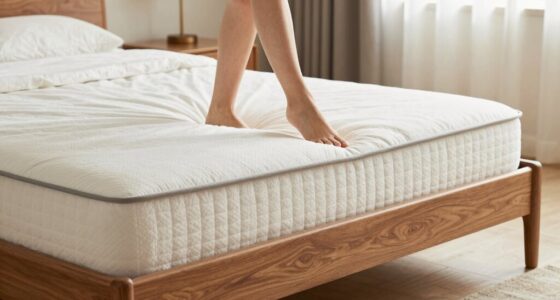
Paul Keenan, identified as a store manager at Linthorpe Beds, says shoppers often rely on familiar mattress categories without checking whether the actual dimensions suit their height, movement during sleep, or whether they share the bed. To try the one-roll test, lie in your usual sleeping area and move naturally—for example, from your back onto your side. Keenan advises against tucking in your arms or legs to make the mattress seem roomier; the point is to reproduce an ordinary nighttime movement.
Pay attention to whether that movement takes you close to the edge or into the person beside you. Keenan says this can indicate that the mattress offers less usable space than it appears to when a person lies still. He describes the check as one clue, not a strict pass-or-fail test. Shoppers can try it in a store or, where a retailer offers a home trial, on a mattress at home. The article says many brands offer trials of at least 30 days, but it does not identify which brands or set out their terms.
The article also outlines three other checks. For the elbow test, two people lie on their backs with hands behind their heads and elbows pointing naturally outward; elbows that touch or overlap may suggest they would benefit from more width. For the height test, measure the mattress and compare its length with the tallest sleeper’s height, allowing at least six inches beyond that height as a general guideline. For the pillow test, place two standard pillows side by side on the mattress to visualize the space two people would share.
Try the One-Roll Test before choosing a mattress
A Linthorpe Beds manager suggests moving naturally on a mattress to judge its usable space. Treat it as one practical fit check alongside comfort and support.
Try a natural roll
Lie where you normally sleep, then move into another comfortable position without tucking in your arms or legs.
Settle into the area where you would normally sleep.
For example, move from your back onto your side.
See whether the movement brings you near the edge or into your bed partner.
Check fit from other angles
These simple comparisons can help you assess dimensions in a showroom or at home.
Elbow test
Two people lie with hands behind their heads. Touching or overlapping elbows may suggest more width would help.
Height test
Measure the mattress and compare its length with the tallest sleeper’s height.
Pillow test
Place two standard pillows side by side to visualize space for two people.
What these checks can tell you
Size labels alone may not reflect how much room sleepers have in practice.
- Comparing usable space
- Considering height and movement
- Checking fit with a bed partner
- Firmness or support
- Pressure relief or materials
- Whether a mattress suits health needs
Check Space Before Choosing a Size
The suggested checks address a common practical issue: a mattress size name does not, by itself, show whether a particular sleeper or pair will feel comfortable on it. Body size, sleep movement, and sharing the bed all affect how much room is available in practice. Testing movement and measuring the surface can make those needs easier to judge than relying on a category label alone.
For shoppers, this may help identify a size mismatch before purchase or while a return or trial option is available. It does not establish that a larger mattress is always better, nor does it assess firmness, pressure relief, materials, or whether a mattress suits someone’s health needs. The tests are best understood as straightforward ways to compare space and dimensions, alongside other considerations relevant to comfort and support.
Products Worth Considering

Philips Hue Iris Smart LED Table Lamp, White

Sony BRAVIA 6 65-Inch OLED 4K HDR Smart Google TV with Gemini (K-65A60)

Ring Battery Doorbell 4K Pro (2nd Gen)
As an affiliate, we earn on qualifying purchases.
Why Mattress Labels Can Mislead
Mattresses are sold under familiar size names such as twin, full, queen, king, and California king. Keenan’s advice is to check the actual dimensions as well, because the category name alone may not tell shoppers how much room they will have once they lie down or move. He says height, nighttime movement, and sharing arrangements can change how spacious a mattress feels.
The advice is presented as a set of simple checks shoppers can do in a showroom or at home. The supplied article does not provide a full sizing chart, test results, or independent research showing how accurately these checks predict satisfaction. Its central point is narrower: try the space in a realistic way, rather than judging a mattress only while lying still or by its label.
Limits of These Mattress Checks
The article does not cite research validating the one-roll, elbow, height, or pillow tests, and it provides no measurements for specific mattress sizes. The six-inch clearance recommendation is presented as a general guideline from Keenan, not as a universal standard. Results can vary depending on sleepers’ preferences, posture, and how they move.
It is also unclear which mattress retailers offer home trials, how long those trials last, or what return conditions apply. The article says many brands provide at least 30 days, but shoppers should check a particular seller’s current policy before relying on a trial. These space checks do not determine whether a mattress’s firmness or support is appropriate for an individual.
Measure and Test Before Buying
Shoppers considering a mattress can measure its length and width, try a natural roll in a showroom, and repeat the checks with a partner if they share the bed. The elbow and pillow tests can offer additional visual comparisons; none should be treated as a definitive pass-or-fail verdict. Before ordering, check the retailer’s trial period, return requirements, and mattress dimensions, then assess comfort and support separately.
The supplied article does not announce a product launch, policy change, or scheduled follow-up. Its advice is practical guidance for prospective buyers, and any decision will depend on the mattress’s specifications, the shopper’s needs, and the terms offered by the retailer.
Key Questions
How do you do the one-roll mattress test?
Lie in the area where you would normally sleep, then roll naturally into another comfortable position, such as moving from your back onto your side. Do not tuck in your arms or legs to create extra room; observe whether an ordinary movement takes you near the edge or into a bed partner.
Does the one-roll test tell you for certain that a mattress is too small?
No. Keenan describes it as a useful clue, not a strict pass-or-fail test. It can help you judge usable space, but it does not by itself determine the right mattress size or assess comfort and support.
What is the elbow test for mattress width?
Two people lie on their backs with their hands behind their heads and elbows pointing naturally outward. If their elbows touch or overlap, Keenan says that may indicate they would benefit from more width.
How much longer than the tallest sleeper should a mattress be?
Keenan gives at least six inches beyond the tallest sleeper’s height as a general guideline. Measure the mattress itself rather than relying only on its size label.
Do mattress brands offer a 30-day trial?
The supplied article says many brands offer trials of at least 30 days, but it does not name the brands or explain their conditions. Check the retailer’s current trial and return policy before buying.
Source: housebeautiful.com