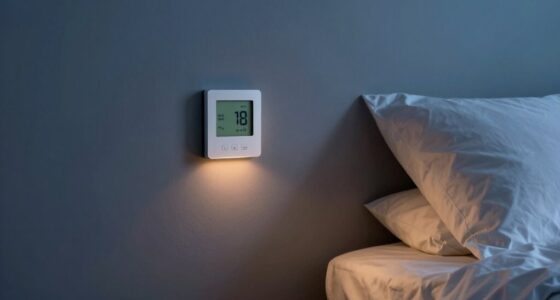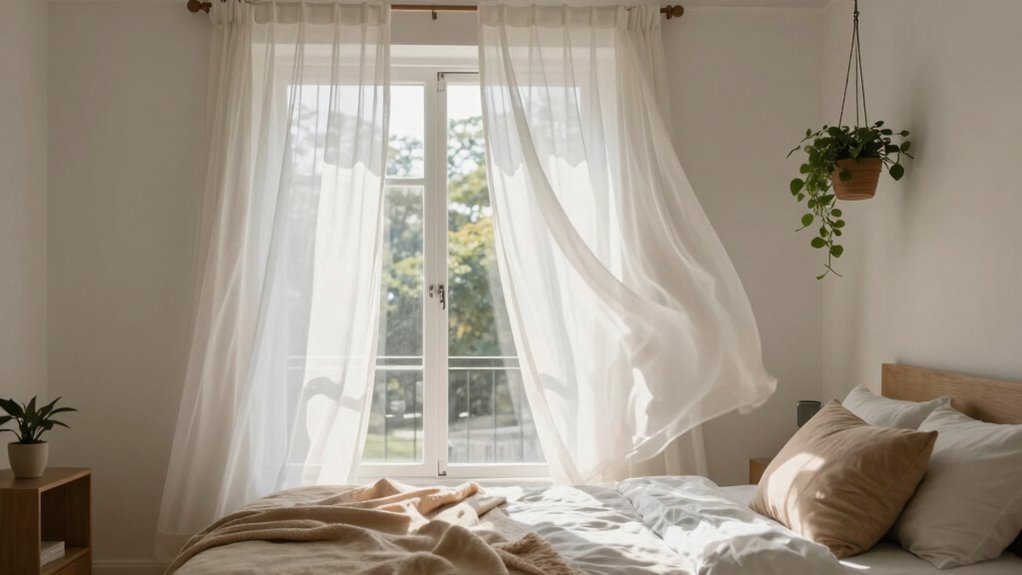
To make your bedroom feel more comfortable, you want a balanced airflow that promotes fresh air circulation without creating drafts. Open windows on opposite sides for cross-ventilation, especially during cooler times of the day. Use ceiling fans or oscillating fans to distribute air evenly and avoid stagnant corners. Keep furniture and clutter away from vents and windows. By optimizing placement of openings and airflow devices, you’ll create a healthier, more inviting space—discover more tips to perfect your airflow today.
Open a free Amazon Business account
Business pricing, bulk buying and tax-exempt orders.
As an affiliate, we earn on qualifying purchases.
Key Takeaways
- Cross-ventilation by opening windows on opposite sides promotes continuous, fresh airflow throughout the room.
- Proper placement of furniture and vents prevents airflow obstructions, ensuring even air distribution.
- Ceiling or oscillating fans help circulate air and eliminate stagnant pockets for enhanced comfort.
- Strategic window opening during cooler times maximizes natural ventilation and reduces reliance on mechanical systems.
- Using exhaust fans and dehumidifiers maintains optimal humidity and air quality, improving overall comfort.
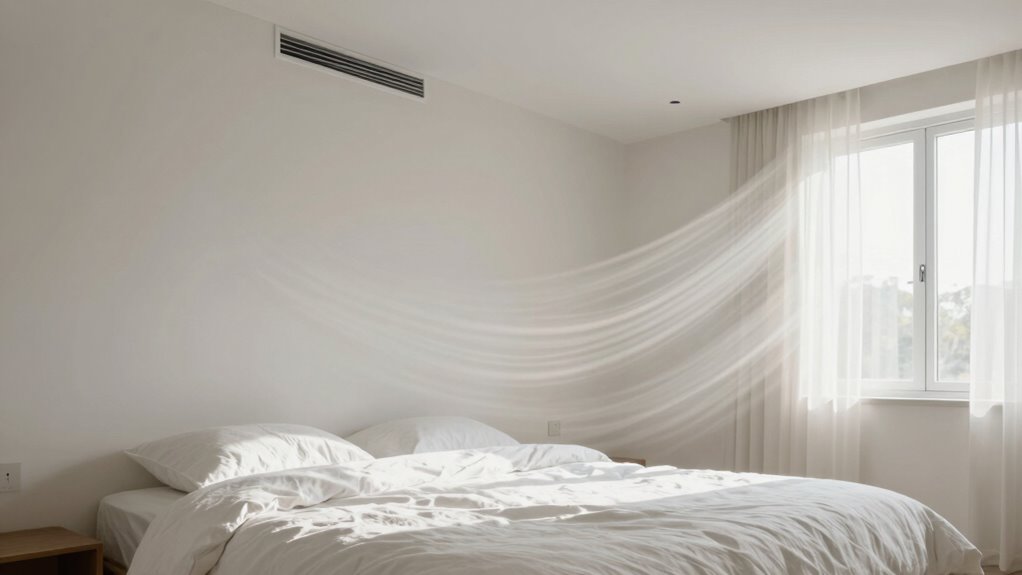
Have you ever wondered why some bedrooms feel stuffy while others stay fresh and inviting? The secret often lies in how the airflow moves through the space. Proper airflow pattern is vital for creating a comfortable environment, and understanding ventilation strategies can make a big difference. When you optimize airflow, you help remove stale air, control humidity, and maintain a consistent temperature—all of which contribute to a more pleasant bedroom experience.
To start, think about how air enters and exits your room. Good ventilation strategies involve positioning windows, vents, or exhaust fans to promote natural airflow. For example, cross-ventilation can be achieved by opening windows on opposite sides of the room, allowing fresh air to flow in one side and push out stale air on the other. This creates a gentle, continuous airflow that refreshes the space without causing drafts. If natural ventilation isn’t enough, consider using ceiling fans or oscillating fans to enhance airflow optimization. These devices help circulate air evenly, preventing pockets of stagnant air from forming in corners or near furniture.
The placement of your furniture and the layout of the room also influence airflow. Avoid blocking vents or windows with large pieces of furniture, as this can impede circulation and lead to uneven air distribution. Keep pathways clear so air can move freely around the room. When designing or rearranging, think about creating a flow that encourages air to circulate throughout the entire space rather than stagnate in one corner. Properly directed airflow ensures that fresh air reaches every part of the bedroom, helping you breathe easier and sleep more comfortably. Additionally, understanding the airflow pattern can help you identify and eliminate areas of poor circulation that contribute to discomfort. Recognizing the importance of proper ventilation techniques can further improve your room’s airflow efficiency.
Furthermore, incorporating natural ventilation methods, such as opening windows during cooler parts of the day, can reduce reliance on mechanical systems and promote sustainable airflow practices. Using airflow patterns to guide your ventilation choices ensures a balanced and effective approach to air circulation. It’s also helpful to consider how room layout impacts airflow, as strategic placement of openings and furniture can greatly enhance circulation. Additionally, controlling humidity levels is an essential part of airflow management. Excess moisture can lead to discomfort and mold growth, so using dehumidifiers or ensuring good ventilation during humid weather can improve overall air quality. Incorporate exhaust fans in areas prone to moisture, like near the bed or in the bathroom if it’s part of the bedroom suite. These ventilation strategies help keep humidity in check and support a healthy airflow pattern.
In the end, creating an ideal airflow pattern is about balancing natural and mechanical ventilation to suit your space. By paying attention to how air moves through your bedroom and making small adjustments—like strategic window placement, furniture arrangement, and the use of fans—you can markedly enhance comfort. Proper airflow optimization doesn’t just improve air quality; it transforms your room into a relaxing retreat where you can sleep soundly and wake up feeling refreshed.
As an affiliate, we earn on qualifying purchases.
Frequently Asked Questions
How Does Outdoor Climate Affect Bedroom Airflow Patterns?
Outdoor climate profoundly affects your bedroom airflow patterns through outdoor ventilation and climate influence. When the weather is warm, breezes can help circulate fresh air, making your room more comfortable. Conversely, in humid or cold conditions, airflow might decrease or become uneven, impacting comfort. You can optimize airflow by adjusting windows and vents based on outdoor climate, ensuring a steady, pleasant breeze that enhances your sleep environment regardless of outside conditions.
Can Ceiling Fans Alter the Ideal Airflow for Comfort?
Yes, ceiling fans can considerably improve your bedroom’s airflow for comfort. Don’t worry about their efficiency; modern fans are designed for ideal airflow customization, allowing you to adjust speed and direction. By strategically positioning your ceiling fan, you can improve circulation, making the room feel cooler in summer and warmer in winter. This flexibility ensures you enjoy a comfortable environment year-round, tailored to your personal preferences.
What Are Signs of Poor Airflow in a Bedroom?
You can tell if airflow is poor in your bedroom by feeling stuffiness or stuffy air, which indicates low air circulation. You might notice lingering odors or excessive humidity, showing ventilation efficiency is lacking. If windows or vents aren’t helping, or if you experience uneven temperatures, these signs point to airflow issues. Improving air circulation with fans or opening windows can enhance ventilation efficiency, making your room more comfortable.
How Often Should Airflow Patterns Be Adjusted?
You should adjust airflow patterns regularly, ideally every few weeks, to maintain effective ventilation strategies and airflow maintenance. Changes in seasons, weather, or room usage can impact comfort, so keep an eye on signs of poor airflow like stuffiness or uneven temperature. Regularly tweaking vents, fans, or window positions ensures fresh air circulates efficiently, enhancing comfort and indoor air quality. Stay attentive to your room’s airflow needs for a healthier, more comfortable space.
Do Window Placements Impact Airflow Effectiveness?
Think of your bedroom’s airflow as a dance—window orientation and vent placement lead the steps. Properly positioned windows allow fresh air to flow in naturally, while strategic vent placement ensures stale air exits efficiently. If your windows face prevailing winds or are poorly placed, airflow becomes sluggish. You can’t choreograph a comfortable breeze without taking these factors into account, so optimize window orientation and vent placement for the best airflow.
As an affiliate, we earn on qualifying purchases.
Conclusion
By mastering airflow patterns, you create a sanctuary where cool breezes soothe and warm currents embrace. It’s a dance between comfort and freshness, where gentle air circulation transforms your bedroom into a haven of tranquility. Just as a whisper of wind can invigorate, the right airflow balances serenity with energy. In this delicate interplay, you find not just comfort, but a space that refreshes your soul—proving that sometimes, the simplest patterns hold the greatest power.
As an affiliate, we earn on qualifying purchases.
As an affiliate, we earn on qualifying purchases.
NFL season / tailgating Picks
team gear
As an affiliate, we earn on qualifying purchases.