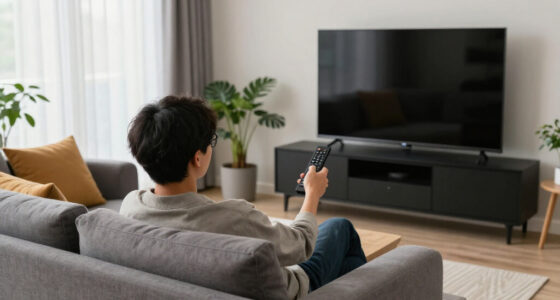
This checklist is for anyone setting up or refreshing a smart living room and deciding which appliances belong in the mix. It covers the main screen, ways to stream and listen, floor care, and controls for connected devices.

Get home appliances delivered free with Prime
- Fast, free delivery on millions of items
- Prime Video, Amazon Music and more included
- Member-only deals all year
The sections follow those everyday uses: watching, streaming, cleaning, listening, and managing power or a ceiling fan. Each one focuses on the role of the pick and the details to check before bringing it home.
Use the notes as a fit check, then confirm the product’s current dimensions, compatibility requirements, and setup instructions. Start with the items that solve a clear need in your room, and add the rest as they make sense.
Smart TV
A television is often the main viewing hub in a living room, so its screen size and placement shape the experience. The Samsung 65-Inch S90H OLED 4K Smart TV (2026) is the pick for this slot. Before choosing a 65-inch set, measure the wall or stand and consider how far the main seats are from the screen. Check that the intended mounting setup or furniture can support the television and leave room for its connections.
A common mistake is choosing a screen based on the room’s width alone, without checking viewing distance, glare, or where people sit. Map out the primary seating positions and note windows and lamps that could reflect on the screen. Confirm the TV’s exact dimensions, mounting pattern, input layout, and smart features in the product documentation. Also check that the cables and connected equipment you plan to use can reach the installation point. A room-first measurement makes it easier to decide whether this size suits the space and how the rest of the setup should be arranged.
What to look for:
- Measure the available wall or stand width and height.
- Check viewing distance from the main seats.
- Confirm mounting compatibility and support requirements.
- Review input locations and cable reach for planned devices.
- Consider window and lamp placement relative to the screen.
Samsung 65-Inch S90H OLED 4K Smart TV (2026)

This 65-inch OLED TV features 4K resolution, a matte Glare Free screen, and AI processing for upscaling and enhancing picture and motion. Its gaming features include a refresh rate up to 165 Hz, NVIDIA G-SYNC, and AMD FreeSync Premium Pro support; it also has Dolby Atmos audio and a 2.2-channel speaker system.
Pros:
- OLED display with self-illuminating pixels and 4K resolution
- Matte Glare Free screen reduces distracting reflections
- AI features upscale content and smooth fast-moving action
- Gaming support includes up to 165 Hz and variable refresh technologies
Cons:
- 4K at 165 Hz requires a compatible PC-connected game and graphics card
- Picture and performance may vary with source content and graphics processing
Best for: A living room planned around a 65-inch television
Not ideal for: A space without enough room for a 65-inch screen
Bottom line: Measure the viewing area and installation spot before making this the room’s main screen.
Streaming Device
A separate streaming device can be useful when you want a dedicated media player in the living room setup. The NVIDIA SHIELD TV Pro 4K HDR Streaming Media Player fills that role. Before buying, check what services and playback features you actually need, then compare those requirements with the device’s current specifications. Confirm the available connections and whether your television and any audio equipment support the formats and connections you intend to use.
One common buying mistake is assuming every streaming box works equally well with every display, sound system, or home network. Check the product documentation for device compatibility, supported formats, network requirements, and the physical space needed near the TV. Make sure the chosen location has an accessible power outlet and that its cables will reach without crossing walkways or pulling taut. If you already rely on the television’s built-in apps, decide which specific need this player would address before adding another device. A little planning helps keep the media area tidy and avoids a player that does not fit the rest of the setup.
What to look for:
- Confirm the formats and playback features you need.
- Check compatibility with the TV and audio equipment.
- Review network and connection requirements.
- Measure shelf space and plan for cable reach.
- Identify the specific role beyond the TV’s built-in apps.
NVIDIA SHIELD TV Pro 4K HDR Streaming Media Player

The NVIDIA SHIELD TV Pro streams 4K HDR content with Dolby Vision and Dolby Atmos, and uses AI upscaling to enhance HD video. It includes a Tegra X1+ processor, 3 GB RAM, 16 GB storage, two USB 3.0 ports, built-in Chromecast 4K, and Plex Media Server.
Pros:
- AI upscaling enhances HD video to 4K
- Supports Dolby Vision HDR and Dolby Atmos
- Two USB 3.0 ports support external devices and storage
- Remote includes voice control, backlit buttons, and a locator
Cons:
- Game controller is sold separately
- Built-in storage is 16 GB
Best for: Viewers who want a separate streaming player
Not ideal for: A setup already well served by built-in TV apps
Bottom line: Match the player’s documented features and connections to your existing media setup.
Robot Vacuum
Floor care can be easier to plan when you account for everyday obstacles before choosing an automated cleaner. The eufy E25 Robot Vacuum and Mop with HydroJet Roller Mop is the pick for this slot. Walk the cleaning area and note rugs, thresholds, cords, furniture legs, and tight spaces. Check the product’s documented dimensions and operating requirements against those features, and review what floor types and cleaning tasks it is designed to handle.
A frequent mistake is expecting one device to suit every surface and room layout without checking its instructions. Look for clear guidance on floor compatibility, rug handling, water use, and any preparation or maintenance the mop function requires. Consider where the unit will be stored or charged and whether that spot is accessible without blocking a doorway. If there are delicate rugs or areas you do not want cleaned, confirm how the device handles boundaries and exclusions. Compare the instructions with your own floor plan rather than relying on assumptions about what a robot cleaner can navigate. A realistic layout check helps you decide whether this combination vacuum and mop suits your home.
What to look for:
- Compare device dimensions with furniture clearance and thresholds.
- Check documented compatibility with your floor types and rugs.
- Review instructions for the mop function and water use.
- Plan an accessible storage or charging location.
- Confirm options for excluding delicate or off-limit areas.
eufy E25 Robot Vacuum and Mop with HydroJet Roller Mop

The eufy E25 combines robot vacuuming and mopping, using 20,000 Pa suction and a HydroJet roller mop that refreshes with clean water during use. Its all-in-one station empties dust, washes and dries the mop, and refills water; laser-guided navigation, app and voice controls, and anti-tangle brushes support automated cleaning in homes with pets.
Pros:
- Combines vacuuming and mopping with strong suction and a continuously refreshed roller mop.
- All-in-one station handles dust emptying, mop washing and drying, and water refilling.
- Anti-tangle brushes are designed to reduce pet-hair buildup and manual cleanup.
- Laser-guided mapping supports up to five floor plans, with an extendable arm for edges and corners.
Cons:
- Wi-Fi connectivity is limited to 2.4 GHz.
- The stated mop lift is 10.8 mm, which may limit carpet clearance.
Best for: Homes seeking a vacuum and mop in one device
Not ideal for: Rooms with obstacles or surfaces outside its documented compatibility
Bottom line: Check floor types, clearances, and mop instructions against the rooms you want cleaned.
Smart Speaker
A living room speaker should fit both the way you listen and the space where it will sit. The Sonos Five Wireless HiFi Speaker, White is the pick here. Before selecting a location, consider whether you want it near the television, in a listening area, or elsewhere in the room. Check the product documentation for placement guidance, power needs, connectivity, and compatibility with the devices and services you plan to use.
A common mistake is focusing on the speaker alone and overlooking the practical setup around it. Measure the shelf or surface, leave the clearances specified by the manufacturer, and make sure a power outlet is within reach. If you intend to use it alongside the TV or other speakers, verify the supported connections and setup requirements first. Also consider where people sit and whether the chosen spot leaves the controls and connections accessible. Review current documentation for the listening setup you want, including any app or network requirements. These checks help prevent a speaker that has no convenient home or does not work with the rest of your room.
What to look for:
- Measure the intended shelf or surface.
- Confirm outlet access and cable reach.
- Check supported connections and network requirements.
- Verify compatibility with planned devices and services.
- Review placement instructions for the room.
Sonos Five Wireless HiFi Speaker, White

The Sonos Five is a wireless speaker with three woofers and three tweeters designed for room-filling sound and stereo playback. Control it through the Sonos app or Apple AirPlay 2, connect audio devices through its 3.5 mm line-in port, and use Trueplay to tune sound to your room.
Pros:
- Room-filling sound with six-driver design
- Supports stereo playback and speaker pairing
- Works with the Sonos app and Apple AirPlay 2
- 3.5 mm line-in connects turntables and other audio devices
Cons:
- Not water resistant
- Requires corded power
Best for: Listeners planning a dedicated living room speaker
Not ideal for: A room without a suitable surface or accessible outlet
Bottom line: Choose its location and verify the required connections before setting up the speaker.
Smart Plug
A smart plug can add control to a compatible device, but the outlet and appliance both need to suit the setup. The Kasa Smart Plug Mini EP10P4, 4-Pack provides four plugs for this checklist. Before using one, check the manufacturer’s compatibility guidance for the connected appliance, outlet, and electrical requirements. Decide which devices you want to control and whether their location leaves the plug accessible after installation.
One common mistake is assuming a smart plug works with every appliance or fits comfortably beside other plugs. Review the instructions for supported loads, setup, network needs, and any device types that should not be connected. Check the outlet orientation and spacing, especially where outlets share a wall plate or sit behind furniture. Keep the plug reachable for setup and resetting, and confirm that the planned device’s own controls behave as you expect when power is switched. For a multi-pack, make a short room-by-room list so each plug has a clear purpose. Careful outlet and device checks help avoid blocked sockets or a connection that does not match the manufacturer’s guidance.
What to look for:
- Check the product’s electrical and appliance compatibility guidance.
- Confirm the outlet has enough clearance for the plug.
- Review network and setup requirements.
- Keep the plug accessible after furniture is in place.
- Assign each plug to a specific compatible device.
Kasa Smart Plug Mini EP10P4, 4-Pack
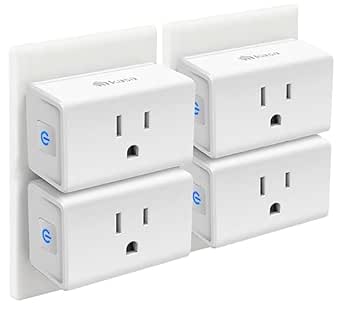
Four compact Wi-Fi smart plugs let you control lights and small appliances by voice or through the Kasa app. They connect to 2.4 GHz Wi-Fi without a hub and support schedules, timers, and Away Mode.
Pros:
- Compact design leaves the second outlet accessible
- Supports voice control and app-based control from anywhere
- Schedules, timers, and Away Mode are included
- UL certified
Cons:
- Requires a 2.4 GHz Wi-Fi connection
- Kasa app is required for setup and control
Best for: Households with several compatible devices to control
Not ideal for: Appliances or outlets that do not meet the documented requirements
Bottom line: Verify each connected device and outlet against the plug’s instructions before setup.
Universal Remote
A ceiling fan remote kit can bring fan and light controls into the living room’s everyday routine. The Universal Wi-Fi Ceiling Fan Remote Control Kit with Dimmable Light is the pick for this slot. Before choosing a kit, identify the fan and light setup it must work with, including the existing controls and wiring arrangement. Check the manufacturer’s compatibility list and installation instructions rather than assuming a universal label guarantees a match.
A common mistake is buying based on the room’s fan alone without checking the receiver, light, and wall controls. Confirm whether the kit supports the specific fan configuration and dimmable light arrangement you have, and review the documented Wi-Fi and control requirements. Measure the space where any receiver component must fit, and make sure the installation instructions align with the existing fixture. If the current wiring or controls are unclear, identify the model information before ordering so you can compare it with the kit’s requirements. Check the control setup you want and the product’s pairing process in advance. That compatibility review helps avoid a kit that cannot perform the functions your fan and light need.
What to look for:
- Identify the fan model and current control arrangement.
- Verify compatibility with the fan and light configuration.
- Check receiver dimensions and installation requirements.
- Review Wi-Fi and pairing requirements.
- Confirm the kit supports the intended dimming controls.
Universal Wi-Fi Ceiling Fan Remote Control Kit with Dimmable Light

This Wi-Fi remote control kit lets you operate a ceiling fan and its light separately, with three fan speeds and dimming support for compatible LED, CFL, and incandescent bulbs. It works with Alexa, Google Assistant, IFTTT, and the Smart Life app without a hub, and requires a 2.4 GHz Wi-Fi network.
Pros:
- Controls fan and light separately
- Offers three fan speeds and dimming for compatible bulbs
- Supports voice control and the Smart Life app without a hub
- Compact receiver fits most conventional ceiling fan covers
Cons:
- Requires a 2.4 GHz Wi-Fi network
- Compatibility may depend on the fan and available space inside its cover
Best for: Rooms needing compatible fan and dimmable light controls
Not ideal for: Fans or wiring arrangements outside the kit’s documented compatibility
Bottom line: Match the kit’s compatibility and installation details to the existing fan before purchase.
For a budget-first buying order, begin with the item that addresses the most important daily need in your living room. Measure and check compatibility before buying the TV or fan kit; then consider the streaming device, speaker, vacuum, and plugs according to the tasks you want each to handle. This order keeps practical fit checks at the center of each decision.
You do not have to outfit every part of a smart living room at once. Start with one well-matched pick, confirm that it works in your space, and build from there. A few careful checks can make the finished room feel useful and comfortable for the way you watch, listen, clean, and relax.