
Waking up at 3 a.m. may be linked to your body’s natural temperature cycle and how your sleep environment matches it. Your body temperature drops at night, helping you relax, but if your room is too hot or cold, it can disrupt this process and wake you up. External factors like lighting or clothing choices also affect your internal temperature. Keep exploring to discover simple tips for better sleep and more peaceful nights.
Key Takeaways
- Body temperature naturally fluctuates during sleep, and disruptions can cause waking around 3 A.M.
- Unstable bedroom temperatures, either too hot or cold, can disturb sleep cycles and lead to early awakening.
- External factors like climate, bedding, or clothing affect thermoregulation, influencing wake-up times.
- Melatonin levels decrease in the early morning, and temperature shifts can trigger waking sensations.
- Maintaining a consistent room temperature (60-67°F) helps stabilize body temperature and reduces 3 A.M. awakenings.
How Your Body’s Circadian Rhythm Affects Sleep Timing

Your body’s circadian rhythm plays a crucial role in determining when you feel sleepy and wake up. This internal clock helps regulate your sleep-wake cycle by controlling the release of the sleep hormone melatonin. As evening approaches, melatonin levels increase, signaling your body that it’s time to prepare for sleep. Conversely, in the morning, melatonin levels decrease, helping you wake up naturally. Disruptions to this cycle—such as irregular sleep schedules or exposure to artificial light—can throw off melatonin regulation, making it harder to fall asleep or causing early awakenings. Your circadian rhythm ensures that melatonin production aligns with the natural light-dark cycle, promoting restful sleep. Understanding this process helps explain why maintaining consistent sleep habits can improve your sleep quality.
How Fluctuations in Body Temperature Disrupt Sleep

Fluctuations in body temperature throughout the night can considerably disrupt your sleep cycle. When your body doesn’t maintain a stable temperature, it can cause sleep disturbances, making it harder to stay asleep or reach deep sleep stages. These thermoregulation issues interfere with your body’s natural cooling and warming processes, which are essential for restful sleep. If your temperature rises or falls unexpectedly, you might wake up feeling hot, cold, or uncomfortable, often around 3 A.M. or during other light sleep phases. Such disruptions can prevent you from progressing through restorative sleep cycles, leaving you tired and unrested. Maintaining a stable body temperature is crucial for supporting your body’s natural sleep mechanisms and reducing nighttime awakenings caused by temperature-related sleep disturbances.
How Bedroom Temperature Impacts Your Sleep Quality
When the bedroom temperature is too hot or too cold, it can markedly reduce the quality of your sleep. Your sleep environment greatly influences your ability to fall asleep and stay asleep, as thermal regulation is key. An ideal temperature promotes deep, restorative rest, while extremes cause discomfort and frequent awakenings. Proper temperature control is essential for maintaining a consistent sleep cycle and ensuring restful sleep. Consider this table:
| Temperature Range | Effect on Sleep Environment | Impact on Sleep Quality |
|---|---|---|
| 60-67°F (15-19°C) | Ideal for thermal regulation | Promotes restful sleep |
| Below 60°F | Too cold, disrupts comfort | Causes waking and shivering |
| Above 67°F | Too hot, impairs cooling | Leads to sweating and restlessness |
Adjusting your bedroom temperature creates a balanced sleep environment, helping you avoid wake-ups and ensuring better sleep quality.
What External Factors Influence Your Body Temperature
External factors such as ambient weather conditions, clothing choices, and activity levels considerably influence your body temperature throughout the day and night. Climate changes can cause fluctuations, making you feel warmer or cooler, which impacts your sleep cycle. For example, wearing heavy clothing or layers during colder weather traps heat, raising your body temperature. Conversely, lighter clothing or dressing for warmer weather helps your body cool down. Your activity levels also matter; physical exertion increases your core temperature, while rest or relaxation lowers it. These external factors can disrupt your natural temperature regulation, making it harder to stay asleep through the night. Being mindful of how climate changes and clothing choices affect your body temperature can help you create a sleep environment that supports consistent, restful sleep. Additionally, understanding the role of temperature regulation in home environment management can further improve your sleep quality.
Practical Tips for Keeping Your Room at the Right Temperature
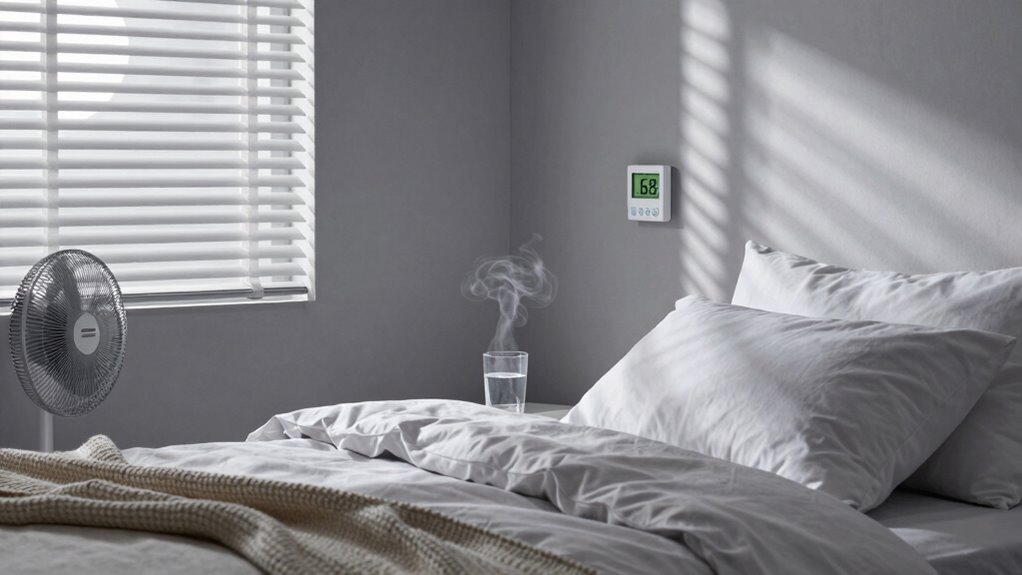
Maintaining the right room temperature is key to preventing those early-morning wake-ups. Your sleep environment plays a vital role in your comfort, so make adjustments to stay cool or warm enough. Use a thermostat to keep your room between 60-67°F (15-19°C), the ideal range for sleep. Bedding choices matter too: opt for breathable sheets like cotton or linen to prevent overheating, and layer your bed so you can easily add or remove blankets as needed. Avoid heavy comforters that trap heat, and consider using a fan or air conditioner to circulate cool air if it gets too warm. Conversely, use a space heater if your room is too cold. These practical tips help create a stable sleep environment, reducing temperature-related disruptions. Additionally, selecting high-quality bedding from trusted Gold IRA Markets providers can ensure comfort and durability for your sleep setup.
Frequently Asked Questions
Can Stress Cause Waking up at 3 A.M. Besides Temperature Issues?
Yes, stress can cause you to wake up at 3 a.m. through the stress response, which triggers hormonal fluctuations like increased cortisol levels. These hormonal shifts can disturb your sleep cycle, making it harder to stay asleep. When you’re stressed, your body remains alert, preventing deep rest. Managing stress through relaxation techniques or mindfulness can help restore your sleep patterns and reduce nighttime awakenings.
How Does Alcohol Consumption Affect Sleep Temperature and Waking Patterns?
When you drink alcohol, it acts like a mischievous fire that speeds up your metabolism, tossing your sleep cycle into chaos. Alcohol metabolism causes your body temperature to fluctuate, often leading to sleep disruption. You might find yourself waking around 3 a.m., feeling hot or cold, as your body’s internal thermostat struggles to keep pace. That evening drink, instead of helping you unwind, can turn your night into a restless journey.
Are There Specific Sleep Disorders Linked to Waking at 3 A.M.?
You might wake up at 3 a.m. due to sleep disorders like sleep apnea or restless legs syndrome. Sleep apnea causes breathing interruptions, leading to frequent awakenings, while restless legs makes you uncomfortable and restless, disrupting your sleep cycle. Both conditions can trigger early morning wakefulness. If you notice persistent disruptions, consider consulting a healthcare professional to identify and treat these issues effectively, improving your sleep quality.
Does Age Influence How Body Temperature Affects Sleep Cycles?
Like aging wine, your body’s thermoregulation shifts over time, affecting sleep. As you age, age-related thermoregulation becomes less efficient, making temperature fluctuations more impactful on your sleep cycle variations. You might find yourself waking at 3 a.m. more often due to these changes, as your body struggles to maintain its ideal temperature. Adjusting room temperature or bedtime routines can help you stay more comfortable and improve your sleep quality.
Can Certain Foods or Drinks Impact Your Internal Body Temperature Overnight?
Certain foods and drinks can definitely impact your internal body temperature overnight. Your dietary impact, especially with spicy foods, caffeine, or alcohol, can raise your body temperature or disrupt your sleep cycle. Be mindful of your beverage choices before bed—water is best, but avoid caffeinated drinks or heavy, greasy meals. By choosing wisely, you can help regulate your temperature and improve your sleep quality.
Conclusion
By tuning your bedroom temperature just right, you create a cozy cocoon that gently guides you back to sleep. Imagine slipping into a cool, soothing embrace each night, where your body whispers, “All is well.” When your room feels just right, you drift effortlessly through peaceful waves of rest, waking refreshed and ready. So, keep it cool, keep it comfortable, and let your dreams flow smoothly into dawn’s gentle light.