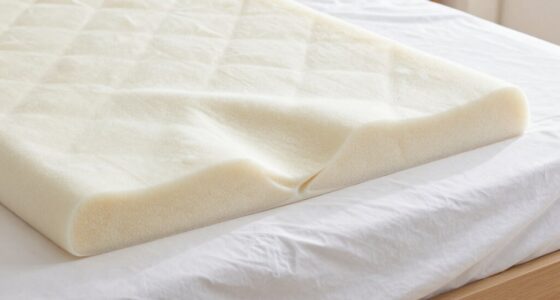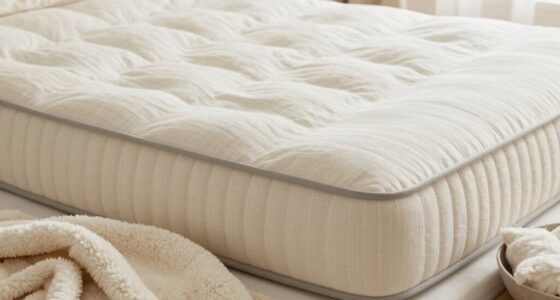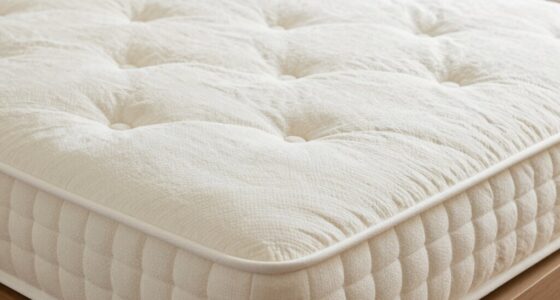

If you have restless sleep, your comfort layers could be the cause. Overly plush or heavy padding can trap heat and reduce airflow, making you feel hot and uncomfortable. Poor support or misaligned layers can cause tossing and turning as your body struggles to stay relaxed. Clumping, sinking, or uneven support may also disturb your sleep cycle. To improve, check if your mattress’s comfort layers need adjustment or replacement—more tips await if you keep exploring.
Key Takeaways
- Inadequate or overly soft comfort layers can cause misalignment, leading to tossing and turning during sleep.
- Clumping or shifting of materials like feathers creates uneven support and cold spots that disturb rest.
- Excess padding and plush layers trap heat, causing overheating and discomfort that result in restless sleep.
- Unsupported or poorly balanced comfort layers fail to maintain spinal alignment, increasing discomfort and wakefulness.
- Improper pillow firmness or height combined with comfort layer issues can cause neck pain and disrupt sleep cycles.
What Are Comfort Layers and Why Do They Matter?

Have you ever wondered what makes a good night’s sleep truly comfortable? It all comes down to comfort layers, which are vital parts of your mattress. These layers improve sleep hygiene by providing proper support and pressure relief. The materials used in these layers, like memory foam, latex, or innerspring, directly affect how well you sleep. High-quality mattress materials can help prevent aches and tossing, promoting deeper rest. Comfort layers also influence temperature regulation and responsiveness, making it easier to settle into a restful state. Selecting suitable materials for your comfort layers can significantly enhance sleep quality and longevity. Properly chosen sleep environment components ensure you wake up refreshed and pain-free. Remember, comfort layers aren’t just padding—they’re essential for creating an ideal sleep environment tailored to your needs.
Which Types of Comfort Layers Help or Hinder Sleep?
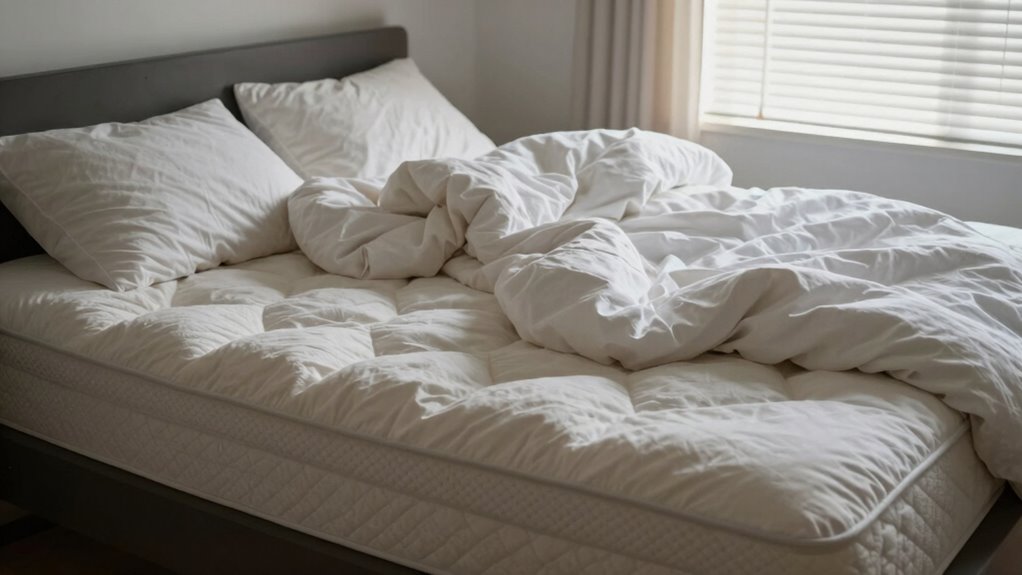
Memory foam can trap heat, making it uncomfortable if you tend to sleep hot. Latex responds quickly to movement, offering a balanced feel that many sleepers prefer. Feather layers may provide soft support, but they can clump and lose their shape over time, potentially disturbing your rest. Additionally, understanding the characteristics of comfort layers can help you choose options that promote better sleep quality.
Memory Foam’s Heat Retention
While memory foam offers excellent support and contouring, it often traps heat, making it uncomfortable for those who tend to sleep hot. This heat retention occurs because traditional memory foam absorbs and holds body heat, leading to discomfort and disrupted sleep. To combat this, some comfort layers incorporate breathable fabrics that promote airflow and dissipate heat. Additionally, cooling gels are infused into the foam to absorb excess warmth, helping you stay cooler throughout the night. These innovations can markedly improve sleep quality for hot sleepers. However, not all memory foam products include these features, so it’s essential to check whether a mattress or topper utilizes breathable materials or cooling gels. Choosing the right layer can mean the difference between a restful night and restless tossing. Understanding the role of ventilation in heat dissipation can further aid in selecting the most comfortable comfort layer.
Latex’s Responsiveness Level
Latex’s responsiveness can markedly impact your sleep experience, as it determines how quickly the mattress responds to your movements and pressure. Higher latex responsiveness means the comfort layer quickly adapts to your body, providing immediate support and reducing sinking. This is ideal if you prefer a more responsive feel, especially for rapid position changes during the night. Conversely, lower latex responsiveness results in a slower reaction, creating a softer, more contouring surface. Comfort layer firmness also plays a role; firmer latex offers a more supportive, responsive surface, while softer latex provides a plush, less reactive feel. Choosing the right level of latex responsiveness depends on your sleep preferences—whether you want quick, supportive reactions or a more relaxed, sinking sensation. Additionally, latex’s durability ensures that these responsiveness features remain effective over time, maintaining optimal sleep quality.
Feather’s Support and Clumping
Feather comfort layers can substantially influence your sleep quality through their supportiveness and tendency to clump. Feather’s support varies depending on how densely the feathers are packed and the quality of the fill. When well-constructed, feathers offer a soft, supportive feel that adapts to your movements. However, clumping issues can compromise comfort, causing uneven support and discomfort during the night. Over time, feathers tend to shift and clump, creating cold spots and uneven surfaces that hinder restful sleep. If you prefer a plush, supportive layer and want to avoid clumping, look for high-quality, well-maintained feather beds that feature proper quilting. Regular fluffing helps prevent clumping issues, ensuring your feather comfort layer maintains its support and comfort over time. Incorporating European cloud innovation into bedding design can also enhance durability and support, contributing to better sleep quality.
Can Too Much Padding Keep You From Sleeping Well?

Too much padding can trap heat and make you feel uncomfortable throughout the night. When surfaces are excessively soft, you might sink in too deeply, disrupting your sleep position. Additionally, extra insulation can reduce airflow, leaving you feeling stuffy and restless. Overly plush mattresses can also compromise spinal alignment, leading to discomfort and disrupted sleep cycles. Sleep environment factors such as padding thickness play a significant role in overall sleep quality.
Excess Padding Insulation
While adding extra padding insulation might seem like a cozy choice, too much can actually hinder your sleep quality. Overstuffing your mattress can reduce insulation effectiveness, trapping heat and causing discomfort. Excess padding also compromises padding durability, leading to quicker sagging or uneven support. When your sleep surface is overly cushioned, you might find yourself tossing and turning, unable to settle into a restful sleep. It’s essential to strike a balance between comfort and functionality. Proper insulation plays a crucial role in maintaining a comfortable sleeping temperature and supporting restful sleep throughout the night.
Overly Soft Surfaces
Even if your mattress feels plush and inviting, too much padding can make it overly soft, preventing proper support and disrupting your sleep. An overly soft surface can cause your body to sink too deeply, especially if your bed frame doesn’t offer enough stability. Your sleep position matters too—side sleepers might find extra softness comforting, but stomach or back sleepers need firmer support to maintain proper spinal alignment. When your mattress is too plush, it can lead to aches and restless nights because your muscles strain to keep your spine aligned. Choosing a balance of comfort and support is key. Ensuring your bed frame matches your mattress and sleep position helps prevent the pitfalls of overly soft surfaces, promoting restful, uninterrupted sleep. Additionally, understanding sleep ergonomics can help you select the right combination of mattress and support to optimize your rest.
Reduced Airflow Flow
A mattress with excessive padding can hinder airflow, making it harder for heat and moisture to dissipate from your body during sleep. When thick comfort layers trap air, it creates airflow barriers that prevent proper ventilation. This reduces the exchange of fresh air and traps heat, leading to discomfort and restless nights. To improve airflow, choose breathable fabrics like cotton or linen for sheets and pillow covers. Avoid overly dense padding that acts as an airflow barrier, which can accumulate moisture and cause sweating. Keeping your sleep surface ventilated helps regulate temperature and maintains dryness. Remember, enhanced airflow supports better sleep quality and prevents overheating, so opt for thinner, breathable layers whenever possible.
- Breathable fabrics promote cooling and comfort
- Excess padding creates airflow barriers
- Proper ventilation prevents moisture buildup
How Plush Bedding Affects Your Body’s Temperature at Night

Plush bedding can considerably influence how your body regulates temperature during the night. If your bedding is too thick or insulating, it can trap heat, raising your bed temperature and disrupting your sleep quality. Overly warm bedding prevents your body from cooling down naturally, leading to restlessness and broken sleep cycles. To better understand, consider how different layers affect heat retention:
| Layer Type | Effect on Bed Temperature | Impact on Sleep Quality |
|---|---|---|
| Plush Mattress | Insulates heat | Can cause overheating |
| Lightweight Sheets | Allows airflow | Promotes cooling |
| Heavy Comforter | Traps heat | May lead to sweating |
| Breathable Fabrics | Facilitates heat escape | Enhances comfort |
Choosing the right combination helps maintain an ideal bed temperature, improving your sleep quality. Additionally, understanding how ventilation considerations impact overall sleep comfort can help you create a more temperature-regulated sleep environment.
Is Your Comfort Layer Making You Restless? Recognize the Signs

If your comfort layer isn’t properly balanced, it can cause your sleep to become restless and interrupted. You might notice discomfort that prevents you from reaching deep sleep stages. Signs include waking up frequently, feeling stiff, or sore. Pay attention to your pillow firmness—if it’s too soft or too firm, it can misalign your neck, especially if your sleep position isn’t supported. Your sleep position matters; stomach sleepers need a softer pillow, while back and side sleepers require more support. Additionally, supportive sleep technology can help optimize your sleep posture and comfort, reducing discomfort caused by improper layers.
How to Choose the Right Comfort Layers for Better Support
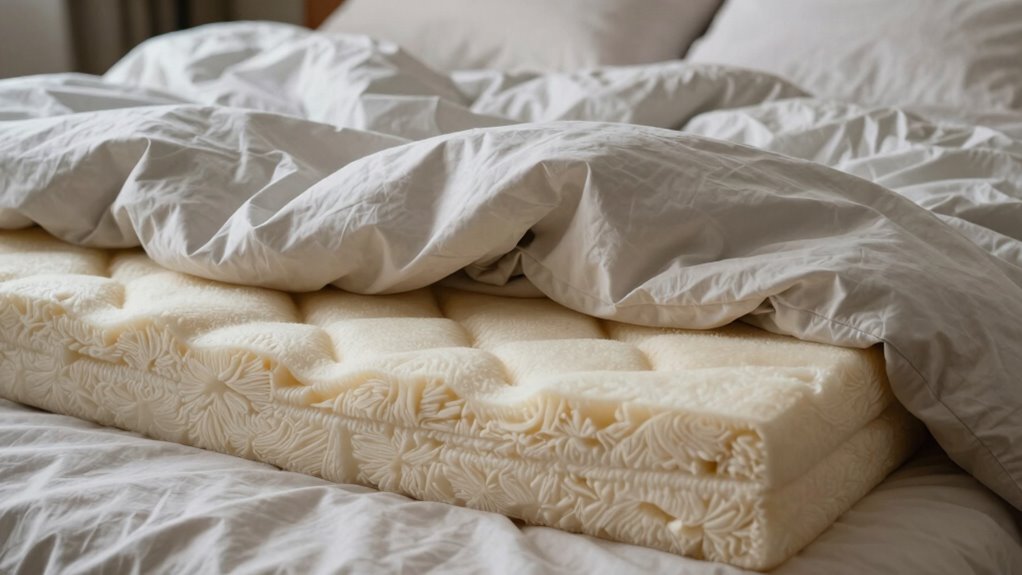
Choosing the right comfort layers starts with understanding your sleep position and how your current setup affects your rest. Your bed height influences how easily you get in and out of bed, which impacts comfort and alignment. If you sleep on your side, you need a comfort layer that cushions your shoulders and hips without raising your bed too high. Back sleepers benefit from firmer support to maintain spinal alignment, so a thinner or firmer layer might work best. For stomach sleepers, a softer, lower-profile layer prevents your head and neck from elevating too much. Always consider how your comfort layer complements your bed height and sleep position to achieve better support, reduce pressure points, and promote restful sleep.
Should You Adjust or Remove Comfort Layers for Restful Sleep?

Sometimes, adjusting or removing comfort layers can considerably improve your sleep quality, especially if your current setup isn’t providing the support you need. If your bed feels too high or low, it can affect your comfort and ease of getting in and out. Changing mattress firmness or removing extra layers might help you find a better balance. Before making a change, consider these points:
- The ideal bed height for easy movement and proper alignment
- How mattress firmness impacts pressure points and spinal support
- Whether your current comfort layers are causing your sleep disturbances
Why Support and Alignment Are Key for Comfortable Nights

Proper support and alignment are essential for a restful night’s sleep because they guarantee your spine stays in a neutral position throughout the night. When your body maintains correct alignment, your sleep cycle flows smoothly, reducing disruptions caused by discomfort or pain. Good support also improves sleep hygiene by minimizing tossing and turning, helping you fall asleep faster and stay asleep longer. Without proper support, pressure points develop, leading to restless nights and uneven sleep quality. Supporting your body’s natural curves ensures your muscles relax fully, which is crucial for restorative sleep. Investing in a mattress and pillows that promote proper support and alignment can make a significant difference, helping you wake up refreshed and ready for the day. Prioritizing support ultimately leads to better sleep health and overall well-being.
When Should You See a Sleep Expert or Mattress Specialist?
If you find yourself consistently waking up tired despite trying different mattresses or sleep routines, it may be time to consult a sleep expert or mattress specialist. Persistent discomfort, ongoing sleep disturbances, or pain could signal issues with pillow firmness or your sleep position. A specialist can assess whether your mattress and pillow support your preferred sleep posture effectively. They might recommend adjustments to pillow firmness or suggest a mattress tailored to your sleep position. Recognizing when your sleep environment isn’t enough is key to improving rest and avoiding long-term issues.
If waking tired persists, consult a sleep expert to optimize your mattress and pillow support.
- You wake up exhausted despite good sleep habits
- Persistent neck or back pain linked to your sleep setup
- Unsatisfactory sleep despite trying multiple mattresses
Frequently Asked Questions
How Do I Know if My Comfort Layer Is Causing My Sleep Issues?
You can tell if your comfort layer is causing sleep issues by noticing if you wake up with pressure points or feel too hot during the night. If your mattress feels uncomfortable or doesn’t support proper temperature regulation, it may lead to restless sleep. Try changing or upgrading your comfort layer to see if it reduces pressure points and helps maintain a cooler, more comfortable sleep environment.
Can Replacing Comfort Layers Improve Sleep Quality Without Buying a New Mattress?
Did you know that 85% of people see better sleep after upgrading just their comfort layers? Replacing comfort layers can notably improve sleep quality without buying a new mattress. Focus on mattress maintenance and good sleep hygiene, like keeping your bedding fresh and maintaining a comfortable temperature. This simple change can refresh your sleep environment, reduce discomfort, and lead to more restful nights without the expense of a whole new mattress.
Are Certain Materials More Prone to Causing Restless Sleep?
Certain materials can make you restless, especially if you’re sensitive to them or struggle with temperature regulation. For example, memory foam may trap heat and cause discomfort, leading to disrupted sleep. Latex tends to breathe better and offers more consistent temperature control, reducing the chance of material sensitivity. Choosing breathable, hypoallergenic materials can help you stay comfortable and improve your sleep quality throughout the night.
How Often Should I Replace or Update My Comfort Layers?
You should replace or update your comfort layers every 3 to 5 years to maintain mattress longevity and support good sleep hygiene. Over time, materials break down, leading to restless sleep or discomfort. Regularly check for signs of wear, such as sagging or lumps, and consider updating your comfort layers promptly. Doing so guarantees your sleep environment stays supportive, comfortable, and conducive to restful nights.
What Are the Signs That My Current Comfort Layer Is No Longer Effective?
You’ll notice your comfort layer isn’t effective if your sleep quality declines, you wake up feeling sore, or you see visible sagging or lumps. If your memory foam no longer contours properly or the cooling gels aren’t providing relief from heat, it’s time to evaluate an update. These signs indicate your comfort layer isn’t supporting you as it used to, affecting your overall sleep.
Conclusion
If your sleep feels like a restless tide, your comfort layer might be the hidden current pulling you under. By tuning into how your bedding supports and cradles you, you can steer toward calmer seas. Adjust or replace those layers to create a soothing haven where dreams can drift peacefully. Remember, the right comfort layer is your anchor—keeping you steady, supported, and finally, asleep at last.