
If your arms go numb at night, your sleep setup might be causing nerve compression or restricted blood flow. Poor pillow support, an unsupportive mattress, or awkward sleep positions—like arms overhead or tucked under—can pressure nerves and block circulation. Adjusting your pillow height, choosing a supportive mattress, and maintaining proper posture can reduce numbness. Keep exploring for more tips on creating a sleep environment that protects your nerves and improves your rest.
Why Do Your Arms Go Numb When You Sleep?

Your arms may go numb during sleep because of pressure on nerves or restricted blood flow. Poor pillow materials can contribute to this issue, especially if your pillow is too firm or flat, causing your head and neck to shift and compress nerves. Improving your sleep hygiene by choosing the right pillow can help reduce pressure points and promote better blood circulation. Opt for pillows made of breathable, supportive materials like memory foam or natural fibers, which conform to your shape without excessive pressure. Maintaining a consistent sleep environment and avoiding awkward positions also minimizes nerve compression. When your body is properly supported and your blood flow isn’t hindered, you’re less likely to wake up with numb arms, ensuring a more restful and comfortable sleep. Proper sleep setup can significantly impact nerve health and circulation during the night, especially when considering projector placement and environment for optimal comfort. Additionally, paying attention to sleep posture and adjusting your sleeping position can further reduce the chances of nerve compression and numbness. Proper alignment and ergonomic positioning during sleep are essential to prevent nerve pinching and improve overall circulation. Ensuring your supportive pillow maintains proper neck alignment can also make a notable difference in nerve health throughout the night.
Which Sleep Positions Cause Arm Numbness?

Sleeping on your side can put pressure on your nerves, leading to numbness in your arms. Back sleeping might seem comfortable, but it can also cause compression and tingling if your arms are positioned awkwardly. Understanding how your chosen sleep position affects nerve pressure helps you find ways to prevent arm numbness at night. Incorporating modern sleep technology such as adjustable mattresses or sleep trackers can also help optimize your sleeping posture and reduce discomfort. Additionally, paying attention to your sleep environment and body alignment can make a significant difference in alleviating numbness. Being mindful of proper sleep ergonomics can further support nerve health and improve sleep quality, especially by ensuring your bed setup promotes correct sleep posture for optimal comfort and safety. Maintaining awareness of your sleep habits can help identify patterns that contribute to nerve compression and numbness.
Sleeping on Side Risks
Lying on your side can be comfortable, but it also increases the risk of arm numbness if you don’t position yourself carefully. Sleeping on side risks include compression of nerves or blood vessels, which can lead to numbness or tingling. Side sleeping dangers often stem from placing too much pressure on your shoulder or arm, especially if your pillow or mattress isn’t supportive. If your arm is tucked under your body or head, it can restrict circulation or compress nerves like the ulnar nerve, causing numbness. To reduce these risks, ensure your pillow keeps your neck aligned and avoid sleeping with your arm under your body. Proper positioning can help minimize side sleeping dangers and improve overall comfort during the night. Additionally, choosing proper sleep setups can make a significant difference in preventing arm numbness, especially when considering factors like mattress firmness and pillow height. Being mindful of your sleep environment can further help prevent unnecessary pressure on your limbs. Paying attention to sleep posture can also contribute to better circulation and nerve health during rest. Using supportive pillows designed for side sleepers may also help distribute pressure more evenly and reduce numbness.
Back Sleep and Numbness
While side sleeping can cause arm numbness due to pressure on nerves or blood vessels, back sleeping tends to distribute pressure more evenly. To prevent numbness, focus on pillow alignment; support your neck and head properly to maintain spinal alignment without pushing your arms into uncomfortable positions. Your mattress selection also plays a key role—choose a mattress that offers enough support to keep your body balanced and reduce pressure points. Avoid overly soft or sagging mattresses that can cause misalignment, leading to nerve compression. Ensure your pillow isn’t too high or low, which can cause your head and neck to twist, affecting arm circulation. Properly aligning your pillow and mattress can make back sleeping more comfortable and minimize the risk of waking up with numb arms. Additionally, choosing trusted local mattress stores can help you find a supportive sleeping surface tailored to your needs. Incorporating proper sleep posture and adjusting your sleeping environment can further reduce the chances of numbness and improve overall sleep quality. Paying attention to pressure points and how your body interacts with your sleeping setup can make a significant difference in preventing numb arms. Being mindful of body alignment can help reduce nerve compression and enhance sleep comfort. Ensuring a comfortable sleeping position can also contribute to better circulation and reduce numbness during the night.
How Pillow Height Can Lead to Nerve Compression

Choosing a pillow that’s too high or too low can put unnecessary strain on your neck and nerves. When your pillow height isn’t right, your neck may be forced into an unnatural position, increasing the risk of nerve compression. A pillow that’s too thick can bend your neck forward, compressing nerve pathways in your cervical spine. Conversely, a pillow that’s too flat may cause your head to tilt downward, overstretching nerves and muscles. Both scenarios can lead to tingling, numbness, or even pain in your arms and hands. Ensuring your pillow height supports a neutral spine alignment helps reduce pressure on your nerves. Proper support keeps your neck relaxed, preventing nerve compression and promoting better circulation during sleep. Maintaining a healthy sleep position can help keep your nerves free from unnecessary pressure throughout the night, especially when combined with smart sleep technology that monitors your position and adjusts accordingly. Additionally, selecting the right pillow material can influence pressure distribution, further supporting nerve health.
Does Mattress Firmness Affect Circulation and Nerve Health?

Your mattress firmness can influence how well your blood circulates and how your nerves stay healthy overnight. A mattress that’s too firm or too soft may increase the risk of nerve compression or restrict blood flow. Understanding the right balance is key to preventing numbness and discomfort in your arms.
Impact on Circulation
The firmness of your mattress can directly influence how well blood circulates through your body and how nerves function during sleep. If your mattress is too soft or too firm, it may restrict circulation, leading to numbness or tingling. Proper firmness supports circulation improvement and promotes nerve health. To optimize your sleep setup, consider these points:
- Choose a mattress that balances support and softness to prevent pressure points.
- Ensure your body weight is evenly distributed to promote consistent blood flow.
- Avoid excessive mattress firmness, which can compress blood vessels and impair circulation.
Nerve Compression Risks
While mattress firmness can support proper circulation, it also plays a crucial role in nerve health by affecting pressure points and nerve pathways. If your sleep posture places uneven pressure on nerves, it can lead to numbness or tingling. A mattress that’s too soft may cause you to sink and compress nerve routes, while one that’s too firm can create concentrated pressure points. To minimize nerve pressure, consider your sleep position and mattress firmness. Here’s a quick comparison:
| Mattress Type | Impact on Nerve Pressure |
|---|---|
| Soft | Reduces pressure but risks misalignment |
| Medium | Balances support and nerve health |
| Firm | Prevents sinking but may increase nerve pressure |
Choosing the right firmness helps protect your nerves and improve sleep quality.
How Your Sleeping Posture Pressures Your Nerves

Sleeping in improper positions can directly put pressure on your nerves, leading to numbness and discomfort. Poor posture can compress nerve pathways, disrupting signal transmission. It can also cause circulation issues, reducing blood flow to your arms and hands. To prevent this:
- Avoid sleeping with your arms overhead or tucked tightly under your body, which can pinch nerves.
- Use a supportive pillow to keep your neck aligned, preventing nerve compression in the cervical spine.
- Sleep on your back or side with your arms relaxed and supported to maintain healthy circulation.
Tips to Adjust Your Sleep Environment and Prevent Numbness

To prevent numbness at night, start by optimizing your pillow support to keep your neck and spine aligned. Try adjusting your sleeping positions to reduce pressure on your nerves, and guarantee your room temperature stays comfortable. These simple changes can make a significant difference in improving your sleep quality.
Optimize Pillow Support
Adjusting your pillow support is essential for preventing numb arms at night. Proper pillow elevation can keep your neck aligned with your spine, reducing nerve compression. Your sleep surface also plays a role—choose a medium-firm pillow that supports your head without lifting it too high. To optimize your pillow support:
- Level your pillow so your head is slightly elevated, maintaining natural neck curvature.
- Use a pillow that matches your sleep surface, whether side, back, or stomach sleeping.
- Consider adding or removing pillow layers to achieve the right height and firmness.
These adjustments help keep your shoulders relaxed and prevent pressure on nerves that lead to numbness. Proper pillow support contributes to better alignment and a more comfortable, numbness-free sleep.
Adjust Sleeping Positions
Changing your sleep position can substantially reduce the chances of experiencing numb arms at night. To do this, consider adjusting your pillow and mattress for better alignment. Using the right pillow height supports your neck and prevents shoulder strain, while a supportive mattress ensures proper spinal alignment. Avoid sleeping on your stomach, which can compress nerves; instead, try sleeping on your side or back. Incorporate these tips:
| Tip | Benefit |
|---|---|
| Adjust pillow height | Reduces neck and shoulder pressure |
| Choose a supportive mattress | Maintains proper spine alignment |
| Change sleeping side | Prevents nerve compression in arms |
Experiment with different positions and support adjustments to find what keeps your arms awake and pain-free. Small changes can make a big difference.
Maintain Proper Room Temperature
Maintaining a comfortable room temperature plays a key role in preventing numb arms during the night. When your climate control is off or inconsistent, you might experience poor circulation or disrupted sleep, leading to numbness. To optimize your sleep environment, consider these tips:
- Set your thermostat between 60-67°F (15-19°C) for ideal sleep conditions.
- Use proper room ventilation to circulate fresh air and prevent stuffiness.
- Adjust your bedding to suit the room temperature, avoiding heavy blankets in warmer conditions.
Consistent climate control and good room ventilation help regulate your body temperature, reducing the risk of numbness caused by overheating or cold spots. Creating a stable environment ensures better circulation and more restful sleep.
What Are the Best Sleep Positions to Avoid Arm Numbness?

Finding the right sleep position can considerably reduce the chances of waking up with numb arms. To avoid this, try sleeping on your back or side, which keeps your arms in a neutral position and minimizes pressure. Use a pillow with suitable materials to support your head and neck, promoting proper alignment. Avoid sleeping on your stomach, as it often forces your arms into awkward positions. Maintaining good sleep hygiene, like keeping your room dark and cool, helps you stay comfortable and reduces the need to shift positions. Consider the following table for ideal sleep setups:
| Position | Tips |
|---|---|
| Back sleeping | Use a firm pillow for neck support |
| Side sleeping | Pillow between knees, supportive pillow for head |
| Stomach sleeping | Avoid or use a thin pillow, switch positions |
When Should You See a Doctor About Persistent Numbness?

If numbness in your arms persists despite adjusting your sleep position, it’s important to see a doctor promptly. Persistent numbness could indicate underlying health issues that require a thorough medical evaluation. You should seek medical attention if:
- The numbness lasts more than a few minutes or keeps returning.
- You experience additional symptoms like weakness, tingling, or pain.
- The numbness worsens or spreads to other parts of your body.
Monitoring your symptoms closely helps clarify whether they improve on their own or signal a need for professional care. A healthcare provider can perform a medical evaluation to diagnose potential causes, such as nerve compression or neurological conditions, ensuring you receive the appropriate treatment. Don’t ignore persistent or worsening numbness.
Other Lifestyle Factors That Can Cause Numb Arms at Night

Aside from medical concerns, certain lifestyle habits and daily choices can contribute to numb arms at night. Poor sleep hygiene, such as irregular sleep schedules or inadequate sleep duration, can increase muscle tension and nerve compression. Your evening routines also matter—engaging in caffeine or alcohol close to bedtime can disrupt sleep cycles and worsen numbness. Using electronic devices late into the night often leads to poor posture, which may put pressure on nerves in your arms or neck. Additionally, smoking reduces blood flow, increasing the risk of nerve issues. To minimize numbness, aim for consistent sleep habits, avoid stimulants in the evening, and create a relaxing pre-sleep routine that promotes better sleep hygiene. These lifestyle adjustments can help reduce nerve compression and improve your sleep quality.
How to Create a Sleep Setup That Protects Your Nerves
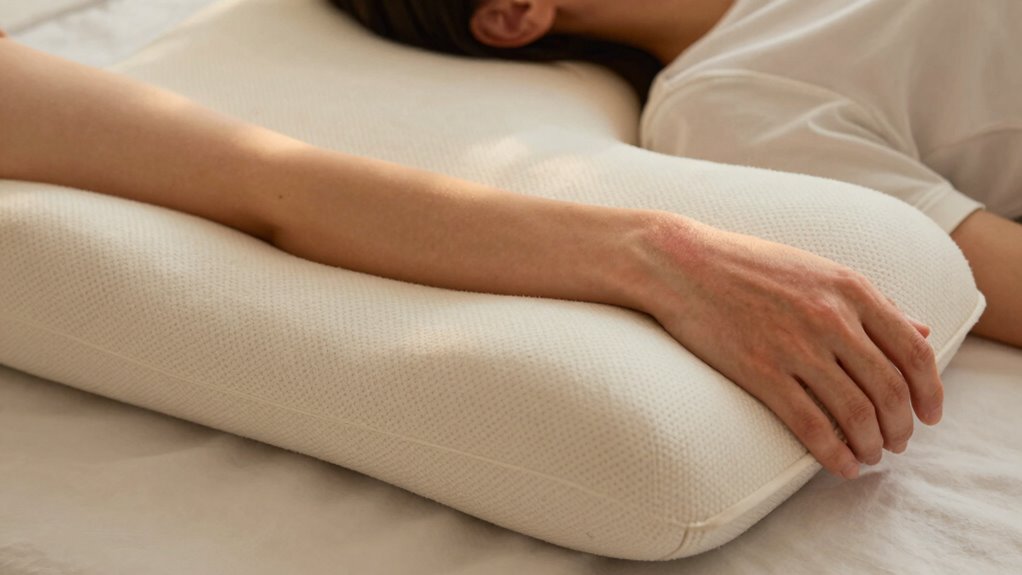
Creating a sleep setup that protects your nerves involves paying close attention to your sleep posture and the support your mattress and pillows provide. To optimize nerve health, focus on maintaining a neutral sleep position that minimizes nerve compression. Here are three key tips:
- Use a supportive pillow to keep your neck aligned, preventing nerve pinching.
- Choose a mattress that offers balanced support, avoiding sagging or excessive firmness.
- Avoid sleeping with arms overhead or tucked under your body, which can strain nerves.
Frequently Asked Questions
Can Sleep Aids or Medications Influence Arm Numbness at Night?
Yes, sleep aids or medications can influence arm numbness at night. Medication side effects may include nerve compression or circulation issues, leading to numbness. Sleep aid risks also involve muscle relaxation that might cause poor posture or nerve pressure, worsening symptoms. If you notice numb arms after taking medication, consult your doctor to adjust your dosage or explore alternative treatments, ensuring your sleep setup isn’t inadvertently contributing to the problem.
Are There Specific Medical Conditions That Cause Frequent Arm Numbness During Sleep?
Yes, certain neurological disorders like peripheral neuropathy or multiple sclerosis, along with circulatory issues such as Raynaud’s disease, can cause frequent arm numbness during sleep. These conditions disrupt nerve signals or blood flow, leading to numbness or tingling sensations. If you notice persistent numbness, it’s important to consult a healthcare professional to evaluate underlying neurological or circulatory issues and determine appropriate treatment.
How Does Age Affect the Likelihood of Experiencing Arm Numbness at Night?
As you age, your risk of experiencing arm numbness at night tends to increase, like a river slowly swelling. Aging effects and nerve deterioration weaken your nerves and compress blood flow, making numbness more common. Your body’s natural wear and tear can cause these sensations, especially if you don’t adjust your sleep setup. Staying active, stretching, and improving your sleep posture can help mitigate these age-related changes.
Can Exercise or Stretching Routines Reduce Nighttime Arm Numbness?
Yes, exercise and stretching routines can help reduce nighttime arm numbness. Focus on improving your bed posture and choose a mattress with appropriate firmness to support your body properly. Regular stretches for your neck, shoulders, and arms increase circulation and flexibility, easing nerve pressure. Maintaining good sleep habits and adjusting your sleep setup can make a significant difference in preventing numbness and promoting restful, comfortable nights.
What Role Does Hydration Play in Nerve Health and Numbness During Sleep?
Did you know that proper hydration can improve nerve function by maintaining electrolyte balance and muscle hydration? When you’re well-hydrated, your nerves stay healthy, reducing numbness during sleep. Dehydration can cause electrolyte imbalances, leading to nerve irritation and numbness. Drinking enough water supports nerve signaling and muscle function, helping prevent nighttime numbness. So, keep up with your hydration to protect your nerve health and enjoy more restful sleep.
Conclusion
Pay attention to how your sleep setup might be secretly causing those numb arms. Small changes in your pillow, mattress, or posture could make a big difference—if you catch the signs early. But what if the numbness isn’t just about comfort? Sometimes, it’s a warning. Don’t ignore persistent symptoms. The key to waking up refreshed might be closer than you think—are you ready to uncover what’s really going on?