If your adjustable base is noisy, loose parts, worn components, or mechanical issues are often the culprits. Vibrations from misaligned or damaged parts cause rattles, squeaks, or grinding sounds. Bedding problems, like sagging mattresses or shifting sheets, can also create noise. Regularly tighten hardware, inspect for worn parts, and lubricate moving joints to quiet your bed. Keep an eye out for signs that may require professional help — more tips follow to help keep your bed silent.
Key Takeaways
- Loose or worn components and hardware can cause vibrations and squeaks; tightening and replacing parts resolves the issue.
- Friction from worn joints or hinges can produce squeaking; applying silicone-based lubricant reduces noise.
- Mechanical problems like motor malfunctions or misalignments generate grinding or buzzing sounds; regular inspection helps prevent these.
- Bedding issues such as sagging springs or improperly fitted sheets can cause creaking noises; adjusting bedding can eliminate the sound.
- Persistent or unusual noises despite troubleshooting may require professional repair or warranty service.
What Mechanical Issues Cause Adjustable Base Noise?

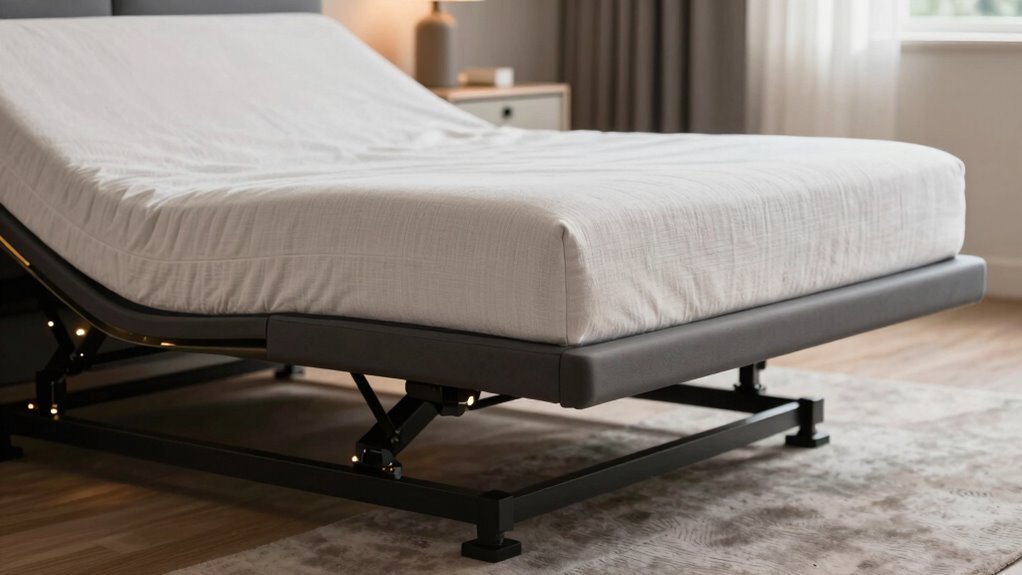
Mechanical issues are a common cause of noise in adjustable bases. You might notice bed frame vibrations whenever you adjust your bed, which can be traced back to loose or worn components. A key issue is motor malfunction; if the motor isn’t functioning smoothly, it can produce grinding or buzzing sounds. Sometimes, the motor’s internal parts wear out, causing irregular movements and vibrations. Additionally, misaligned or damaged bed frame parts can amplify vibrations and generate noise. Regularly inspecting the motor and ensuring all components are secure helps prevent these problems. If you hear persistent vibrations or unusual sounds when adjusting, it’s likely a mechanical issue that needs fixing. Addressing these problems early can extend your adjustable base’s lifespan and keep your sleep quiet and comfortable. Paying attention to the mechanical components and performing routine maintenance can significantly reduce noise issues, especially when components like motors or gears begin to show signs of wear. Furthermore, understanding how component deterioration impacts overall operation can help in timely troubleshooting and repairs. Additionally, checking for proper alignment can prevent unnecessary strain and noise during adjustments. Being aware of wear and tear effects can also guide you in preventative care to maintain quieter operation.
How Do Loose Parts Create Rattles and Squeaks?
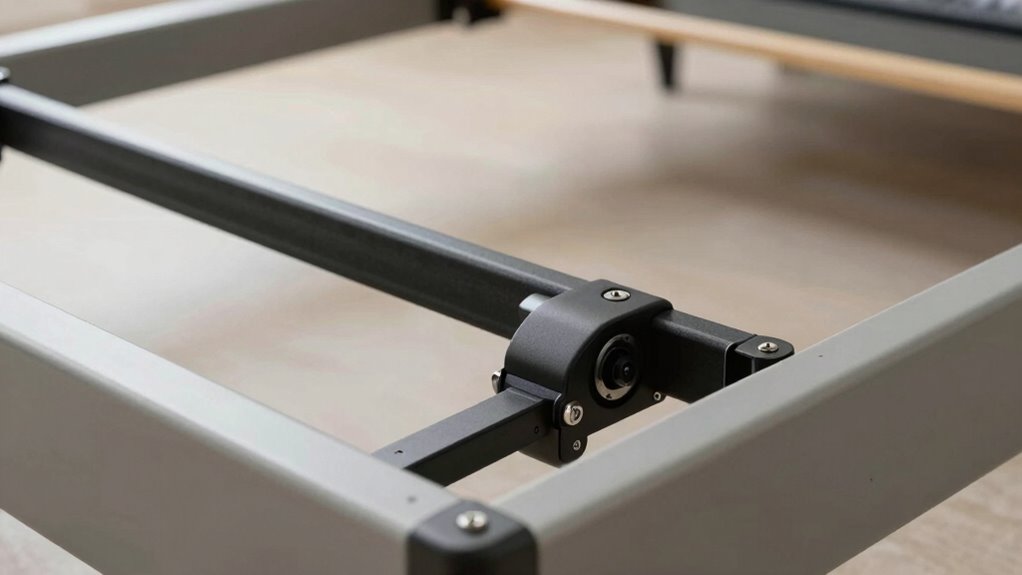
Loose bolts and screws can cause parts to shift or rattle when you move the bed. Worn or damaged components might not fit properly, creating squeaks or knocking sounds. Improper assembly or fitting can also lead to parts rubbing or vibrating, resulting in noise. Ensuring all parts are properly tightened and secured can help minimize these noises and improve bed stability. Regularly inspecting and maintaining your bed’s hardware and fittings is also a good practice to prevent these issues from recurring.
Loose Bolts and Screws
Ever wonder why your adjustable bed sometimes makes rattling or squeaking sounds? Loose bolts and screws are often the culprits, disrupting bed frame stability and causing noise. When these fasteners aren’t tight, they shift during adjustments, leading to unwanted sounds. This can also affect mattress alignment, making the bed less comfortable and less secure. To prevent this, check for:
- Loose bolts in the frame joints
- Screws that have backed out over time
- Worn or stripped fasteners
- Loose connections near motor components
- Frame parts that aren’t seated properly
Tightening these parts can restore stability, reduce noise, and improve overall comfort. Regularly inspecting and securing bolts and screws guarantees your adjustable base remains quiet and secure during every adjustment. Additionally, using appropriate fasteners can help maintain a secure fit and prevent future loosening. Incorporating proper maintenance routines can extend the lifespan of your adjustable bed and ensure consistent performance. For added stability, consider using thread-locking adhesives on critical fasteners to prevent loosening due to vibration or movement. Applying vibration-resistant fasteners can further help keep fasteners tight over time and reduce noise caused by regular adjustments. Incorporating support brackets can also enhance the structural integrity and reduce movement-related noise.
Worn or Damaged Parts
Worn or damaged parts are common causes of rattling and squeaking sounds in your adjustable bed. Over time, components like the bed frame or joints can wear out, leading to looseness that creates noise. If your bed frame has cracks or bent areas, it can cause parts to shift during movement, producing squeaks. Damaged or broken motor mounts or hinges can also contribute to rattling. Additionally, if your mattress isn’t compatible with the adjustable base, it can interfere with proper movement and cause unwanted noise. Regularly inspecting these parts helps identify issues before they worsen. Replacing worn or damaged components and ensuring your mattress fits properly can considerably reduce noise and restore smooth operation. Ensuring the quality of components and proper assembly also plays a significant role in minimizing noise.
Improper Assembly or Fit
When parts of your adjustable bed aren’t assembled correctly or don’t fit snugly, they can move out of alignment during operation. Loose connections or misaligned components cause rattles and squeaks, especially if the bed frame isn’t properly secured. Ensuring mattress compatibility is also vital; an incompatible mattress can shift and create noise. To fix this, check for:
- Loose bolts or screws in the bed frame
- Gaps between the frame and mattress
- Improperly installed or missing brackets
- Worn or damaged hinges
- Misaligned adjustable mechanisms
Tightening or replacing loose parts can dramatically reduce noise. Confirm that all components fit tightly, and that your mattress sits properly within the frame. Proper assembly and fitting are key to silence and smooth operation. Additionally, maintaining well-designed and properly secured components aligns with the principles of European cloud innovation, emphasizing quality and reliability in manufacturing. Ensuring all parts are properly manufactured and assembled can prevent unnecessary issues and improve overall durability. Regular inspections and proper adjustment procedures can also help maintain noise-free operation over time.
Can Mattress or Bedding Problems Make Your Bed Noisy?
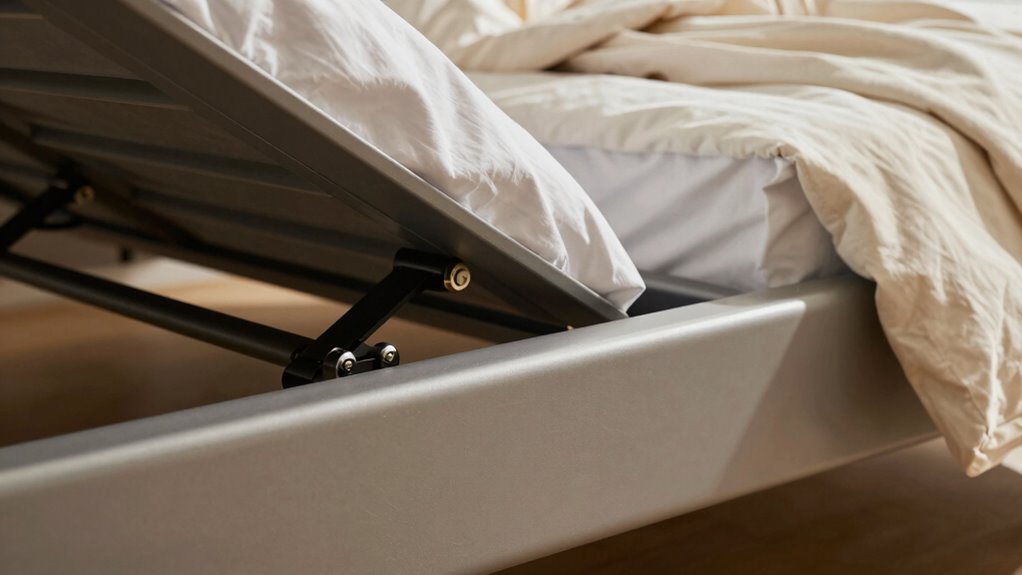
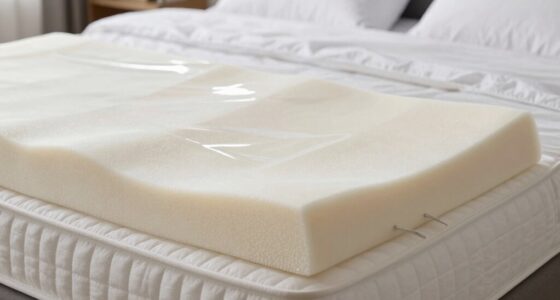
Have you noticed your bed making creaking or squeaking sounds whenever you move? Sometimes, mattress or bedding problems are the culprits behind these noises. Start with a thorough mattress inspection to check for loose or uneven areas, sagging, or worn-out springs, which can cause noise. Bedding issues, like improperly fitted sheets or thick blankets that shift and rub, can also contribute. Bedding adjustments, such as tightening or smoothing out sheets and removing bulky blankets, may reduce the squeaks. Make sure your mattress is properly aligned on the frame and that no bedding is catching or rubbing against moving parts. Addressing these issues can often eliminate noise without needing to replace parts of your bed or frame. Additionally, ensuring proper airflow around the bed can help minimize vibrations and squeaking caused by trapped air or humidity. Proper bed frame support can also reduce unnecessary movement and noise during sleep. Furthermore, inspecting the sleeper’s position and adjusting it to reduce strain on the mattress can help prevent squeaking caused by uneven weight distribution. Being aware of bedding quality and fit can also contribute to quieter, more comfortable sleep. Recognizing the importance of bed maintenance can lead to quieter, more comfortable sleep.
Why Do Worn Parts Lead to Adjustable Bed Squeaking?
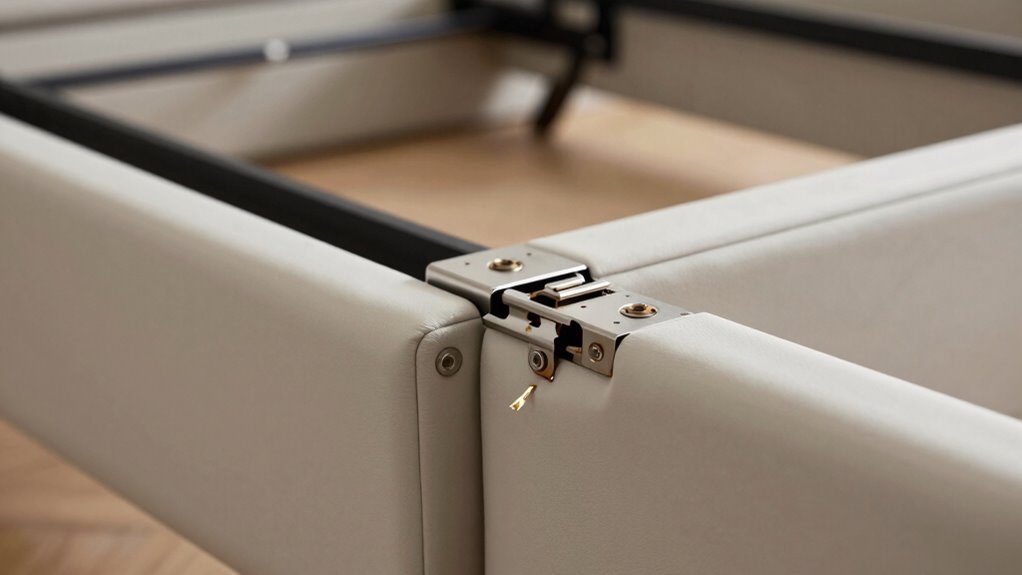
Over time, the moving parts of an adjustable bed can develop wear and tear that lead to squeaking noises. Worn components reduce bed frame durability, causing metal-to-metal contact or loose fittings. Manufacturing defects can also weaken parts, making them prone to squeaking earlier than expected. When parts like joints, motors, or hinges wear down, they create friction that results in noise. You might notice squeaks increasing after frequent use or over years of operation. Regularly inspecting and maintaining your bed can help identify common issues before they cause persistent noise problems. Recognizing early signs of wear and tear can prevent minor issues from escalating and prolong the lifespan of your adjustable bed. Additionally, understanding the role of lubrication in reducing friction can be beneficial for noise control. Addressing these worn parts can considerably reduce squeaking, but understanding their role is key to preventing persistent noise issues.
How Can You Troubleshoot and Quiet Your Adjustable Base?
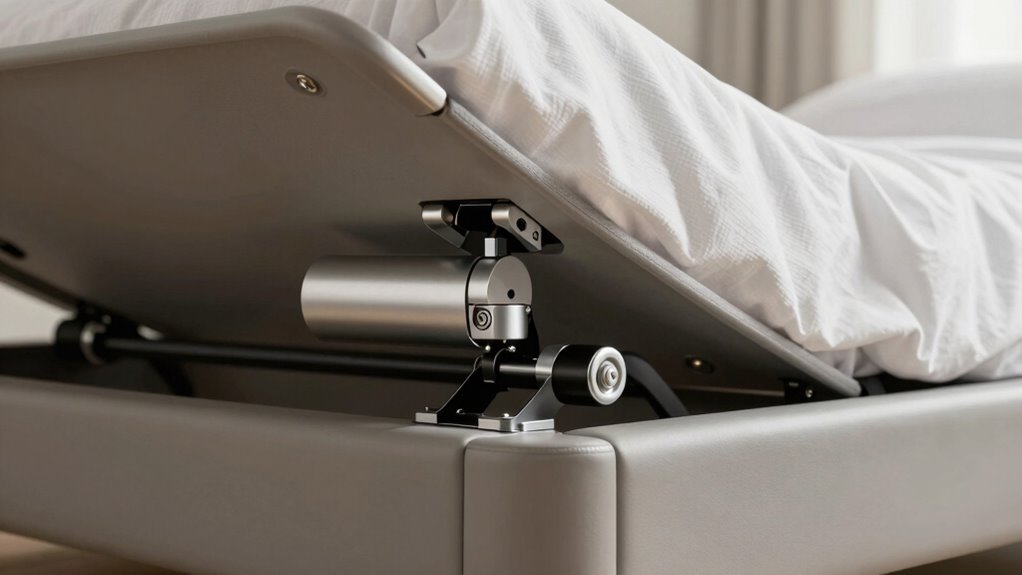
To quiet your adjustable base, start by checking for loose parts that might be causing noise. Next, lubricate the moving components to reduce friction and squeaks. Finally, try adjusting the noise settings to see if that minimizes the sound during operation.
Check For Loose Parts
Is a rattling or squeaking noise coming from your adjustable base? It might be caused by loose parts. First, check for loose brackets securing the frame or motor. Tighten any screws or bolts you find. Also, inspect for rattling springs, which can loosen over time. Make sure all components are snugly in place. Listen closely to identify the source of the noise, then tighten or reassemble as needed. Loose parts often vibrate or shift during operation, creating noise. Keep an eye out for the following:
- Loose brackets or mounting hardware
- Unsecured or rattling springs
- Loose screws or bolts on the frame
- Disconnected or loose wiring clips
- Any parts that wobble when pressed
Addressing these issues can considerably reduce noise and improve your base’s stability.
Lubricate Moving Components
Have you noticed squeaking or grinding sounds when adjusting your bed? These noises often come from dry moving components. To fix this, try bed frame lubrication on joints and hinges. Also, check your motor for signs of wear and perform motor maintenance if needed. Proper lubrication reduces friction and noise, making adjustments smoother and quieter. Use a silicone-based lubricant for metal parts, avoiding oil-based options that can attract dust. Regular maintenance ensures longevity and best performance.
| Action | Benefit |
|---|---|
| Lubricate joints and hinges | Quiets squeaks, smooths movement |
| Maintain motor components | Prevents grinding, extends lifespan |
Adjust Noise Settings
If you notice persistent noise coming from your adjustable base even after lubricating moving parts, tweaking the noise settings can help. Many models allow you to adjust the noise reduction features or recalibrate the adjustment calibration to minimize sounds. Start by consulting your user manual to locate the noise control options. Then, follow these steps:
- Access the control panel or app for your adjustable base
- Turn down or disable optional noise reduction features
- Recalibrate the adjustment settings for smoother, quieter operation
- Test the base after each change to gauge noise levels
- Repeat calibration if needed for idealquietness
When Should You Call a Professional or Use Your Warranty?

Knowing when to call a professional or use your warranty can save you time and prevent further damage. If your adjustable base makes persistent noise despite troubleshooting, it’s time to consider warranty claims or professional repair. Don’t delay if the noise is accompanied by strange odors, electrical issues, or if the base won’t respond to controls. Attempting repairs beyond basic adjustments may void your warranty. Here’s a quick guide:
| Issue | Action |
|---|---|
| Unusual or loud persistent noise | Contact professional repair |
| Electrical malfunctions | Use warranty or expert help |
| No response from controls | Call for professional service |
| Visible damage or broken parts | Warranty claim or repair needed |
| Base stops functioning entirely | Seek professional repair |
Frequently Asked Questions
How Often Should I Perform Maintenance on My Adjustable Bed?
You should perform maintenance on your adjustable bed every 3 to 6 months. Regularly check for bed frame squeaks and tighten any loose bolts. Use motor lubrication tips to apply lubricant to the moving parts, ensuring smooth operation. This upkeep helps prevent noise and prolongs your bed’s lifespan. Keep an eye on squeaks and other issues, and address them promptly for a quieter, more comfortable sleep experience.
Are There Specific Lubricants Recommended for Reducing Noise?
You should use manufacturer-recommended lubricants for noise reduction, rather than generic options. While it might seem like a small detail, choosing the right lubricant—like silicone-based or graphite powders—can substantially quiet your adjustable bed. Avoid oil-based lubricants, which can damage components over time. Always follow the specific lubricant recommendations to ensure smooth operation and prolong your bed’s lifespan, reducing annoying noises effectively.
Can Environmental Factors Like Temperature Affect Adjustable Base Noise?
Yes, environmental factors like temperature can affect adjustable base noise. Temperature effects cause metal parts to expand or contract, which may lead to squeaking or creaking sounds. Cooler temperatures can make components stiffer, increasing noise, while warmer temperatures might make parts more pliable and quieter. You should consider the environment where your bed is located and try to keep it consistent, as fluctuations can contribute to unwanted noise and affect performance.
What Safety Precautions Should I Take When Fixing Noisy Components?
When fixing noisy components, prioritize electrical safety by unplugging the bed before starting. Wear insulated gloves and use tools with non-slip grips to prevent accidents. Keep your workspace dry and well-lit, avoiding any water contact with electrical parts. Follow manufacturer instructions carefully, and if you’re unsure, consult a professional. Remember, adhering to tool safety reduces the risk of injury and guarantees a safe, effective repair process.
How Long Is the Typical Warranty Coverage for Noise-Related Issues?
Think of your warranty as a safety net that catches you if noise issues arise. Most warranties last between 1 to 5 years, depending on the brand and model. The coverage specifics often include repairs or replacements for mechanical or electrical noise problems, but always check the fine print. Knowing your warranty duration helps you plan ahead, ensuring you’re protected when your adjustable base’s noise becomes more than just a minor hum.
Conclusion
If your adjustable base keeps squeaking despite troubleshooting, it might be time to call in a professional. For example, Jane ignored the noise, but it worsened, indicating worn components needing expert repair. Regular maintenance and timely professional help can extend your bed’s lifespan and keep it silent. Don’t hesitate to use your warranty or consult a specialist—investing in proper care now prevents bigger issues later, ensuring peaceful, noise-free nights ahead.