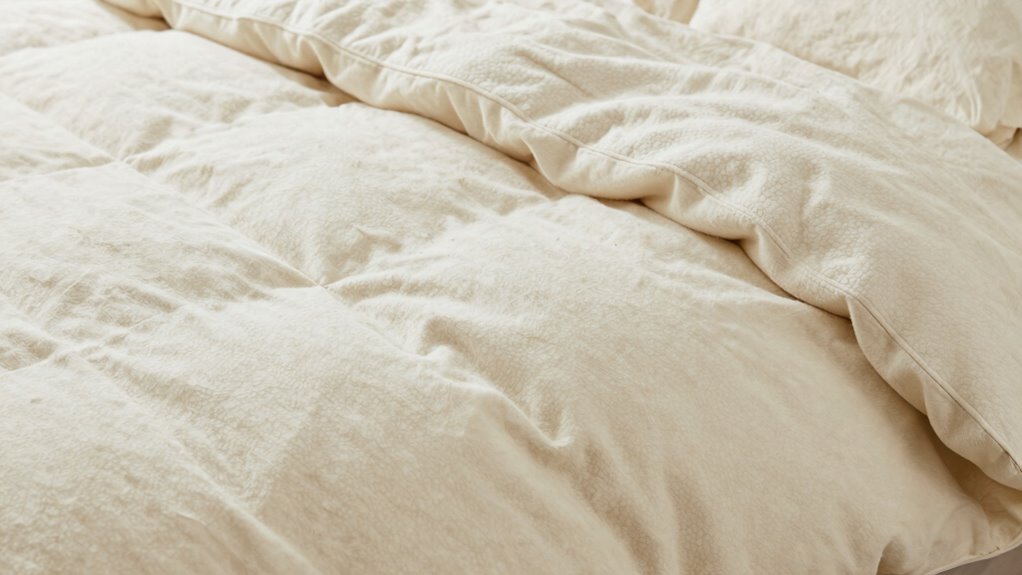

Wool duvets keep you warm without making you sweat because they naturally regulate temperature and moisture. Wool’s fibers trap air for insulation while wicking away sweat and excess humidity, helping you stay dry and cozy. They release heat when it’s warm and retain warmth when it’s cold, preventing overheating and chills. Plus, wool’s breathability creates a healthy sleep environment. Keep exploring how wool’s unique properties help you enjoy a comfortable, sweat-free night every time.
Key Takeaways
- Wool regulates body temperature by trapping air and releasing heat, keeping you warm without overheating.
- Its moisture-wicking fibers absorb sweat and evaporate moisture, preventing dampness and discomfort.
- Wool’s natural breathability promotes airflow, reducing heat buildup and maintaining a dry, comfortable sleep environment.
- Wool’s antibacterial properties inhibit mold and bacteria, ensuring freshness and reducing odors even when damp.
- The fiber structure adapts to seasonal changes, providing warmth in winter and coolness in summer for year-round comfort.

CUDDLE DREAMS Wool Comforter Duvet Insert, 100% Australian Wool Filling with Soft Noiseless Cotton Shell, Natural Warmth (Midweight for All Season, Queen)
Filled with premium Australian wool, selected for its softness, durability, and superior thermal properties, this wool comforter provides…
As an affiliate, we earn on qualifying purchases.
As an affiliate, we earn on qualifying purchases.
How Do Wool Duvets Differ From Synthetic Alternatives?
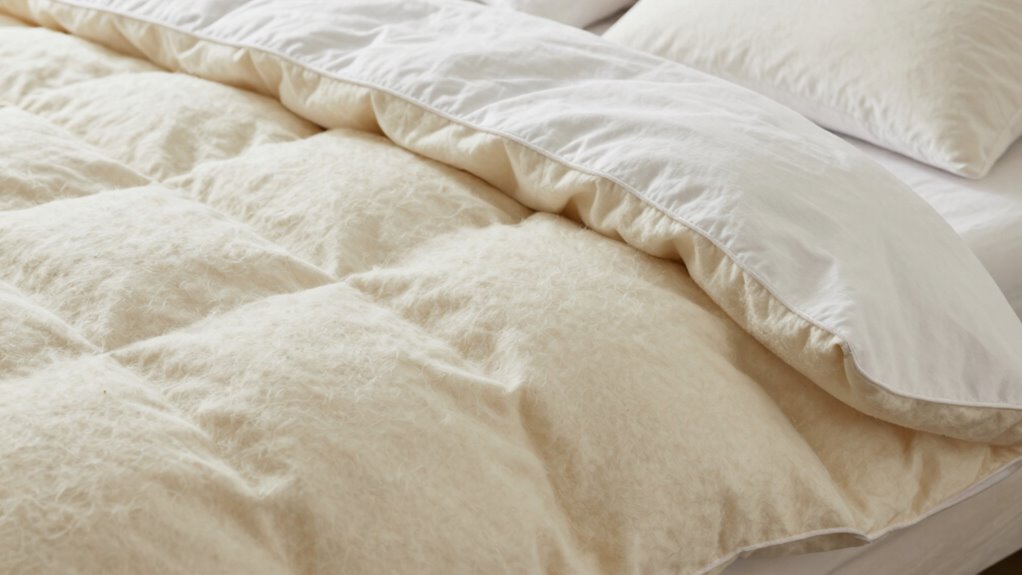
Wool duvets stand out from synthetic alternatives because they naturally regulate temperature and moisture better. Unlike synthetic fibers, wool can absorb and release moisture without feeling damp, helping you stay dry and comfortable. Synthetic duvets tend to trap moisture, making you feel clammy or overheated. Wool’s unique structure allows it to wick away sweat and excess moisture, preventing buildup that can cause discomfort or mold. This moisture retention capability also means wool keeps you warm even when damp, unlike synthetic options that lose insulating power when wet. As a result, wool duvets provide a healthier, more breathable sleep environment, reducing the risk of mold and bacteria growth. Additionally, proper ventilation and moisture management can enhance the comfort and longevity of your bedding. Wool’s natural properties also contribute to sustainable and eco-friendly bedding, making it a responsible choice for environmentally conscious consumers. Overall, wool’s natural properties make it a superior choice for those seeking comfort, dryness, and better moisture management, especially when combined with proper bedroom airflow and ventilation.

CUDDLE DREAMS Wool Comforter Duvet Insert, 100% Australian Wool Filling with Soft Noiseless Cotton Shell, Natural Warmth (Lightweight for Summer, Queen)
Filled with premium Australian wool, selected for its softness, durability, and superior thermal properties, this wool comforter provides…
As an affiliate, we earn on qualifying purchases.
As an affiliate, we earn on qualifying purchases.
How Does Wool Naturally Regulate Your Body Temperature?
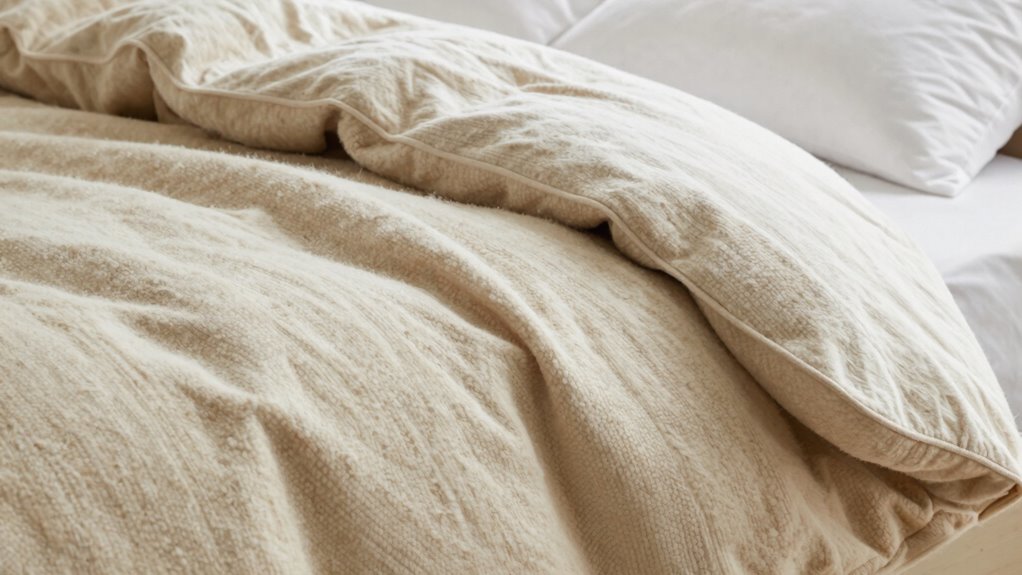
Because of its natural fiber structure, wool actively works to keep your body temperature balanced throughout the night. Wool’s unique properties enable thermal regulation, meaning it can retain heat when you’re cold and release it when you’re warm. The tiny scales and crimped fibers create air pockets that trap warmth without overheating you. This natural insulation adapts to your body’s needs, preventing overheating and excessive sweating. Wool’s moisture-wicking abilities also help maintain a stable body temperature, as excess moisture can disrupt thermal regulation. Additionally, wool’s vintage design elements can enhance the aesthetic appeal of your bedding setup. Thanks to its natural structure, wool fibers also promote air circulation, which supports continuous breathability and further enhances comfort. The biodegradable nature of wool ensures it’s an environmentally friendly choice for sustainable living. Wool’s ability to adapt to your body’s changing needs is further supported by its natural insulation, making it an ideal material for maintaining suitable body temperature all night long. Furthermore, wool’s moisture management properties help prevent the buildup of bacteria and odors, contributing to a fresher sleeping environment.

KUSNUG Climaloft Hybrid Wool Comforter Queen Size with 100% Organic Cotton, Hypoallergenic Down Alternative Luxury Duvet Insert with Tabs, Temperature Regulating All-Season Bedding, White
100% Organic Cotton Luxury — OEKO-TEX and OCS-approved 100% organic cotton shell delivers ultra-breathable softness. Combined with our…
As an affiliate, we earn on qualifying purchases.
As an affiliate, we earn on qualifying purchases.
How Does Wool Wick Away Moisture for a Dry Sleep?
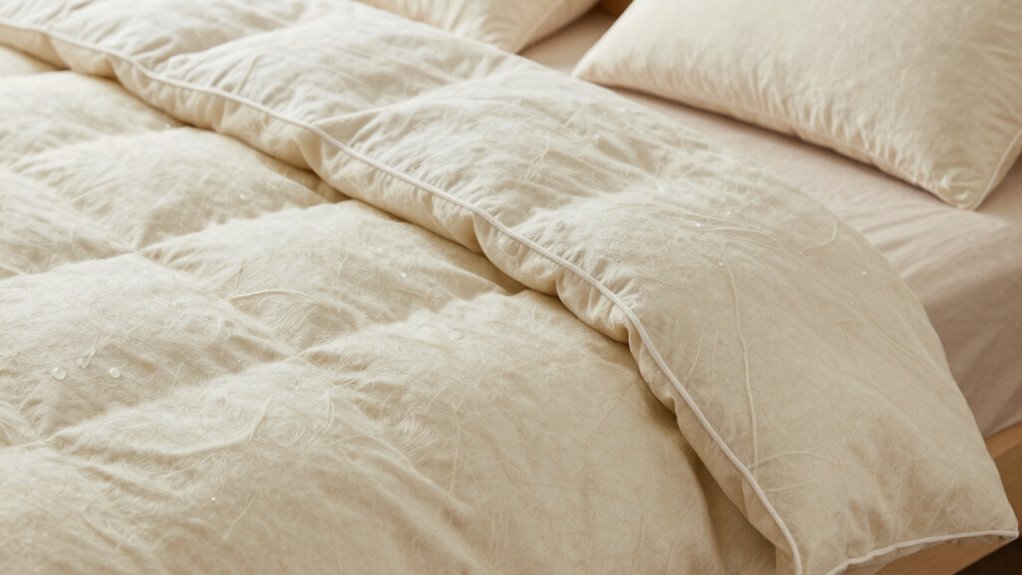
Wool’s natural moisture regulation helps keep you dry throughout the night. Its breathable fibers allow air to circulate, preventing sweat buildup. Thanks to its moisture-wicking action, wool pulls moisture away from your skin, promoting a comfortable, dry sleep. Additionally, wool’s thermal insulation properties help maintain consistent body temperature, enhancing overall comfort. The natural fibers also resist odors and bacteria, ensuring a fresh sleeping environment. Moreover, wool’s hypoallergenic qualities make it suitable for sensitive sleepers who want to avoid allergies and irritation. Understanding moisture management is key to appreciating how wool creates a healthier sleeping environment. Incorporating wool into your bedding can also contribute to sustainable sleep solutions, making it an eco-friendly choice for conscious consumers.
Natural Moisture Regulation
When you sleep under a wool duvet, your body’s moisture is naturally managed through the fibers’ unique structure. Wool fibers absorb excess humidity, helping to keep the sleeping environment dry and comfortable. This humidity control prevents the buildup of dampness that can cause discomfort or chills. Wool also wicks moisture away from your skin, reducing the risk of sweat buildup and promoting a dry sleep surface. Additionally, wool’s natural properties inhibit odor-causing bacteria, offering odor prevention without synthetic treatments. This self-regulating moisture management ensures you stay warm without feeling damp or sweaty, maintaining a consistent temperature throughout the night. The layering of wool fibers enhances its ability to trap air and provide insulation, further supporting a cozy sleep environment. Wool’s ability to adapt to changing temperatures is influenced by its natural moisture-wicking properties, which help prevent overheating. Its inherent antimicrobial qualities also contribute to a healthier sleep environment by reducing bacteria growth. Moreover, wool’s capacity for regulating humidity makes it especially effective in managing varying moisture levels. Wool’s moisture management benefits are further amplified by its thermal regulation, helping to balance comfort across different climates. As a result, wool duvets support restful, dry sleep while naturally controlling humidity and odors.
Breathable Wool Fibers
The unique structure of wool fibers enables them to wick moisture away from your skin effectively. This natural moisture control is due to wool’s fiber structure, which allows it to absorb and release moisture efficiently. When you sleep, wool fibers draw sweat away from your body, keeping you dry and comfortable. Here’s how it works:
- Capillary Action: Wool fibers have tiny spaces that pull moisture away from your skin through capillary action. Capillary action is a key process in moisture transport within fibers.
- High Absorption: Wool can absorb up to 30% of its weight in moisture without feeling damp.
- Vapor Transmission: The fiber structure lets moisture evaporate into the air, maintaining a dry sleep environment. Additionally, wool’s natural properties help regulate temperature, preventing overheating during warmer nights.
- Moisture Management: The fiber structure of wool fibers helps regulate humidity levels, preventing excess moisture buildup, which is essential for appliance maintenance and overall health. This moisture-wicking property is essential for maintaining a comfortable and healthy sleep environment.
This breathable quality makes wool duvets ideal for moisture control, ensuring you stay cozy without sweating.
Moisture Wicking Action
Ever wonder how wool keeps you dry throughout the night? Wool’s unique fibers excel at moisture management, drawing sweat away from your skin and into breathable layers. This process keeps you comfortable and dry, preventing that sticky feeling. Wool’s moisture-wicking action is thanks to its ability to absorb up to 30% of its weight in moisture without feeling wet. As sweat moves through the fibers, it evaporates quickly, maintaining a dry sleep environment. Wool’s natural breathability helps regulate temperature and moisture, making it ideal for a restful night’s sleep. Here’s how wool’s moisture management works:
| Step | What Happens | Result |
|---|---|---|
| Sweat production | Sweat is released onto fibers | Absorbed by wool fibers |
| Absorption | Wool traps moisture without feeling damp | Keeps skin dry |
| Evaporation | Moisture evaporates through breathable layers | Refreshes fibers |
| Continuous cycle | Repeats as needed | Maintains dryness |
This moisture-wicking action ensures your sleep remains comfortable, dry, and cozy all night.
CUDDLE DREAMS Wool Comforter Duvet Insert, 100% Australian Wool Filling with Soft Noiseless Cotton Shell, Natural Warmth (Midweight for All Season, Queen)
Filled with premium Australian wool, selected for its softness, durability, and superior thermal properties, this wool comforter provides…
As an affiliate, we earn on qualifying purchases.
As an affiliate, we earn on qualifying purchases.
How Does Wool Prevent Overheating at Night?

Wool’s unique ability to regulate temperature makes it an excellent choice for preventing overheating at night. It helps you maintain thermal comfort by adapting to your body’s needs. Wool’s natural fibers manage moisture effectively, preventing sweat buildup that can lead to discomfort. Here’s how it works:
Wool naturally regulates temperature and manages moisture for a comfortable, sweat-free sleep.
- Breathability: Wool allows air to circulate, reducing heat buildup and keeping you cool.
- Moisture management: It wicks away sweat, preventing dampness that causes overheating.
- Temperature regulation: Wool adjusts to your body’s temperature, providing warmth when needed and cooling when it’s too hot.
Together, these properties guarantee you stay comfortable and sweat-free, making wool duvets ideal for a restful night’s sleep without overheating.
How Does Wool Insulate for Comfort All Year?
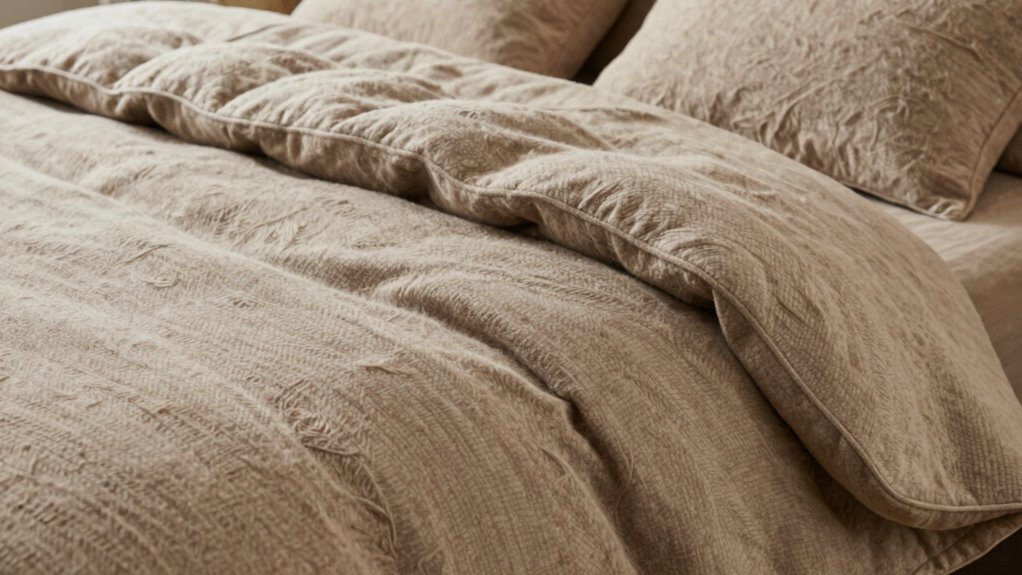
Wool naturally provides excellent insulation, helping you stay comfortable no matter the season. Its fibers trap air, which keeps heat in during cold months and allows cooling when it’s warm. This adaptive temperature regulation makes wool a smart choice for year-round comfort.
Natural Wool Insulation
Natural wool insulation works by trapping air within its fibers, creating a barrier that helps regulate temperature and moisture. This process leverages wool’s unique fiber properties, which allow it to adapt to your body’s needs while maintaining comfort year-round. Wool’s natural structure provides excellent insulation without overheating you. Plus, its environmental benefits make it a sustainable choice.
Here are three key points:
- Wool fibers trap air, providing effective insulation in all seasons.
- Its fiber properties promote moisture-wicking, keeping you dry.
- Wool is eco-friendly, biodegradable, and requires minimal processing.
This combination ensures your home stays warm in winter and cool in summer, all while supporting sustainable living. Wool’s natural insulation truly offers comfort with a conscience.
Adaptive Temperature Regulation
Because of its unique fiber structure, wool adjusts to your body’s temperature, providing insulation that feels just right no matter the season. Its fiber composition allows it to trap heat when you’re cold and release excess warmth when you’re hot. This adaptive temperature regulation keeps you comfortable year-round. Wool’s natural breathability helps prevent overheating, making it ideal for varying climates. Plus, wool is crafted from eco-friendly materials, ensuring your comfort doesn’t come at the planet’s expense. The fibers’ structure creates tiny air pockets that serve as natural insulators, adjusting to conditions seamlessly. This self-regulating feature means you stay cozy without sweating, and you won’t wake up feeling too hot or too cold. Wool’s ability to adapt makes it a smart choice for all-season comfort.
Are Wool Duvets Good for Allergies and Sensitive Skin?
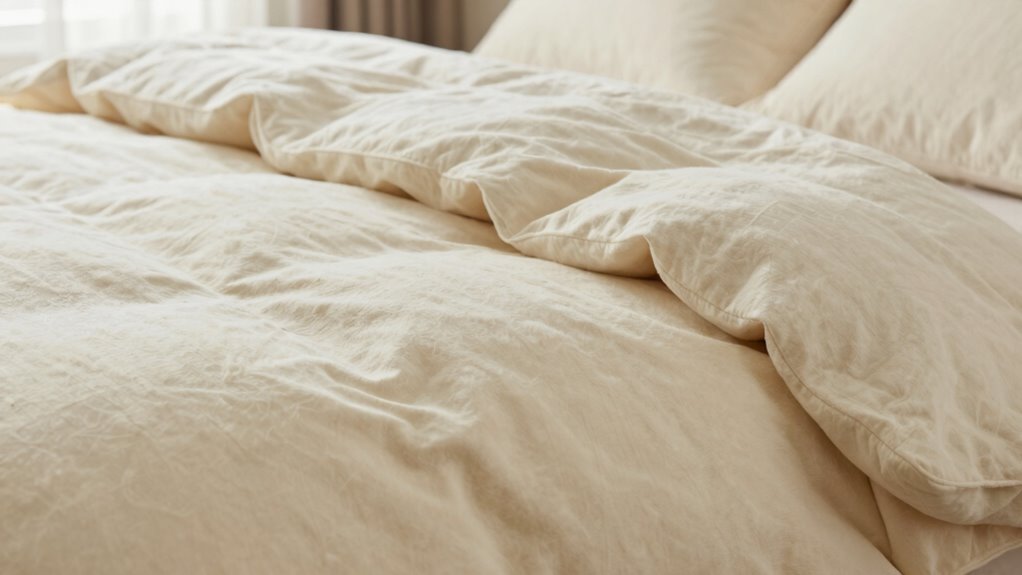
If you have allergies or sensitive skin, you might wonder whether wool duvets are a good choice for you. Wool naturally offers hypoallergenic benefits, making it resistant to dust mites and mold, which can trigger allergies. Plus, wool’s breathability reduces moisture buildup, helping skin sensitivity issues. Here are three reasons why wool duvets may suit your needs:
Wool duvets are hypoallergenic, breathable, and gentle on sensitive skin, making them ideal for allergy sufferers.
- They resist common allergens, promoting a healthier sleep environment.
- Wool’s natural fibers are gentle on sensitive skin, reducing irritation.
- The moisture-wicking properties help keep you dry, preventing skin reactions.
How Do You Care for a Wool Duvet to Keep It Fresh?

Keeping your wool duvet fresh requires proper care to maintain its hypoallergenic qualities and softness. Regular duvet cleaning is essential; it prevents dust and allergens from accumulating and keeps it smelling fresh. Wool maintenance involves gentle handling—avoid harsh chemicals and high heat. Air your duvet outside on dry days to refresh it naturally. Use a duvet cover to protect it from dirt and spills, washing it regularly. When washing, choose a wool-specific detergent and wash on a gentle cycle. Dry thoroughly, preferably flat, to prevent shape distortion. Store your duvet in a breathable bag when not in use for long periods.
| Duvet Cleaning Tips | Wool Maintenance Tips | Important Reminders |
|---|---|---|
| Use gentle detergent | Air regularly outdoors | Avoid bleach |
| Wash on delicate cycle | Use a duvet cover | Keep away from direct sunlight |
| Dry flat or in low heat | Store in breathable bag | Do not twist or wring |
| Avoid fabric softeners | Shake to fluff periodically | Keep in a cool, dry place |
| Ventilate frequently | Brush gently to remove dust | Regularly inspect for damage |
Why Are More Sleepers Choosing Wool for Cooler, Cozier Nights?
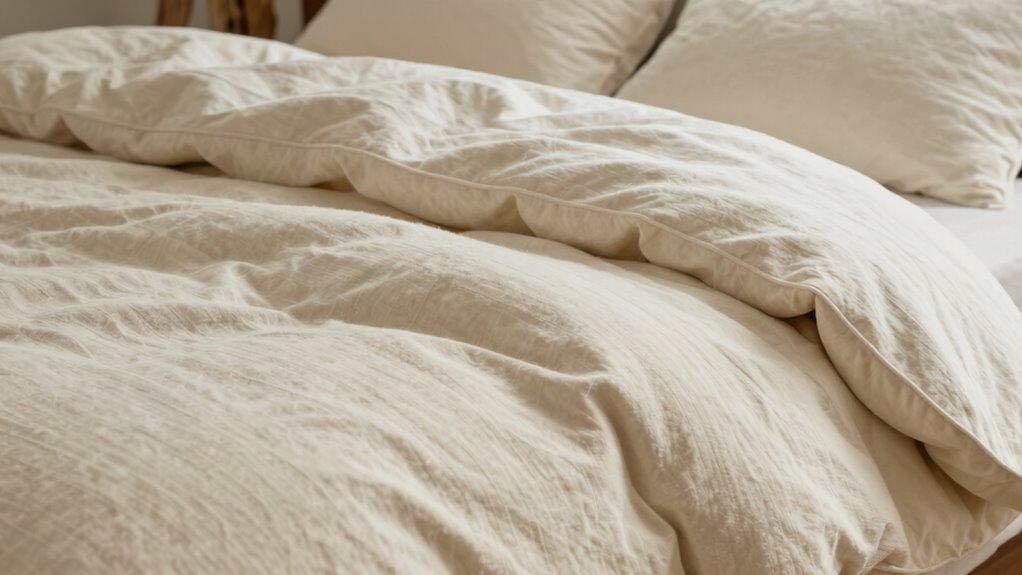
Many sleepers are turning to wool for cooler, cozier nights because of its natural ability to regulate temperature. Wool keeps you warm when it’s cold and cool when it’s hot, preventing overheating. Its fiber durability ensures your duvet stays in great shape for years, making it a smart investment. Plus, wool is eco-friendly, as it’s a renewable resource that requires less energy to produce than synthetic alternatives. Here are three reasons why more people choose wool:
- Temperature regulation keeps you comfortable all night.
- Fiber durability ensures longevity and sustained performance.
- Eco-friendly benefits support sustainability and reduce environmental impact.
This combination of features makes wool a top choice for a restful, cozy sleep environment.
Frequently Asked Questions
Are Wool Duvets Suitable for All Climate Types?
Wool duvets are highly adaptable to various climates, making them suitable for regional comfort across different environments. In colder areas, they provide warmth without overheating, while in milder or humid regions, their moisture-wicking properties keep you comfortable and dry. Their climate adaptability guarantees you stay cozy without sweating, regardless of where you live. So, whether you’re in a chilly or warm climate, a wool duvet can enhance your sleep quality.
How Long Does a Wool Duvet Typically Last?
A wool duvet can last up to 10 years or more if you take good care of it. Its durability considerations mean it withstands years of use, sleep after sleep, without losing its cozy warmth. To keep it in top shape, follow maintenance tips like airing it regularly and using a duvet cover. With proper care, your wool duvet will remain a comforting, long-lasting sleep companion through countless seasons.
Can Wool Duvets Be Machine Washed Safely?
Yes, you can machine wash wool duvets safely if you follow the washing instructions carefully. Use a gentle cycle with cold water and a mild detergent designed for wool. Avoid harsh agitation and high heat, as these can damage the fibers. After washing, gently reshape your duvet and let it air dry or use a low-heat tumble dry setting. Always check the care label for specific washing instructions to keep it in good condition.
Do Wool Duvets Require Special Storage?
Did you know wool naturally resists dust mites and mold? To keep your wool duvet in top shape, you should follow specific storage tips. Store it in a breathable bag or case, avoiding plastic to prevent moisture buildup. Make sure it’s completely dry before putting it away, and keep it in a cool, dry place. Proper wool maintenance guarantees your duvet stays fresh and fluffy for years to come.
Are Wool Duvets More Expensive Than Synthetic Options?
Wool duvets tend to be more expensive than synthetic options due to the quality and natural benefits of wool, including better temperature regulation and environmental impact. You might find the initial price higher, but you’ll appreciate the durability and eco-friendliness. Over time, the cost can balance out since wool is biodegradable and requires less energy to produce, making it a smarter, more sustainable choice for environmentally conscious shoppers.
Conclusion
Choosing a wool duvet transforms your sleep experience into something truly extraordinary. It’s like wrapping yourself in a cloud that’s always perfectly in tune with your body’s needs—never too hot, never too cold. Say goodbye to restless nights and hello to a luxurious, all-season sanctuary. Once you discover the magic of wool, you’ll wonder how you ever slept without it, because this wonder material makes every night feel like a five-star retreat.