To create a comfortable bedroom, keep the temperature between 60-67°F and humidity around 40-50%. Pay attention to dew point: aim for below 55°F to reduce excess moisture and prevent mold. High dew points and humidity can disrupt sleep, while proper airflow and humidity control help maintain a restful environment. Understanding how temperature, humidity, and dew point work together can markedly improve your sleep quality—continue exploring to learn more practical tips.
Key Takeaways
- Optimal bedroom conditions: temperature 60-67°F, humidity 40-50%, dew point below 55°F for better sleep quality.
- Dew point indicates moisture level; high dew points (>60°F) mean excess humidity and potential mold risk.
- Proper humidity prevents skin dryness and mold growth, while temperature impacts comfort and sleep cycles.
- Monitoring humidity and dew point helps maintain a comfortable, healthy sleeping environment.
- Using climate control devices and ventilation optimizes temperature, humidity, and dew point for restful sleep.

LEVOIT Tower Fan for Bedroom, 90° Oscillating Standing Fan with 28dB Quiet for Sleep, 25ft/s Velocity, 12H Timer, 5 Speeds 4 Modes, Remoter, Bladeless Room Fan for Home, Office, Indoor, 36 inch, White
𝙎𝙖𝙮 𝙂𝙤𝙤𝙙𝙗𝙮𝙚 𝙩𝙤 𝙏𝙧𝙖𝙙𝙞𝙩𝙞𝙤𝙣𝙖𝙡 𝙁𝙖𝙣𝙨: Our innovative airflow design combines a curved air inlet and unique multi-blade design,…
As an affiliate, we earn on qualifying purchases.
As an affiliate, we earn on qualifying purchases.
How Temperature Affects Your Sleep Quality
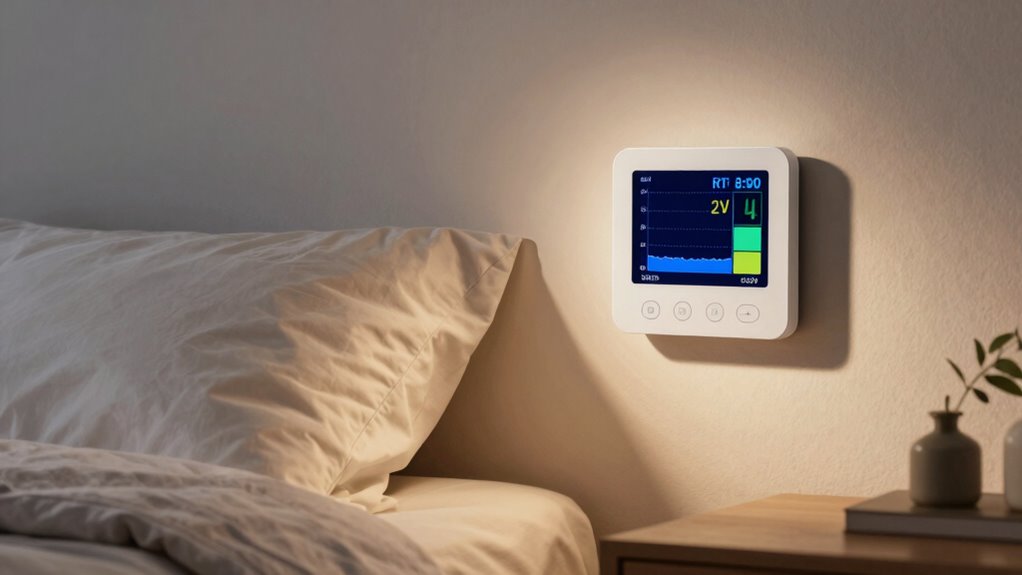
Temperature plays a crucial role in determining how well you sleep. When your body can regulate its temperature effectively, your sleep cycles flow smoothly, helping you fall asleep faster and stay asleep longer. If it’s too hot or cold, your body struggles with temperature regulation, which disrupts these cycles. A cooler room, around 60-67°F (15-19°C), promotes better sleep by supporting the body’s natural drop in core temperature that signals bedtime. Conversely, an environment that’s too warm can cause restless nights and frequent awakenings. Maintaining ideal temperature helps your body transition through sleep stages seamlessly, ensuring restorative rest. So, keeping your bedroom at the right temperature isn’t just comfort—it’s essential for quality sleep and overall health. Proper temperature regulation is also influenced by factors like bedding and sleepwear, which can help optimize your sleep environment. Additionally, using sleep environment adjustments such as fans or heaters can further refine your comfort levels. Ensuring consistent room temperature can prevent abrupt awakenings caused by temperature fluctuations, enhancing sleep continuity.

TempPro TP50 Digital Hygrometer Indoor Thermometer Room Thermometer and Humidity Gauge with Temperature Humidity Monitor(Previously ThermoPro)
Wellness Indicator: This humidity meter with humidity level icon indicates air conditions – DRY/COMFORT/WET, allowing this humidity sensor…
As an affiliate, we earn on qualifying purchases.
As an affiliate, we earn on qualifying purchases.
Why Does Humidity Matter in Your Bedroom?
Humidity levels in your bedroom considerably impact your comfort and sleep quality. Proper moisture control helps prevent dryness or excess dampness, both of which can disturb your rest. When humidity is too low, your skin and airways dry out, leading to irritation and discomfort. Conversely, high humidity fosters mold growth, dust mites, and musty odors, creating an unhealthy environment. Maintaining ideal humidity levels—typically between 40-60%—ensures your breathing stays smooth and your skin remains comfortable. Moisture control also helps regulate temperature, making your room feel warmer in winter and cooler in summer. By managing humidity, you create a balanced environment that promotes deeper, more restful sleep, and helps you wake refreshed. Understanding environmental factors like humidity control can further enhance your overall bedroom comfort. Additionally, using an air purifier can help maintain optimal indoor air quality and support humidity balance. Proper ventilation and air circulation are also key to preventing excess moisture buildup and maintaining a healthy sleeping environment. Implementing dehumidifiers or humidifiers can be effective tools for precise humidity regulation.

2500 Sq.Ft Dehumidifier for Basement with Drain Hose Max 34 Pints, VEAGASO Dehumidifiers for Home, Large Room, Bathroom, Bedroom, Three Modes, Intelligent Humidity Control, Dry Clothes, 24HR Timer
Three Smart Modes Dehumidifiers – Our dehumidifier for basements come with 3 smart modes that make choosing between…
As an affiliate, we earn on qualifying purchases.
As an affiliate, we earn on qualifying purchases.
What Is Dew Point and Why Does It Matter?

Dew point is the temperature at which air becomes saturated and dew forms, affecting how comfortable you feel. When the dew point is high, it can make the air feel sticky and humid, impacting your sleep and daily comfort. Understanding dew point helps you manage indoor conditions better and stay comfortable year-round. Additionally, monitoring dew point is essential for maintaining energy-efficient and sustainable cloud solutions, as it influences climate control strategies in data centers and cloud infrastructure. Being aware of dew point variations can also help in leasing a car, especially when considering climate conditions that may affect vehicle maintenance or comfort. Recognizing dew point trends can also assist in optimizing HVAC system performance, ensuring better indoor air quality and energy use. Tracking dew point fluctuations enables more effective climate control and can prevent issues like mold growth or excessive humidity indoors. Monitoring dew point regularly can also inform your ventilation strategies, helping to maintain a comfortable and healthy indoor environment.
Dew Point Definition
Have you ever wondered what the dew point really is? It’s the temperature at which air becomes saturated with moisture, causing dew to form. Think of it as a marker that shows how humid or dry the air feels. When the dew point is low, the air feels dry and comfortable; a high dew point indicates moist, muggy conditions that can make you feel sticky. Your comfort level depends on this measurement because it directly affects how humid your environment feels, regardless of the actual temperature. Understanding the dew point helps you gauge how humid or dry your bedroom is, making it easier to adjust your climate control for a more comfortable space. In substance, the dew point is a key indicator of how the air’s moisture impacts your comfort.
Impact on Comfort
Ever wonder why some days feel more uncomfortable than others even when the temperature is the same? It’s often due to humidity levels and dew point, which directly affect your thermal comfort. When dew points are high, humidity increases, making the air feel damp and sticky. This can cause you to sweat more, but evaporation slows, making you feel hotter. Conversely, low dew points create dry air that can cause skin and respiratory discomfort. Understanding dew point helps you manage humidity for better comfort, especially since indoor air quality can be affected by these factors. Recognizing how dew point influences thermal comfort allows you to optimize your environment for greater well-being. Additionally, monitoring humidity levels can aid in preventing issues like mold growth or respiratory problems caused by improper moisture control. Incorporating traditional practices that promote sustainable living and respect for nature can further enhance indoor air quality and overall health. Being aware of climatic factors such as dew point can help you make more informed decisions about your indoor environment.

GoveeLife Smart Air Quality Monitor for Home, CO2 Detector for Health, Sleep Quality & Energy Efficiency, Thermometer Hygrometer with Real-Time Display & Alarm, for Office, Bedroom, Kitchen
Fast & Accurate: Equipped with the SCD4x CO₂ sensor (photoacoustic NDIR principle), it ensures accuracy of ±(40ppm +…
As an affiliate, we earn on qualifying purchases.
As an affiliate, we earn on qualifying purchases.
How Temperature, Humidity, and Dew Point Interact in Your Sleep Environment
Temperature, humidity, and dew point are interconnected factors that considerably influence the quality of your sleep environment. When your bedroom is too warm or humid, it can cause discomfort regardless of your sleep position or mattress firmness. For example, a high dew point indicates moist air, which can make your body sweat more, disrupting rest. Conversely, low humidity and cooler temperatures help your body regulate temperature more efficiently. Your sleep position and mattress firmness also interact with these factors: a softer mattress may trap heat, while a firmer one promotes better airflow. Understanding how these elements work together helps you create a balanced environment, reducing night sweats and ensuring more restful sleep. Adjusting temperature and humidity based on dew point levels supports ideal sleep conditions for your sleep setup. Maintaining optimal indoor air quality further enhances your sleep comfort and overall health. Additionally, knowing the dew point can help you better manage your bedroom environment to prevent mold growth and maintain a healthy atmosphere. Properly managing these factors can also improve respiratory health by reducing airborne irritants and allergens.
What Are the Best Bedroom Conditions for Sleep?

Achieving the best bedroom conditions for sleep involves maintaining a cool, comfortable environment that promotes relaxation. The ideal sleep environment has a balanced bedroom climate that helps you fall asleep faster and stay asleep longer. To optimize your sleep environment, focus on these key factors:
- Keep the temperature between 60-67°F (15-19°C) for comfort.
- Maintain humidity levels around 40-50% to prevent dryness or dampness.
- Use breathable bedding materials to regulate temperature and humidity.
- Minimize noise and light to create a calm, restful atmosphere.
- Considering water vapor, controlling humidity levels is essential for a comfortable sleep environment.
Common Problems Caused by Imbalanced Temperature and Humidity
When your bedroom climate falls outside the ideal range, it can lead to a variety of sleep-disrupting problems. Poor air quality may increase allergens, mold, or dust, making it harder to breathe comfortably and causing congestion or allergies that interrupt your rest. Imbalanced humidity can also cause noise disturbances; for example, dry air can make your breathing sound louder or trigger throat irritation, while overly humid air might create a stuffy environment that fosters mold growth. These issues can make it difficult to fall asleep or stay asleep throughout the night. Additionally, fluctuations in temperature and humidity can lead to discomfort, causing restless nights and reducing overall sleep quality. Maintaining balanced conditions helps optimize air quality and minimizes noise disruptions, supporting better sleep.
How to Regulate Your Bedroom Temperature Effectively
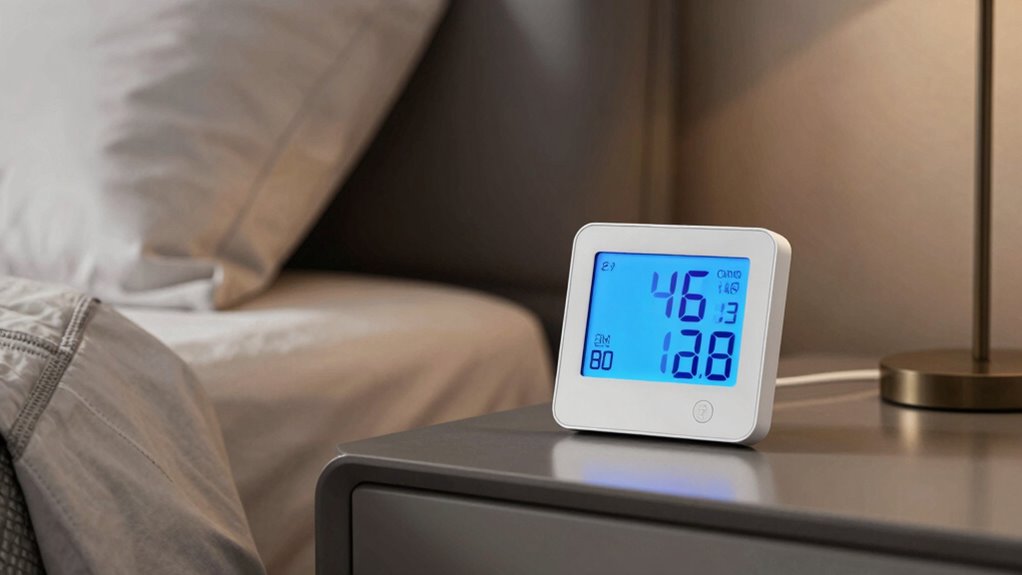
To keep your bedroom comfortable, start by optimizing your thermostat settings to maintain a consistent temperature. Using breathable bedding can help regulate moisture and improve sleep quality, while incorporating air purifiers can enhance air quality and airflow. These simple adjustments make it easier to control your environment and get better rest.
Optimize Thermostat Settings
Regulating your bedroom temperature effectively starts with setting your thermostat to a comfortable level that promotes restful sleep. Make sure your thermostat is properly calibrated so it accurately reflects the room’s actual temperature. Consider dividing your bedroom into temperature zones if possible, so you can customize settings for different areas. This helps maintain consistent comfort and energy efficiency. Keep these tips in mind:
- Regularly calibrate your thermostat for accuracy
- Use temperature zones to target specific areas
- Set your thermostat between 60-67°F for ideal sleep
- Avoid drastic temperature fluctuations overnight
Use Breathable Bedding
Using breathable bedding is a simple yet effective way to help your bedroom stay comfortable throughout the night. Breathable bedding materials, like cotton, linen, or bamboo, allow air to circulate and moisture to escape, preventing overheating and sweat buildup. This promotes better sleep comfort by maintaining a stable temperature and reducing night sweats. When your bedding breathes, it helps regulate humidity levels naturally, making your sleeping environment less stuffy and more invigorating. Avoid heavy, non-porous fabrics that trap heat and moisture, which can disrupt your sleep. Opting for breathable bedding not only enhances your sleep comfort but also supports healthier skin and overall sleep quality. Incorporate these lightweight, moisture-wicking materials into your bedding routine for a cooler, more restful night.
Incorporate Air Purifiers
Incorporating air purifiers into your bedroom can considerably improve temperature regulation by reducing airborne pollutants that may cause discomfort or disrupt sleep. Clean air helps your body maintain a stable temperature and minimizes irritation that can make you feel too hot or cold. To keep your air purifier effective, regular air purifier maintenance and timely filter replacement are essential. Neglecting these can reduce airflow and filtration efficiency, negating the benefits.
- Check filters every 1-3 months
- Replace filters as recommended by the manufacturer
- Clean the purifier exterior regularly
- Ensure proper placement for maximum airflow
Easy Ways to Manage Humidity for Better Sleep
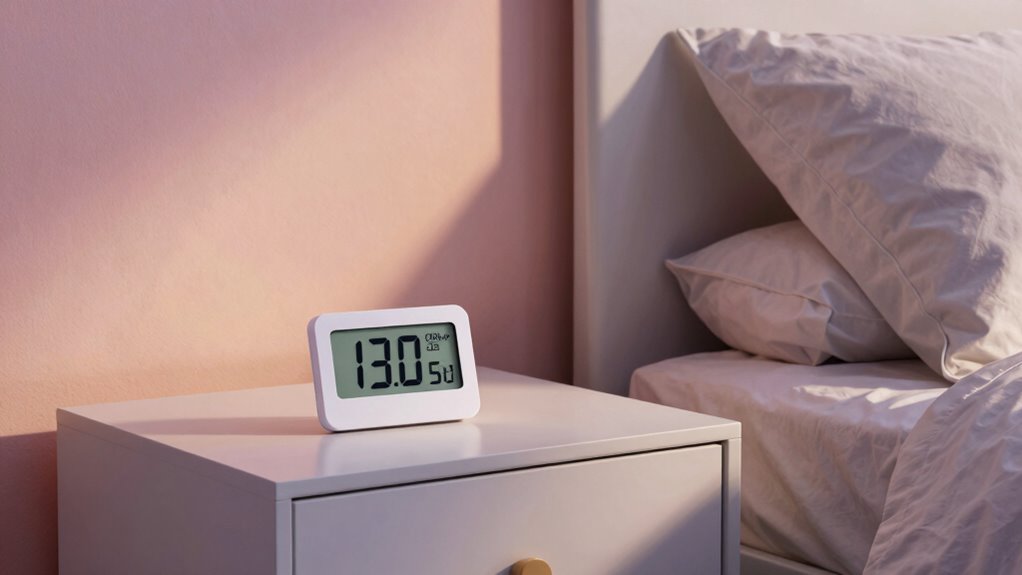
Maintaining the right humidity level in your bedroom can considerably improve your sleep quality. To do this, focus on easy methods like using a humidifier properly. Regular humidifier maintenance ensures it runs efficiently and prevents mold or bacteria buildup, which can affect your health. If the air feels dry, a humidifier adds moisture, aiding your body’s natural moisture absorption and reducing dry skin or congestion. Conversely, if your room is too humid, consider using a dehumidifier or increasing ventilation. Using a hygrometer helps monitor humidity levels, so you can adjust your approach accordingly. Small adjustments, like opening windows or using moisture absorbers, keep humidity balanced. These simple steps create a comfortable sleep environment, helping you wake refreshed and ready for the day.
How to Use Dew Point to Improve Your Bedroom Climate
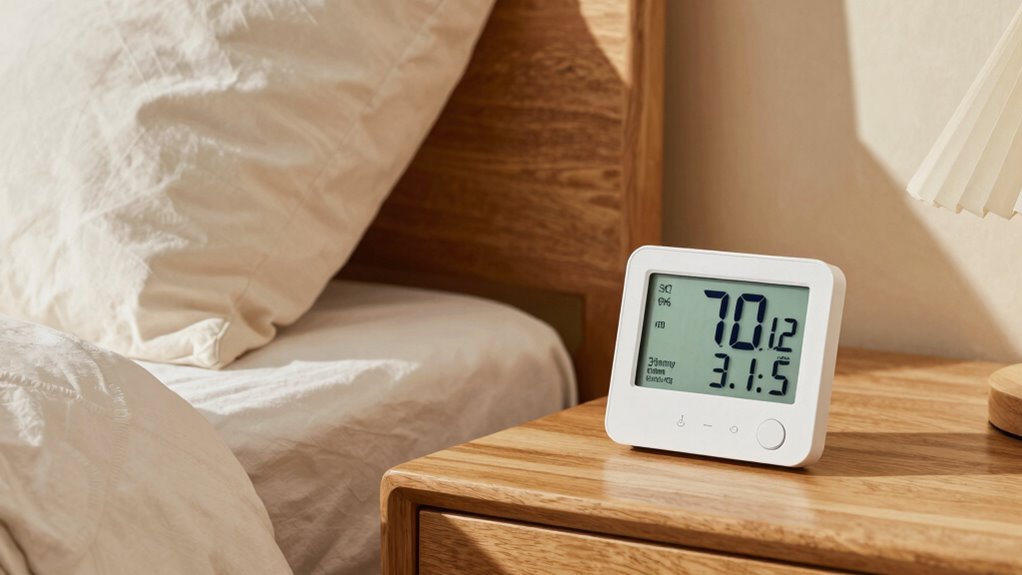
Understanding dew point can substantially enhance your bedroom’s comfort by helping you manage moisture levels more effectively. When you monitor the dew point, you can prevent excessive humidity that causes discomfort and mold. Keep the dew point below 55°F to improve sleep quality and reduce condensation issues. Use a hygrometer to track dew point and adjust your ventilation or dehumidifier accordingly.
Remember:
- A dew point above 60°F indicates high humidity, risking mold growth
- Lowering dew point improves air quality and comfort
- Proper airflow helps regulate dew point naturally
- Maintaining ideal dew point levels supports better sleep quality and overall health
Troubleshooting Tips for the Perfect Sleep Environment
If your bedroom still feels uncomfortable despite monitoring dew point and humidity levels, it’s time to troubleshoot common issues that can disrupt sleep quality. First, check your sleep hygiene—ensure your sleep space is quiet, dark, and cool. Noise reduction can considerably improve sleep, so consider using earplugs or white noise machines to block disruptive sounds. Keep electronic devices away from your bed, as they emit light and noise that interfere with rest. Adjust your thermostat to maintain a consistent, comfortable temperature, and use fans or air purifiers to improve airflow. Proper humidity levels and dew point control help prevent dryness or excess moisture. By addressing these factors, you create an ideal sleep environment that promotes restful, uninterrupted sleep.
Frequently Asked Questions
How Do Seasonal Changes Affect Bedroom Temperature and Humidity Levels?
Seasonal fluctuations considerably impact your bedroom’s temperature and humidity levels. During summer, you might notice increased humidity, making the air feel damp, while winter can bring colder temperatures and lower humidity. Your body needs humidity adaptation to stay comfortable and healthy. To maintain ideal conditions, consider using humidifiers or dehumidifiers to counteract seasonal changes, ensuring your bedroom stays cozy and balanced year-round.
Can Air Purifiers Influence Humidity and Dew Point in My Bedroom?
Think of your air purifier as a guardian that can influence humidity, but not by itself. While some air purifiers come with humidity control features, most mainly filter airborne particles. To truly manage humidity and dew point, you need dedicated humidity control methods like a humidifier or dehumidifier. An air purifier improves air quality but doesn’t substantially alter humidity levels or dew point in your bedroom.
What Are the Signs of Improper Dew Point Levels During Sleep?
If your dew point is too high, you might notice sleep discomfort, like waking up feeling sweaty or stuffy. You could also see signs of mold growth on walls, ceilings, or bedding. Conversely, if the dew point is too low, you may experience dry skin, sore throat, or nasal congestion. Maintaining proper dew point levels helps guarantee a comfortable sleep environment and prevents mold issues caused by excess moisture.
How Does Body Temperature Regulation Interact With Bedroom Climate?
Did you know that your body generates about 100 watts of heat while sleeping? Your body temperature regulation directly interacts with your bedroom climate to guarantee personal comfort and improve sleep quality. When your room is too warm or humid, it hampers your body’s ability to cool down, making it harder to fall asleep and stay asleep. Maintaining a suitable climate helps your body regulate temperature more efficiently, boosting your overall sleep experience.
Are There Specific Devices to Monitor All Three Factors Simultaneously?
Yes, there are multi sensor devices and climate monitors that track temperature, humidity, and dew point simultaneously. These devices often come with user-friendly apps, allowing you to monitor and control your bedroom environment in real-time. By using them, you can make precise adjustments, ensuring ideal comfort and better sleep. Look for models with integrated sensors and smart features to get complete climate data in one convenient device.
Conclusion
Now that you understand how temperature, humidity, and dew point shape your sleep, imagine walking into your bedroom tonight. The air feels just right—neither too dry nor too damp. As you settle in, you’re aware that mastering these factors could transform your nights from restless to restful. Are you ready to take control and create the perfect sleep sanctuary? The secret to better sleep might be closer than you think—just a few simple adjustments away.