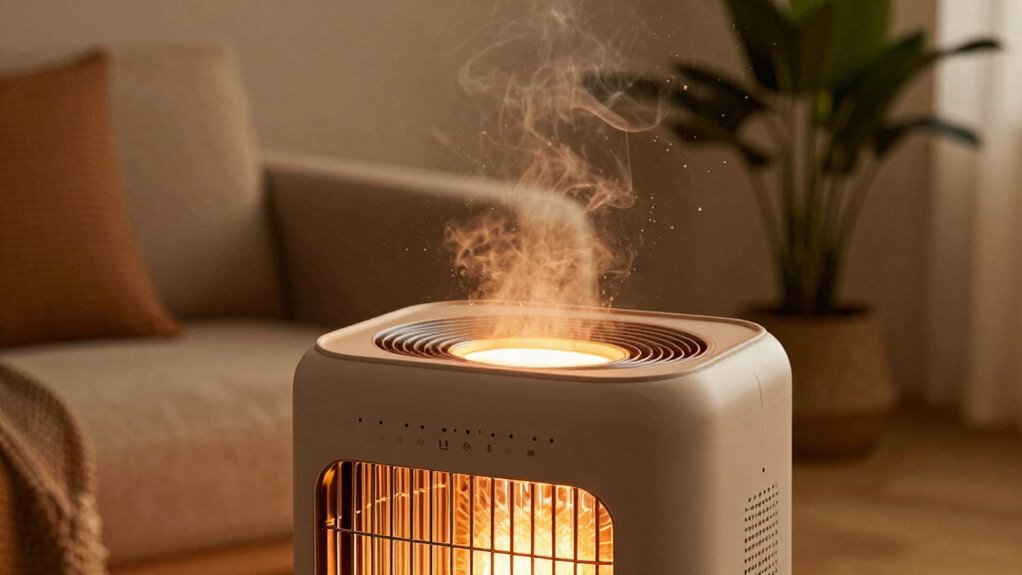

Space heaters heat rooms quickly through convection or radiation but don’t add moisture to the air. As the temperature rises, moisture in the room evaporates faster, lowering humidity levels rapidly. Without humidifying features, the dry air becomes more noticeable, making the room feel less cozy and causing discomfort. If you want to understand how to manage this dryness effectively, there’s more to explore below.

Get home appliances delivered free with Prime
- Fast, free delivery on millions of items
- Prime Video, Amazon Music and more included
- Member-only deals all year
Key Takeaways
- Space heaters heat air without humidifying, causing rapid moisture evaporation and quick dryness.
- Elevated temperatures from heaters accelerate moisture loss compared to other heating methods.
- Larger, poorly insulated rooms lose humidity faster due to increased evaporation rates.
- Lack of built-in humidifiers in space heaters means no moisture is added, speeding up dryness.
- Using heaters without humidity control leads to faster decreases in indoor moisture levels.
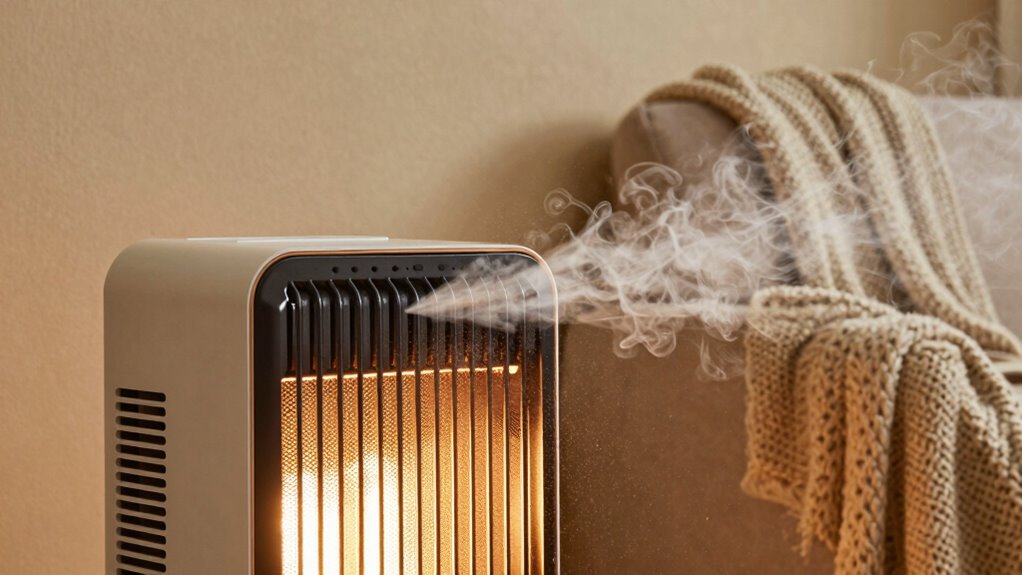
When you turn on a space heater, you might notice the air feels drier much sooner than you expected. That’s because these devices tend to lower the humidity levels in a room quickly, which can make the air feel uncomfortable and stuffy. Space heaters work by radiating heat directly into the space, but they don’t add moisture to the air. Instead, they dry it out, which impacts your sense of thermal comfort. When humidity levels drop, your skin, respiratory system, and nasal passages can become dry and irritated, making you feel colder even if the temperature is adequate.
Space heaters dry out the air quickly, making you feel colder and uncomfortable despite warmth.
This rapid change in air dryness happens because space heaters primarily heat the air through convection or radiation without any humidifying feature. As the temperature rises, moisture in the air evaporates faster, leading to a noticeable decrease in humidity levels. The drier air also enhances the feeling of chilliness because dry air conducts heat away from your skin more quickly than moist air. That’s why, even when the room is warm, it might not feel as cozy or comfortable as you’d like. The lack of humidity can also cause static electricity and dry skin, further contributing to the sense that your environment is less pleasant.
You might not realize it, but maintaining ideal thermal comfort involves balancing heat and humidity. When humidity drops too low, your body struggles to regulate temperature efficiently, which can make you feel colder and less comfortable overall. This means that while your space heater is effectively raising the temperature, it might be inadvertently making the environment less pleasant by stripping away moisture. If you want to maximize comfort, you’ll need to consider ways to offset this dryness, such as using a humidifier or placing water bowls nearby. Additionally, air quality can be negatively impacted by prolonged dryness, which can affect respiratory health. Understanding how humidity levels fluctuate in response to heating can help you better manage indoor comfort. Proper ventilation can also help mitigate some of these effects by maintaining a healthier indoor environment.
The speed at which space heaters dry out the air depends on factors like room size, insulation, and the heater’s wattage. Larger, poorly insulated rooms can experience faster moisture loss because heat escapes more quickly. Conversely, in smaller or well-insulated spaces, the humidity can plummet rapidly once the heater is on. It’s important to monitor humidity levels with a hygrometer and properly insulating your space to maintain a comfortable environment. Remember, a comfortable environment isn’t just about warmth; it’s about creating a balance where your body feels thermally comfortable without sacrificing moisture. That way, you’ll enjoy the warmth without the discomfort of overly dry air.
As an affiliate, we earn on qualifying purchases.
Frequently Asked Questions
Do Different Types of Space Heaters Affect Air Dryness Differently?
Yes, different space heaters affect air dryness differently. Radiant warmth heaters, like panel or infrared units, heat objects directly, so they don’t dry the air much. Convection heaters, however, actively warm the air, increasing evaporation and making the air feel drier faster. Your choice impacts dryness: radiant heaters maintain humidity levels better, while convection heaters can considerably reduce moisture in the room.
Can Humidity Levels Be Controlled While Using a Space Heater?
Think of your space heater as a gentle breeze that can dry out your indoor oasis. Yes, you can control humidity levels by using a humidifier or placing water trays nearby. Maintaining proper humidity boosts indoor plant benefits and improves air quality, making your space healthier and more comfortable. Keep a hygrometer handy to monitor moisture, ensuring your environment stays balanced and inviting, even with a heater running.
How Quickly Does Air Dryness Typically Increase With a Space Heater?
Air dryness can increase within minutes of turning on a space heater, affecting your indoor air quality and thermal comfort. As the heater warms the air, moisture evaporates quickly, making the room feel drier fast. To maintain ideal air quality and comfort, consider using humidifiers or moisture sources, especially during extended heating sessions. This way, you keep humidity levels balanced while enjoying the warmth without sacrificing indoor air quality.
Are There Health Risks Associated With Increased Air Dryness From Heaters?
Think of dry air like a sneaky thief stealing your comfort. Yes, increased dryness from space heaters can pose health risks, especially affecting indoor air quality and respiratory health. Dry air can cause sore throats, irritated eyes, and worsen asthma. To protect yourself, use humidifiers or place water near the heater. Staying mindful helps you maintain a healthier indoor environment and keeps your respiratory system happy.
What Are the Best Ways to Maintain Humidity With a Space Heater?
To maintain humidity with a space heater, you should integrate a humidifier into your space to prevent the air from drying out too quickly. Keep moisture levels balanced by monitoring humidity with a hygrometer, adjusting your humidifier as needed. Regularly refilling the humidifier and positioning it properly guarantees even moisture distribution, helping you stay comfortable without risking overly dry air. This approach keeps your environment cozy and healthy.
As an affiliate, we earn on qualifying purchases.
Conclusion
So, next time you turn on your space heater, remember it’s like opening a window to dry air in a blink. It warms your space quickly, but it also sucks moisture out faster than you’d think. Keep a humidifier nearby or place a bowl of water in the room to avoid that uncomfortable dryness. Think of your heater as a double-edged sword—warmth and dryness, both happening at lightning speed. Stay cozy and hydrated!
As an affiliate, we earn on qualifying purchases.
portable humidifier for indoor use
As an affiliate, we earn on qualifying purchases.
As an affiliate, we earn on qualifying purchases.
Fall yard work Picks
leaf blowers
As an affiliate, we earn on qualifying purchases.