Your sheet’s weave has a bigger impact on sleep temperature than thread count because it controls airflow, moisture movement, and heat retention. A breathable weave like percale promotes better cooling and moisture evaporation, while denser weaves like sateen trap heat and moisture. Even with a high thread count, if the weave restricts airflow, you’ll find it harder to stay cool. Keep exploring to find out how different weaves can improve your sleep comfort.

Get home appliances delivered free with Prime
- Fast, free delivery on millions of items
- Prime Video, Amazon Music and more included
- Member-only deals all year
Key Takeaways
- Weave structure determines airflow and heat dissipation, affecting temperature regulation more than thread count.
- Looser weaves like percale promote better breathability and cooling compared to denser weaves like sateen.
- Tight weaves trap heat and moisture, reducing airflow regardless of high thread count.
- Moisture management depends on weave openness, influencing how well heat and sweat are released.
- Fabric durability and moisture-wicking properties are linked to weave type, impacting long-term sleep temperature control.
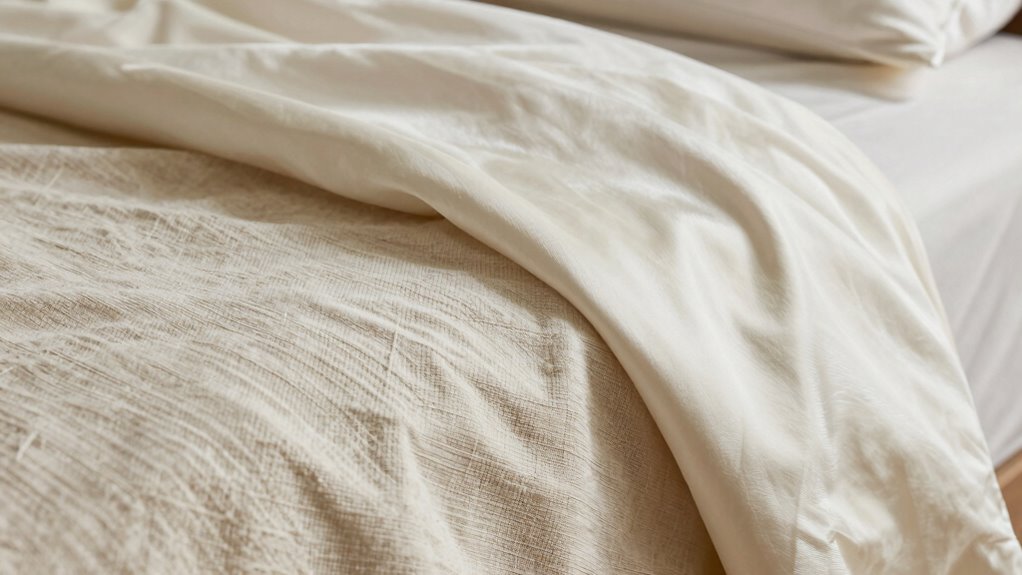
Your sleep quality can be considerably influenced by the weave of your sheets and how well they regulate your body temperature. While many people focus on thread count, the weave plays a more essential role in determining how comfortable you feel throughout the night. The reason is that the weave directly impacts fabric breathability and moisture management, two key factors in maintaining an ideal sleep environment. High thread count doesn’t necessarily mean better sleep if the weave restricts airflow or traps heat and moisture. Instead, the way the fabric is woven influences how well air circulates and how moisture is wicked away from your skin, keeping you cooler and drier.
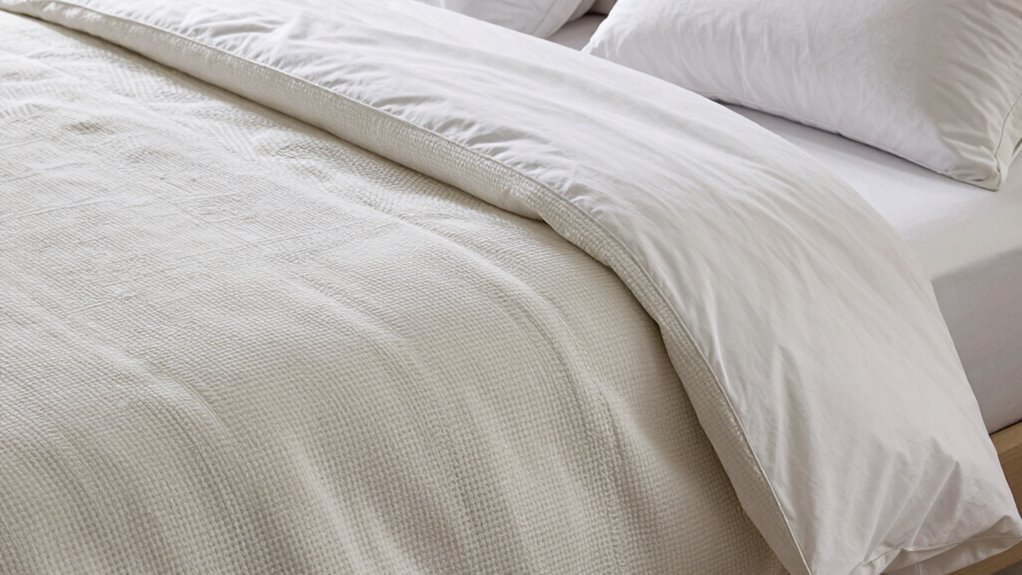
Different weaves allow for varying levels of breathability. For example, a percale weave, characterized by a tight, crisp feel, typically offers excellent airflow due to its simple, flat weave structure. This promotes better fabric breathability, ensuring heat escapes and fresh air reaches your skin. Conversely, sateen weaves, which have a smoother, silkier surface, tend to trap more heat because their weave is denser and less permeable. The tighter the weave, the less air can pass through, making it harder for your body to release excess heat. Hence, even if two sheets have the same thread count, their different weaves can result in vastly different sleep experiences. Recognizing the weave structure can help you select sheets that support better temperature regulation. Additionally, fabric durability is often influenced by the weave type, affecting how long your sheets will maintain their qualities over time.
Percale weaves promote airflow, keeping you cool, while sateen traps heat for a warmer sleep experience.
Moisture management is another vital aspect affected by the weave. A loosely woven fabric allows sweat and moisture to evaporate more readily, preventing you from waking up feeling sticky or overheated. Sheets with better moisture management help regulate your body temperature by pulling sweat away from your skin and allowing it to evaporate quickly. This process keeps you dry and comfortable, especially during hot or humid nights. On the other hand, a dense or tight weave may trap moisture, leading to a damp feeling and disrupting your sleep. This poor moisture management can cause you to toss and turn, trying to find a cooler spot on the bed. Additionally, fabric construction plays a crucial role in these moisture-wicking properties. Understanding fabric construction can help you make more informed choices for better sleep quality by selecting sheets designed for optimal moisture transfer.
As an affiliate, we earn on qualifying purchases.
Frequently Asked Questions
How Does Weave Type Affect Moisture-Wicking Properties?
Your sheet’s weave type considerably impacts moisture-wicking properties by influencing fiber breathability and moisture management. For instance, a percale weave allows better airflow, helping sweat evaporate faster, while sateen weaves trap heat and moisture. Choosing a breathable weave improves moisture management, keeping you dry and comfortable throughout the night. So, opting for a breathable weave enhances moisture-wicking, making your sleep environment cooler and more comfortable.
Can Weave Changes Impact Allergy Relief?
Think of your sheets as a protective shield; changing the weave can act like a fortress against allergens. Different weaves, like sateen or percale, can trap or repel fabric allergens, impacting allergy prevention. A tighter weave creates a barrier, reducing exposure to dust mites and other irritants. So, yes, switching up your sheet weave can help you breathe easier and lower allergy symptoms, making your sleep environment safer and more comfortable.
Do Different Weaves Influence Durability Over Time?
Yes, different weaves influence durability over time. The fabric strength depends heavily on the weave pattern; tighter weaves like percale or sateen generally offer more durability, resisting wear and tear better. Looser weaves tend to weaken faster, leading to fraying or pilling. When choosing sheets, consider the weave pattern to guarantee long-lasting quality, especially if you want your bedding to stand up to frequent washing and use.
Is There a Best Weave for Hot Sleepers?
If you’re a hot sleeper, a percale weave is your best choice, as it offers superior breathability factors for thermal regulation. Studies show percale sheets can help reduce body temperature by up to 2°F. The tightness of the weave impacts airflow, making it easier to stay cool throughout the night. Opt for lightweight, breathable fabrics with a percale weave to enhance comfort and prevent overheating.
How Does Weave Compare to Thread Count in Comfort?
Weave plays a bigger role in comfort than thread count because it affects fabric texture and breathability directly. A looser weave, like percale, feels crisp and allows better airflow, helping you stay cooler. In contrast, a higher thread count often means denser fabric, which can trap heat. So, if you prioritize comfort and aesthetic appeal, choose a weave that enhances breathability and feels good against your skin.
As an affiliate, we earn on qualifying purchases.
Conclusion
So, next time you slip into bed, remember that your sheet’s weave shapes your sleep just as much as its thread count. While a smooth, satin weave feels cool and luxurious, a crisp percale offers a invigorating breeze against your skin. Think of your sheets as the fabric of your dreams—each weave weaving a different story of comfort and temperature. Choosing the right one transforms your sleep from a simple rest into a revitalizing escape.
As an affiliate, we earn on qualifying purchases.
As an affiliate, we earn on qualifying purchases.
Fall yard work Picks
leaf blowers
As an affiliate, we earn on qualifying purchases.