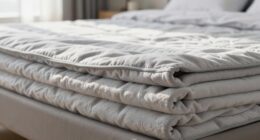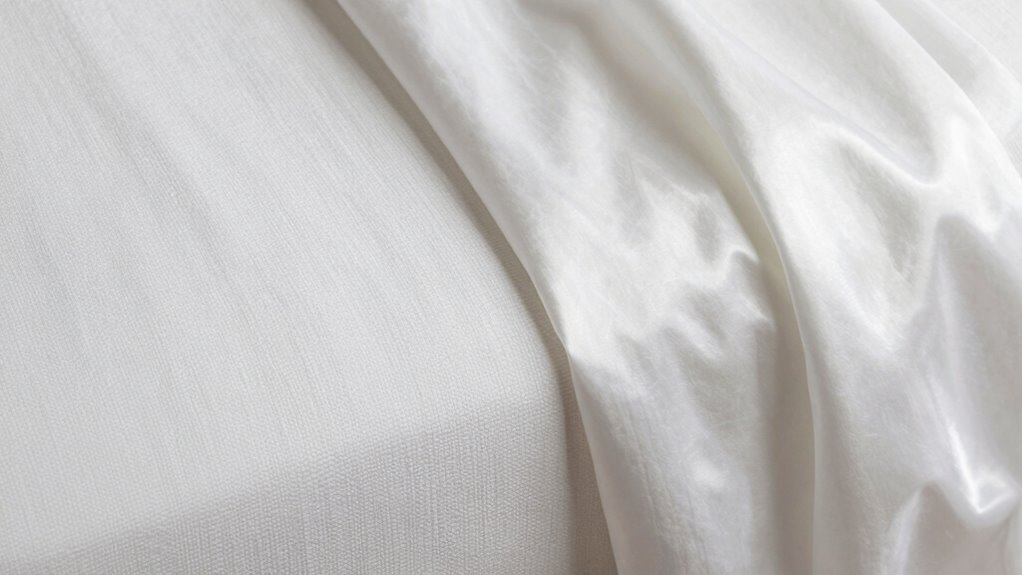
Percale sheets usually sleep cooler than sateen because their plain, tight weave promotes better airflow and moisture evaporation, helping you stay dry and comfortable. Sateen’s silky surface and denser weave trap heat and reduce breathability, making it feel warmer. If you want sheets that keep you cooler at night, focus on fabrics with better breathability and moisture-wicking properties. To discover which options suit your sleep style, explore more below.
Key Takeaways
- Percale’s plain weave creates more gaps for airflow, promoting better heat dissipation and cooler sleep conditions.
- Sateen’s tight, lustrous weave traps heat, reducing breathability and making it feel warmer during sleep.
- Lower to moderate thread counts in percale sheets enhance breathability, aiding thermal regulation in hot environments.
- Smoother sateen fabrics tend to retain moisture and heat, increasing the likelihood of feeling warm at night.
- Durability and fabric quality influence long-term cooling performance, with percale generally maintaining its breathability longer.
What Are Percale and Sateen? Key Differences for Sleep Comfort
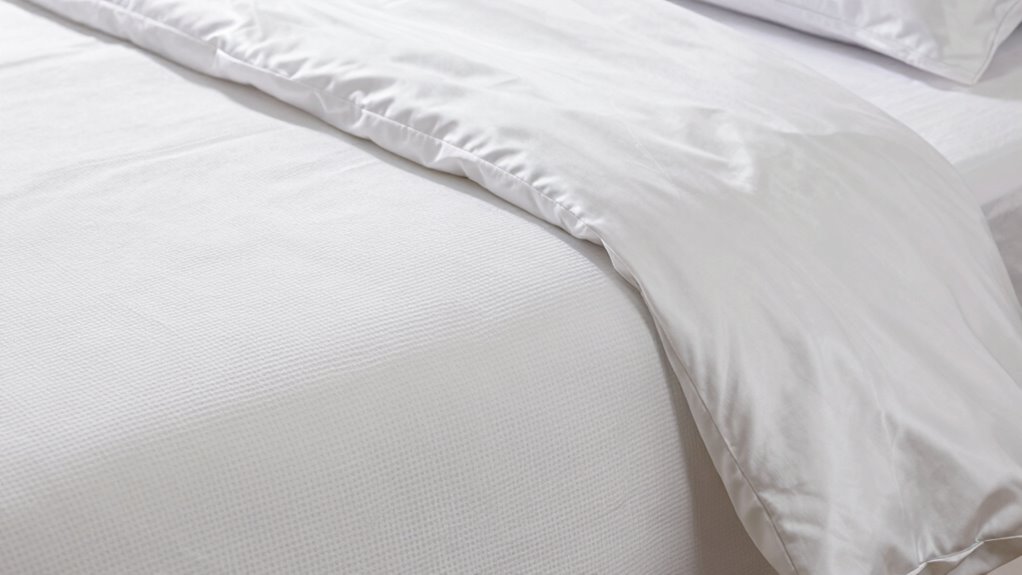
Have you ever wondered what makes some sheets feel crisp and cool while others are smooth and silky? It all comes down to the type of bed linen you choose. Percale and sateen are two popular fabric weaves, each offering different sleep experiences. Percale is a plain weave that feels crisp, cool, and breathable, making it ideal for warmer sleep temperatures. Sateen, on the other hand, uses a satin weave, resulting in a smooth, lustrous surface that feels soft against your skin. These differences influence how your sheets perform during the night. If you prefer a cooler, more breathable feel, percale is your best bet. For a silkier, more luxurious touch, sateen provides a cozy, smooth sensation. Your choice impacts both comfort and sleep quality. Additionally, understanding the fabric weave can help you select sheets that best match your climate and personal preferences for better sleep. Knowing how fabric durability varies between weaves can also help extend the life of your sheets over time. Furthermore, the breathability of percale is often superior due to its open weave, making it a popular choice for hot sleepers. Moreover, selecting the right fabric weave can contribute to sleep environment, promoting better rest and overall health. When choosing sheets, considering their moisture-wicking properties can also enhance your sleep comfort, especially during warmer nights.
How the Weave Affects Feel and Cooling Performance
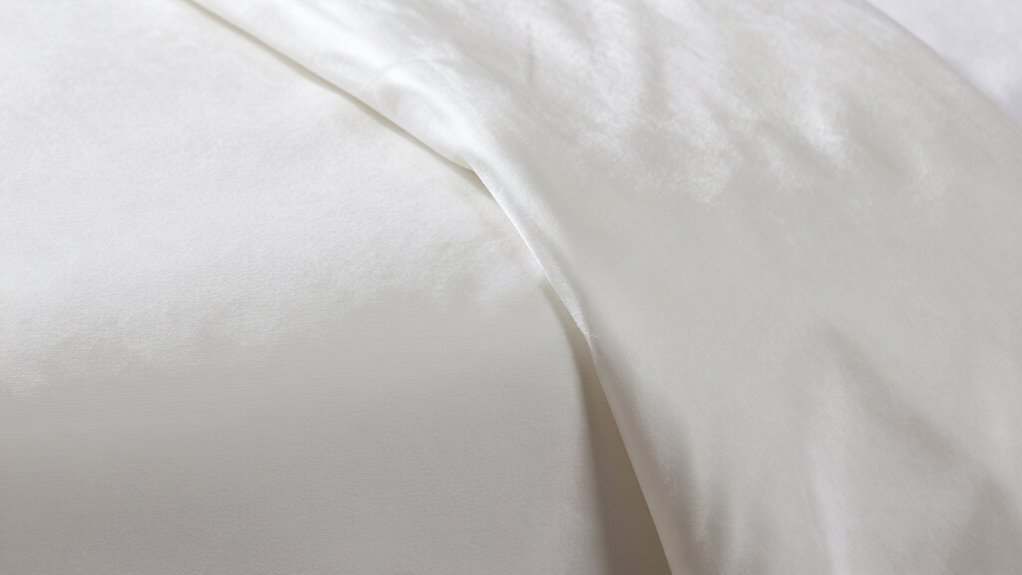
The weave of your sheets directly influences how they feel against your skin and how well they help keep you cool during the night. Woven patterns like percale, with their tight, crisp construction, create a cool, smooth surface that feels invigorating. Sateen, with its softer, lustrous weave, offers a silky feel that may trap heat more easily. Fabric finishes also play a role; matte finishes on percale enhance breathability, while sateen’s sheen can reduce airflow slightly. The way the threads are woven determines not just comfort but also how heat moves away from your body. Understanding fabric breathability can help you select sheets that promote better airflow and temperature regulation. Choosing the right woven pattern and finish impacts your sleep temperature, making a noticeable difference in how cool and comfortable your sheets feel all night long. Additionally, the weave tightness influences how much air can pass through the fabric, further affecting cooling performance. For optimal cooling performance, selecting sheets with a looser weave can improve airflow and help you stay cooler throughout the night.
Furthermore, understanding the fabric finishes can inform your choice, as matte finishes tend to be more breathable than shiny, sateen finishes.
Why Percale Sheets Stay Cooler Through Better Breathability
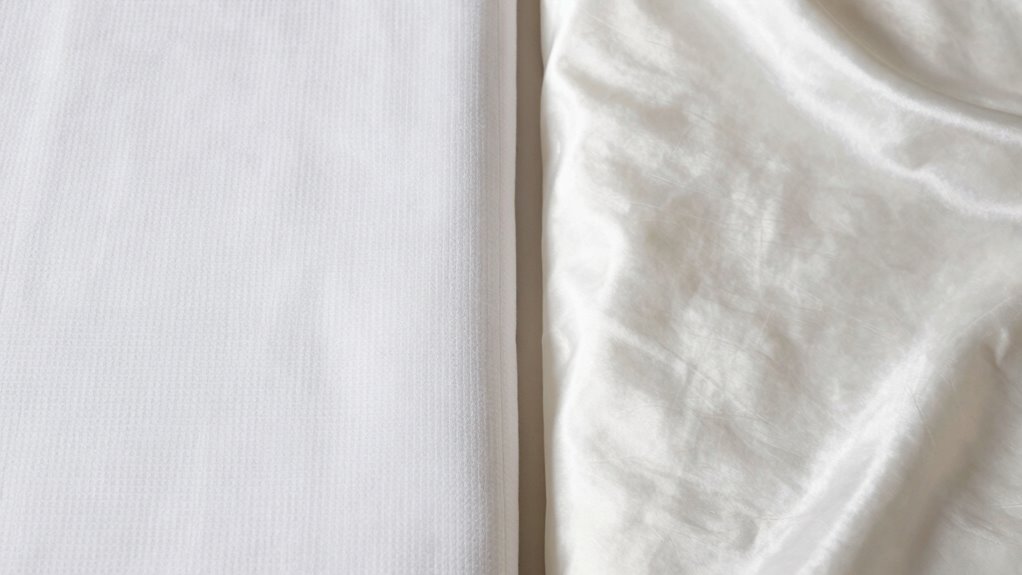
Percale sheets tend to stay cooler because their tight, plain weave promotes superior breathability. This weave allows for better fabric airflow, which helps heat and moisture escape more efficiently. The breathability benefits of percale mean you won’t feel trapped under layers of heat, making it ideal for warm sleepers or hot climates. Unlike fabrics with looser weaves, percale’s tightly woven structure encourages continuous airflow, preventing heat buildup. As a result, you stay cooler and more comfortable throughout the night. The enhanced fabric airflow also reduces sweat accumulation, helping you wake up feeling fresh. Proper home bedding setup can further enhance sleep comfort by optimizing airflow and temperature regulation. Additionally, the fabric weave plays a crucial role in maintaining a cooler sleep environment. The tight weave of percale sheets not only contributes to breathability but also enhances durability, ensuring long-lasting freshness. Understanding how fabric breathability impacts overall comfort can help you make more informed choices for your sleep environment. Overall, the breathability benefits of percale sheets make them a smart choice if you prioritize staying cool and dry while sleeping.
Does Thread Count Impact How Cool Your Sheets Feel?
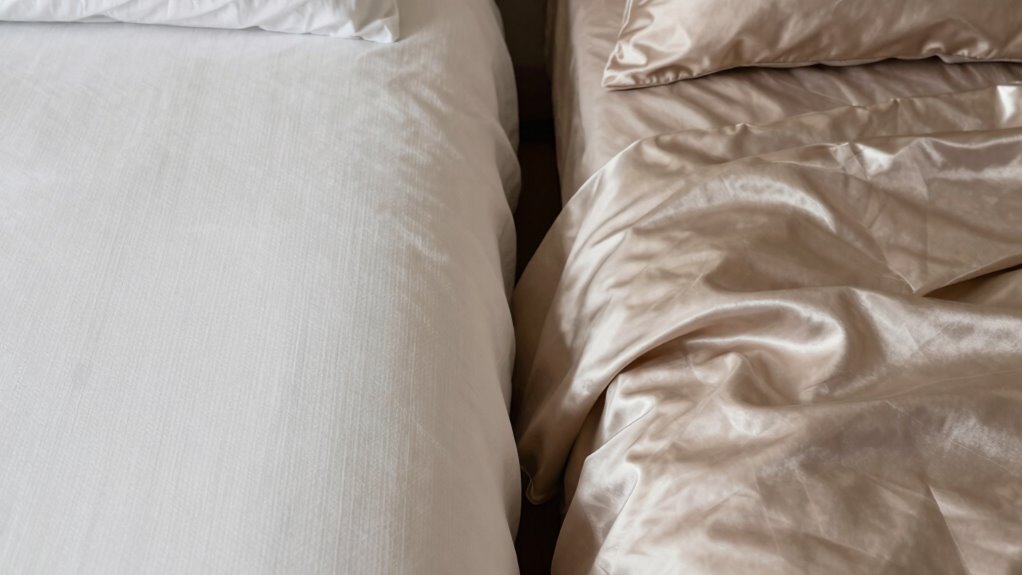
Higher thread counts can trap more heat, making sheets feel warmer instead of cooler. Thinner weaves often promote better airflow, helping you stay comfortable. Remember, quality fabric usually matters more than just a high thread count for feeling cool. Additionally, fabrics made from suprem material can offer enhanced breathability and moisture-wicking properties, contributing to a cooler sleep environment. Choosing fabrics with proper weave patterns can further improve night-time comfort. Incorporating breathable fibers into your sheet selection can also significantly impact overall cooling. Moreover, selecting fabrics that incorporate air-permeable weaves can enhance ventilation and help regulate temperature throughout the night.
Higher Thread Counts Trap Heat
While a higher thread count might seem like a sign of luxury, it can actually trap more heat and make your sheets feel less cool. Many believe that a higher thread count guarantees better quality, but that’s a thread count myth. Instead, extremely high counts can compromise fabric durability and airflow, making you feel hot and uncomfortable. Thicker weaves tend to trap heat, reducing breathability. To feel cooler, look for sheets with lower to moderate thread counts and better airflow. Here’s how different thread counts can affect your sleep:
| Thread Count | Heat Retention | Comfort Level |
|---|---|---|
| 200-300 | Less heat | Cooler, breathable |
| 400-600 | Moderate heat | Balanced comfort |
| 800+ | Traps heat | Less cool, stuffy |
Choosing fabrics designed for breathability can also enhance your sleep temperature.
Thinner Weaves Promote Airflow
Thinner weaves naturally promote better airflow because they create more gaps between threads, allowing heat and moisture to escape more easily. This increased ventilation helps prevent heat from trapping against your skin, making you feel cooler throughout the night. Sheets made with breathable fibers, like cotton or linen, enhance this effect by facilitating airflow even further. Unlike dense, tightly woven fabrics, thinner weaves reduce thermal insulation, which means less heat retention. As a result, thinner weaves are ideal if you tend to sleep hot, as they promote a more breathable environment. The open structure allows air to circulate freely around your body, helping you stay comfortable and cool, especially during warmer nights or in humid climates. Proper piercing aftercare also plays a role in maintaining comfort by preventing irritation and inflammation that could affect sleep quality. Additionally, choosing breathable fabrics can further optimize airflow and keep you cooler throughout the night. Understanding fabric weave types can help you select sheets that maximize cooling effects based on their construction, and selecting appropriate thread counts can further influence the breathability and comfort of your bedding. Incorporating moisture-wicking materials can also help draw sweat away from your skin, enhancing the cooling sensation.
Quality Over Quantity Matters
Many people believe that a higher thread count automatically makes sheets cooler, but that’s not always the case. Instead, quality over quantity truly matters when it comes to comfort. A higher thread count may feel denser, trapping heat and making your bedroom temperature less comfortable, especially if you tend to sleep in a restless or spread-out sleep posture. Softer, well-made sheets with moderate thread counts often allow better airflow, helping you stay cooler throughout the night. Focus on the weave and material—percale tends to promote airflow, while sateen feels smoother but can trap heat. Remember, comfort is personal: choosing sheets based on quality improves your sleep posture and keeps you cooler, regardless of thread count.
How Surface Texture Influences Heat Retention in Sheets
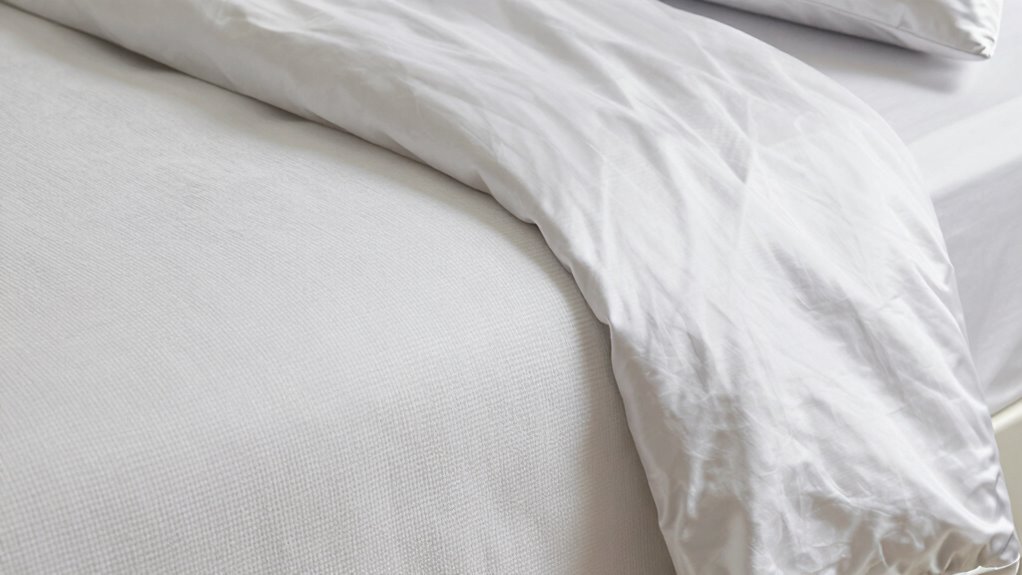
Your sheets’ surface texture affects how well air flows through them, impacting heat retention. Smoother fabrics like sateen trap more heat because they have less airflow, while percale’s textured surface allows better cooling. Additionally, denser fabrics hold in more heat, making fabric density a key factor in how warm your sheets feel.
Surface Texture and Airflow
Surface texture plays a crucial role in how heat is retained or dissipated through sheets. It affects airflow, which influences sleep comfort and temperature regulation. Different textures create varying degrees of air circulation beneath you.
- Smooth surfaces like sateen tend to reduce airflow, trapping more heat and making you feel warmer.
- Perfectionally textured bed linen allows more air to flow through, promoting cooling.
- Rougher finishes create gaps that enhance ventilation, helping dissipate heat faster.
- Tightly woven fabrics restrict airflow, increasing heat retention, while looser weaves boost breathability.
Your choice of surface texture directly impacts how well your sheets manage heat, ensuring a cooler or warmer sleep environment and improving overall sleep comfort.
Fabric Density and Heat Retention
The way fabric density influences heat retention is closely tied to surface texture, as tighter weaves and denser fabrics tend to trap more body heat. This impacts fabric breathability, which affects how much heat escapes during sleep. Denser fabrics like sateen often retain more heat, reducing breathability benefits and making you feel warmer. Conversely, percale’s lighter weave allows for better airflow, enhancing fabric breathability and keeping you cooler. Consider the following:
| Fabric Type | Density & Heat Retention |
|---|---|
| Percale | Lighter weave, lower density, better airflow |
| Sateen | Tighter weave, higher density, traps heat |
| Effect | Influences comfort and temperature regulation |
Choosing the right fabric depends on your heat retention needs and preference for breathability benefits.
How Moisture Wicking Helps Keep You Cool at Night

Have you ever woken up in the middle of the night drenched in sweat? Moisture-wicking fabrics help keep you cool by managing moisture and enhancing thermal regulation. They draw sweat away from your skin, allowing it to evaporate quickly, which prevents overheating. Here’s how moisture management works:
- Absorbs sweat rapidly
- Promotes quick evaporation
- Reduces surface moisture buildup
- Maintains a dry, comfortable feeling throughout the night
This process helps your body stay cool and dry, preventing discomfort and overheating. When your sheets wick moisture effectively, it supports better thermal regulation, so you sleep more soundly. Choosing fabrics with moisture-wicking properties ensures you stay comfortable, even on hot nights, by actively managing moisture and promoting a cooler, more restful sleep.
Durability and Performance of Sheets in Hot Sleep Conditions

When sleeping in hot conditions, the durability and performance of your sheets become crucial for maintaining comfort throughout the night. Sheets with good longevity resist wear and tear, ensuring they stay smooth and comfortable over time. Percale sheets, with their tight weave, typically offer greater durability, maintaining their crispness and preventing pilling. Sateen sheets, although soft, may show signs of wear faster, especially with frequent washing. Color fading is another factor to contemplate; hot conditions and repeated washing can cause dyes to fade more quickly, diminishing the sheet’s appearance. Choosing high-quality fabrics and proper care helps preserve both color and integrity. Ultimately, durable sheets that maintain their performance ensure you stay comfortable and rested, night after night.
How Washing Your Sheets Changes Their Cooling Power

Washing your sheets can substantially impact their cooling power, especially if you’re aiming to stay comfortable in hot conditions. Clean bed linen retains its original texture and breathability, which helps regulate your sleep temperature. Over time, washing habits can cause fibers to wear down or become softer, affecting their ability to wick away heat. Here’s how washing influences your sheets:
- Fiber integrity: Frequent washing can weaken fibers, reducing breathability.
- Fabric finish: Detergents or fabric softeners may coat sheets, trapping heat.
- Texture changes: Over-washing can make sheets less crisp, diminishing cooling effects.
- Drying methods: High heat drying can cause fibers to shrink or soften, altering how your bed linen interacts with air.
Proper care maintains the fabric’s cooling properties, ensuring a comfortable sleep temperature.
Which Fabric Suits Your Sleep Style and Helps You Stay Cooler?
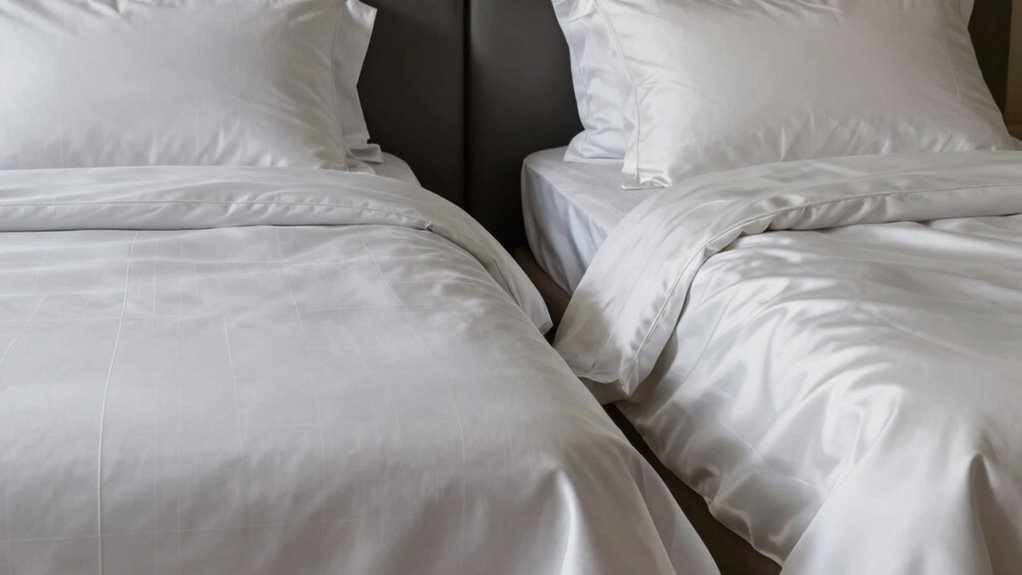
Choosing the right fabric for your sheets can make a significant difference in how cool and comfortable you sleep, especially during hot nights. If your bedroom temperature tends to rise, opt for fabrics that promote airflow and wick away moisture. Percale sheets offer a crisp, breathable feel, ideal for hot sleepers who want a cooler sleep experience. Sateen, with its smooth, glossy surface, tends to trap heat, making it less suitable for warm nights. Consider your sleep style and environmental factors when choosing. Here’s a quick comparison:
| Fabric Type | Best For |
|---|---|
| Percale | Hot sleepers, warm bedroom temperatures |
| Sateen | Cooler temperatures, softer feel |
| Both | Overall sleep comfort, personal preference |
Frequently Asked Questions
Which Fabric Is More Hypoallergenic: Percale or Sateen?
You’ll find percale more hypoallergenic than sateen because of its tighter fabric weave, which helps prevent dust mites and allergens from settling in. Additionally, percale often undergoes fewer textile finishes, reducing potential irritants. Sateen’s smoother surface and softer feel may trap more allergens. If hypoallergenic qualities matter most, choose percale, as its natural, tightly woven fabric offers better protection against common allergens and irritants.
How Does the Fabric’s Breathability Influence Allergy Symptoms?
Breathable fabrics boost airflow enhancement, helping you stay cooler and reducing allergen accumulation. When your bedding allows better airflow, it minimizes trapped dust, mold, and other irritants that can trigger allergy symptoms. If you want to lessen allergy issues, choose a fabric that promotes airflow, like percale, which tends to be more breathable than sateen. This way, you create a less hospitable environment for allergens, easing allergy symptoms and improving your sleep quality.
Are There Temperature Differences Between Cotton and Linen Sheets?
You’ll notice temperature differences between cotton and linen sheets because linen’s open weave promotes better airflow, making it cooler. Linen fabric’s loose weave enhances moisture wicking, keeping you dry and comfortable. Cotton, with a tighter weave, retains more heat but still breathes well. If you prefer cooler sleep, linen’s natural breathability and moisture-wicking properties give you an advantage, especially in warm weather.
Can Fabric Treatments Affect Cooling Performance?
Yes, fabric treatments can affect cooling performance. A fabric finish designed to enhance moisture-wicking properties helps draw sweat away from your skin, keeping you cooler. Treatments that add a breathable, lightweight layer can improve airflow and reduce heat retention. So, when choosing sheets, look for those with moisture-wicking finishes, as they can make a noticeable difference in how cool and comfortable you feel throughout the night.
Which Sheet Type Is Better for Hot Sleepers With Sensitive Skin?
If you’re a hot sleeper with sensitive skin, opt for percale sheets—they’re like a refreshing gust, offering superior breathability compared to sateen. Percale’s crisp weave helps wick away heat and moisture, while being gentle on sensitive skin. Sateen, though silky, traps more heat. So, for a cooler, more comfortable night, percale sheets are your best bet—they keep you cool and soothe your skin.
Conclusion
Choosing between percale and sateen could be the difference between sleeping like royalty or tossing through a sweat-soaked night. Feel the incredible coolness, breathe easier, and wake up refreshed—every single morning. Don’t settle for sheets that trap heat; pick the one that keeps you ice-cold and comfortable all night long. Your perfect, cooler sleep is just a sheet swap away—embrace the chill and conquer sleepless, sweaty nights forever!