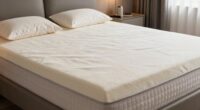
In cold rooms, memory foam feels firmer because lower temperatures cause the material’s molecules to contract, reducing flexibility and responsiveness. This makes the foam less able to contour to your body and creates a firmer feeling overall. Warmer conditions soften the foam, improving comfort and support. To learn more about how temperature affects memory foam and what you can do to stay comfortable, keep exploring this topic.
Key Takeaways
- Cold temperatures cause polymer chains in memory foam to contract, increasing firmness and rigidity.
- Lower ambient heat reduces the foam’s ability to soften and contour to the body.
- Reduced heat transfer slows the foam’s response, making it feel less flexible and more solid.
- Cold conditions decrease the foam’s elasticity, limiting its ability to conform comfortably.
- Memory foam’s viscoelastic properties make it temperature-sensitive, resulting in a firmer feel when cold.
How Does Temperature Affect Memory Foam’s Response?
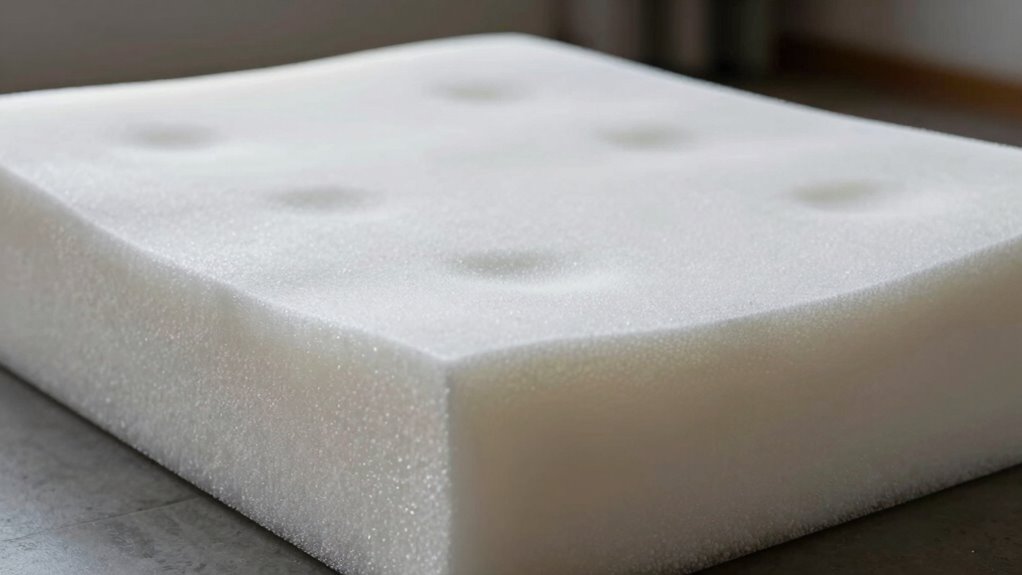
Temperature plays a crucial role in how memory foam responds to pressure. When the room is cold, your body’s heat isn’t enough to warm the foam quickly, leading to a different temperature sensation. This cooler environment makes the foam firmer, reducing its ability to contour to your body’s curves. As a result, your sleep comfort decreases because the foam doesn’t mold as well to your shape. Additionally, foam’s temperature sensitivity means that even minor changes in ambient temperature can significantly affect its feel. This sensitivity is due to the material’s viscoelastic properties, which cause it to react differently depending on the temperature. Conversely, in warmer conditions, the foam becomes softer and more responsive, improving pressure relief and overall comfort. You’ll notice a significant difference in how the mattress feels, especially if you’re sensitive to temperature changes. Understanding this relationship helps you optimize your sleep environment for better rest and more consistent support. Recognizing how ambient temperature impacts foam’s elasticity can help you choose the right bedding or room climate adjustments for optimal sleep quality.
What’s the Chemistry That Makes Memory Foam Flexible?
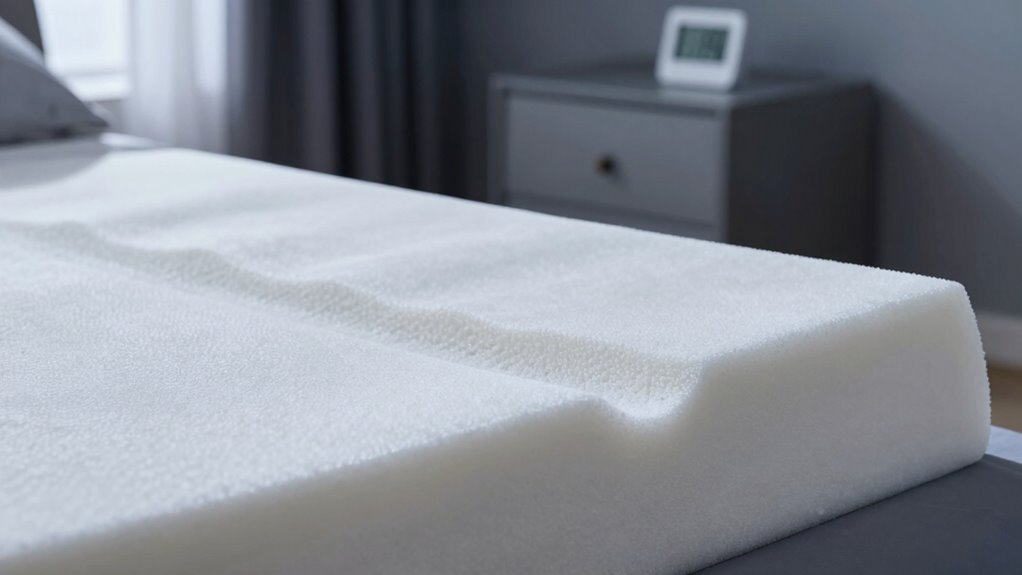
The flexibility of memory foam primarily comes from its unique chemical structure, which consists of long chains of polyurethane molecules combined with other compounds called additives. These additives improve the material’s ability to bend and stretch without breaking. Chemical reactions during manufacturing create bonds that give memory foam its elastic properties, allowing it to respond smoothly to pressure. The polymer chains are flexible because of their specific arrangement, enabling the foam to mold to your body. When heat is applied, these chemical bonds become more dynamic, increasing material flexibility. This chemical composition ensures that memory foam can compress and regain shape easily. Additionally, the molecular flexibility of the polymer chains allows for better responsiveness and comfort. The thermal sensitivity of memory foam is also influenced by its chemistry, making it more adaptable to temperature changes. The temperature-dependent behavior of memory foam plays a key role in its comfort and support. Essentially, the chemistry behind memory foam’s structure directly influences how flexible and responsive it feels.
Why Does Cold Weather Make Memory Foam Firmer?

Cold weather affects memory foam‘s material properties, making it less flexible and more rigid. As temperatures drop, the foam’s viscoelastic response increases, causing it to firm up. This temperature-dependent change explains why memory foam feels firmer in colder environments. Additionally, understanding the material properties of memory foam helps explain its behavior in different climates. The viscoelastic nature of memory foam is sensitive to temperature shifts, which further influences its firmness. Moreover, the thermal sensitivity of memory foam impacts how quickly it responds to body heat, affecting comfort levels in various settings. Recognizing the temperature-dependent behavior of memory foam can help consumers choose the right environment or bedding accessories for optimal comfort, especially considering its dynamic response to temperature variations.
Temperature-Dependent Material Properties
When the environment drops in temperature, memory foam responds by becoming noticeably firmer. This change is due to the material’s temperature-dependent properties, especially how thermal expansion affects its structure. At colder temperatures, the foam’s polymer chains contract, reducing their flexibility. This contraction makes the material less elastic and more rigid. As a result, the foam’s ability to conform slowly to your body decreases, giving it a firmer feel. Conversely, warmer temperatures allow the polymer chains to expand and become more elastic, making the foam softer. These variations highlight how temperature influences the physical behavior of memory foam, directly impacting its comfort and support. Understanding these properties helps explain why your mattress feels different depending on the room’s temperature. Recognizing the small systems involved can help you optimize your sleep environment for comfort, including how temperature interacts with material science in foam products. Additionally, the specific thermal properties of memory foam play a crucial role in its responsiveness to temperature changes. For example, thermal conductivity determines how quickly heat is transferred through the material, affecting its temperature-dependent behavior. Furthermore, polymer chain behavior is fundamental to understanding the material’s response to temperature fluctuations.
Increased Viscoelastic Response
As the temperature drops, memory foam doesn’t just become firmer—it also exhibits a heightened viscoelastic response. Cold temperatures reduce the material’s thermal conductivity, slowing heat transfer within the foam. This means the foam takes longer to soften because it can’t efficiently distribute heat throughout its structure. Additionally, lower temperatures decrease the material elasticity, making the foam less flexible and more resistant to compression. This increased viscoelastic response causes the foam to respond more slowly to pressure and take longer to conform to your body. As a result, the foam feels firmer and less responsive in cold environments. Fundamentally, the combination of reduced thermal conductivity and decreased elasticity amplifies the foam’s viscoelastic properties, intensifying the sensation of firmness.
How Does Heat Help Memory Foam Conform to Your Body?
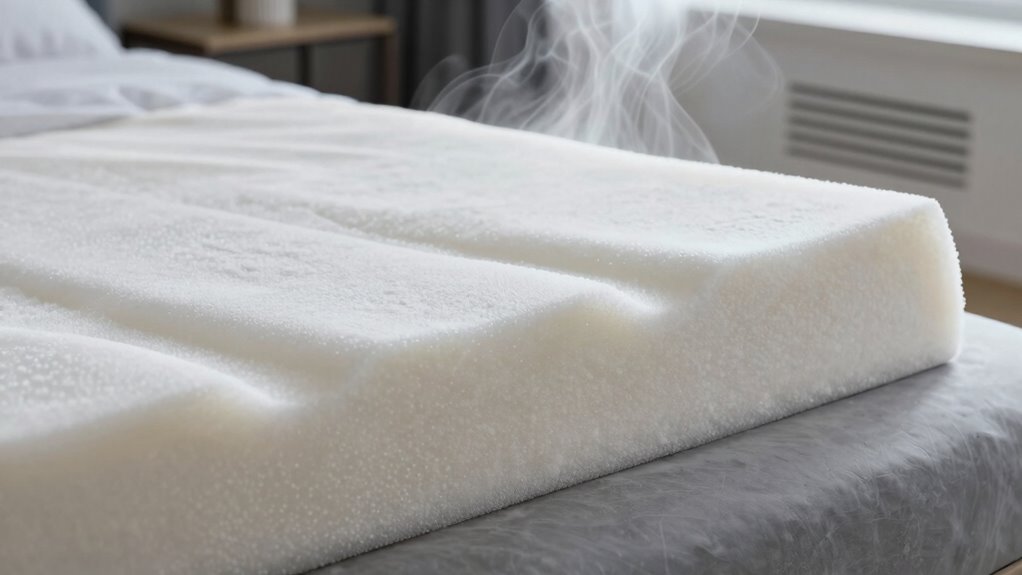
Heat plays a crucial role in helping memory foam conform to your body because it causes the foam’s molecules to become more flexible. During memory foam manufacturing, the foam is designed to respond to temperature changes, allowing it to mold smoothly around your curves. When you lie on the mattress, your body releases heat, which gently warms the foam. This warmth increases the foam’s elasticity, enabling it to contour precisely to your shape and distribute your weight evenly. Without this heat, the foam remains too firm and less responsive, especially in colder environments. Mattress cooling techniques can hinder this process, making it feel firmer and less supportive. Additionally, proper temperature regulation is essential for maintaining optimal foam performance and comfort. That’s why maintaining a comfortable temperature is essential for ideal memory foam performance and comfort. Proper heat levels also help prevent the foam from becoming too rigid, which can impair its supportive qualities and overall comfort. Ensuring consistent temperature control helps the foam stay responsive and maintain its desired softness. Furthermore, the foam’s molecular structure relies on temperature to optimize its conforming abilities. A consistent heat level ensures the foam’s responsiveness remains stable over time, enhancing user satisfaction.
How Do Temperature Changes Impact Memory Foam’s Density and Support?
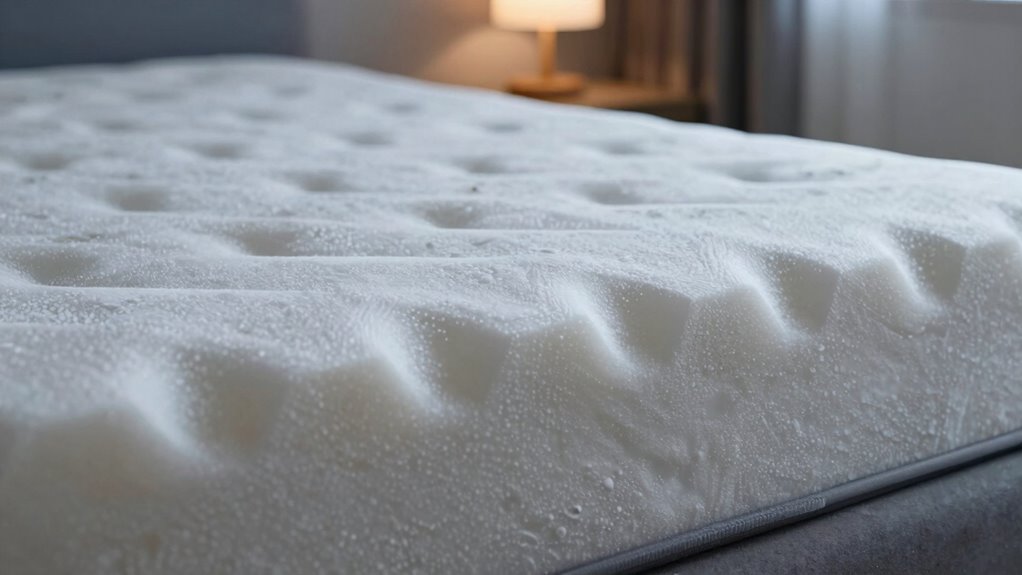
When temperatures drop, memory foam becomes denser, which can make it feel firmer and less responsive. This change affects how well the foam supports your body, especially in cold rooms. Understanding how temperature shifts alter its viscoelastic response helps you choose the right mattress for comfort year-round.
Temperature-Dependent Density Changes
Temperature fluctuations markedly influence the density and supportiveness of memory foam. When temperatures drop, the foam undergoes thermal expansion, causing its material elasticity to decrease. This makes the foam denser and firmer, reducing its ability to contour comfortably. Conversely, warmer temperatures cause the foam to contract, increasing elasticity and softness. The change in density directly affects how well the foam supports your body. Additionally, understanding the total-cost clarity of different foam types can help you select the most suitable option for varying environments.
Viscoelastic Response Variations
As the density of memory foam changes with temperature, so does its viscoelastic behavior, which directly impacts how the material responds to pressure and body heat. When it’s cold, the foam’s thermal conductivity decreases, slowing heat transfer and making the material less responsive. This results in reduced material elasticity, causing the foam to feel firmer. Conversely, warmer temperatures increase thermal conductivity, allowing the foam to soften and contour better. Here’s how temperature affects viscoelastic response:
- Cooler temps reduce material elasticity, making foam stiffer.
- Slower heat transfer hampers body heat absorption.
- Reduced thermal conductivity delays foam’s response to pressure.
- These variations influence how well the foam supports and molds to your body in different environments.
In Cold Rooms, How Is Pressure Distributed in Memory Foam Mattresses?
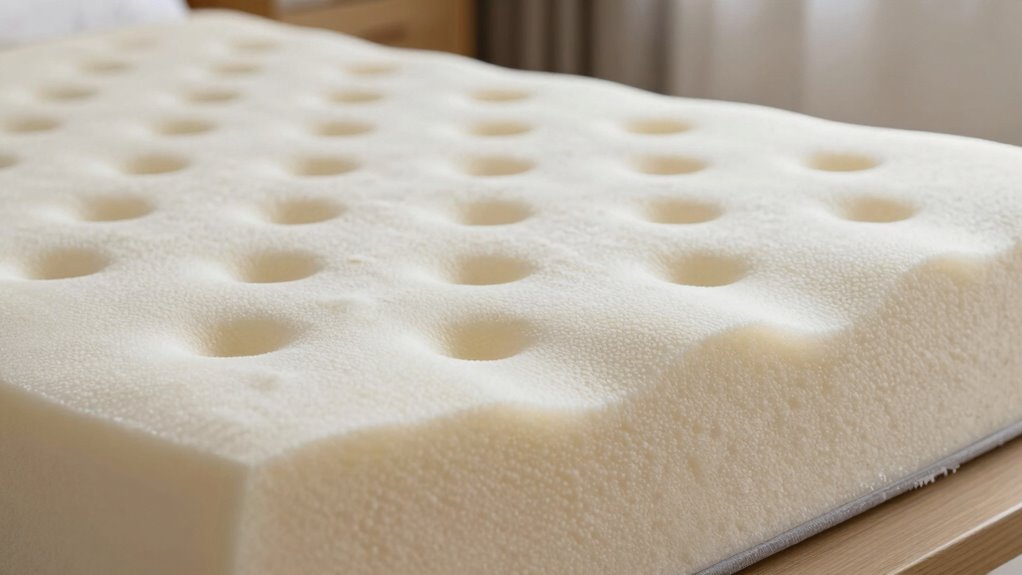
In cold rooms, memory foam mattresses respond differently to pressure due to the material’s increased firmness at lower temperatures. This change affects how pressure is distributed across the mattress surface. When it’s cold, the foam becomes less flexible, causing pressure to concentrate more intensely in certain areas rather than spreading evenly. You might notice that your body weight presses more into the foam, creating localized pressure points. This uneven pressure distribution can lead to discomfort and reduced support. The firmness at lower temperatures prevents the foam from contouring smoothly to your body’s shape, making it harder for pressure to disperse naturally. As a result, you experience a firmer feel and less pressure relief, especially in colder environments.
How Can You Keep Your Memory Foam Comfortable When It’s Cold?
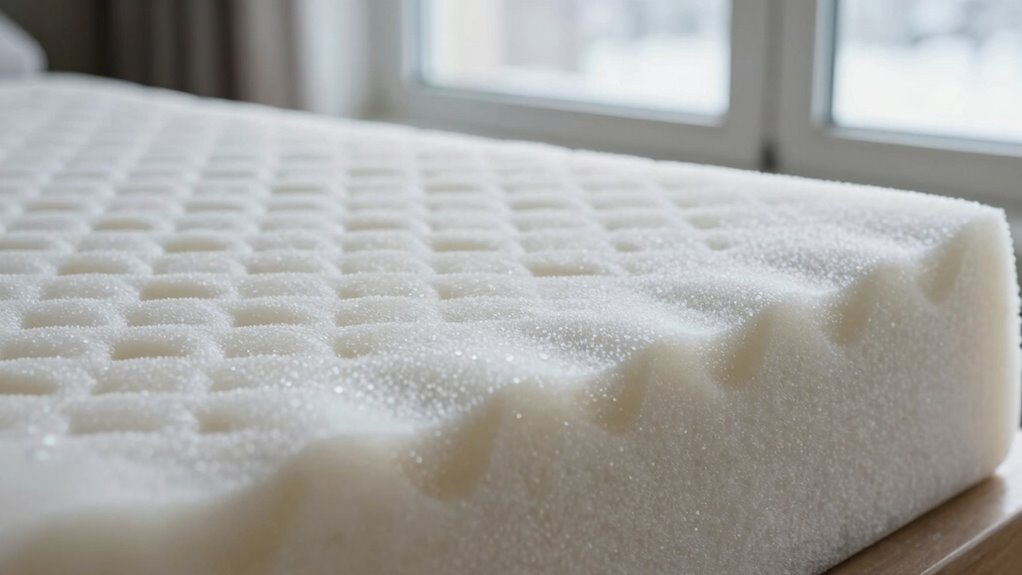
To keep your memory foam comfortable when it’s cold, you can take simple steps to warm it up before use. Cold temperatures reduce memory foam elasticity, making it feel firmer. Proper temperature regulation helps it regain softness and conform better. Here are some effective tips:
Warm your memory foam mattress in cold weather to restore softness and comfort.
- Use a space heater or heating pad briefly to warm the mattress surface.
- Allow your bedding to pre-warm by storing it in a warmer environment.
- Keep the room at a consistent, moderate temperature.
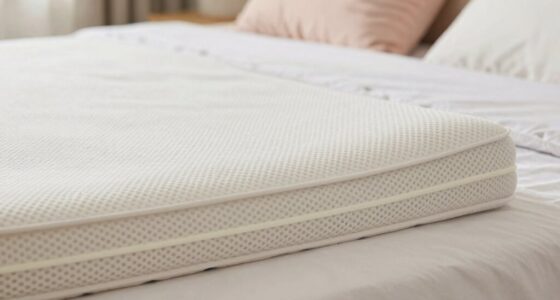
- Use a mattress topper made of breathable material to help insulate and promote even warmth.
These actions help maintain ideal temperature regulation, ensuring your memory foam remains comfortable, responsive, and supportive despite the cold.
How Does Memory Foam Compare to Other Mattress Materials in Cold Conditions?

Memory foam tends to become firmer and less responsive in cold conditions, which can diminish its comfort and support. Compared to other mattress materials, it reacts differently in low temperatures. For example, latex stays relatively consistent, offering steady firmness, while innerspring mattresses maintain their bounce and support. Here’s a quick comparison:
| Mattress Material | Behavior in Cold Conditions |
|---|---|
| Memory Foam | Becomes firmer, less responsive |
| Latex | Remains fairly consistent, softens slightly |
| Innerspring | Maintains bounce, minimal change |
In a memory foam comparison, these differences highlight how cold affects comfort. If you prefer consistent support regardless of room temperature, latex or innerspring could be better options in cold climates.
What Are Effective Fixes for Firmer Memory Foam in Cold Environments?
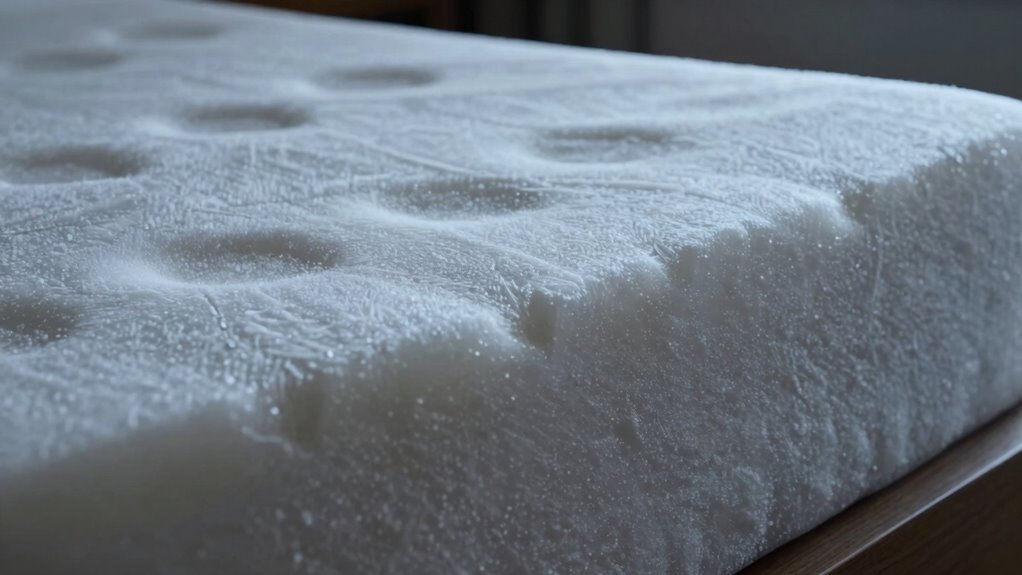
When cold temperatures make your memory foam mattress firmer and less responsive, there are several effective ways to restore its comfort. First, improve air circulation around your mattress by using a fan or leaving windows slightly open, which helps regulate temperature. Second, guarantee proper moisture control; using a dehumidifier prevents excess moisture from making the foam feel even firmer. Third, consider placing a heated mattress pad or electric blanket on low settings to warm the foam gradually. Finally, keep your room at a consistent, warmer temperature to prevent cold drafts that cause firmness. These fixes help soften the foam, enhance responsiveness, and improve overall sleep comfort in cold environments.
Frequently Asked Questions
Can Using a Heated Mattress Pad Prevent Memory Foam From Feeling Firmer?
Yes, using heated mattress pads helps prevent memory foam from feeling firmer by providing better temperature regulation. When you heat your mattress, it warms the foam, making it more pliable and comfortable. This way, you avoid the firmness caused by cold temperatures. Just make certain your heated pad has adjustable settings to maintain a consistent, cozy temperature, enhancing your overall sleep experience without overheating.
Does the Thickness of Memory Foam Affect How Temperature Impacts Its Firmness?
Yes, the thickness of memory foam does influence how temperature impacts its firmness. Thicker memory foam tends to have more density factors, which can make it feel firmer in colder conditions because the additional layers respond differently to temperature changes. As the thickness increases, temperature effects become more noticeable, so you might experience a firmer feel in cold rooms, especially with higher-density foams.
Are There Specific Types of Memory Foam More Resistant to Temperature Changes?
Some memory foam types resist temperature changes better because of material variations and manufacturing processes. You might notice gel-infused or plant-based foams, which incorporate cooling agents or different compounds, making them less sensitive to cold. Imagine a fabric that stays soft regardless of the weather — these foams behave similarly. They’re crafted with specific materials and techniques to keep firmness consistent, so your comfort isn’t affected by temperature swings.
How Quickly Does Memory Foam Respond to Temperature Fluctuations in Cold Rooms?
Memory foam responds to temperature fluctuations quickly due to its high temperature sensitivity and material responsiveness. In cold rooms, you’ll notice it takes a few minutes to soften when you lie down, as the foam needs time to absorb heat and adjust. Conversely, when temperatures rise, it returns to its softer state faster. Your comfort depends on how efficiently the foam reacts to these changes, influenced by its specific properties.
Is It Safe to Use External Heat Sources to Soften Memory Foam in Cold Environments?
Using external heat sources to soften memory foam in cold environments isn’t safe, as it can cause damage or create fire hazards. Instead, consider alternative solutions like using a mattress topper, applying a gentle electric blanket, or warming the room gradually. These methods are safer and more effective, helping to soften your memory foam comfortably without risking safety concerns or damaging your mattress.
Conclusion
Remember, temperature plays a big role in how your memory foam feels. When it’s cold, the foam hardens, making it less supportive and less comfortable. In fact, studies show that memory foam can become up to 30% firmer in cooler temperatures. To keep your mattress feeling cozy, try using a mattress pad or warming it before sleeping. Staying mindful of the temperature helps make certain your memory foam stays supportive and comfortable all year round.