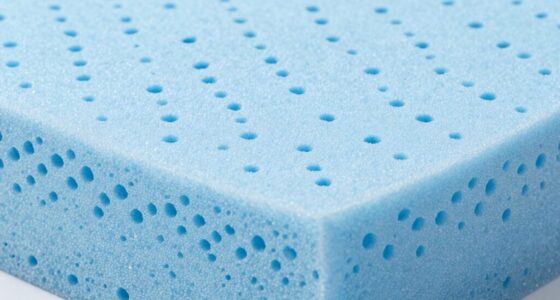

Research consistently suggests that keeping your bedroom between 60-67°F (15-19°C) helps promote better sleep. A cooler environment aids your body’s natural drop in temperature, which signals sleep onset and deep sleep stages. It’s also important to maintain humidity levels between 40-60% for comfort and air quality. Getting the temperature just right can reduce awakenings and improve overall sleep quality. To learn more about optimizing your sleep environment, stay with us.
How Does Body Temperature Regulate Your Sleep?
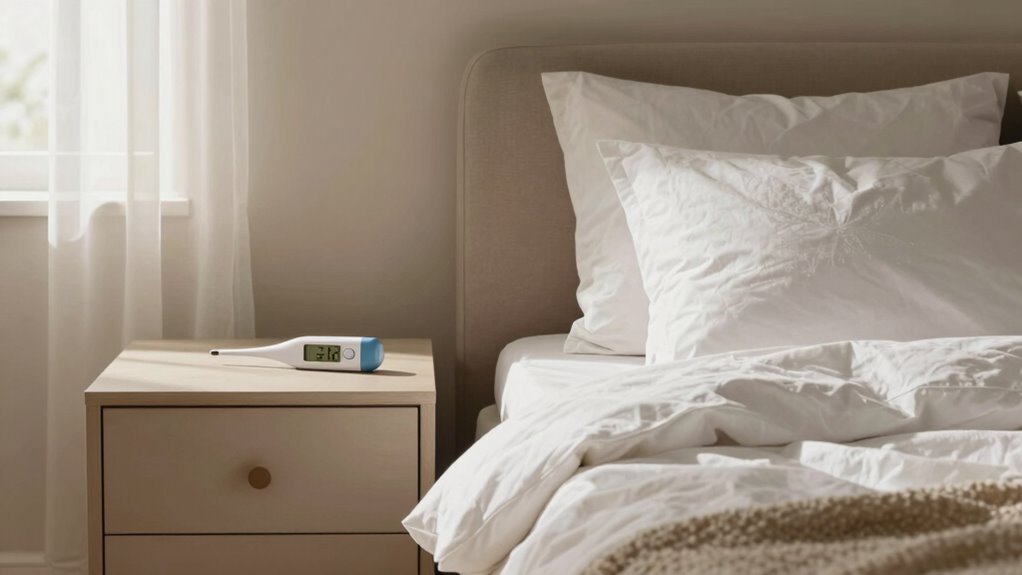
Your body actively regulates its internal temperature to help you fall asleep and stay asleep. This process is driven by circadian rhythms, which follow a roughly 24-hour cycle, signaling your body when to wind down and prepare for rest. During the evening, thermoregulation processes cause your core body temperature to drop, signaling your brain that it’s time to sleep. This temperature decrease is vital for initiating sleep stages and maintaining deep sleep. Additionally, maintaining a comfortable sleep environment** can support your body’s internal clock and promote better sleep quality. Proper room temperature is essential for aligning your body’s thermoregulatory responses with your sleep cycle. Understanding the role of thermoregulation in sleep can help you adopt habits that align with your circadian rhythms, such as adjusting room temperature and bedtime routines, to optimize sleep. Creating a consistent sleep routine** can further enhance your body’s natural temperature regulation and improve overall sleep quality.

California King Mattress, Upgraded 14 Inch Cal King Mattress in a Box, Cooling Gel Memory Foam Hybrid Mattresses with Pocket Springs, Pressure & Pain Relief, Double Additional Support, CertiPUR-US
【Ergonomic Zonal Support System】The california king mattress features multiple layers of premium memory foam and independent support springs...
As an affiliate, we earn on qualifying purchases.
What Is the Best Bedroom Temperature for Restful Sleep?
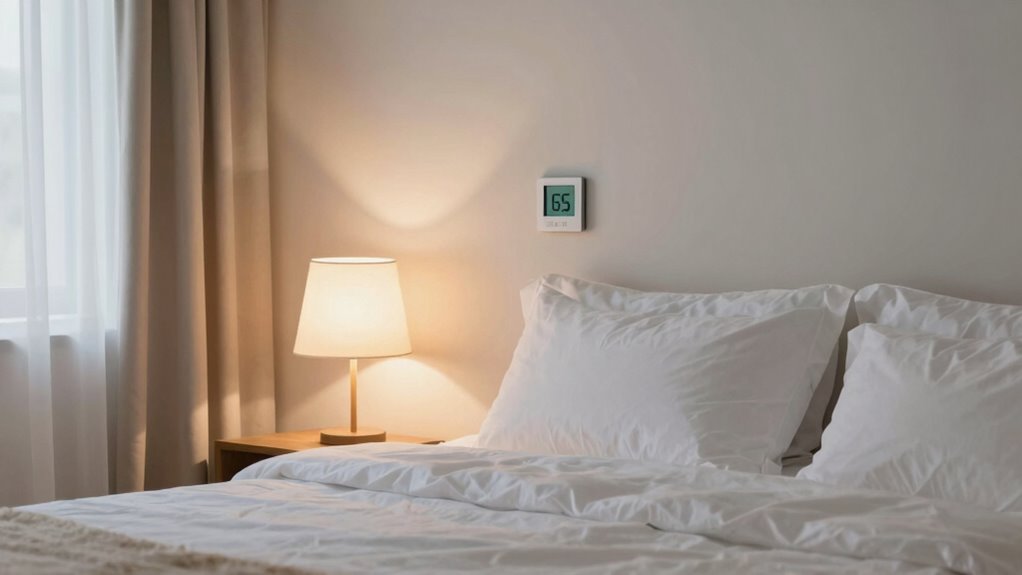
Maintaining the right bedroom temperature can considerably influence how well you sleep. Experts recommend keeping your room between 60-67°F (15-19°C) for ideal rest. Your sleep position also plays a role; side sleepers may prefer slightly cooler temperatures, while back sleepers might be comfortable at the higher end of the range. Additionally, your bedroom decor can help regulate temperature—light-colored walls and breathable bedding promote airflow and keep the room cooler. Avoid heavy curtains or thick comforters that trap heat. Adjusting your thermostat or using fans can help you find your perfect setting. Incorporating proper ventilation can improve airflow and maintain a consistent temperature throughout the night. Ensuring that your sleep environment is well-ventilated can further enhance overall comfort. Using smart thermostats and other connected home technology can help you automatically maintain a stable, comfortable temperature for optimal sleep, especially in environments where external factors fluctuate. Additionally, understanding how air circulation impacts sleep quality can guide you in optimizing your room setup. When your environment stays within this temperature range, you create a comfortable sleep atmosphere that supports your body’s natural cooling process, leading to more restful, uninterrupted sleep.

Novilla Queen Size Mattress, 12 inch Gel Memory Foam Mattress for a Cool Sleep & Pressure Relief, Medium Firm Feel with Motion Isolating, Bliss
General Note: Please allow 24 - 72 hours for your Mattress to regain its full shape. Any memory...
As an affiliate, we earn on qualifying purchases.
How Does Temperature Impact Sleep Onset and Deep Sleep?
Temperature plays a crucial role in how quickly you fall asleep and how deeply you enter restorative stages of sleep. When your bedroom maintains a cool, consistent temperature, it facilitates the natural drop in core body temperature necessary for sleep onset. Fluctuations in temperature can disrupt your sleep cycle, making it harder to shift into deep sleep stages. If the room is too warm or experiences temperature fluctuations during the night, your body struggles to maintain the stability needed for deep, restorative sleep. Conversely, a stable, comfortable temperature helps your body regulate its internal clock, promoting faster sleep onset and longer periods of deep sleep. Maintaining a consistent environment supports your sleep cycle and enhances the quality of your rest. Additionally, temperature regulation is essential for maintaining optimal sleep quality by supporting your body’s natural circadian rhythms. Proper sleep environment adjustments, like using a thermostat or breathable bedding, can further optimize your sleep conditions. A comfortable sleeping temperature can also reduce nighttime awakenings caused by overheating or chills, further improving sleep continuity. In fact, using temperature control devices can help you achieve and maintain ideal sleeping conditions throughout the night.

LETMOON California King Mattress, 14 Inch Mattress Cal King Bed in Box, Medium Firm, (Upgrade) Edge Support, Pocket Springs, Pressure Relief
Hybrid Mattress for Back Pain & Spinal Alignment – Combines memory foam & pocket coils in a medium-firm...
As an affiliate, we earn on qualifying purchases.
Are There Common Myths About Bedroom Temperature and Sleep?
Many people believe that any temperature outside a narrow range will ruin sleep, but that’s a myth. You might also think that warmer rooms always cause restless nights, which isn’t true for everyone. Let’s look at some common misconceptions and see what the research really says.
Common Misconceptions Persist
Despite widespread beliefs, some common myths about bedroom temperature and sleep persist. Many think that a higher or lower temperature will drastically improve sleep quality, but that’s a misconception. People often believe that their sleep environment must be kept extremely cool or warm to achieve restful sleep, yet research shows moderate, comfortable temperatures are more effective. These temperature misconceptions can lead you to make unnecessary adjustments that don’t truly benefit your sleep. The truth is, your body’s ideal sleep temperature is around 60-67°F (15-19°C), but individual preferences vary. Believing that more extreme temperatures are better can interfere with sleep quality. Understanding these myths helps you focus on creating a balanced sleep environment rather than chasing inaccurate notions.
Temperature Myths Debunked
Although it’s common to believe that adjusting your bedroom temperature dramatically can boost your sleep quality, this is actually a myth. Many think that extreme changes will instantly improve sleep hygiene, but research shows that consistent, moderate temperatures are more effective. Climate change has heightened concerns about indoor comfort, yet drastic temperature shifts aren’t necessary. Instead, maintaining a cool, comfortable setting—around 65°F (18°C)—supports better sleep. Overheating or cooling your room excessively can disrupt your sleep cycle. Trusting these myths can lead to poor sleep habits. Focus on creating a stable environment that aligns with sleep research, which emphasizes moderation over extremes. Your bedroom should promote comfort without extremes, helping you sleep soundly without falling for common misconceptions fueled by climate change concerns. Additionally, free floating elements like airflow and humidity can influence sleep quality and should be considered in creating an optimal sleep environment. Proper indoor climate control techniques can optimize sleep conditions by balancing temperature, humidity, and airflow for improved rest, especially since airflow patterns play a crucial role in maintaining a comfortable sleep environment. Furthermore, understanding the impact of humidity can help you fine-tune your bedroom climate for better sleep quality. Maintaining awareness of climate variability can also assist in managing indoor conditions effectively throughout different seasons.

LETMOON 14 Inch Hybrid California King Mattress, Cooling Memory Foam, Motion Isolation, Targeted Back Support, Fiberglass Free, Medium Firm for Side & Back Sleepers,Cali King Bed in a Box
Hybrid Comfort for All Sleep Positions: The Letmoon 84"×72" cali king hybrid mattress blends memory foam and supportive...
As an affiliate, we earn on qualifying purchases.
How Do Humidity Levels Affect Your Sleep Quality?
Have you ever noticed how your sleep quality changes with the humidity in your room? Humidity impact plays a significant role in how well you sleep by affecting moisture regulation. Too much moisture can make you feel clammy and disrupt your rest, while too little can cause dry skin and throat discomfort. Maintaining ideal humidity levels, around 40-60%, helps your body temperature and breathing stay balanced. Here’s a quick guide:
| Humidity Level | Effect on Sleep | Best Actions |
|---|---|---|
| Low (<40%) | Dry skin, irritation | Use a humidifier |
| Optimal (40-60%) | Comfortable, balanced moisture | Maintain room humidity |
| High (>60%) | Dampness, discomfort | Use dehumidifier or ventilation |
Additionally, controlling indoor humidity is an important part of indoor air quality that can influence sleep comfort. Proper humidity regulation supports moisture regulation, which is essential for restful sleep and overall health. Moreover, consistent humidity control can prevent the growth of mold and dust mites that negatively impact respiratory health. Furthermore, using the right humidification or dehumidification equipment can help maintain these optimal levels consistently.
What Happens When Your Bedroom Is Too Hot or Cold?
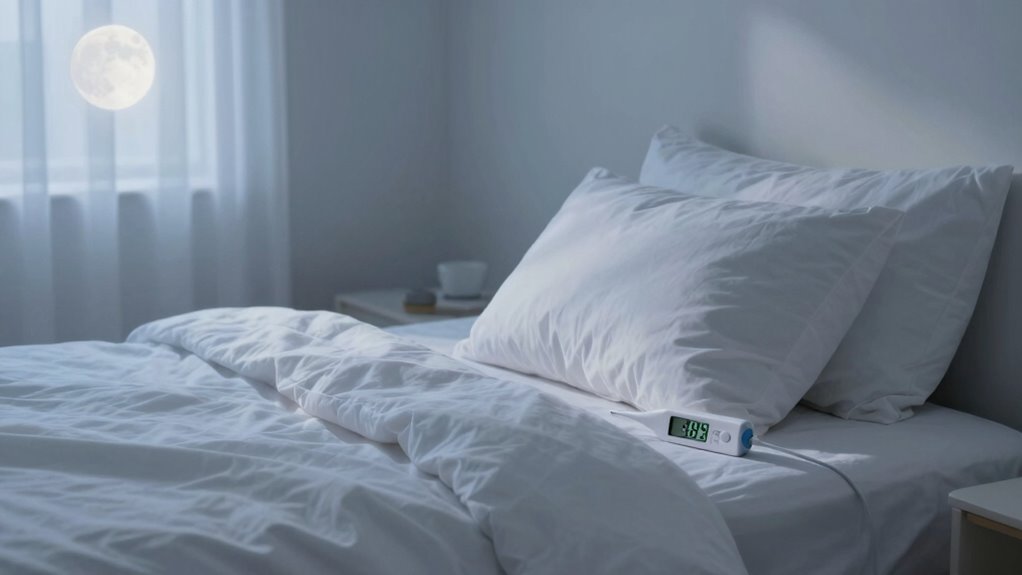
When your bedroom temperature drifts too far from the ideal range, it can profoundly disrupt your sleep. Poor thermal comfort makes it harder to fall asleep and stay asleep, leading to fragmented sleep cycles. If it’s too hot, your body struggles to cool down, causing discomfort, sweating, and increased awakenings. Conversely, if it’s too cold, your body works harder to maintain core temperature, which can result in restless nights and difficulty reaching deep sleep stages. Both extremes impair sleep quality by preventing your body from entering a restful state. Maintaining a consistent, comfortable temperature supports your body’s natural sleep processes, helping you achieve restorative sleep. Proper thermal regulation is essential for optimizing sleep quality and overall health. When thermal comfort is compromised, your sleep becomes less effective, leaving you tired and less refreshed the next day. Additionally, plant-based remedies may support relaxation and help improve sleep when thermal conditions are less than ideal.
How Can You Keep Your Bedroom Perfect for Sleep?
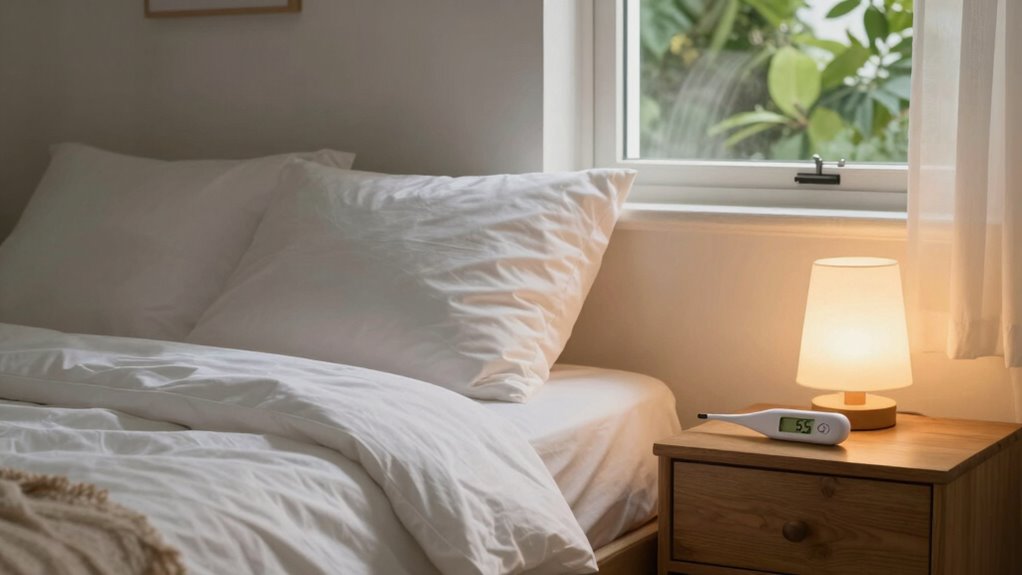
To keep your bedroom perfect for sleep, focus on maintaining an ideal temperature range, usually between 60-67°F. Using fans or an air conditioner can help you stay comfortable throughout the night, especially during warmer months. Additionally, optimizing your bedroom environment with proper lighting and minimal noise can make a big difference in quality sleep.
Ideal Temperature Range
Maintaining the right bedroom temperature is key to a good night’s sleep, and experts generally recommend keeping it between 60 and 67 degrees Fahrenheit. This range supports your sleep cycle by helping your body cool down naturally. Proper bedroom insulation is vital to maintaining a consistent temperature, preventing drafts, and reducing heat loss. When your room stays within this ideal range, you’re more likely to fall asleep faster and experience deeper, more restful sleep. If your room is too warm or too cold, your sleep quality can suffer. To optimize your sleep environment, consider these tips:
- Use blackout curtains for insulation
- Seal drafts around windows and doors
- Avoid overheating by layering bedding
- Maintain consistent room temperature overnight
Use of Fans or AC
Using fans or air conditioning can be highly effective in keeping your bedroom within the ideal sleep temperature range. These devices help regulate personal comfort by quickly cooling down a room that’s too warm, allowing you to fall asleep faster and stay asleep longer. Fans are energy-efficient options that promote air circulation without notably increasing your energy bill. Air conditioning offers precise temperature control, ensuring your room stays consistently cool throughout the night. To maximize comfort and energy efficiency, set your AC to a moderate temperature and use fans to enhance airflow. This combination helps create an excellent sleep environment, reducing heat buildup and preventing overheating, so you can enjoy restful, uninterrupted sleep.
Optimize Bedroom Environment
Creating the perfect sleep environment involves more than just controlling temperature; it requires attention to lighting, noise levels, and clutter. A well-organized, calming bedroom can improve your sleep quality. Focus on maintaining a comfortable sleep posture by choosing a supportive mattress and pillows. Keep your bedroom decor simple and soothing—use soft colors and minimal accessories to reduce distractions. Dim lighting or blackout curtains help signal your body it’s time to rest. Minimize noise with earplugs or a white noise machine, and keep the space tidy to reduce stress. These small adjustments create a peaceful retreat that promotes relaxation and better sleep quality. When your environment is optimized, you’ll find it easier to fall asleep and stay asleep throughout the night.
Why Do Personal Preferences Matter for Sleep Comfort?

Since everyone has unique comfort needs, personal preferences play a crucial role in sleep quality. Your personal comfort influences how easily you fall asleep and stay asleep throughout the night. Sleep preferences vary widely; some people sleep better in cooler environments, while others prefer warmth. Ignoring your individual needs can lead to restless nights or waking up feeling unrefreshed. Adjusting your bedroom environment to match your personal comfort ensures better sleep hygiene. It’s important to listen to your body and find the temperature that feels most natural to you. When your sleep preferences are met, you’ll experience improved sleep quality, making your nights more restful and your mornings more energized. Personal comfort is key to creating an ideal sleep environment tailored just for you.
What Tech Can Help You Control Bedroom Temperature?
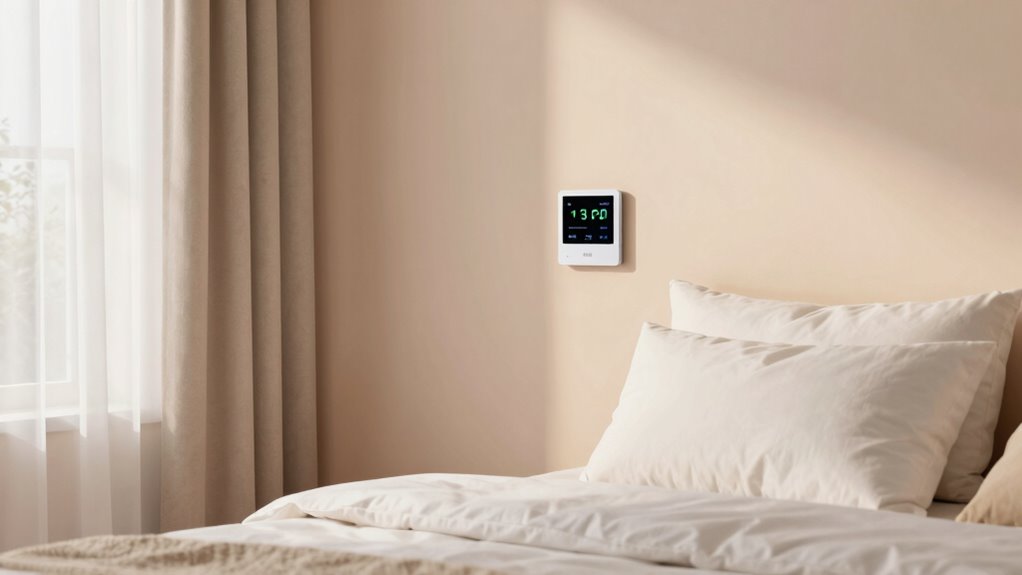
Technology offers a variety of tools to help you maintain the ideal bedroom temperature for better sleep. Smart thermostats are a popular option, allowing you to set and adjust your room’s temperature remotely or automatically based on your preferences. Sleep tracking devices can monitor your sleep patterns and suggest *best* temperature settings to improve your rest. These tools work together to create a comfortable environment effortlessly. Additionally, some smart systems learn your habits over time, *maximizing* comfort without manual adjustments. You can also find smart fans and window sensors that respond to changes in temperature or air quality. Overall, integrating these technologies helps you fine-tune your sleep environment, ensuring your bedroom stays cool and comfortable throughout the night.
What’s New in Sleep Environment Research?
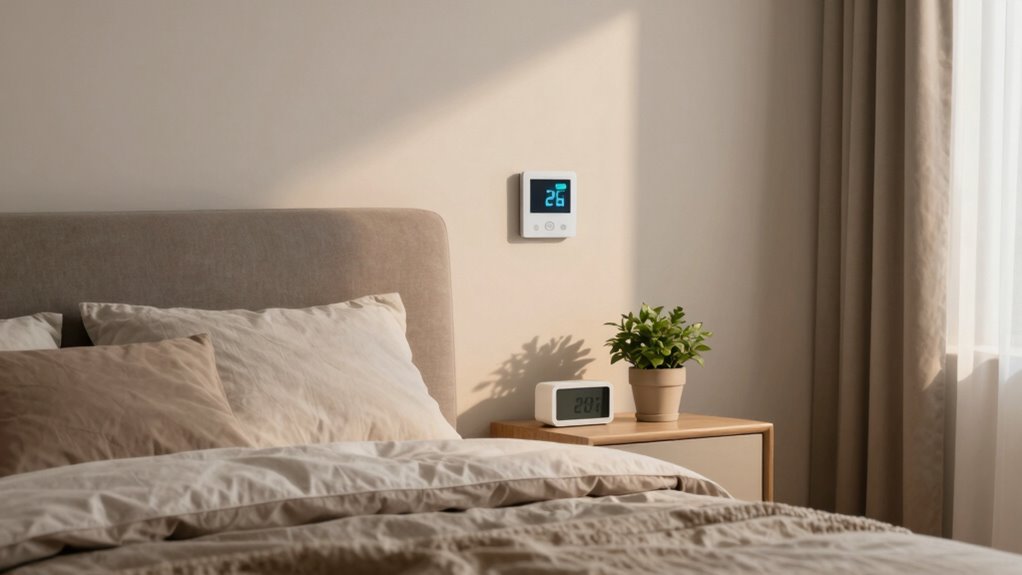
Recent research is revealing exciting advances in temperature control and how it affects sleep quality. Innovative sleep technology is making it easier to create a perfect environment, while emerging trends highlight personalized approaches. Staying updated on these developments can help you optimize your sleep setup for better rest.
Advances in Temperature Control
Recent advances in sleep environment research have led to innovative ways to optimize bedroom temperature for better rest. One major breakthrough is the integration of smart thermostats, allowing you to customize and automatically adjust your sleep environment for ideal comfort. These devices learn your preferences and respond to changes, ensuring a consistent temperature throughout the night. Additionally, new temperature control systems now feature zone-specific heating and cooling, giving you targeted comfort. Researchers are also exploring wearable sensors that monitor skin temperature to fine-tune your sleep environment in real-time. Finally, smart home technology can now sync with sleep routines, adjusting bedroom conditions based on your sleep cycle. These innovations make it easier to create a perfect sleep environment tailored to your needs.
- Smart thermostats with learning capabilities
- Zone-specific temperature zones
- Wearable sensors for real-time adjustments
- Integration with sleep cycle data
Innovative Sleep Technology
Innovations in sleep environment research are transforming how you optimize your bedroom for restful nights. Advanced sleep technology now offers tools like sleep tracking devices that monitor your sleep patterns, helping you identify ideal temperature and environment settings. These devices provide real-time insights, allowing you to make precise adjustments for better sleep quality. Additionally, new innovations focus on dream enhancement, using gentle soundscapes, light therapy, or subtle aromatherapy to improve the quality of your dreams and overall sleep experience. Smart mattresses and climate control systems can automatically adjust room temperature based on your sleep cycle, ensuring ideal comfort throughout the night. With these technological advancements, you gain a personalized approach to creating a sleep-friendly environment that promotes deeper, more restorative sleep.
Emerging Research Trends
Emerging research trends in sleep environment are increasingly focusing on personalized interventions that adapt to individual needs. Advances in understanding thermoregulation mechanisms reveal how temperature adjustments can enhance sleep quality. Researchers are exploring how the sleep cycle influence varies among individuals, leading to tailored temperature solutions. These studies emphasize dynamic environments that respond to your body’s changing needs during the night. Such innovations aim to improve sleep efficiency by supporting natural thermoregulatory processes. Personalized approaches consider factors like age, gender, and health conditions, making interventions more effective. This evolving research suggests that one-size-fits-all solutions may fall short, paving the way for smarter, adaptive sleep environments.
- Use of smart sensors to monitor body temperature and adjust room conditions
- Development of adaptive bedding and clothing for optimal thermoregulation
- Integration of AI to personalize temperature settings based on sleep cycle patterns
- Focus on individual differences in thermoregulation mechanisms for better sleep outcomes
Frequently Asked Questions
How Does Ambient Noise Influence Sleep Quality Alongside Temperature?
Ambient noise can notably impact your sleep quality by causing sleep disruption. When there’s unpredictable or loud noise, your brain stays alert, making it harder to fall asleep or stay asleep through the night. This effect is intensified if your room temperature isn’t ideal, as it can make you more sensitive to disturbances. To improve sleep, aim for a quiet, cool environment, and consider using earplugs or white noise machines to minimize ambient noise.
Are There Specific Mattress Types That Work Better at Different Temperatures?
Like a knight choosing armor, you want the right mattress for temperature regulation. Memory foam traps heat, so it’s better for cooler sleepers. Latex and gel-infused mattresses dissipate heat more efficiently, keeping you comfy. Hybrid mattresses combine materials for ideal temperature control, making them versatile. You should pick based on your sleep environment and personal preference, ensuring your mattress helps you stay cool or warm as needed.
Can Temperature Fluctuations During the Night Disrupt Sleep?
Yes, temperature fluctuations during the night can disrupt your sleep cycle because they interfere with thermoregulation, which is vital for falling asleep and staying asleep. As your body temperature naturally drops for sleep, sudden changes can wake you or cause lighter sleep stages. To maintain consistent rest, try to keep your bedroom at a stable, comfortable temperature, supporting your body’s natural thermoregulation and promoting uninterrupted sleep.
How Do Seasonal Changes Affect Optimal Bedroom Temperature?
Seasonal changes require you to adapt your bedroom temperature for better sleep. During colder months, you might need to lower the temperature slightly or add extra blankets, while warmer seasons call for a cooler environment. Your body naturally adjusts through seasonal adaptation, so maintaining proper temperature regulation helps you sleep comfortably year-round. Pay attention to how your body responds and tweak your room temperature accordingly to make certain restful, uninterrupted sleep.
What Role Does Clothing Choice Play in Maintaining Sleep Temperature?
Did you know that inappropriate clothing can disrupt your sleep by causing overheating or chills? Your sleepwear comfort and fabric breathability play vital roles in maintaining ideal sleep temperature. Choosing lightweight, breathable fabrics like cotton or linen helps wick away moisture and regulate heat. By selecting appropriate clothing, you can stay comfortably cool or warm, ensuring your body maintains the best temperature for restful sleep all night long.
Conclusion
Sticking to a cool, comfortable bedroom temperature can substantially improve your sleep quality. Even if you prefer warmer environments, adjusting your space slightly cooler helps you fall asleep faster and enjoy deeper rest. It’s worth trying different settings to find what feels best for you—after all, your sleep matters. Don’t let myths or habits keep you uncomfortable; a simple temperature tweak could transform your nights into truly restful ones.